
The WTF Series: Triple constraint
March 10, 2016 | Ben Kittrell

One of the hardest parts of software development is managing stakeholder expectations.
Of course, everyone wants as much as they can get, as fast as possible, for the lowest price. Why wouldn’t you?

Ben Kittrell
The problem is that most programmers get frustrated when a stakeholder asks for too much too fast, and don’t know how to push back. Some of us aren’t exactly social butterflies. That’s why we borrowed a project management term called the triple constraint.
This is usually explained by drawing a triangle and writing one word at each corner: “scope”, “cost” and “time.” These corners represent what will be included in the project, how much it will cost and how long it will take, respectively. 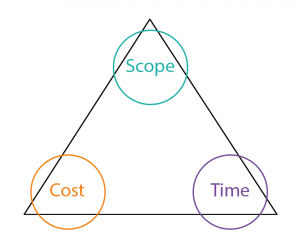
With the triple constraint, you can’t change one corner without affecting the others. If you add features, it’s either going to cost more or take more time. If you want to get it done faster, you have to remove features or pay more. It’s a handy way to explain that you can’t get something for nothing. The model, of course, can be applied to many different industries.
Another popular way of using the triple constraint is to say “Among the three options of fast, good and cheap, you can choose two.” If you want it fast and good, it’s not going to be cheap. If you want it cheap and fast, it’s probably not going to be very good.
This not only helps the developer set guidelines for what’s possible, it helps stakeholders understand what their options are. Usually, after I explain this to a client, they’re happy to say something like “Well we have to get this done in two months and this is our budget, so what features can we cut?”
Ben Kittrell is the co-founder of Doodlekit and an advisor for startups and small businesses. Kittrell also is host of Spare Room Radio, a podcast that features Kansas City entrepreneurs.

2016 Startups to Watch
stats here
Related Posts on Startland News
André’s planted its flag in KC 70 years ago; chocolatier says that’s just a taste of what’s to come
Nearly 5,000 miles from Switzerland, a small group toured the inner sanctum of an iconic 70-year-old Kansas City company — a family-run brand that helped redefine accessible luxury in the Midwest, one Swiss chocolate-covered almond at a time. “What people get excited about André’s is the legacy, that we take a lot of pride in…
Here’s how ULAH’s new boutique model aims to rack success for local brands, not inventory debt
The new KC Collective consignment-based program for local brands at ULAH is a win for both the Westwood boutique and Kansas City creatives, said Joey Mendez and Buck Wimberly, announcing a fresh model to help the struggling store stay open and financially stable. “We’ve always had local brands,” said Mendez, co-founder of ULAH, explaining the…
Tiki Taco ticks up giving alongside expansion; CEO owns up to taco shop’s neighborhood impact model
A month-long campaign in the popular Kansas City-based chain offers easy add-on: joining KC GIFT’s network of donors Restaurant executive Eric Knott wants Tiki Taco’s operators to own the neighborhoods into which the popular taco shop expands, he said, but that doesn’t just mean dominating the fast-casual market in each pocket of Kansas City. “Our…