
Grief happens on (and off) company time: Why a startup founded from loss is building holistic bereavement plans for corporate America
January 3, 2023 | Matthew Gwin

When grieving employees return to work, managers and colleagues often aren’t equipped to properly support them, said Lisa Cooper.
“While I was working in corporate America for quite some time, I had witnessed a lot of dysfunction surrounding grief,” said Cooper, co-founder of Workplace Healing alongside Mindy Corporon. For example, I can remember specifically when someone came back to work, and her husband had had a massive heart attack. She had four young kids at home, and nobody knew what to say, and nobody knew what to do.”
“It was very, very awkward,” Cooper continued. “Our hearts went out to this woman, but there was really no standard operating procedure in the company beyond perhaps sending her to an employee assistance plan for five sessions of therapy.”
Workplace Healing aims to fill that gap by providing companies with actionable ways to support grieving employees through its Human Recovery Plan software platform, a B2B HRTech tool.
Click here to explore Workplace Healing.
“We started just really honing in on the gap where people don’t know what to do and what to say when someone comes back to work after bereavement,” Cooper said.
That experience is personal for Corporon, who has lived through dealing with her own grief while trying to return to the workplace.
In 2014, Corporon’s son and father were killed by a white supremacist in a shooting at the Overland Park Jewish Community Center.
When she returned to her position as CEO of a wealth management firm weeks later, Corporon sensed her coworkers and employees were unsure of how to respond.
“As I started going back into the workplace, it was really apparent that even my team did not know what to do or say on my behalf,” Corporon said. “So here I am going back into the workplace, and I’m wearing the hat of griever, and I’m wearing the hat of CEO.”
“I wanted so badly to tell somebody how to talk to me,” Corporon continued. “I wanted to tell someone, ‘This is what you can say. This is what you can do.’”
Scaling the tools to heal
Years later, Corporon and Cooper are trying to do just that with Workplace Healing.
The duo initially created a consultative workshop in 2018, but quickly realized that the scope of their work required an asynchronous approach, Cooper said, when an attendee asked if they were available 24/7.
“That was a lightbulb moment for us, because we realized, ‘We can’t be the Lisa and Mindy Show forever,’” Cooper said. “We have this important information that we need to share, but grief doesn’t happen between 8 a.m. and 5 p.m.”
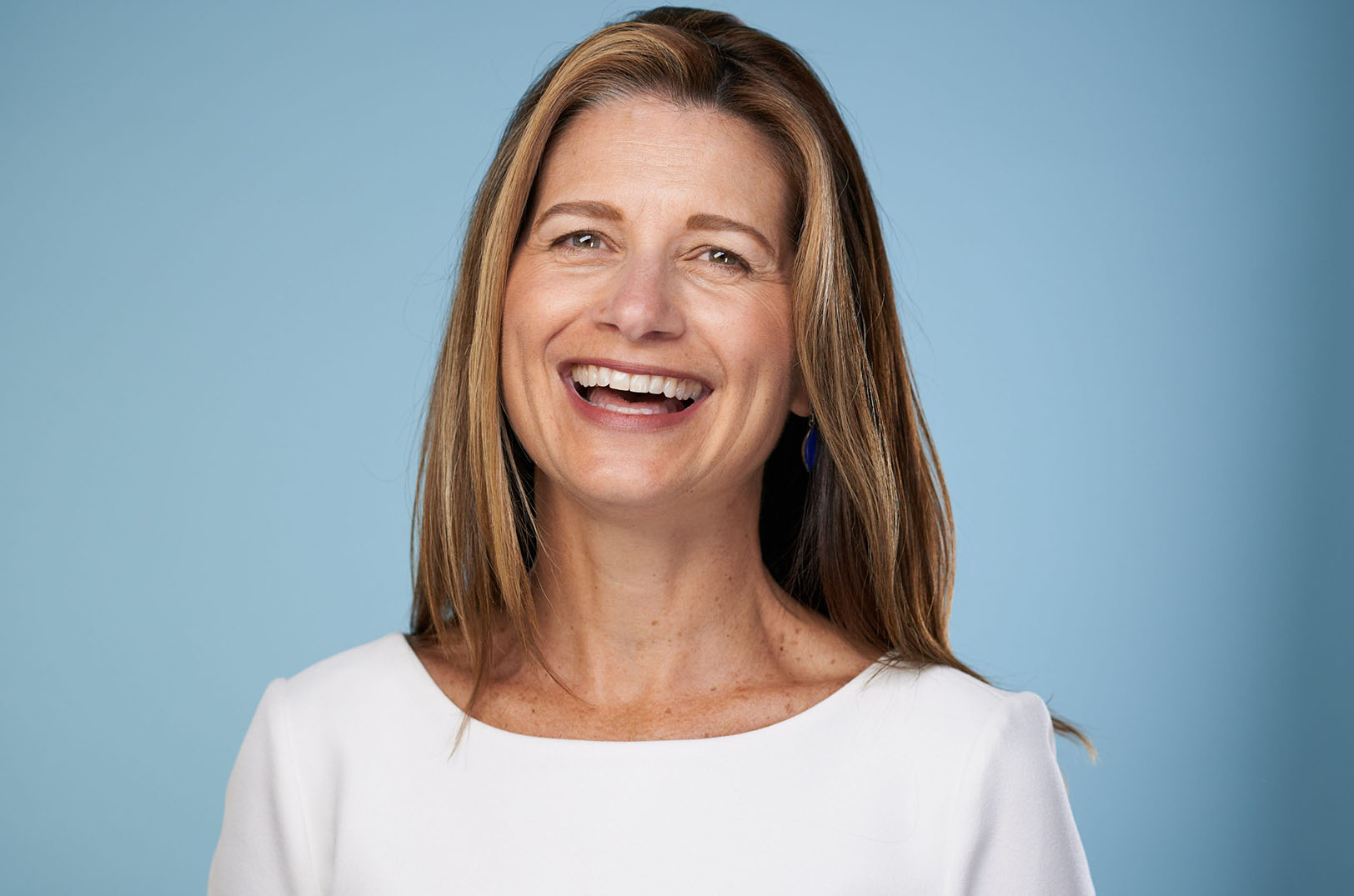
Mindy Corporon, Workplace Healing
The COVID-19 pandemic accelerated the need for a self-service tool, so Cooper and Corporon spent an entire year conducting quantitative and qualitative research on workplace grief.
Then, they spent nearly another year building the SaaS model, finally launching the Human Recovery Plan software platform in March 2022.
From their research, Cooper and Corporon determined that 1 in 4 employees is grieving at any given time.
Because of that, they recommend that companies purchase enough Human Recovery Plans — which are sold on an annual subscription basis and do not expire from one month to the next — to support 25 percent of their employees.
The software accounts for 11 different “death scenarios,” ranging from the death of a spouse, to an unborn child, to a coworker, to a pet.
The grieving employee’s manager then builds a Human Recovery Plan tailored specifically to that person’s needs.
“We really do want the direct supervisor to be the one building the plan,” Corporon said. “Does it have to be that way? No. Is it still going to be beneficial to the griever if someone in the company acknowledges them? Yes.”
“But people don’t tend to leave companies as much as they leave managers,” Corporon added. “So we’re trying to help the bosses. We’re trying to help them look more human, have more compassion, and just have an actionable plan that they can put in place.”
From head to heart
The plan builder can choose from a list of head-based and heart-based tactics, and each plan should have a 50/50 split between head- and heart-based tactics, Cooper said.
“We talk about the importance of balancing head and heart because you can’t be all head, because then the person isn’t healed from an emotional perspective,” Cooper said. “But you can’t be all heart either, because then the work doesn’t get done.”
Examples of head-based initiatives — which are designed to maximize employee reintegration — include lightening the employee’s workload and offering access to an employee assistance plan.
Heart-based initiatives target the individual’s emotional well-being, and could be flowers, cards, a day of remembrance, and special cause fundraisers.
In less than a year, Workplace Healing has already sold hundreds of Human Recovery Plans to 7 clients across the Kansas City area, with a goal of reaching 45 clients by the end of 2023.
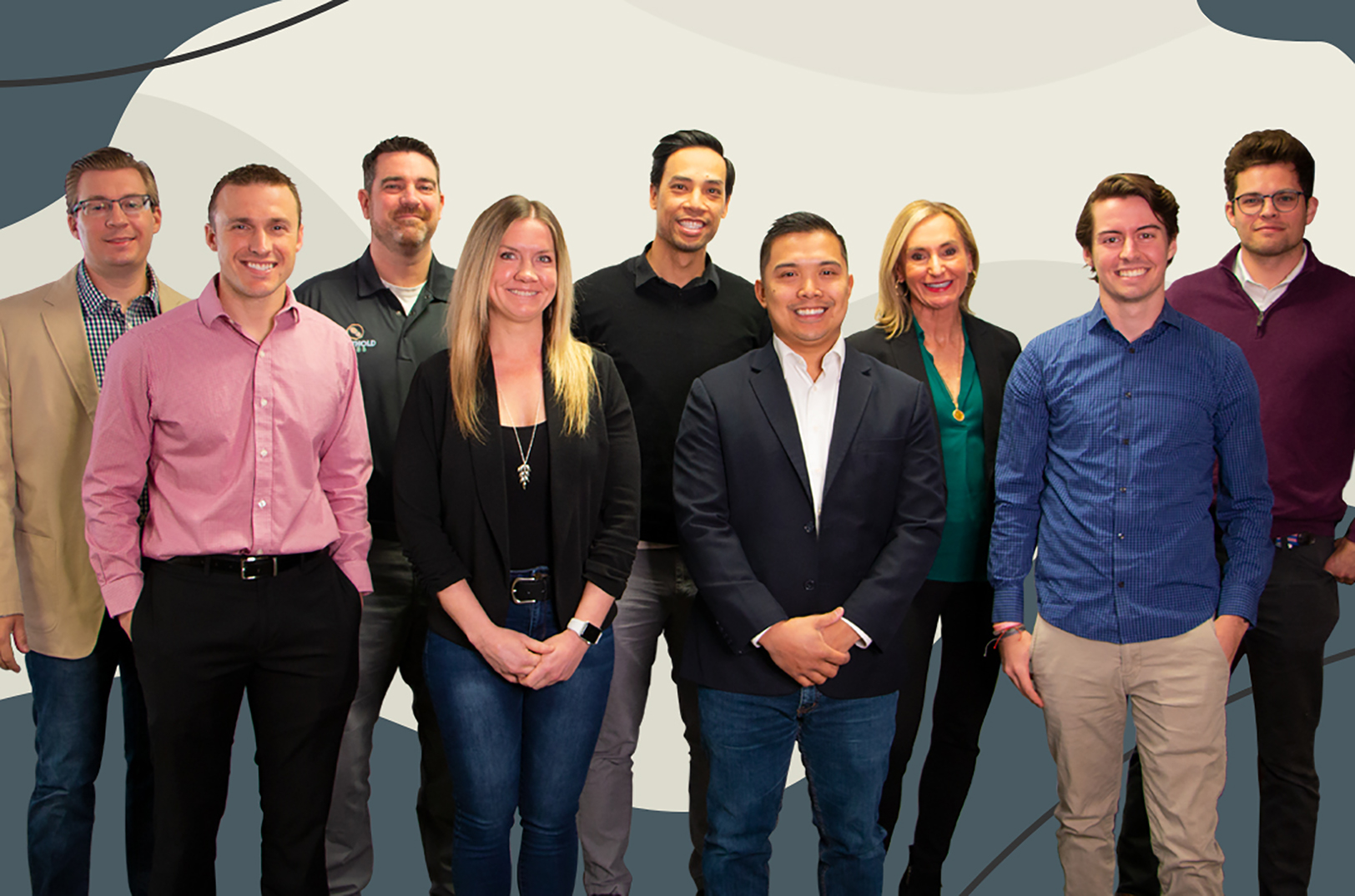
Digital Sandbox Q1 2022 awardees: Dan Schwarzlander and Nick Bennet, VaccineAssist;
Sean McIntosh and Sarah Steeby, Foothold Labs; Roger Ngo and Tam Tran, DataAppraisal; Lisa Cooper, Workplace Healing; Tyler Bolz and Will Strout, DataSource
Corporon and Cooper received a $20,000 grant from Digital Sandbox KC in April 2022, and were invited to participate in UMKC’s Technology Venture Studio.
Part of that funding from the Digital Sandbox award has gone toward adding a caretaking channel, Corporon said, which is currently being tested by 33 users.
“One of the top three reasons that employees are disrupted and have a foggy brain at work is because they’re caregiving,” Corporon said.
“Anything that takes you out of the present moment at work and affects productivity is grief,” Cooper added.
Presenteeism — meaning the employee is physically present but mentally and emotionally absent — can have a massive impact beyond just the individual, Cooper noted.
“We did find that the top two industries that have the highest propensity for presenteeism from grief are financial services and insurance companies,” Cooper said. “When you make a mistake on a decimal point or a number, the downstream effect of that with a customer is so huge.”
Accelerating the business
Moving forward, Workplace Healing is about halfway through a $1.5 million capital raise, Corporon said, and has begun the process of transitioning from an LLC to a C corporation.
The co-founders are applying for the women-owned business certificate, Kansas angel tax credits, and multiple accelerator programs, Corporon added.
It’s all part of a push to get Human Recovery Plans into the hands of as many leaders as possible.
“Our goal is to really infiltrate as much as we can corporate America, get our software and our plans in hands,” Corporon said. “We want to make this huge difference in corporate America, and then we’re going to gear up, like most SaaS businesses do, for a really great exit so that it can go global, and it can get the breadth and depth that it needs to touch all the humans that we want it to touch.”
Beyond that, they hope that Human Recovery Plans from Workplace Healing can change the way people grieve, and support grievers, in the workplace.
“It’s truly moving the needle and changing the conversation around grief and caregiving in corporate America,” Cooper said. “Again, just not expecting people to leave their whole selves at the door when they walk into work or get online.”
Featured Business

2023 Startups to Watch
stats here
Related Posts on Startland News
Open Doors: Here’s how KCMO plans to turn empty storefronts into a World Cup stage for local talent
Applications are now open for grants of up to $10,000 for businesses and artists who want to activate underutilized or vacant commercial spaces in the downtown area during the coming FIFA World Cup to showcase Kansas City’s entrepreneurial spirit. Funds awarded through the just-detailed Open Doors! Program — crafted through a partnership between the City…
He took over a house-trained side hustle; meow it’s time scale the gourmet catnip brand
Adam Larson might be severely allergic to cats, but he’s following his own advice — pawing away at a gourmet catnip side hustle and toying with the best market fit for the business (and his life). Larson — who also is a network convener for MOSourceLink, the founder Decimal Projects, and a former program coordinator at…
How Main Street Summit is putting homegrown small business on stage with Tim Tebow
COLUMBIA, Missouri — Small businesses don’t stay small on purpose, said Colby Kraus, echoing a mantra popular among organizers of the Main Street Summit — an immersive downtown experience rich with enough Americana capital for entrepreneurs and community builders from all walks of life. Approaching its third year, Main Street Summit is set to return Nov.…
ICYMI: MTC says it’s moving forward with select entrepreneur programs despite steep state funding cuts
Editor’s note: This story was originally published by Missouri Business Alert, a member of the Kansas City Media Collective, which also includes Startland News, KCUR 89.3, American Public Square, Kansas City PBS/Flatland, and The Kansas City Beacon. Click here to read the original story. [divide] The Missouri Technology Corp. has released its annual implementation plan, announcing which programs…