
Even gatekeepers struggle to bring KC’s women-led companies in from the cold
March 6, 2019 | Elyssa Bezner

Female entrepreneurs are falling behind as a new generation of highly-scalable startups rises in the Kansas City, said Darcy Howe, reporting too few women-led firms even approaching KCRise Fund for investment.
[pullquote]
Editor’s note: The following is part of three-piece package, Women’s Work: Startups fueled by female founders struggle for equity.
• Founder facing gender bias: Don’t call me a victim; call me investors
• Even gatekeepers struggle to bring KC’s women-led companies in from the cold
• WIRED together: How mentorship led 22 women to a million-dollar investment
[/pullquote]
“My experience with those ‘Hey, I hear you have money’ calls that I do get [from female entrepreneurs] — many of them are not even ready for venture capital,” said Howe, managing director of the leading KC venture firm.
With women historically undernetworked in Kansas City’s entrepreneur and business community, local “gatekeepers” must become less isolated and more accessible — especially those who themselves are women, said Howe, defining gatekeepers as community resource partners, investors, and prominent thought leaders that entrepreneurs must reach to succeed.
An overdependence on resource organizations, rather than mentorships and leadership from experienced founders also can contribute to fewer women attempting to launch startups, she said.
“There are not enough founders who are [like] Toby Rush, so entrepreneurs are [seeking help from] people who are, frankly, not the practitioners,” Howe added. “If those gatekeepers are not as experienced as a successfully exited founder, the entrepreneur can find themselves [in trouble.]”
Click here to read Howe’s KCultivator Q&A profile, in which the KCRise Fund leader discussed entrepreneurial safe spaces.
Kansas City is “an exceptionally small world,” said Melissa Roberts, senior program officer for entrepreneurship at the Ewing Marion Kauffman Foundation, noting female entrepreneurs who approach investors too early — and with too little education on specific finance lingo — can close more than one door at a time.
[pullquote]
“There’s this wall and if you can get one person beyond the wall to invest in you, then the other people beyond the wall invest in you. If none of those people do, then none of those people do. It’s almost like a ‘cool kids club’, for a lack of a better term.”
— Carlanda McKinney, co-founder, Raaxo
[/pullquote]
“People in KC talk and you’ll start to hear, ‘Well, that deal has hair on it,’ or ‘Why hasn’t she done anything yet?’ or ‘Man, I’ve been trying to tell her she needs traction, but she just won’t sell anything,’ and while all of those things might be true, there’s this sense that we want people to come to us as early partners,” she said.
“We’ve got to balance that with the investor’s responsibility to pass judgment on companies,” she added. “It’s a really hard line for investors to walk too, because at some point you have to make a call [that makes the best financial sense].”
Click here to read more about a report indicating women-led startups are more likely to receive angel support than VC backing.
Resources already available in Kansas City — even those catered to women — don’t automatically translate to progress being made, said Roberts, noting concentrated resources that can take a female-led startup from grant competitions to “hockey stick” or venture-backable territory might address many of the most prevalent issues facing women founders.
Click here to read more about a study indicating that both equity investors and loan officers nationally perceive the funding landscape to be fair and balanced, despite data showing the scales tipped heavily toward male entrepreneurs.
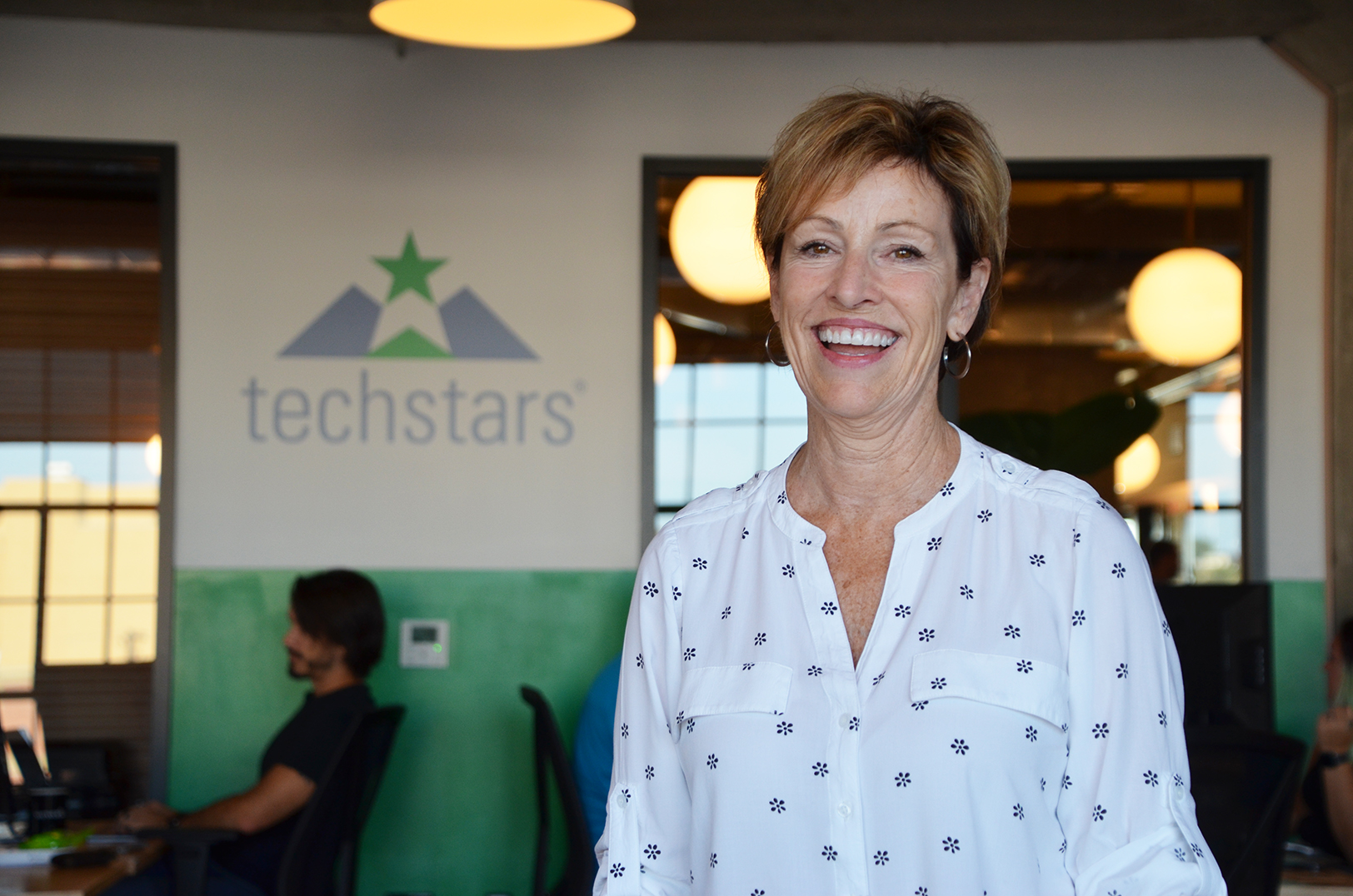
Lesa Mitchell, Techstars Kansas City
Resource organizations and investors know they have trouble attracting women who run startups, acknowledged Lesa Mitchell, managing director for Techstars Kansas City. And they’ve attempted to build a pipeline to allow easier access, she said. Yet too few applicants to programs like Techstars represent women-led startups.
“It’s just that black and white,” said Mitchell. “Our goal is to try to get 50 percent of our applicants into a Techstars program that are not white men — we are incentivized to do that. But, finding them is so unbelievably hard.”
“So where do we get the pipeline?” she asked.
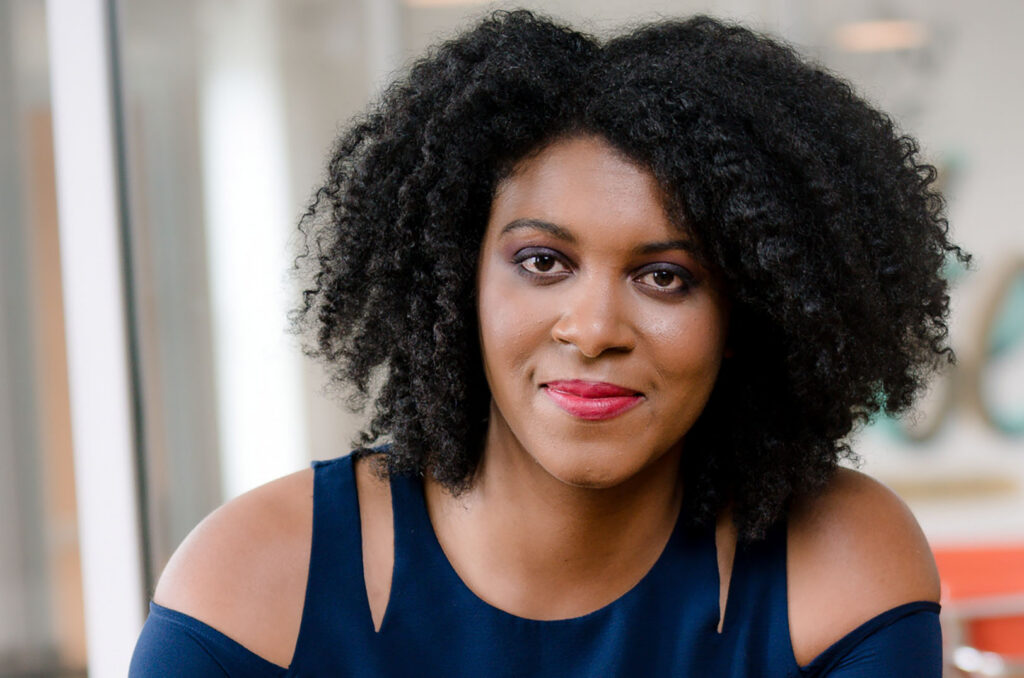
Rebecca Dove, Pennez, ProjectUK
From the outside looking in
Edtech startup Pennez is expected to apply to accelerator programs outside of Kansas City throughout 2019, said founder Rebecca Dove.
“Even though it’s great to start a business here, I haven’t seen the support to grow a business in Kansas City,” said Dove, noting a five-year journey since founding her youth reading-oriented venture in 2015. “I, personally, have found more success outside of Kansas City — more potential investors, and just more advocates of the mission of Pennez — as opposed to here.”
Gaining validation from Mozilla Gigabit Community Fund and Pure Pitch Rally proved the platform for increasing literacy in children was a viable concept, she said, though any further funding opportunities seemed to stall.
[pullquote]
“Certainly with minority-led businesses or minority women, I think the issue gets even more complicated — do the women know who to go to? Are they getting the right kind of mentoring and coaching?”
— Rania Anderson, co-founder, Women’s Capital Connection
[/pullquote]
“2018 was the year of denials,” Dove said. “I had made a goal to apply to different accelerators in Kansas City [throughout the year] but [denials] just made me think that maybe I just didn’t know the language, or didn’t have the relationships. [Other than that] I don’t really know why they said ‘no’ because I felt like I at least had some traction and had received a small amount of funding.”
The level of financial literacy required from founders can be unrealistic, she added, noting that the inconsistent quality of education that entrepreneurial support organizations across the metro offer can put founders at a disadvantage.
“It makes sense why the venture capitalist doesn’t invest in women or, like they say, people of color … On one side, the investors might not be looking for women [founders] or people of color [to invest in,] but I think the other side is that we don’t know when we’re talking to them, what their expectations are,” said Dove.
“It can be very frustrating when you see someone [early-stage] like you receive funding and they didn’t have to go through as many hoops as you did to get access to that capital,” she added.
Shifting the lens of entrepreneurial vision
Effectively supporting female entrepreneurs in Kansas City would mean taking a closer look at the models from other successful entrepreneurial ecosystems, as well as considering Kansas City stakeholders’ collective entrepreneurial vision, said Roberts.

Melissa Roberts, Ewing Marion Kauffman Foundation
“[We can] pursue creating daycare cooperatives and safety net programs like [for] healthcare for [those in] the entrepreneurial community in general that would make it easier for people to leave their jobs [to begin a startup],” she said.
“It’s not like these are new concepts — I think there are people who are trying to build things like that in Kansas City, but it’s like nobody’s gotten off the ground for whatever reason,” she added. “But, I mean, that’s a great way to support women.”
Because the number of female starts in general is low, the number of female-led high-growth companies is even fewer, Mitchell said. That makes building a feeder population into entrepreneurship even more crucial, she added.
“[That pipeline] also needs to be twice as big because the reality is that we have twice as many women graduating from college as we have men,” she said, “Even though [college] doesn’t necessarily matter for entrepreneurship, it is a data point.”
Attacking the real issues behind an overall disparity between women and men in the startup space should remain a focus, said Howe, noting that hardship among women has, in some cases, led to stronger, more successful ventures in the end.
“My concern is that it will go back to the victim thing,” she said. “There are women founders who have figured it out. I grew up in a business that was 15 percent women and we got out and figured out how to succeed. So girls: find someone who can help you.”
[divide]
More from Women’s Work: Startups fueled by female founders struggle for equity:
• Founder facing gender bias: Don’t call me a victim; call me investors
• WIRED together: How mentorship led 22 women to a million-dollar investment
Featured Business

2019 Startups to Watch
stats here
Related Posts on Startland News
ShotTracker, NBA champ Klay Thompson set for virtual camp
The Golden State Warriors weren’t the only team elated from its Tuesday night NBA Championship win over the Cleveland Cavaliers. Overland Park-based ShotTracker also snagged a win alongside the Warriors’ first championship since 1975, as the wearable tech firm’s recent endorsement deal with Golden State guard Klay Thompson received another coat of varnish. Golden State’s…
Digital Sandbox helps entrepreneurs fight summer slump
With summer knocking at the door, Digital Sandbox KC is taking initiative to provide resources and instruction to keep entrepreneurs engaged and on-point. Digital Sandbox, a proof-of-concept program that expedites area businesses’ projects, will host the third-annual “Summer in the Sand Series” as a way of prompting discussion around relevant topics for entrepreneurs. “The Summer…
Techstars acquires UP Global, expands KC footprint
The global business accelerator firm that operates the Sprint Mobile Health Accelerator announced a major acquisition Tuesday that will expand its reach in Kansas City. Boulder-based Techstars reported Tuesday morning that it acquired UP Global, an international non-profit that fosters entrepreneurship with a variety of events and programs around the world. UP Global operates the…
Stackify continues global growth ahead of HQ move
Kansas City-based tech firm Stackify is posting a solid year of growth that’s leading it to hop the state line for more office space. Led by CEO Matt Watson, Stackify is moving its headquarters and 15 staff members from Kansas City’s Waldo neighborhood to Leawood, Kan., for larger and swankier offices. Watson said that Stackify…