
Capital connector’s message to women: Your investor pool isn’t just sharks; dive in and learn to swim
October 31, 2024 | Nikki Overfelt Chifalu

When it comes to navigating the waters of capital and equity, Women’s Capital Connection angel investment network and the Women’s Business Center serve as a guide to both entrepreneurs and investors, Kelly Sievers shared.
“All the education that we do and all the connections that we make, I would say that’s really the key,” explained Sievers, managing director of Women’s Capital Connection, which is a part of the entrepreneurial hub at Enterprise Center in Johnson County (ECJC) and the OneKC for Women alliance, along with the Women’s Business Center.
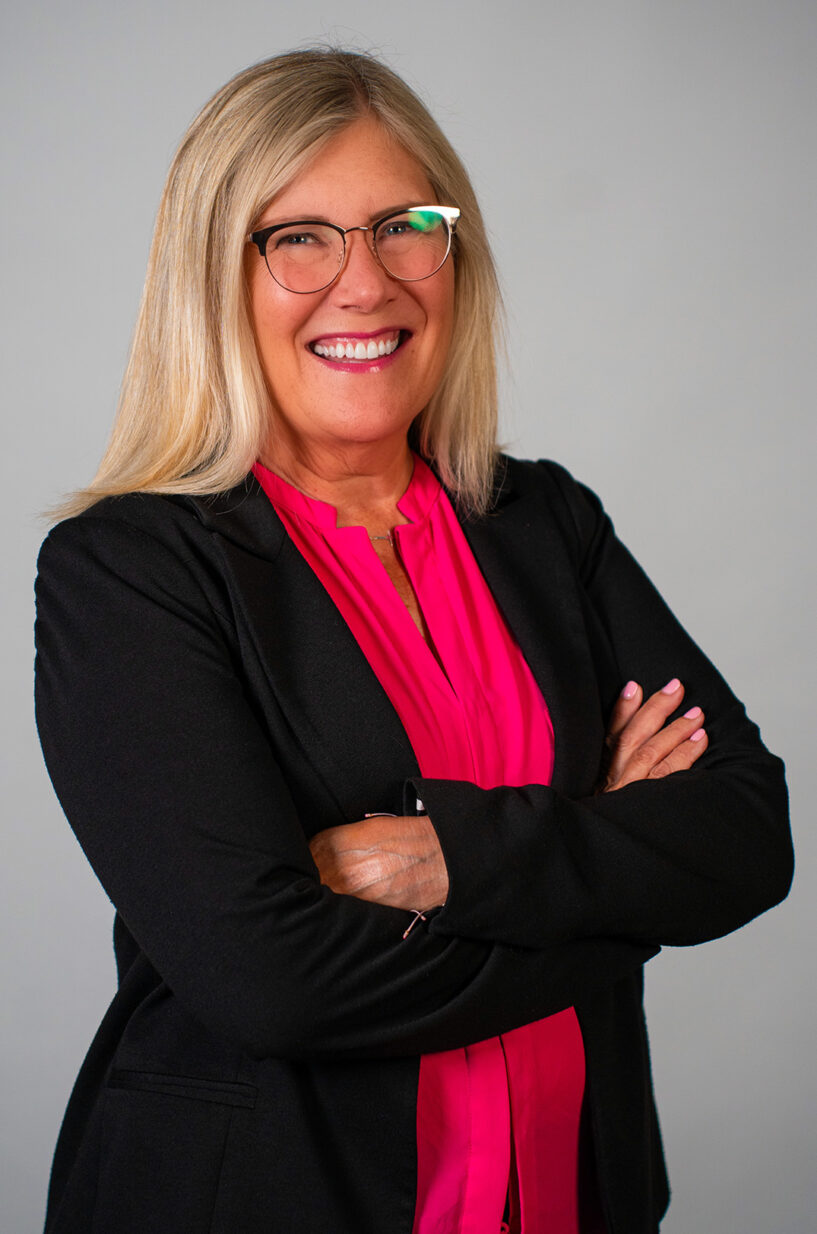
Kelly Sievers, Women’s Capital Connection, Women’s Business Center
Equity funding involves many misconceptions that need debunking, she noted, including thinking it’s always like the TV show “Shark Tank” when an entrepreneur faces investors, and that if they’re not looking to raise $10 million, a business leader must figure out how to fund the venture themself.
“People are kind of scared of it,” Sievers continued. “I think there’s just a lot of education that continues to need to be done in this space, especially, I would say, in the conservative middle of the country. You hear about these companies raising tens of millions of dollars on the coast and you hear about investors in Silicon Valley that’ll write a check for a back-of-the-napkin idea. In the middle of the country, we need to know it’s a relationship thing, too. A lot of this is about relationships.”
Approaching that education gap, the Women’s Business Center and ECJC offer two programs to help women — and men — get prepared to raise money: “Making Sense of Capital” and “Equipped for Equity.”
Making Sense of Capital — a workshop conducted by attorneys from the Polsinelli law firm’s venture capital division — is great for both founders and investors, Sievers said.
“Some of them are trying to determine if that’s the route they want to go,” she explained. “I think there’s a lot of folks out there that don’t really know the path to go fund their business.”
Through the program, investors learn to make better-examined investment decisions and entrepreneurs learn to negotiate with confidence, according to program support materials. Topics in the angel investment-focused workshop include: the ins and outs of business entities, convertible debt, priced rounds and valuations, and the deal from both sides.
“It’s a process, and it’s different from getting debt funding,” Sievers said. “With equity funding, you’re raising money, you’re diluting your company — as far as how much you own of it. And then those investors are going to want you to grow up big really fast and exit out of it, so everybody gets paid.”
Click here to register for Sessions 1 and 2 of Making Sense of Capital on November 19 and here to register for Sessions 3 and 4 on December 10.
For those founders who are ready to raise capital, Sievers noted, Equipped for Equity serves as a five-part program for six to eight entrepreneurs. It allows each participant to dive deep into their pitch decks, while learning more about the investment process and what type of equity they should raise from what type of investor.
“That’s a really hands-on program,” she explained. “It’s really getting under the hood and working on your pitch.”
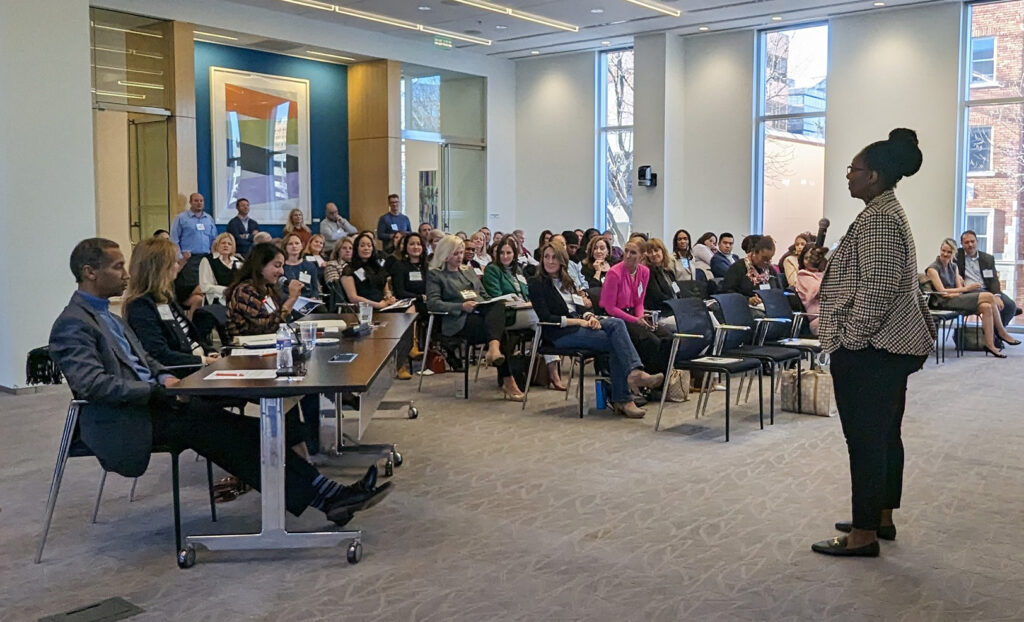
Aviva Ajmera, CEO and founder of SoLVE KC, third from left, speaks April 2024 Dolphin Tank event for Heartland women in tech, organized by Springboard and presented by Women’s Capital Connection and the Women’s Business Center via the OneKC for Women alliance; courtesy photo
Relationship building remains at the core for the Women’s Capital Connection (WCC) angel investment network — the equity investment arm of the OneKC for Women alliance — which has been matching investors to women-led ventures in the Midwest since 2008, Sievers shared.
“Two percent of venture capital goes to women,” she noted. “It’s still pretty low.”
The WCC network — founded by 33 women investors — started just 18 months after the Mid-America Angels network, the first angel investment group in the area; also a part of the ECJC hub. To date, 25 women-led companies have received funding, with more than $5 million dollars contributed to the region, according to the network’s site.
“We were really early on,” Sievers said. “Now there’s quite a few groups and networks and funds — which is awesome — because there’s a lot more opportunities for entrepreneurs to get funded. But they have to find the right place.”
The WCC helps entrepreneurs access capital by introducing vetted companies to relevant funds and investor networks, Sievers said.
“It’s really about guiding both the entrepreneurs and the investors onto what is a good deal,” she continued. “Raising capital is a full-time job in itself. Where do you spend your time most efficiently?”
“There are investors out there who want to invest money in early-stage companies, but don’t know how to find them,” she added, noting she has relationships with angel groups for women-led ventures across the country. “So they come to us. We are the connectors.”
Together, the WCC and Mid-America Angels host a biannual Venture Lounge event to provide the opportunity for company founders, angel investors, and resource organizations to get acquainted and optimize the investment process, Sievers said.
“It’s a great way to connect entrepreneurs and investors together,” she added.
Featured Business

2024 Startups to Watch
stats here
Related Posts on Startland News
In time for Mother’s Day: Ovatemp wants to boost women’s fertility
The arrival of Ana Mayer’s baby girl isn’t the only thing she’ll be thinking about this Mother’s Day. Mayer — who’s among the newest founders in the Techstars-led Sprint Mobile Health Accelerator in Kansas City — will also be mulling how to further develop Ovatemp, the Boston-based ovulation tech company she leads. Ovatemp offers women…
Founder of defunct Symptomly shares lessons from failure
Failure is a touchy subject. But for Derek Bereit — the former CEO and co-founder of mobile asthma tracking company Symptomly — his company’s failure was an opportunity shrouded in a difficult situation. Rather than sulking, Bereit sat down with Startland News to discuss Symptomly’s demise, the lessons it provided him and the possibilities that…
Founders discuss tough decisions entrepreneurs face
Two founders took the stage at Kansas City’s chapter of 1 Million Cups to discuss the vast variety of tough decisions entrepreneurs face when starting and running a business. Stuart Ludlow, co-founder of RFP 365 and Sarah Shipley, co-founder of BikeWalkKC, offered insights and advice for those launching a business. Read about RFP365’s recent funding…