
Two novice gardeners in an Olathe lab could harvest Kansas’ first legal hemp harvest
July 23, 2019 | Tommy Felts and Austin Barnes

Potential for a high-yield payoff grows with each day as Michael Wilson and James DeWitt inch closer to their first hemp harvest — likely the first in the state in modern times, they said.
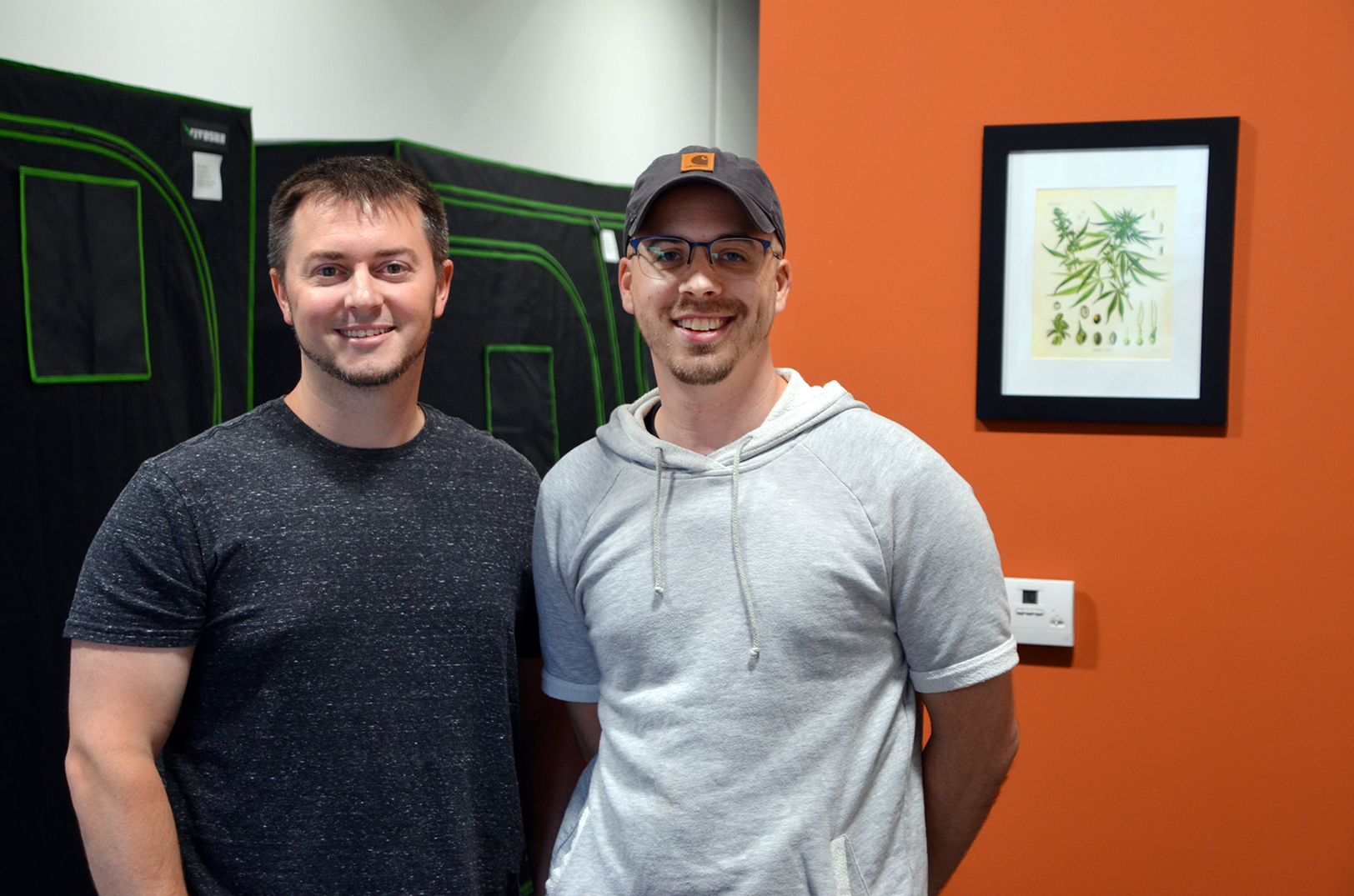
James DeWitt and Michael Wilson, United American Hemp
“It’s the jumping off point to create a repeatable process,” said DeWitt, co-founder and CEO at United American Hemp. “We’ve learned the technology and now we’re at the point where we feel like we can scale. Even if we get zero dollars for anything that happened with this first harvest, we’ve learned as individuals and as a company what we need to be successful in this industry.”
It’s Round 2 for Wilson and DeWitt — one the founder of a luxury watch company, the other a former COO of a private wealth management firm — who see their Olathe-based lab as pioneering the breeding of hemp plants, production of clones and harvesting of seeds for Kansas farmers.
“People ask me about our backgrounds and how we’re even able to do this. Let’s be frank. No one’s done this before, right?” said Wilson, founder of Niall watches. “So hemp comes online — no farmer, no one has ever done this before. We’re all figuring this out at the same time. The idea that you’ve got to be in the marijuana business or some other business is a total fallacy.”
With DeWitt’s 13 years in finance and compliance, the duo extracts expertise from their previous endeavors to fertilize the soil for United American Hemp’s development, he said.
“I came from a watch business, manufacturing,’ Wilson said. “You’d be surprised by the crossover that you learn from precision manufacturing to precision agriculture — the same general principles about deductive reasoning to get to your answer, utilizing technology and trying to break through and get a solution. But at the end of the day, nobody needs to be an expert when you start.”
“I hadn’t grown a plant in my entire life until May,” DeWitt added. “This is actually my first delve into growing any kind of plant. … Anybody can do it. You just gotta put in the time.”
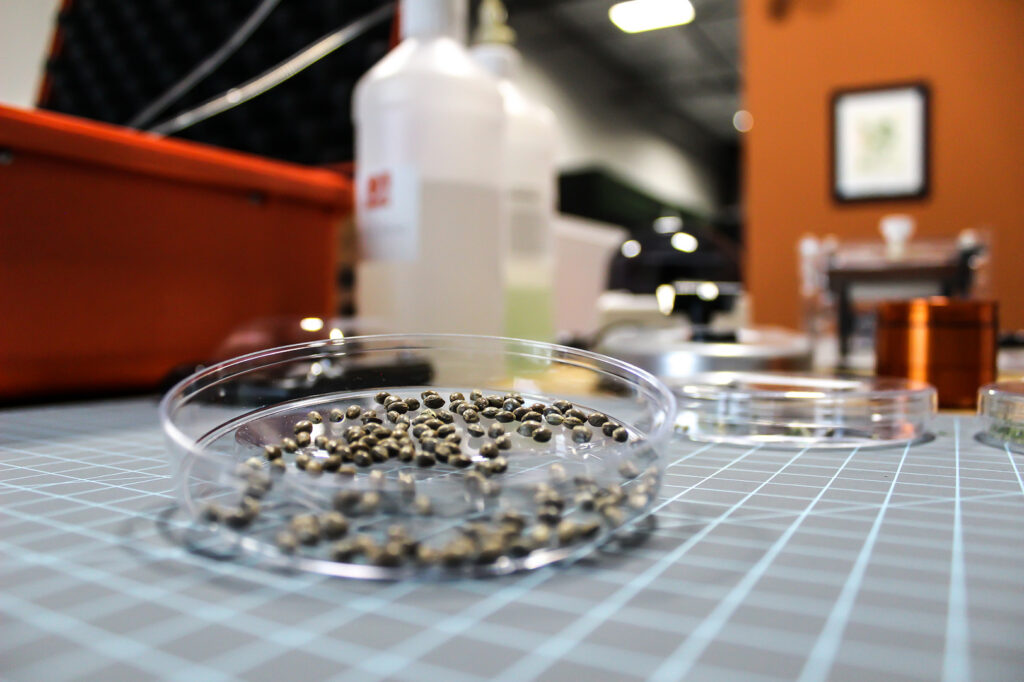
Photo courtesy of United American Hemp
Protecting the farmer
In 2017, the State of Kansas passed a statute allowing for a research program for industrial hemp, DeWitt said. United American Hemp was among those advancing to become a registered seed dealer through the Kansas Department of Agriculture.
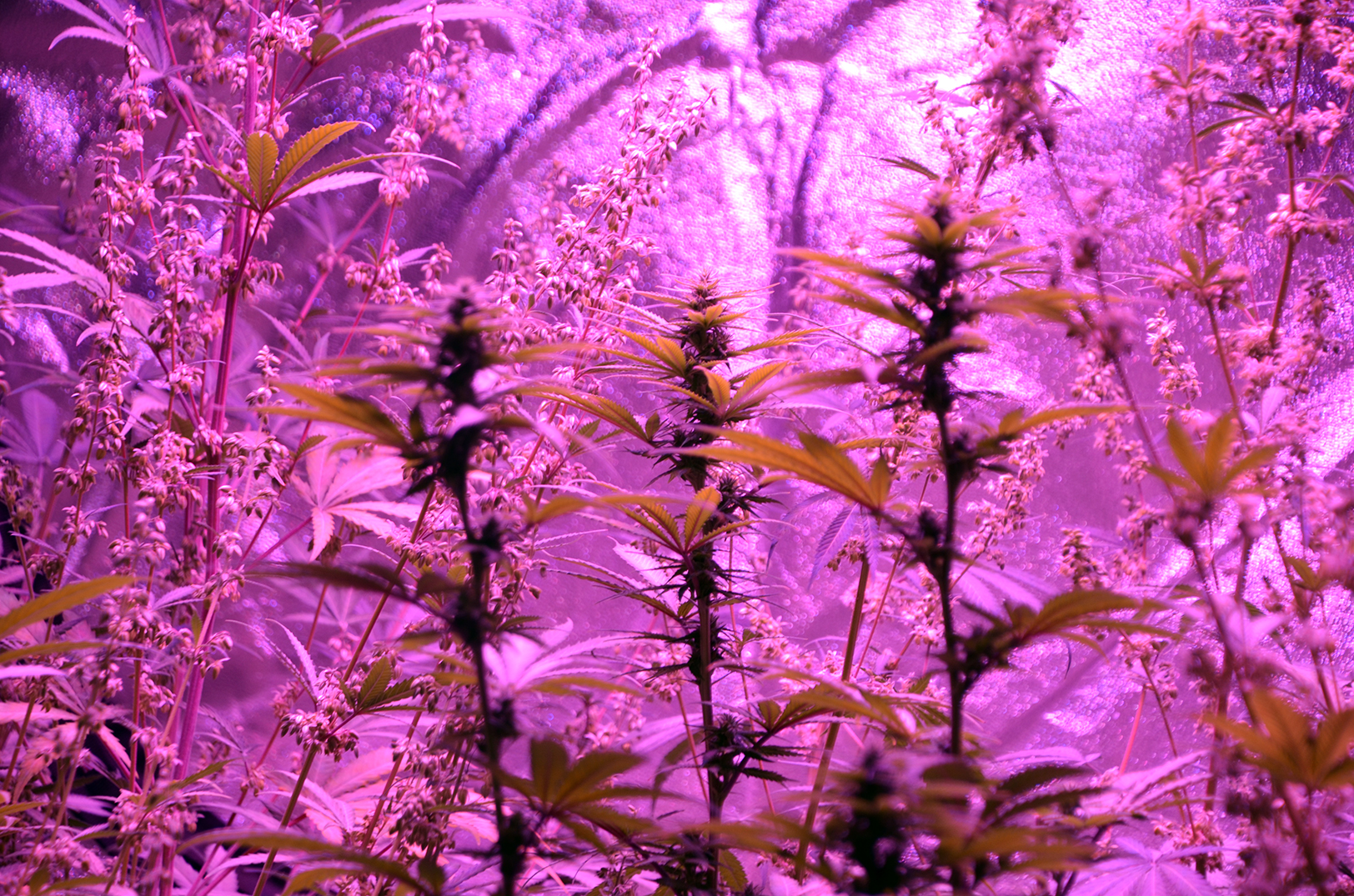
“We really want to bring in quality genetics, breed them and run them through state certification,” said Wilson, director of research and development for the startup. “We believe there’s immense value in going through the lengthy and difficult process to certify that seed in your own state. We want to make a farmer comfortable that not only are we doing what we say we are, but the state has put us through the ringer in order to give us the actual certification. We’re aiming for as many certifications as we can, as much legitimacy as we can, and are fully willing to invest everything that we need to make that happen.”
High quality seeds can be a boon for both the producer and farmer, the United American Hemp duo said.
Each plant could produce about 2,000 to 3,000 tiny seeds, selling to the farmer for $1 each. The grower then can earn $50 to $60 per dried pound of product from the fully grown plant (sold to a buyer producing CBD oil, hemp fiber or other products), Wilson said.
The math gets even better from there, he said.
“Each plant out in a field will produce between one and three pounds with genetics like this. So that’s about $120 per plant,” Wilson said. “If the farmer was to extract [the oil] themselves, now you’re talking about increasing the potential revenue value by about 12 times.”
“As this market gets saturated, hemp prices will change, but it will still have an immense amount of value,” he added. “We’re talking about decades for this to get to where it’s a fully monetized commodity. There’s no shortage of opportunity.”
But with market potential comes risk to the farmer — many of whom could be buying seeds from dealers with questionable strains of hemp, Wilson said, emphasizing the allure of a new cash crop.
“Imagine from a farmer’s perspective … My in-laws are traditional farmers, and there are tens of thousands of people just like them. They’ve grown corn, wheat, soybeans, all of those things,” he said. “Then hemp comes along with this promise of making $100,000 an acre, and it’s this great thing. But while it’s like traditional farming, it’s not the same because you’re dealing with a controlled substance. And when you’re working with a controlled substance, there’s no room for error. You can’t be running high on your THC content.”
“We’ve heard a lot of horror stories of farmers buying seeds from this person or that person who claims it’s one thing, or that it produces one result, and it turns out the seeds never germinated or they came in too high on THC content,” he added. “And the problem with that is that it’s a liability to the farmer, not a liability to the people who sold it to them. Farmers burden all the risk.”
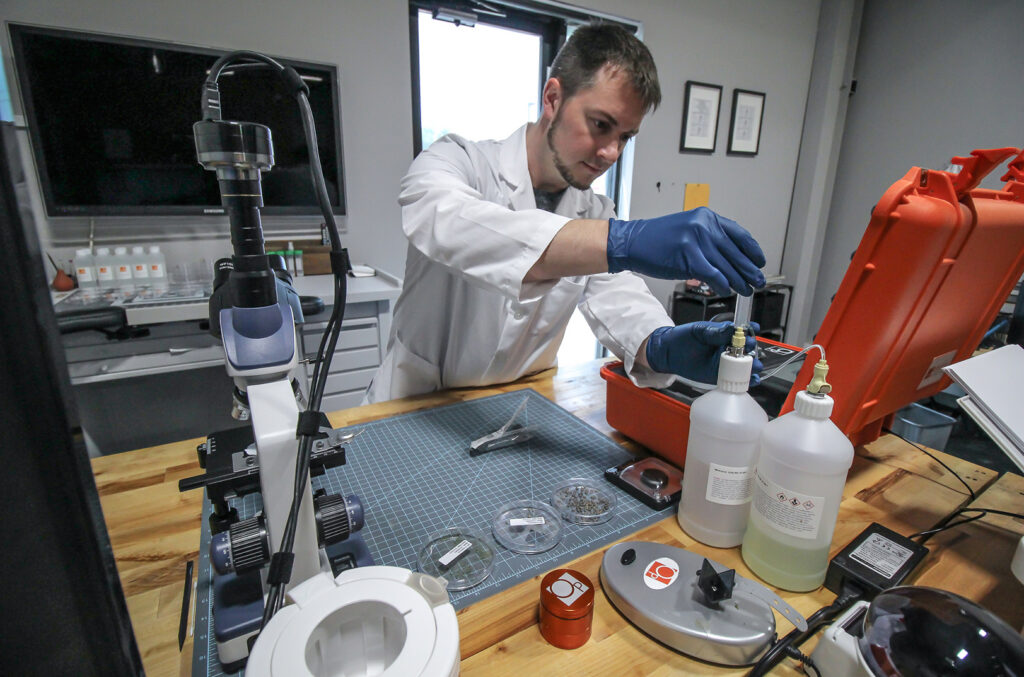
Photo courtesy of United American Hemp
Inside the lab
Perfecting United American Hemp’s seed, plant and clone production is key to ensuring quality control for farmers, DeWitt and Wilson said.
“It’s not a one-size-fits-all category when it comes to hemp. Understanding that helps further reduce the risk for a farmer,” said Wilson, noting the impact of even slight environmental changes on a farmer’s ability to successfully navigate from seed to plant. “It’s pretty wild. When you think about climate change and everything else going on, you have to be able to predict and make a plant that’s going to grow, otherwise farmers lose money.”
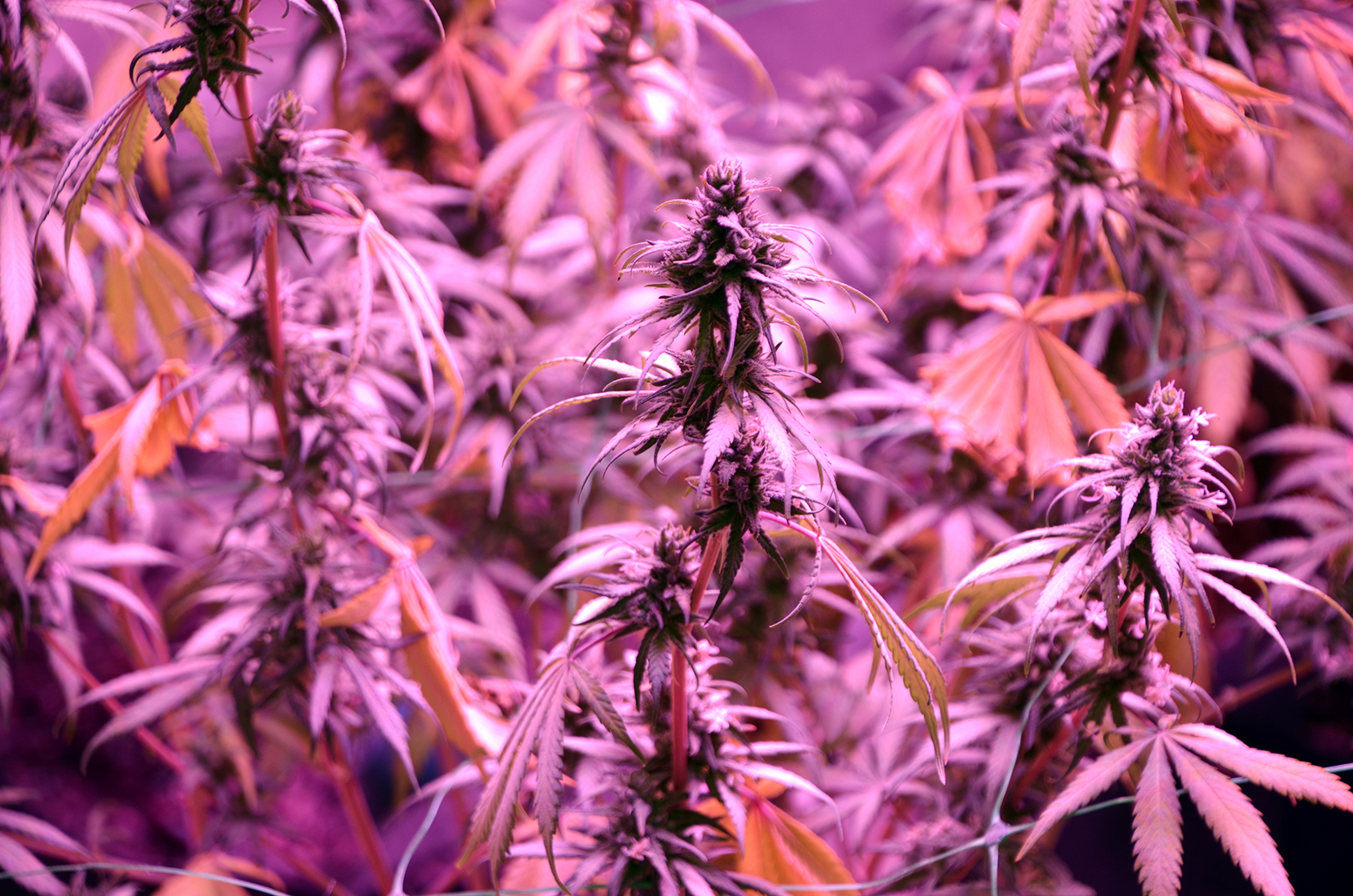
The duo approached the challenge with a bootstrapped, startup mindset, he said, noting they’ve been able to take advantage of tech advances in other industries, particularly medical.
“You’re starting to see a technology revolution in the medical community because machines that used to be $50,000 are now like $1,200. It’s really allowed tech people to get in and figure it out,” Wilson said. “At the end of the day, it’s a bunch of ones and zeroes, and the same parts that are used to build a bunch of other machines.”
The lab’s minPCR machine is a solid example, they said, describing the process of running plant samples through the DNA discovery system to determine the dioecious plant’s gender.
“In less than two hours, you’re taking the DNA from that plant and replicating it, making a billion copies of the exact plant DNA,” Wilson said. “And then at that level, you have the density big enough that you can look for that Y chromosome, you can look for pathogens, you can look for all the different things that you traditionally do with a PCR machine.”
“To do all this — even like five years ago — would have been over a million-dollar investment,” he added.
Similar cost efficiency was found through DeWitt’s own ingenuity, Wilson said. A water filtration system the CEO created replicates the result of a $200,000 system in a large marijuana grow facility, but at an up-front cost of about $1,000 — minus only a series of automated bells and whistles, the duo said.
“Hemp has been grown indigenously by people around the world. It doesn’t have to be done [the most expensive] way,” Wilson said. “By no means do we think we have it totally figured out. But at the same time, we do know that we can go do things utilizing modern tech that’s totally available from other industries. And some of the greatest stuff we’ve learned has come from gardening.”
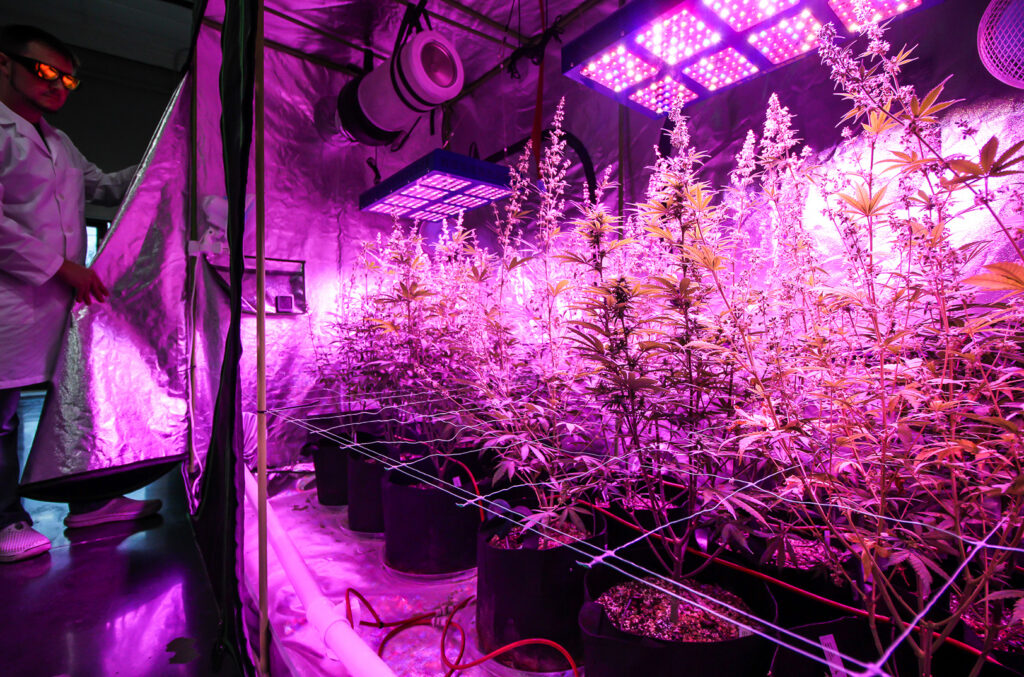
Photo courtesy of United American Hemp
Back to the soil
Hemp helped ground Wilson and DeWitt in a new way of thinking, they said.
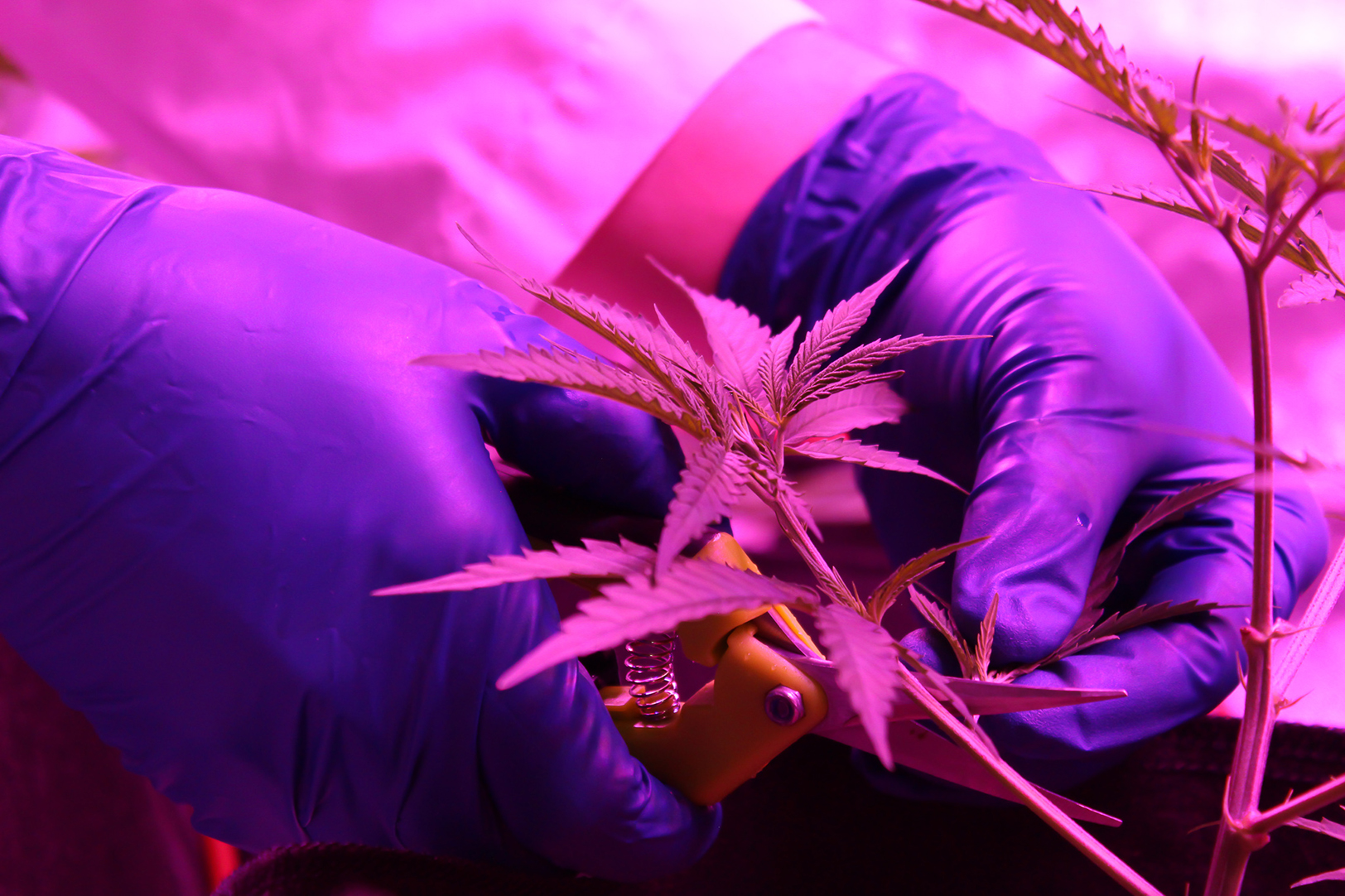
Photo courtesy of United American Hemp
“We’re talking about reconnecting to things that are natural and of the earth. There’s nothing better or more cathartic than growing plants in your backyard, growing hemp,” Wilson said. “It’s been cool to watch this [societal and generational] change, especially in markets in Missouri and Kansas that in the past have not necessarily been as in tune with our environment.”
For United American Hemp, the lab space has been an exercise in combining an unnatural growing environment — indoor tents — with organic practices rooted in the real world.
“When people talk about growing indoors, a lot of times they’re thinking about hydroponics and synthetic nutrients. But we started from the beginning wanting to grow these plants in living soil,” Wilson said. “All the nutrients for that plant exist in the 5-gallon pot that its growing it. That’s important — especially in the cannabis and hemp world — because [using synthetic nutrients to boost growth] doesn’t actually make a better plant that has equal efficacy in the medical world.”
Plants are measured on 15 to 20 data points each day with smart plugs tracking electrical usage and a close digital eye kept on irrigation, DeWitt said.
“While everything is super high tech and controlled in here, we want to aim for as organic a process as possible. You’re not finding us using pesticide,” Wislon said. “The real philosophy here is to mimic as close to an outdoor environment as possible indoors and keep that as a clean product. And we really want to pioneer as Kansas and Missouri come online with cannabis — whether that’s hemp or medical marijuana.”
“We have a big promotion of ‘organic’ — not from a hippie perspective, but from a true, clean, safe, medical efficacy perspective,” he added.
Scaling the company
As the first harvest approaches, Wilson and DeWitt are pleased their success so far proves United American Hemp’s potential to scale.
“It’s not bullshit. It’s not playing the Instagram game. It’s real hard facts,” Wilson said. “This is validation to our confidence, to our clients. There are plenty of challenges ahead for us, but it’s reassuring to see.”
The duo already is planning for an additional 10,000-square-foot indoor growing space, strategic partnerships with other growers, and even a future outdoor production lab.
“I can’t tell you the number of times someone has called me asking for hemp seeds, clones or biomass at a scale we simply can’t yet produce,” Wilson said. “It’s simply where we are as a company. If we want to make this real, we need access to acreage.”
“Our end game is that a farmer should be able to call us at any given time and say ‘Hey, I need X amount of clones or X amount of seeds,’ and we’d be able to either deliver on that or give them a reasonable timeframe when we could do it,” he added, noting the potential for year-round growing and production indoors.
Learning from the past
Wilson and DeWitt wouldn’t change anything in the leadup to harvest, they said.
“We’ve taken no debt. We have no investors. We have positive cash flow. And we’ve been able to learn the plant at a pace that’s really fast because of indoor growing,” DeWitt explained.
Their revenue so far has come from consulting, but it’s allowed United American Hemp to take an unconventional startup path, Wilson said.
“I’ve seen a lot of people in the application process for medical marijuana — which is a very different business than ours — with investment nets coming my way, saying they’re going to raise $15 million or $30 million,” he said. “And I’m like, ‘You know, I’ve been there. I’ve been in that game, and that’s not something I’m interested in for Round 2.’”
In the startup world, Wilson said, entrepreneurs have bred a culture where founders raise money just to burn through it on their way to a possible exit.
“James and I refused to do that ever again,” he said. “James cashed out all the money in his retirement fund, used what he had, and said, ‘Hey, this how long we’ve got if we’re going to do this. Here’s how we’re going to make it work.’ And at the time, when we started this, I was dead broke.”
As the business progressed, Wilson and DeWitt have been vigilant about making sure it’s growth is sustainable and profitable, they said.
“Playing by the rules of the general startup culture, we probably could have gone out and raised like $5 million and we could have everything we want in the future — right now,” Wilson said. “But at what cost? What cost to the business? What cost to your own personal mental health?”
The co-founders are proud of how they’re treating the business and themselves, they said.
“It’s been a drastic change from how I treated myself in the past,” Wilson said. “It’s encouraging that I can spend time with the kids, shoot a bow and arrow, garden at my house, act healthy and work out — all those things we all know we should be doing, but that we too often sacrifice for building a business. I’m just unwilling to sacrifice personal health this time. Maybe that’s not the right approach, but it’s working for us right now.”

2019 Startups to Watch
stats here
Related Posts on Startland News
Q&A: Troy Nash grew up in public housing; now he’s leading real estate innovation at UMKC
Editor’s note: The following story was written and first published by the University of Missouri-Kansas City. Click here to read the original story. [divide] Executive MBA professor named new real estate center director With more than two decades of leadership in public-private partnerships, economic development and community engagement, Troy Nash will serve as director of the Lewis…
Renderings: World Cup innovation-networking hub, FIFA fan fest plans unveiled by KC organizers
Short-term fun, long-term gains. It’s a win-win for Kansas City, local leaders said Thursday, announcing new high-profile concepts set to take the pitch alongside the summer 2026 FIFA World Cup — games that could redefine the region in front of a global audience. “The KC region has an incredible opportunity to showcase our market’s business environment,…
AI disruption is already here: Here’s how Kansas City workers navigate reality redefined by tech
Editor’s note: This story was originally published by The Beacon, a member of the KC Media Collective, which also includes Startland News, KCUR 89.3, American Public Square, Kansas City PBS/Flatland, and Missouri Business Alert. Click here to read the original story from The Beacon, an online news outlet focused on local, in-depth journalism in the public interest.…
Swifties made her work famous; Now this KC maker has opened a fourth retail shop
Sales jumped after Taylor Swift was seen wearing one of EB and Co.’s rings at a key moment in the popstar’s high-profile romance with Chiefs tight end Travis Kelce. The jolt of exposure helped propel the brand’s expansion — most recently the opening of a fourth shop in downtown Lee’s Summit. “This location was requested…