
Transportant tech turns school buses into mobile WiFi hotspots, sack lunch delivery amid COVID-19 shutdowns
March 21, 2020 | Austin Barnes

Editor’s note: The following is part of Startland News’ ongoing coverage of the impact of Coronavirus (COVID-19) on Kansas City’s entrepreneur community, as well as how innovation is helping to drive a new normal in the ecosystem. Click here to follow related stories as they develop.
[divide]
Educators are getting real as design thinking strategies become the new normal in school districts across the country, said John Styers.
“Closing the schools makes everybody think differently and shift and say, ‘OK, how are we going to solve these problems?’” Styers, co-founder of Transportant, said of how the startup’s customers — school districts — are approaching the unprecedented impact of Coronavirus (COVID-19) on the education system.
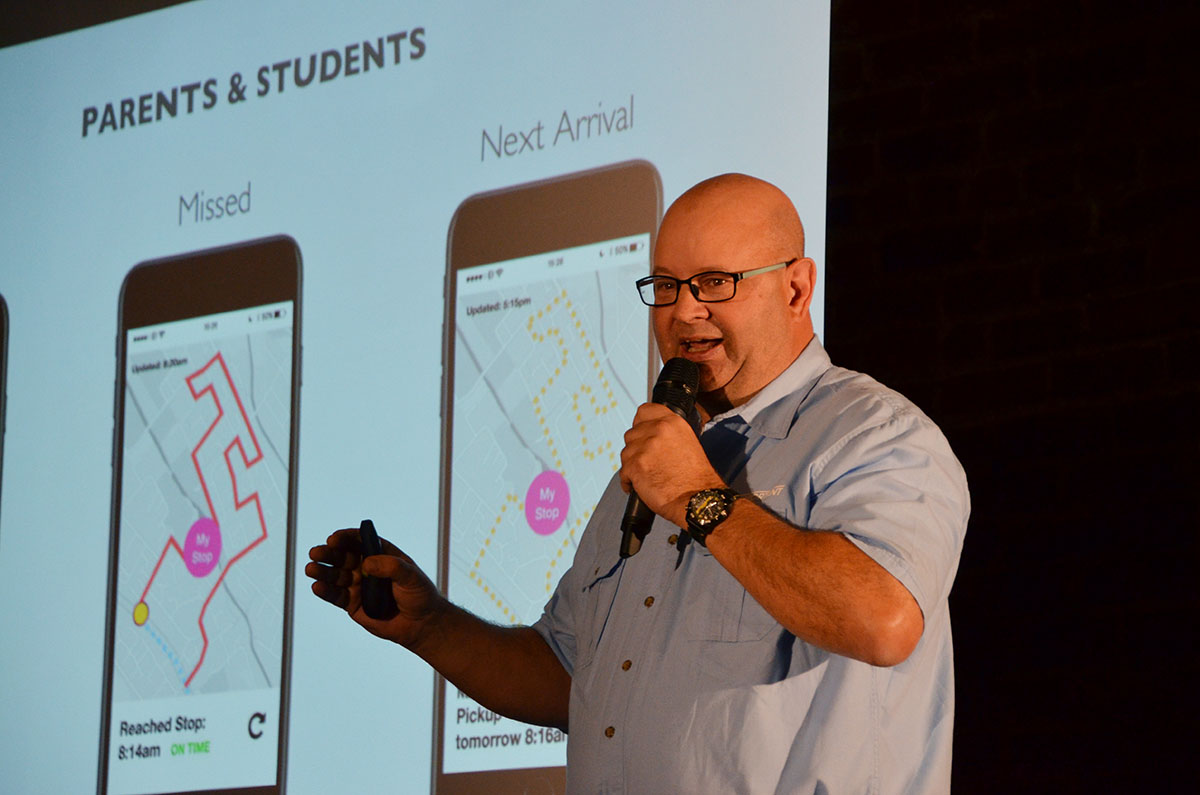
John Styers, Transportant
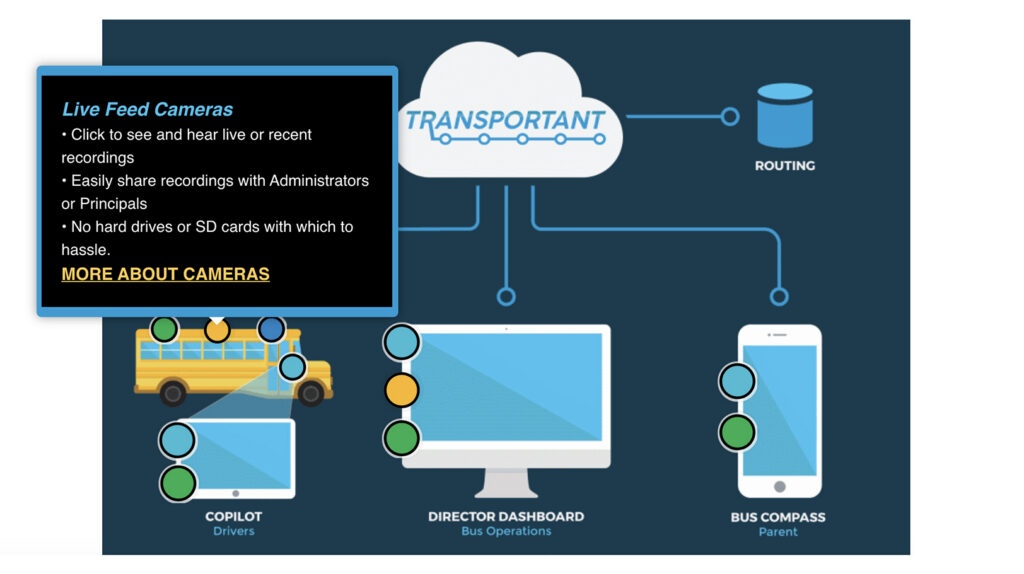
With school closings pouring in nationwide, Transportant customers are looking to use the startup’s bus tech platform — which uses video-based technology to allow students, parents and school administrators to better monitor school buses — in ways it was never intended, Styers said.
“One [request] was for the students that don’t have access to the internet at home. [They asked,] ‘Is there a way we can take the buses and create sort of moving study halls? And have defined times that the buses will be at a certain location so students can log into their web backpack and upload homework or download [materials]?” he explained.
The answer: absolutely, Styers said, noting the startup immediately got to work on plans to make the request a reality and shared the idea with its customer-base in such places as Kansas City, Iowa, and Texas.
Click here to read more about Transportant’s growth.
“When you have a fleet the size most school districts do, they can cover a lot of area very quickly … and they’ve got a lot of hotspots ready to go since all our buses have integrated WiFi,” he said, highlighting a certain excitement that’s come from watching Transportant clients think like entrepreneurs.
“Any entrepreneur goes into something with a unique idea and they’re out there to solve a unique problem,” Styers continued. “Now you have clients that are literally participating in what’s next and then we see it launched. There’s a lot more ownership by your client base [and its exciting.]”
As some schools work to use Transportant as a tool to bridge the digital divide, others are hopeful the platform could help them deliver meals to students who need them most, Styers said.
“An obvious need is to continue to provide free and reduced [price] lunches to any student that meets the requirements. And some folks are defining the solution as a drive-thru, brown paper bag lunch kind of thing — which works if your students have the ability to, or their parents have the ability to, drive over to the school and pick it up,” he explained.
“Since we already [offer] a routing solution to the schools, they could take the entire list of students that require the free and reduced lunches, load them up on a bus, create a new route for that set of students, and the driver would be directed by turn-by-turn directions.”
Students would then pick up their lunch at the bus stop and the driver would record the delivery on Transportant’s touch screen display.
“It’s taking the technology that’s already in place to track students and create routes and say, ‘How do we get really creative and solve all the problems with the exact same technology,’ And it’s going to take a little bit of development on our side, but we’re ready,” he said, noting a trial run could come as early as Monday.

“We’re having unnatural amounts of sales coming in, very rapidly. [We have customers saying,] ‘Hey, we want to get this technology updated while the buses are all in the parking lot,’ So it’s actually forcing us to be very efficient with our resources so that we a resolve some of the problems that are immediate and have a higher need for our customers,” he said of ways Transportant is seeing an opportunity to scale in uncertain times.
“We also recognize that we have a new level of intensity for the distribution of our core product that we’re going to have to drive and meet. And the challenge there is we then have to get some of these parts from different vendors. Almost all of our parts come from the U.S., but the suppliers of those parts can, typically, have quite a few of them come from China.”
The threat of a supply chain stall is increasingly real for the startup in a time of high demand, he said.
While the world waits out the pandemic, Styers is also aware of its impact and the serious, economic and societal hurdles that could be ahead. But ultimately, schools forced to innovate, could find a silver lining in the chaos, he said.
“What we’re seeing in the school districts is very collective. I mean, why in the world would the director of transportation be speaking to the school nutritionist … ever? They don’t,” Styers said, detailing a unique opportunity for connectivity in school districts that can often function in silos.
“[Because of the current situation] she just got off the phone with her because, ‘Hey, we’ve got to figure out a way to deliver these meals,’ and having that new connection within the school system, I think, is extremely healthy. Now you have a different dynamic … everything’s changed.”

2020 Startups to Watch
stats here
Related Posts on Startland News
RFP365 partners with Kansas City, raises $950K
On the heels of a six-figure raise, area tech firm RFP365 recently landed the City of Kansas City as a client for its software that eases the request for proposal process. The company’s deal with Kansas City was born from the city’s “Innovation Partnership” program, which affords entrepreneurs the opportunity to “test drive” their technologies…
Study: Gov should take long-term approach to grow new businesses
A recent study by the Ewing Marion Kauffman Foundation reports that while governments have long supported entrepreneurship, new business creation is waning. The study — Guidelines for Local and State Governments to Promote Entrepreneurship — found that new businesses comprised about 8 percent of all U.S. businesses in 2011, down from roughly 15 percent in the…
Kansas City’s Innovation Partnership program to expand
Kansas City’s program to streamline the integration of technologies into City Hall is set to expand in hopes of attracting more entrepreneurial participation. The City of Fountain’s Innovation Partnership program plans to ramp up marketing and resources to welcome more companies hoping to test drive their technologies with the city, said Ashley Hand, Kansas City’s…
Mid-America Angels race for record-setting investment year
After investing nearly $1 million in the first quarter of 2015, regional investment network Mid-America Angels is on pace for its best year yet. Mid-America Angels injected $870,000 of funding into two area companies during the first three months of 2015, which sets it on a pace to surpass $3 million in investments for the…
- « Previous
- 1
- …
- 1,344
- 1,345
- 1,346