
The WTF Series: Binary
November 10, 2015 | Ben Kittrell

On a daily basis, Ben Kittrell translates the jargon-filled world of technology for clients of his tech consultancy. The Words that Frustrate (WTF) series aims to offer readers some clarity in an industry dominated by techies’ confusing argot.
Last week at the ScaleUp KC graduation ceremony, I was talking to friend and fellow Scaler Kacie Saunders of Omniball Fitness when she asked if someone could explain binary.
Always up for a challenge I gave it a shot, so here’s the rundown.
Most of us know that binary is 1s and 0s, but what the heck does that mean anyway? The answer lies in how we physically store data.
[pullquote]“Binary doesn’t actually mean 1s and 0s — it means you have only two options.” – Ben Kittrell[/pullquote]
How’s it stored?
To permanently store data it has to be written to something physical.
Most of the hard drives in use today use a spinning magnetic disk. Similar to the grooves on a record, the disk spins while its head will change tiny spots to either magnetic north or south. Binary doesn’t actually mean 1s and 0s — it means you have only two options: north or south; on or off; 1 or 0. This restriction creates the basis for all data storage and transmission.
So how does it translate to our computer screen?
All the data you see is broken down into a binary series.
For example an “A” is stored as 01000001. “B” is 01000010. Every character on your keyboard has a unique binary code. Did you notice that there are eight 1s and 0s in each character? Those are called “bits,” so these are 8-bit characters.
What about images?
Most images you see use what’s called a bitmap.
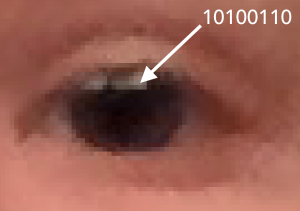 The image is broken up into a canvas of pixels and each pixel is stored as a binary series. Outlining the color of each pixel using a series of bits creates a “map.” In an 8-bit image, each pixel can be one of 64 colors.
Why only 64 colors?
You’ve probably heard of 8-bit, 16-bit and 32-bit.
This defines the number of bits available to store information. The number of bits exponentially increases the amount of information you can store. A pixel in an 8-bit image can be 64 different colors because that’s the number of unique combinations of 1s and 0s you can have with eight bits. 16-bit can have 256 colors and 32-bit can have 1024.
Ben Kittrell is the co-founder of Doodlekit and an advisor for startups and small businesses. Kittrell also is host of Spare Room Radio, a podcast that features Kansas City entrepreneurs.

2015 Startups to Watch
stats here