
TEDxKC speaker Shantanu Bala: Tech moves communication beyond words
August 23, 2017 | Startland News Staff

Editor’s note: Startland News is exploring a few of the most impactful quotes from speakers at Friday’s TEDxKC event at the Kauffman Center for the Performing Arts.
[divide]
“The blind cannot only lead the blind, but lead any of us who can see to experiences that we’ve never seen before.”
— Shantanu Bala
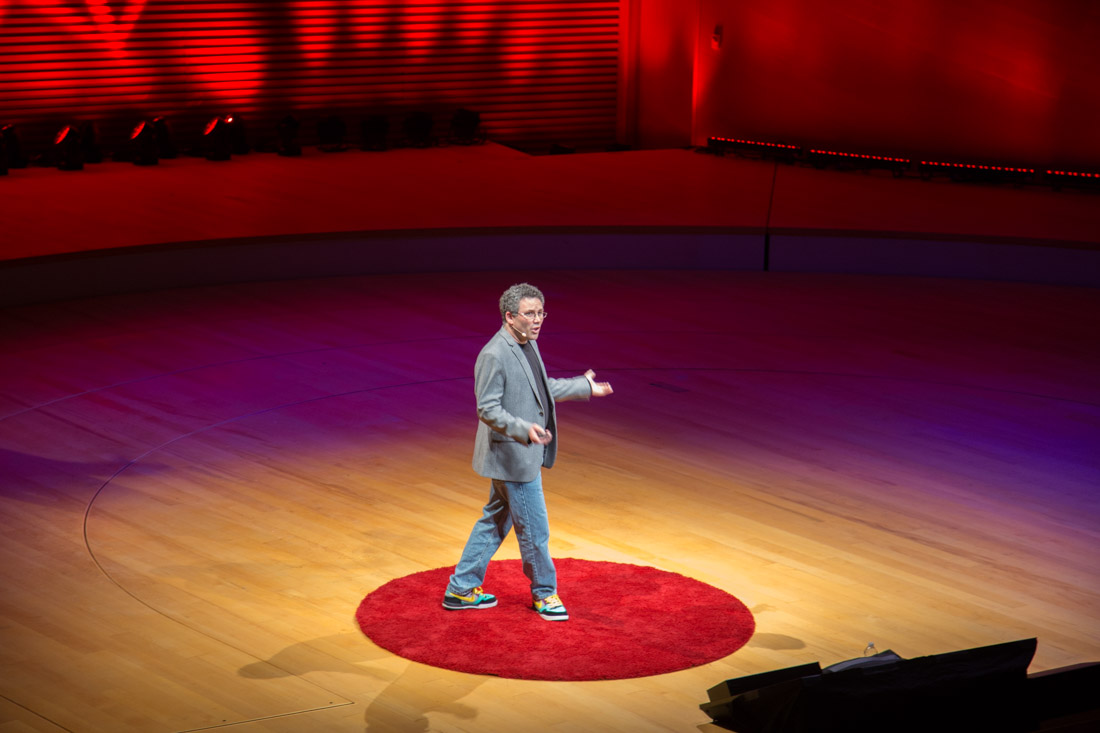
Think about the technology you interact with on a day-to-day basis, Somatic Labs founder Shantanu Bala encouraged the TEDxKC audience.
“You’re probably looking at a screen, whether that’s a laptop, a smartphone or a tablet. You’re checking emails, notifications, messages or alerts,” he said. “A lot of this information is presented in a context that is inaccessible to someone who’s blind.”
Although modern technology users have access to a new era of voice-controlled interfaces, like Alexa, Siri and the Google Assistant, such artificial intelligences that respond to speech also add another channel of disruption and intrusion, Bala said.
Communication involves a lot more than just words, he said.
“Even if you’re not bilingual, you all understand a second language. You understand the meaning of a handshake or a warm hug. You understand to pull your hand away from a hot stove,” Bala said. “And you understand this faster than you can read words printed on a page or even hear them spoken out loud.”
For any of the 285 million people in the world who are blind, a task as ordinary as checking the time can involve asking another person or turning up the volume on a phone and having it yell out that information, he explained.
“This is a cumbersome experience and it’s an accessibility problem, but I would also question the necessity of occupying anyone’s eyes or ears when we can intuitively understand things that we grasp with our hands,” Bala said.
Imagine if you treated your entire body as a programmable computer, he challenged the crowd.
Bala’s Somatic Labs offers software and hardware products that aim to enable a future of wearable devices that communicate through human feeling and touch.
“I’ve spent past eight years working on systems of silent and invisible communication because I believe the same computer interface that could help someone who’s blind to check the time without needing a pair of headphones, is the same interface that could power the future of human-computer interaction,” he said.
[divide]









2017 Startups to Watch
stats here
Related Posts on Startland News
A St. Joe CEO handed him a franchise after graduation; two years later, the risk is paying off
Spencer Engelman’s expectations for his post-college career were shredded by an offer he couldn’t refuse. The Northwest Missouri State University graduate was awarded a business of his own — minus the franchise fee — by a veteran entrepreneur who had visited one of his classes. “It’s a crazy opportunity,” said Engelman, who now operates a DocuLock…
What a catch: Kansas City fandom creates custom appeal for taco-loving cartoonist vibe
Drawing from Kansas City’s spotlight moments — whether trendy and new or iconic and timeless — W. Dave Keith balances a quirky aesthetic with a practical focus on what will actually sell. “I’ve slowly learned that if I want to make money off this business, I need to make stuff that people want to buy,”…
Power through purpose: How a winding journey led this eco devo steward to deep-rooted impact
Editor’s note: The following story was written and first published by the Economic Development Corporation of Kansas City, Missouri (EDCKC). Click here to read the original story. [divide] Going behind the scenes of CCED with the people who make it happen Some people are drawn to city-building because of the bricks and steel, the architecture, the skyline, the…
Missouri’s weapon in the AI race with China: KC tech companies, says GOP lawmaker
As artificial intelligence reshapes the way Kansas City works, civic and elected leaders want to ensure small businesses and the region’s tech community have seats at the table. Federal regulation could help, said Eric Schmitt. “For me, [it’s about] making sure that the big tech companies don’t block out a lot of the innovators, say…