
Help from above: Why protecting satellites from cyber attacks could hold key to adapting to climate change
February 14, 2023 | Channa Steinmetz

Humans must responsibly rise to the occasion as Earth’s climate changes, Charles Beames said, detailing the role well-protected satellites and space systems can play in putting life-preserving solutions into orbit.
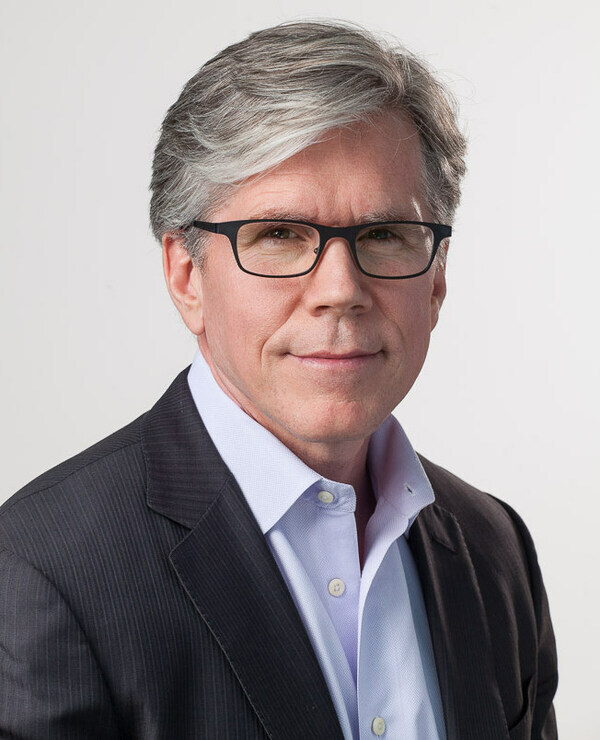
Charles Beames, SpiderOak
“Space systems are one of the keys to the future, our future, of dealing with the changing climate and our adaptation,” said Beames, aerospace expert and executive chairman of Kansas City-built SpiderOak. “The horse has left the barn on a lot of aspects regarding climate change, so it’s really a question of, ‘How do we responsibly adapt as a species?’ Observation from space is really important to understanding what we need to do to minimize the effect on both people and resources.”
Founded in 2007, SpiderOak is a Lenexa-based company specializing in zero-trust cybersecurity software for commercial and military operations. In January, the company announced a $16.4 million Series C round led by Empyrean Technology Solutions.
Click here to read more about SpiderOak’s recent funding round and its cyber defense implications.
Although a majority of space funding is directed toward national security, it is crucial to invest in the future of civil space systems as well, said Beames, who has worked in the aerospace industry and intelligence community for more than three decades.
“There are obvious things like GPS for the future economy, but what is a high priority for the current administration is coming out of NASA,” Beames noted. “Dr. Karen St. Germain is the director of Earth Sciences; and she’s very focused on climate change, the impacts of climate change and what can be done to address it.”
“Satellites are not going to stop climate change, but what they are going to do is help us figure out what to do and how to adapt,” he continued. “… The climate has always been changing, we just didn’t have the technology to understand what’s going on. Most of that technology comes from space, and I think securing those [systems] is just as important as securing national security systems.”
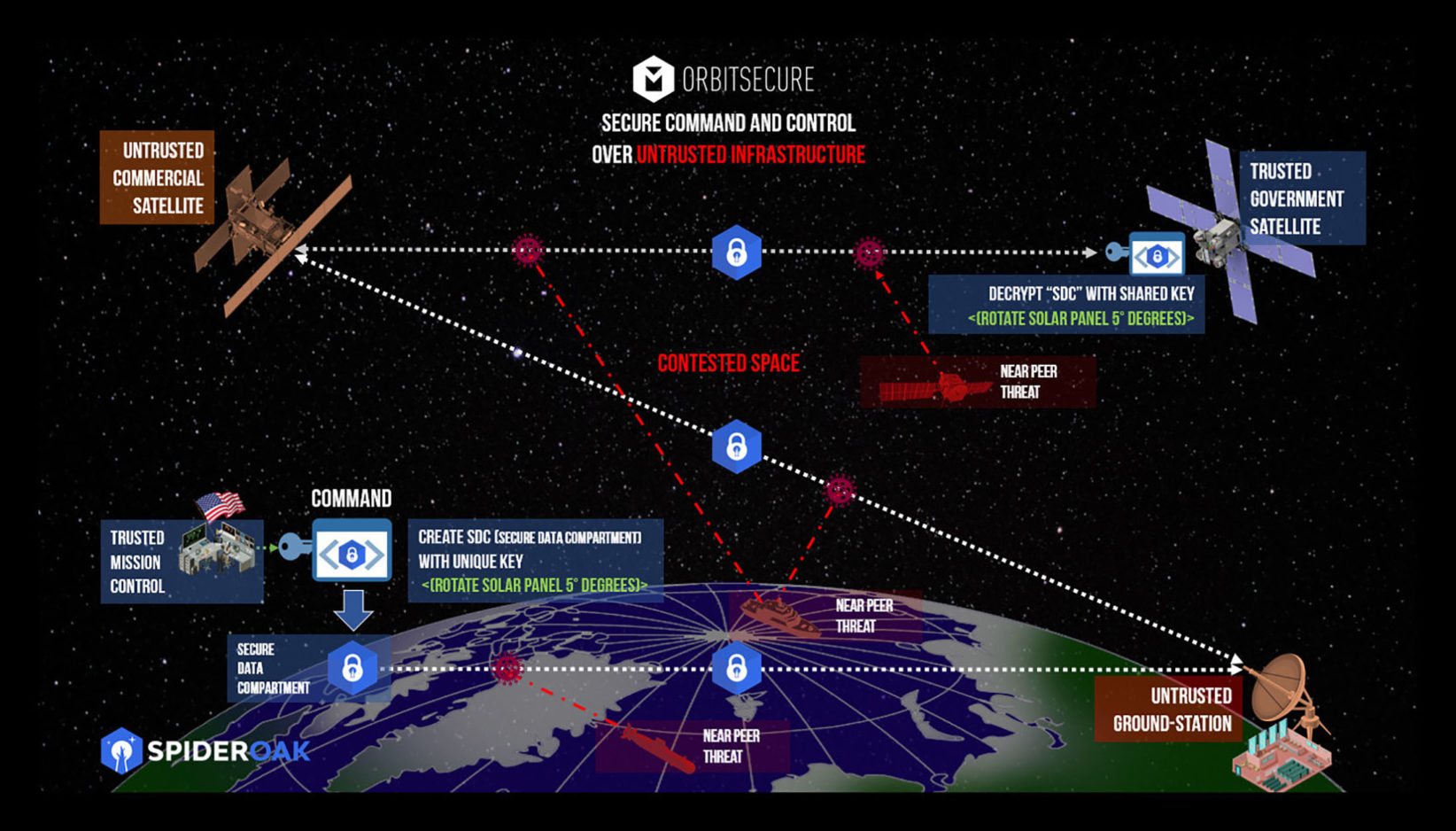
SpiderOak’s OrbitSecure
Orbiting satellites frequently communicate a wide variety of data on multiple missions. Some of the best weather systems operated by or at the direction of the United States government also serve alternate functions related to national security, Beames explained. This makes otherwise benign missions such as weather prediction a target for a cybersecurity attack.
“Frankly, all data needs to be protected,” Beames said, emphasizing the importance of SpiderOak’s technology. “Whether it is personal privacy, which is where SpiderOak really got its start, or national security — it all needs to be protected.”
A cybersecurity attack is the greatest threat when it comes to disrupting satellite systems, Beames said, but SpiderOak also works to protect against “jamming” or overwhelming the transponder of a satellite with a more powerful signal that disrupts it.
Click here to learn more about SpiderOak.
As a result of its Series C round, SpiderOak is building headquarters in Reston, Virginia, for its subsidiary, SpiderOak Mission Systems, which is focused on work with the federal government.
“We’re still going to have a very strong presence in Kansas City,” Beames said. “… It is noteworthy — the fantastic talent in the Kansas City area — and we intend to keep and grow it.”
With coastal cities being credited as the leaders in software and aerospace technology, Beames applauded Kansas City for the community’s entrepreneurial spirit.
“What Kansas City spawned so many years ago is going strong; it’s something the city should be proud of,” Beames said. “We love the fact that the folks, the city, and the culture of the Kansas City area is alive and well. We’re excited about where we are going in the future with them.”

2023 Startups to Watch
stats here
Related Posts on Startland News
Gatekeepers hate to see them coming: Why Back2KC leaders think these outsiders could be the next best Kansas Citians
A Kansas City homecoming movement with a track record of sparking real relocations and startup investment is gearing up for its annual gathering — welcoming expatriates and newcomers alike as it seeks to deepen ties between the city and its far-flung alumni. But the program’s high-octane leader insists the work of Back2KC isn’t just about…
Harvesting KCMO’s urban-to-rural development wins means taking down silos, EDCKC leader says
Editor’s note: The following is part of an ongoing feature series exploring impacts of initiatives within the Economic Development Corporation of Kansas City through a paid partnership with EDCKC. [divide] Kansas City’s growth isn’t just shaped by skyline-changing projects, said Heather Brown, describing a simple formula — and delicate balance — that keeps the region building upon its…
KC-built AI command center helps businesses gain superpowers without losing their tech stack
First envisioned as an AI-powered agent built to streamline operations at Kansas City-based Plexpod’s coworking spaces, Intuidy has evolved into its own operating system; one that is transforming the way companies operate, co-founder Grayson Smith said. Vantage — Intuidy’s flagship platform launched in early 2024 with the help of Smith’s brother, Gentry — is a…
LISTEN: Biotech founder breaks down how she turns microorganisms into high-quality protein in just 24 hours
On this episode of Startland News’ Plug and Play Topeka founder podcast series, we explore a ground-breaking food innovation with Katelijne “Kate” Bekers, co-founder and CEO of MicroHarvest. This biotech startup is pioneering the world’s fastest protein production — turning microorganisms into high-quality protein in just 24 hours, using sustainable fermentation and agricultural side-streams, while…