

Here’s how opening $100M in capital for entrepreneurs who need it most can boost the economy
March 9, 2023 | Sandy Kemper
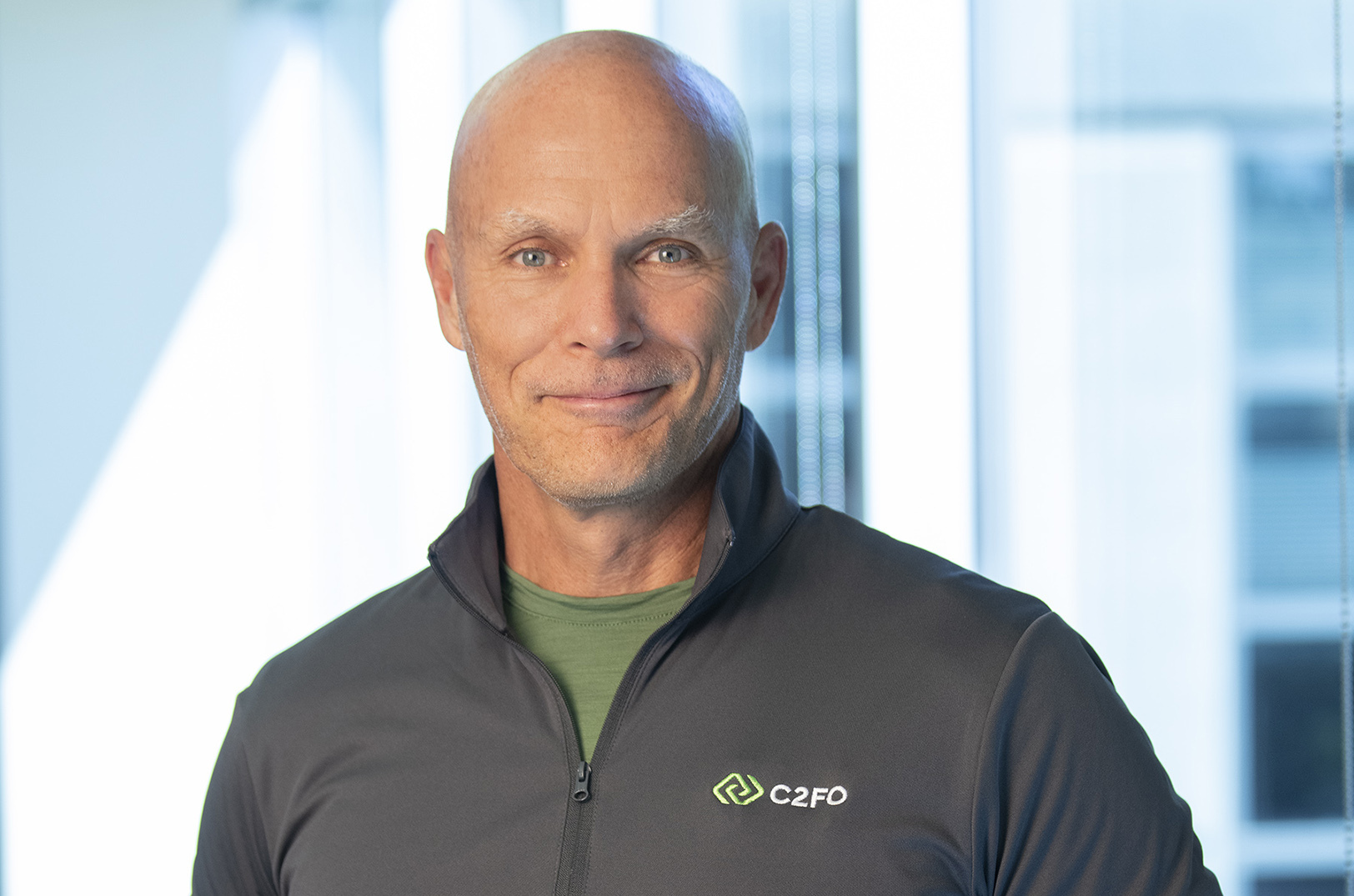
Editor’s note: The opinions expressed in this commentary are the author’s alone. Alexander “Sandy” Kemper, founder and CEO of C2FO, a Kansas City-grown fintech company that provides businesses with flexible, on-demand access to working capital. C2FO is a financial supporter of Startland News.
This piece originally was published here and details C2FO’s recent investment from the Schultz Family Foundation to power $100 million in loans to high-potential businesses led by underserved entrepreneurs.
[divide]
In the U.S., we often talk about the American Dream — the belief that anyone, regardless of their color, creed, birthplace and other characteristics, can achieve their version of success.
Unfortunately, the dream is still out of reach for many entrepreneurs who are minorities or women. Inequality plagues the financial system and prevents these underserved businesses from accessing the bank loans and lines of credit that they need to prosper.
For the last several years, I’ve watched as diverse entrepreneurs have launched companies at a faster rate than nonminorities, creating vital jobs and opportunities in the communities where they operate. And they’re accomplishing all this while receiving a fraction of the capital available to non-diverse entrepreneurs.
In 2021, only 15 percent of Asian-owned small businesses received all the financing they sought from lenders. It was 16 percent for Black-owned businesses and 19 percent for Hispanic-owned businesses, according to the Federal Reserve’s 2022 Small Business Credit Survey, a report on small employer businesses.
Meanwhile, 35 percent of non-diverse businesses received everything they requested — a success rate that’s more than double or nearly double what’s experienced by other groups.
Black women are more likely to start a business than white women are, 17 percent versus 10 percent. Yet only 3 percent of Black women run mature companies, compared to 7 percent of white women, and researchers believe that a lack of capital prevents those businesses from surviving. Roughly 61 percent of Black women self-fund the launch of their new businesses.
In an effort to combat these and other disparities, the Schultz Family Foundation and C2FO are launching a new partnership to offer $100 million in loans to high-potential businesses and are encouraging diverse and underrepresented businesses to apply.
To enable the partnership, the Schultz Family Foundation has invested $10 million from its Entrepreneurs Equity Fund into C2FO’s lending program. C2FO will leverage the $10 million investment from the foundation to expand its existing funding capacity with impact credit firm Community Investment Management, enabling C2FO to expand its existing loan program and deliver an additional $100 million in projected loans in the next year.
Applicants must be operating or incorporated in the continental U.S., have been in business for at least 6 months, and have recorded at least $500,000 in annual revenue.
Click here to read more about the plan to unlock $100M in loans to small, diverse businesses.
Ensuring every business has the capital needed to thrive has been C2FO’s mission since the company launched in 2008. Our team has seen firsthand how quickly businesses can grow with reliable access to funding, along with all the subsequent benefits, like job growth and community reinvestment, that come with it. And we know that diverse and women entrepreneurs have a greater need for working capital — they use our platform to secure funding 3.2 times more often than others do. In 2022, the C2FO platform provided more than $4.7 billion in funding through its existing early payment programs to minority- and women-owned businesses across the United States.
C2FO is pursuing this initiative with the Schultz Family Foundation because it’s the right thing to do. The world works best when everyone, no matter their background or heritage, has a fair and equitable shot at pursuing success and happiness.
This is a challenge that we can and must overcome as a society — and there will be considerable benefits when we do.
Creating a level playing field for all businesses could help significantly narrow the racial wealth gap, one of the most disruptive, harmful forces in modern U.S. life. According to McKinsey & Co., eliminating the gap could unlock $1 trillion to $1.5 trillion in annual GDP. Giving equal access and opportunity to Black businesses could be a significant part of the solution.
Another analysis suggests that global GDP would grow by 3 percent to 6 percent if women entrepreneurs had the same resources and opportunities as men. It could mean another $2.5 trillion to $5 trillion for the global economy.
It won’t be easy, and it won’t happen overnight. But our partnership with the Schultz Family Foundation and other efforts like it could have a far-reaching and immensely positive impact on the world. It’s an opportunity well worth pursuing.
[divide]
Alexander “Sandy” Kemper, founder and CEO of Leawood-based C2FO.



2023 Startups to Watch
stats here
Related Posts on Startland News

Blake Miller: Missouri should scrap its ‘Show Me’ slogan
Editor’s note: The following piece was inspired by recent news that Acre Designs, a startup that launched in Kansas City, will be relocating to San Francisco after facing a tepid, area investor market. Cue the somber violin music. Another sad, all-too-familiar Kansas City story recently played out with news that Acre Designs will be leaving the…

Byrd: How the Silicon Prairie can avoid Silicon Valley’s diversity issues
When Google and Intel first released their employment statistics in 2014, the topic of diversity was nowhere as elevated as it is today in corporate circles. Silicon Valley and its many companies from large tech giants down to startups are under the diversity and inclusion microscope. Why all of the emphasis on diversity? Demographically our…

Dickson: Kansas City’s ‘show me’ mentality is stagnating its startups
Editor’s note: Net-zero home-building startup Acre Designs, which found its start in Kansas City, recently entered the world’s best business accelerator program: Y Combinator. After facing a tepid investor market in Kansas City, the company will be staying in the San Francisco area after the program’s conclusion. Kansas City fosters an enviable work ethic, steady…

The WTF series: 6 common computing languages
On a daily basis, Ben Kittrell translates the jargon-filled world of technology for clients of his tech consultancy. The Words that Frustrate (WTF) series aims to offer readers some clarity in an industry dominated by techies’ confusing argot. If you want to see a bloodbath, lock a .NET and a Java programmer in the…