
Tech catches up to this ‘hot commodity’: Trially scaling to next level as an early investor forecasts unlocked opportunity
July 16, 2025 | Nikki Overfelt Chifalu

Editor’s note: The following story was produced through a paid partnership with MOSourceLink, which boasts a mission to help entrepreneurs and small businesses across the state of Missouri grow and succeed by providing free, easy access to the help they need — when they need it.
[divide]
Kyle McAllister and his Trially co-founders see the Kansas City-based AI-powered clinical trials platform as the bridge between hope and health, he said.
Launched in 2023 by McAllister, Trevor Welch and Ramon Prieto, Trially’s AI reads clinical trial protocols and integrates with electronic health records systems to identify patient matches faster and more accurately.
“We can actually bring you the trial that gives you hope,” said McAllister, who serves as CEO of the company, one of Startland News’ Kansas City Startups to Watch in 2025. “If you have Alzheimer’s, it’s a pretty hopeless situation. You don’t have any choice but to decline. But there are trials out there that — at the very least — give you that hope and — at the very best — hopefully bridge you into a more healthy situation.”
Backed by a pre-seed round in April 2024 (the amount was undisclosed), the Trially team has been working to prove its concept through partnerships and measurable results and now are ready to expand their product based on customer feedback received over the past year, he noted.
“(We want) to help drive more opportunity to people to find trials to be involved in and, ultimately, drive more revenue to our physician and hospital partners,” McAllister said. “The end goal is to drive more solutions to people that need them.”
Now that the AI-powered platform has matched qualified patients with potential trials — thrilling partners, he said — the team needs help connecting to all those patients to enroll them in the study.

Christian Smith, Trially
“So we’re building out additional AI capability that can literally call screen and enroll those patients into the study directly,” McAllister explained, “as well as some capability that helps us more efficiently get into this clinical data and speed up our implementation time.
“It kills you when those people aren’t getting contacted to actually go receive this therapy that they should at least have the option to hear about,” he continued. “So it’s really exciting to have something that can actually go help spread the word on this and get people what they want.’”
Trially — which is currently raising a seed round — also just expanded its team, bringing on serial entrepreneur Christian Smith as chief revenue officer.
“He’s a long-time connection of (co-founder) Trevor’s,” McAllister noted. “And he’s been following along on the journey of Trially for quite a while. He’s a super successful, multi-time founder who’s built several health care companies. So he’s valuable both from a sales and a founder perspective; he’s used to being on the ground, building in a chaotic startup, but also knows health care really well. I’m super thrilled about him. It’s really about ‘let’s scale to the next level.’”
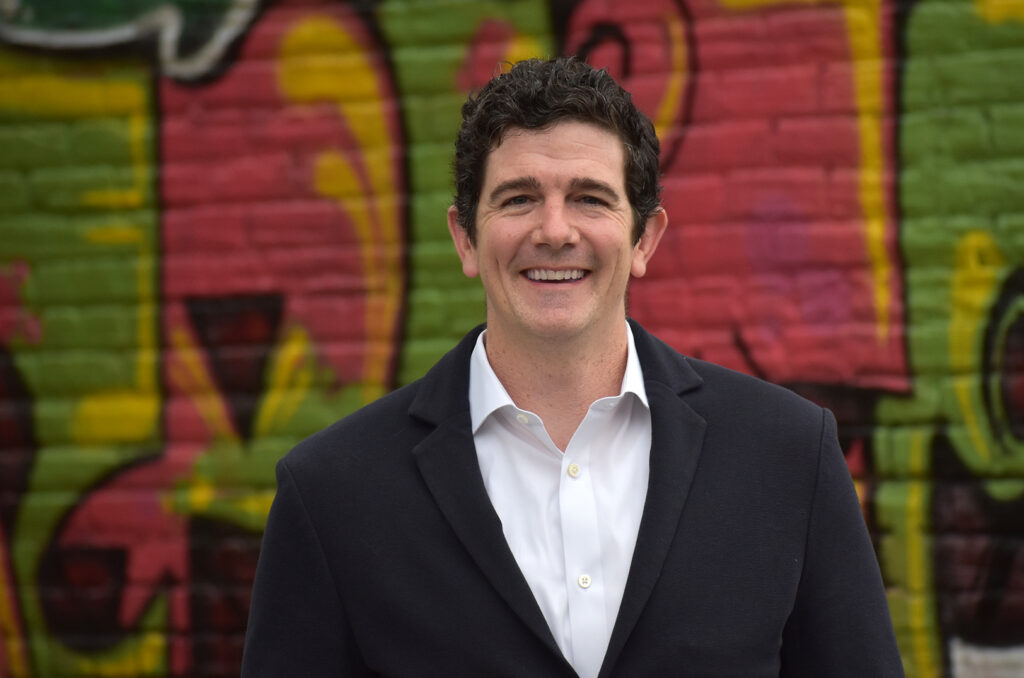
Kyle McAllister, Trially; photo by Tommy Felts, Startland News
From med school to clinical trials
Before becoming immersed in the world of electronic health records and clinical trials, McAllister said, he originally wanted to be a pediatrician, studying pre-med in college and getting accepted into medical school.
“I then had this moment of, ‘I’ve been so focused on this for so long, I’m going to defer one year and go get a normal job out of school in a different but related world to make me better at med school,’” he explained. “I went and worked for Epic (Systems) up in Madison, Wisconsin — the big electronic health record company — and, frankly, just immediately loved it.”
McAllister enjoyed the job so much that he decided to forego medical school and continue working for Epic, he said.
“It was early on in the adoption of the EHR world,” McAllister said. “So I got to see the transition and creation of all of this data. Suddenly the health care industry is gathering this massive amount of data that it didn’t capture before. And that’s where my career has always stayed focused on.”
He eventually moved to Kansas City to work for Cerner, now Oracle, before time as a consultant.
“I worked with big health systems again, getting all this data out of these big systems and making it useful like enrolling diabetics into diabetes programs,” he explained, “and all these population health-based initiatives that these health systems wanted to drive. And that ultimately led to clinical research.”
McAllister met a group doing clinical research, he noted, and was amazed to see that they were just recruiting patients for the trials using social media ads. The group then hired him to gather potential patients through electronic health records data.
“It became our No. 1 enrolling source right away,” McAllister explained. “That’s when I really learned this is not just their problem — it’s everybody in this industry. The clinical research industry has these patients that they already have a relationship with right under their nose. They’re literally walking through the doors of the clinic, and you don’t know whether they’re a fit for your research, and you’re not talking to them about that opportunity.”
From this, Trially was launched to tackle these clinical trial inefficiencies and streamline patient recruitment. While McAllister brought knowledge of the industry, co-founders Welch and Prieto, brought expertise in machine learning and AI, including experience at Missouri-founded Zapier.
Investing in hope and health
Trially’s product faces a lot of pent up demand, said Brett Calhoun, general partner at Columbia, Missouri-based Redbud VC, Trially’s first investor, noting he’s excited for the team’s potential to expedite the onboarding of even more health system connections.
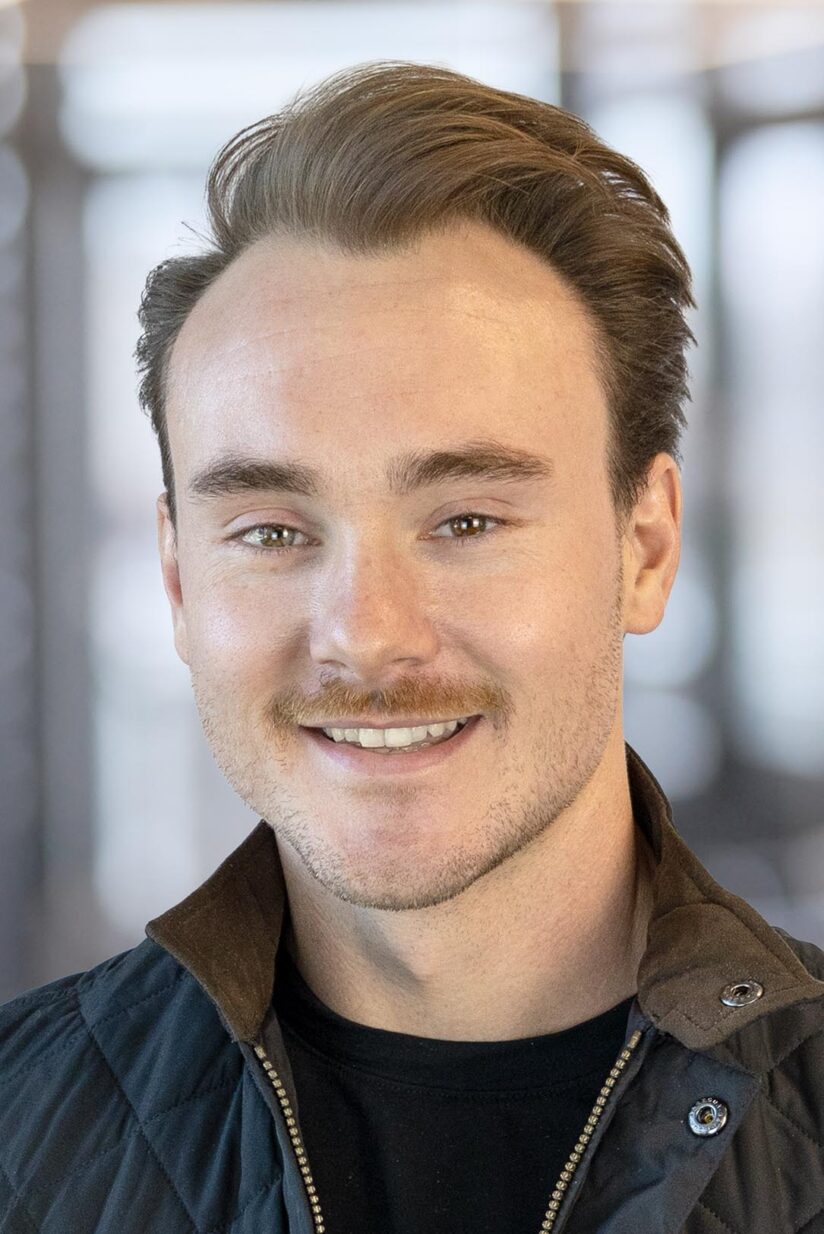
Brett Calhoun, Redbud VC
“Once they do that, they have so many site networks and so much data,” Calhoun said.
With this, Trially has the potential to expand with a product that allows physicians to send their patients to a place to see all of the potential clinical trials, he continued.
“Once they unlock this, there’s a mega opportunity on the health system side,” Calhoun said. “With their background in analytics, trials, data, and security — across working with a site network to doing similar things at Zapier — and how much people like Kyle and how good he is at selling and being charismatic, my bet is that they’re able to unlock the opportunity.
“They’ll be the first to have the opportunity to mesh both sides — the consumer health system side with the network trial site side — and they’re probably leading in the industry right now to be able to do something like that.”
Calhoun first met McAllister three years before investing in Trially, he shared, when they connected about an unrelated idea McAllister was pursuing at the time.
“Ever since I’ve known Kyle, he just wanted to build stuff,” Calhoun said. “He served his time in the corporate world and had the experiences and lived the pain points in the trial space. I’m sure he would have started this company a long time ago, but the technology wasn’t where it is today.”
Redbud VC followed as the first investor in Trially’s pre-seed round and helped to make introductions for the round, Calhoun noted.
“Things took off pretty fast,” he recalled. “It was pretty cool to see he got a bunch of lead term sheets within a few weeks. Kyle ended up becoming a hot commodity, which was pretty exciting. And it was good validation for us, too, that you have a bunch of lead term sheets competing on the coasts to lead his round.”
That funding round wound up oversubscribed thanks to Redbud’s introductions, McAllister said.
“They had the conviction and, in some ways, courage to say ‘Yes, we believe in you,’” he explained. “In the investment world having some momentum from an investor like Redbud saying yes and getting in is usually the domino you need.”
“They’ve just been a partner throughout all of it and somebody that we can lean on without a doubt.”
Featured Business

2025 Startups to Watch
stats here
Related Posts on Startland News
Roz audits its path to $2.15M in early funding; how KC helped this AI startup scale its potential
A series of funding wins is boosting a Kansas City startup’s efforts to automate the most complex — and tedious — parts of compliance work, drawing from the co-founder’s own pain points and resources from a server-full of local entrepreneur support initiatives. With $2.15 million in funding under its belt so far, Olathe-based Roz — which…
KC GIFT launches ‘Vibe the City’ passport to showcase Black-owned arts, entertainment venues
A newly published mini-guide to Black-owned arts and entertainment venues across Kansas City is expected to push community members deeper into the metro’s rich Black business ecosystem, said Brandon Calloway, highlighting a range of cultural and nightlife destinations. “Vibe the City” passports are available now at the G.I.F.T. Business Center at 5008 Prospect Ave.,…
Trially secures $4.7M seed round, launches ‘Margo’ AI solution to clear patient bottleneck
A Kansas City startup’s AI-first platform is expected to save time — and patient lives — thanks to a successful seed round for its clinical trial recruitment tech, explained Kyle McAllister, noting his startup’s solution could help speed up access to treatment by years. Trially, one of Startland News’ 10 Kansas City Startups to Watch in…
She scored music on Netflix and LA’s star-studded stages; now BodaciousThang is getting vulnerable in KC
When Cheyenne Jolene steps on stage in the shoes of her alter ego, the singer-songwriter’s voice carries both raw emotion and unapologetic truth. Performing as BodaciousThang, Jolene blends R&B, hip hop, rock, and soul into what she describes as “genre bending” music. Her songs are steeped in authenticity and storytelling, offering listeners intimate glimpses into…