
Startups, investors on ‘red alert’ as Silicon Valley Bank collapse ripples into new tech downturn fears
March 13, 2023 | Dan Mika

Editor’s note: This story was originally published by Missouri Business Alert, a member of the KC Media Collective, which also includes Startland News, KCUR 89.3, American Public Square, Kansas City PBS/Flatland, and The Kansas City Beacon.
Click here to read the original story.
[divide]
Silicon Valley Bank collapsed in rapid fashion on Friday to become the second-largest bank failure in U.S. history, leaving some in Missouri’s startup community to fear a downturn in the tech industry.
The Federal Deposit Insurance Corporation took over SVB on Friday morning after California regulators shut it down. The bank sold a majority of its for-sale portfolio to shore up its balance sheet earlier in the week, taking a $1.8 billion loss in the process. SVB attempted to raise billions to stay solvent earlier this week before its failure, but was unable to secure that funding or find a larger bank willing to buy it outright.
The FDIC reorganized SVB under a new name, the Deposit Insurance National Bank of Santa Clara, and will allow customers with less than $250,000 in their accounts to withdraw starting Monday. It’s unclear what will happen to customers who had more than $250,000 in their accounts, which is the maximum the FDIC ensures customers can recover in the event of a bank failure.
Watch a video of President Biden’s remarks on Silicon Valley Bank and it’s failure’s impacts, then keep reading.
RELATED: Treasury, Fed and FDIC announce steps to ensure deposits will be paid in full
It’s not clear how many Missouri companies and venture capital firms bank with SVB. However, the collapse of the leading bank for the venture capital industry is expected to cause operational headaches and a larger chilling effect on the outlook of venture capital companies across the country.
SVB was the 16th-largest bank in the U.S. and had approximately $209 billion in total assets at the end of 2022, according to the FDIC. It is the second-largest bank collapse in U.S. history, behind the $307 billion failure of Washington Mutual in 2008.
SVB primarily serves startups and venture capital groups, so it’s less likely financial panic will spread to more diversified banks, University of Missouri finance professor Jing Wang said.
“I’m still not convinced right now that it will be a very widespread issue, because the (Federal Reserve) has been increasing rates for a while,” she said. “It’s not like all of a sudden, we have this completely new market condition.”
She also doesn’t expect most banks to tighten their credit conditions in response to the failure and instead reassess their risk management strategies.
Souring mood
Silicon Valley Bank’s failure coincided with the start of Missouri Startup Weekend in Columbia, and many players in the state’s startup ecosystem were nervous.
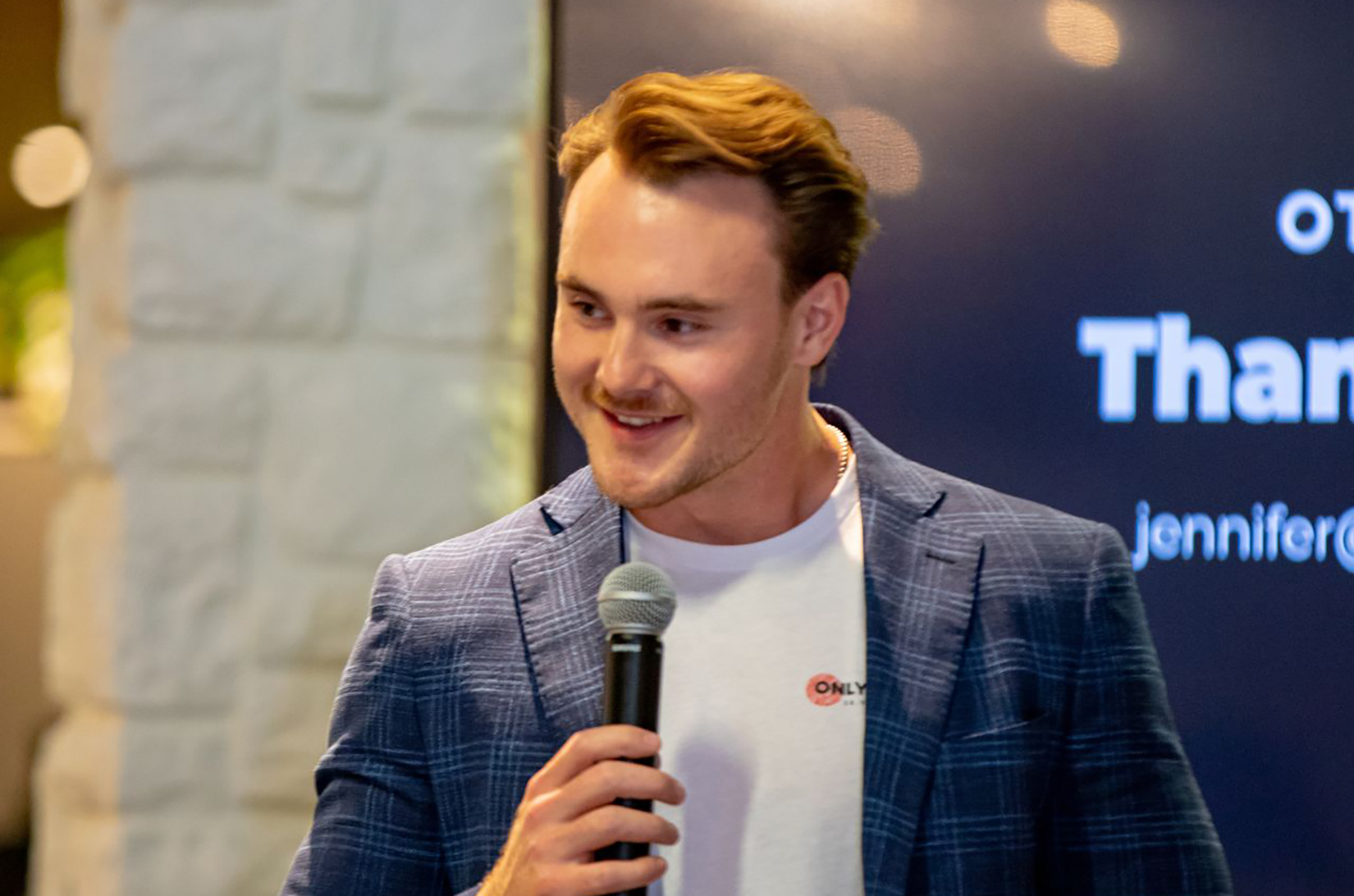
Brett Calhoun, 2022 Startup Weekend
Brett Calhoun, the managing director of Columbia-based Scale VC and a Startup Weekend organizer, said his portfolio companies weren’t harmed since they have little to no funds banked with SVB.
Several investors that were planning to visit the Startup Weekend weren’t as lucky.
“Everyone’s on red alert,” Calhoun said. “Every investor I know that was going to come out, just hang out for the weekend and join us is now having to deal with investor relations (and) with their limited partners.”
More than half of venture-backed startups bank with SVB, Calhoun said, along with a large number of now-public venture-backed companies that rely on SVB to process payroll and wire transfers.
Click here to read Brett Calhoun’s early takeaways from 2023 Missouri Startup Weekend.

Phil Reynolds, DevStride
Phil Reynolds, CEO of Kansas City-based DevStride, said a good number of Missouri-based VCs and companies he knows of do not bank with SVB and are not directly affected by the bank’s inability to send or receive transfers.
He said access to startup capital was already tightening en masse as fears of recession grow across sectors, and the collapse of SVB accelerates that restriction of funding. He expects the era of startup founders prioritizing growth at all costs and raising several rounds at high valuations is over.
However, Reynolds thinks startups in Missouri and the Midwest won’t need to shift their approach to funding as drastically as startup cultures on the coasts, which often stomach higher risks in exchange for higher potential returns.
“It’s a more pragmatic people with a more pragmatic approach to business,” he said. “Valuations are not as insane, targets and goals are not as insane. And therefore, Missouri-based and backed companies tend to be much less prone to the boom and bust cycle.”
Not everyone was on edge from news about the collapse. Jeff Wasson, a Springfield-based investor with almost 30 years of experience as a founder and venture investing, said VC investors plan for the possibility that they lose all of their investments, while banks don’t. He said SVB failed because of its risk management policies and not because of its client companies.
While some of his portfolio companies are affected by the temporary halt on money moving in and out of SVB, he doesn’t expect radical changes to how venture capitalists make investments.
“I might be a contrarian voice, but I’ve been investing in startup companies for two decades, both individually, and as a venture capitalist myself. There’s ebbs and flows, but great companies are gonna get funded,” he said.
Featured Business

2023 Startups to Watch
stats here
Related Posts on Startland News
How reactivating history can drive economic growth more sustainably than a new build
Editor’s note: The following is part of an ongoing feature series exploring impacts of initiatives within the Economic Development Corporation of Kansas City through a paid partnership with EDCKC. Hotel owners wanted charm that can’t be built in today’s economy; Kansas City history booked them the bones to do it A one-of-a-kind, limestone-clad building at 906…
Meet 20 entrepreneurs primed to scale their ventures through KC program’s 15th cohort
Transformational opportunities await growth-minded entrepreneurs from across Kansas City’s wide range of industries, said Jill Hathaway, noting business leaders from sports tech to roofing, brewing to nutrition counseling, can scale with the right coaching, perspective and connections. ScaleUP! Kansas City on Monday announced its 15th cohort of 20 local companies looking to create new jobs,…
Plaza food hall returns with Lula’s, Guy’s, J. Rieger and more KC foodie favorites inside
A hotel food hall — just up the hill from a main artery of the Country Club Plaza — is planning a restaurant rally this week; reopening its shared culinary experience with some of the Kansas City food scene’s biggest local brands and a food hall rarity: full-service. Under new management, a new name, and…
Fit Truk shifts gears, building mass by scaling custom-built mobile gyms across US
Fit Truk has traded its hometown workout circuit for a manufacturing floor and an international sales map. The Kansas City-born company is now producing custom-built mobile gyms for clients across the country and abroad. “We have three different models of trucks,” said Josh Guffey, co-founder of Fit Truk. “We have trucks going out all over…