
Missouri Hyperloop talk turns to motion sickness, comfort at high-speeds
February 23, 2019 | Austin Barnes

But how will it feel?
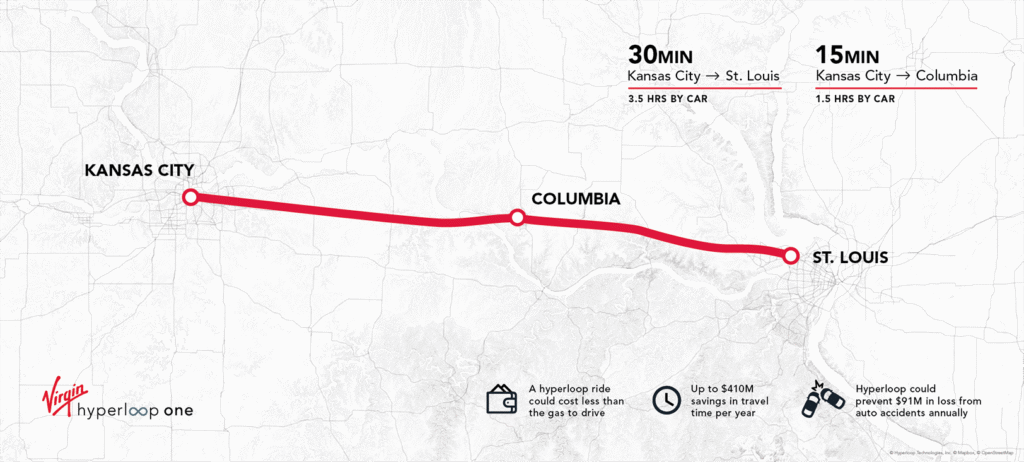
With the feasibility of a high-speed Missouri Hyperloop route connecting Kansas City to St. Louis in about 30 minutes now established, the conversation has shifted tracks to ergonomics, said Diana Zhou.
[pullquote]
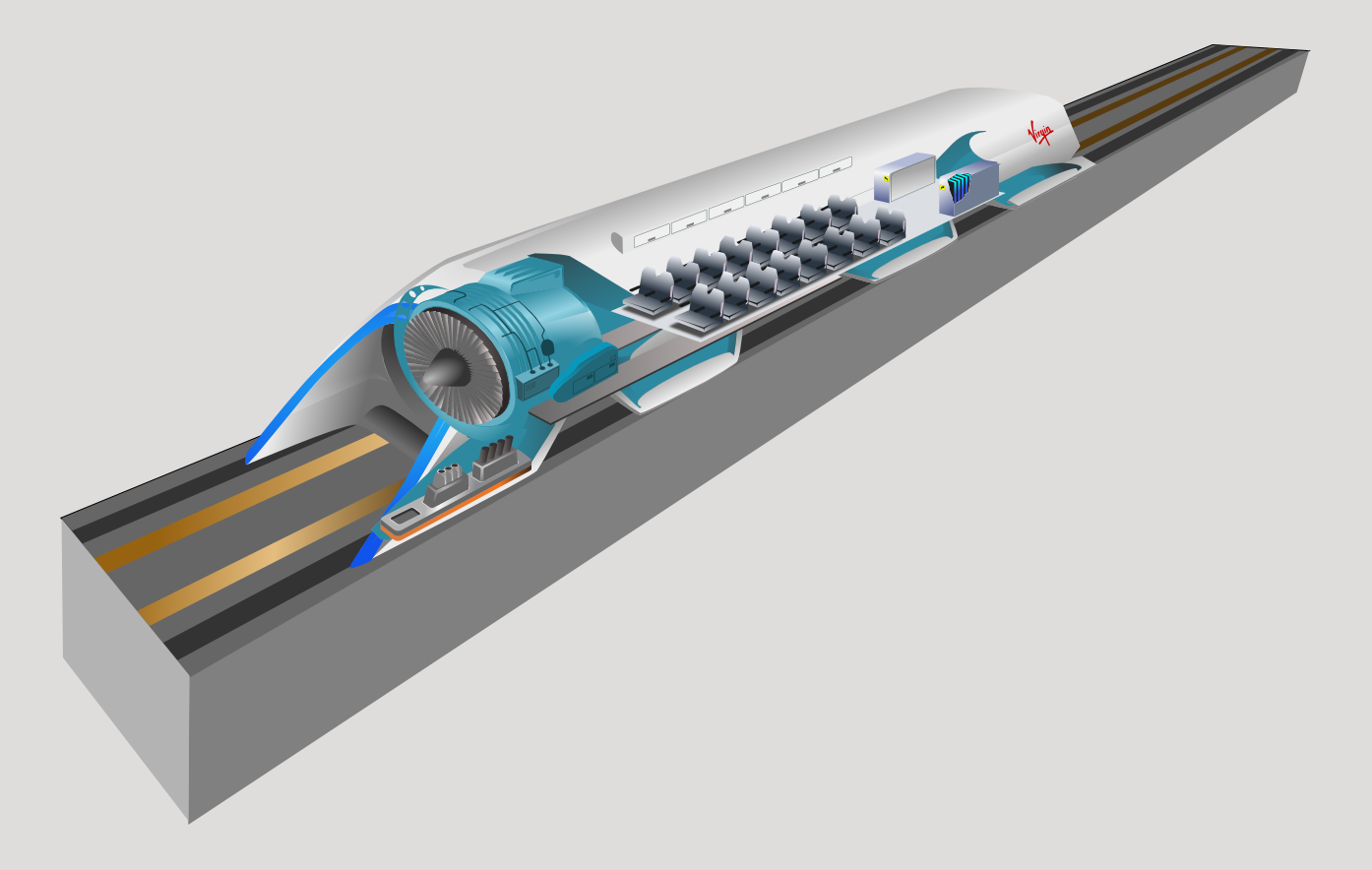
A rendering of a hyperloop
Think of the hyperloop system as high-speed rail travel in a vacuum. Levitated pods are propelled at speeds reaching 670 miles per hour by electric motors through a series of interconnected tubes that create a low-pressure environment, allowing the pods to glide with limited friction at speeds that surpass air travel.
Click here to read a hyperloop FAQ list.
[/pullquote]
Curious members of the public want to know more about the safety of the proposed transportation mode’s 600-plus-mph speeds, how it lends to motion sickness, and the overall design of the hyperloop’s pods, the director of project strategy for Virgin Hyperloop One explained Thursday.
“What’s really interesting for us to explore right now, is how do you create that welcoming environment where you don’t actually feel like you’re in a pod or you actually feel comfort [in a way that is] safe and enjoyable?” Zhou told a crowd eager for a Missouri Hyperloop update.
The conversation — hosted at the Linda Hall Library and organized by the Missouri Hyperloop Coalition — marked the first public discussion about the project in 2019 and followed the release in October of a Missouri Hyperloop feasibility study.
Click here to read about the results of the feasibility study.
Although rides on a Show Me State hyperloop could still be years away, teams from Virgin Hyperloop One — leaders in hyperloop transportation technology and a key stakeholder group in the proposed project — have been exploring ergonomic concerns by, for example, creating mock windows in pods and playing with lighting options, Zhou explained.
“We’ve done a lot of developments over the past four and a half years — and keep in mind, the company’s still relatively young — We’ve done a lot and we’ve invested a lot of money in development,” she said. “We’ve got a lot of great partners lined up, but there’s still a ways to go [toward commercialization]. And I think there’s a lot more that we need to do outside of developing this technology.”

Diana Zhou, Virgin Hyperloop One
Missouri’s project, of course, still isn’t a done deal.
Figuring out a way to plug hyperloop into the current landscape of transportation remains the biggest hurdle Virgin Hyperloop One must jump before the concept is fully realized and a final location for the project is chosen, Zhou said.
A strong spirit of innovation has aided Kansas City in positioning itself one step closer to the long-awaited hyperloop route, which — as proposed — would trace it’s way across the state along the existing I-70 line, she said.
“[The] reception that we’ve seen in Missouri has been incredible. It’s just been absolutely fantastic and it’s unlike anywhere else in the U.S.,” she added.
Zhou was joined Thursday by additional panelists, including: Ismaeel Babur, senior civil engineer, Virgin Hyperloop One; Jeff McKerrow, multimodal transportation leader, Olsson Associates; Drew Thompson, data systems project manager, Black & Veatch; and Ryan Weber, president, KC Tech Council. The conversation was moderated by Steve Kraske, veteran Kansas City journalist and KCUR personality.
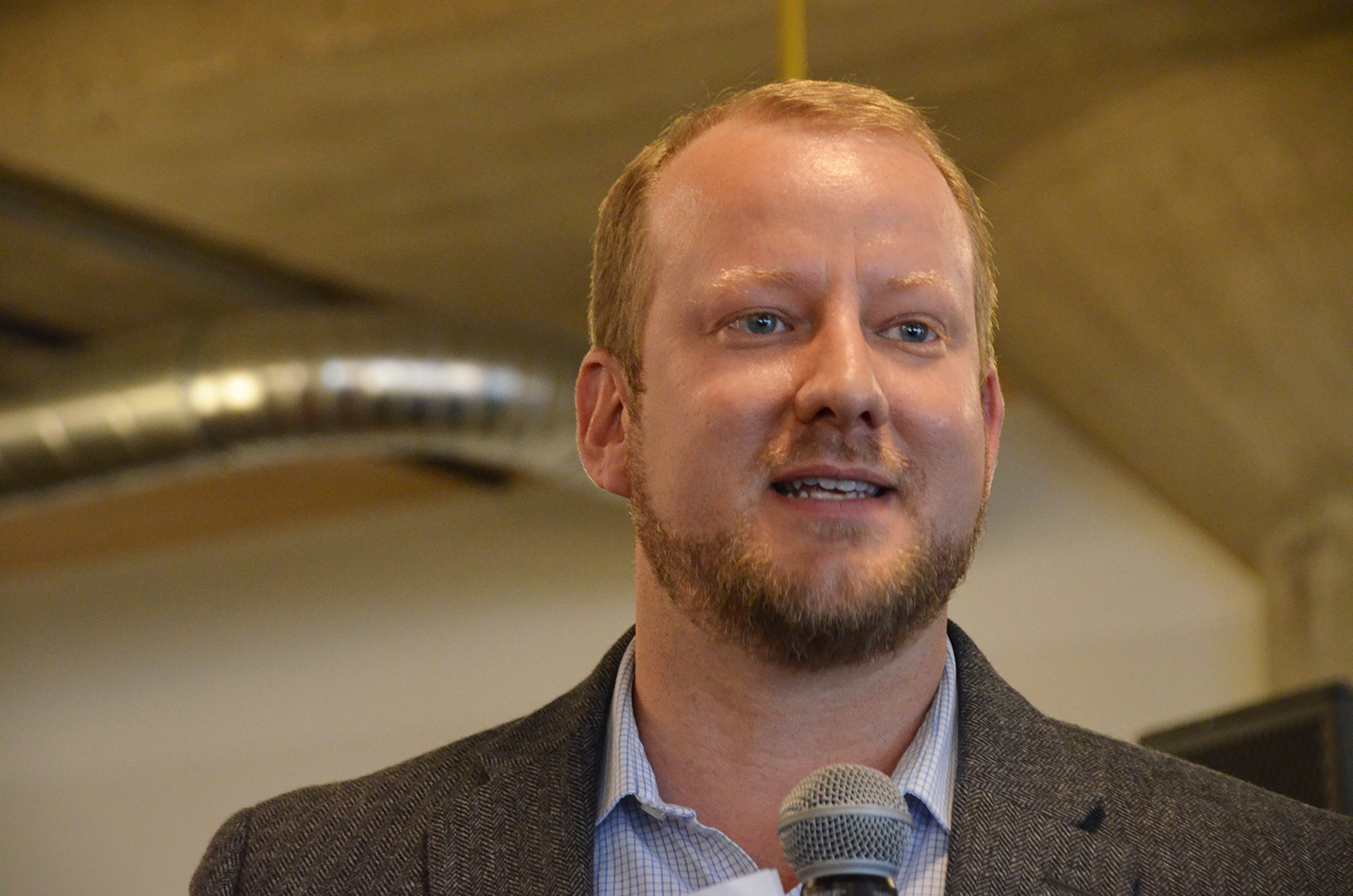
Ryan Weber, KC Tech Council
“We’re not buying new land, we’re not building new rail,” Weber said, giving an example of why Missouri and the I-70 corridor are the ideal spots for the Virgin Hyperloop One project. “It’s not on the ground — which is very important because to build a new railroad [and] to acquire all that land is essentially unaffordable.”
“That was the whole [point] of this feasibility study: ‘Does I-70 work?’” added Thompson, noting that all needed infrastructure feats could be achieved for the project. “And obviously we were working with Virgin Hyperloop One’s criteria to make sure that you could make it flat and level enough [to avoid complications such as motion sickness].”
A common misconception surrounding the hyperloop project is that it’s a new concept, Kraske noted.
In reality, hyperloop technology has long been possible, Zhou agreed.
“All the technology, all the different kinds of systems have been in operation for many years. So the physics and how it all works together has been proven and tested before,” she said. “What we are doing is we are iterating on some of those new technologies. We’re incorporating it, we’re integrating it into the new system.”
Featured Business

2019 Startups to Watch
stats here
Related Posts on Startland News
She scored music on Netflix and LA’s star-studded stages; now BodaciousThang is getting vulnerable in KC
When Cheyenne Jolene steps on stage in the shoes of her alter ego, the singer-songwriter’s voice carries both raw emotion and unapologetic truth. Performing as BodaciousThang, Jolene blends R&B, hip hop, rock, and soul into what she describes as “genre bending” music. Her songs are steeped in authenticity and storytelling, offering listeners intimate glimpses into…
SNAP cuts are ‘worse than they look on paper’: Food access advocates warn shelves could go bare overnight
Chef Shanita McAfee-Bryant doesn’t mince words about perceptions of the hungry Kansas Citians she serves daily through her award-winning culinary social venture. “These are the people who — if you listen to the rhetoric — are deemed ‘lazy,’” the founder of The Prospect KC’s NourishKC Community Kitchen told Startland News. “We know the narratives being…
LISTEN: Fermenting a clean future through products from meat alternatives to skin creams and baby formula
On this episode of Startland News’ Plug and Play Topeka founder podcast series, we chat with Francesca Gallucci of Natáur, a Baltimore-based biotech company that’s reimagining how essential nutrients are made. Combining synthetic biology, metabolic engineering, and eco-friendly fermentation, they’re producing bio-based taurine (and other naturally occurring sulfur compounds) without relying on petroleum. Gallucci takes…
KCMO slashes fees for outdoor dining permits, launches dining trail for grant winning projects
Kansas City has officially eliminated outdoor dining permit fees, reducing the cost from $850 to zero, thanks to the momentum created by a city-led initiative to encourage investment in outdoor dining experiences, city leaders announced this week, unveiling new plans to promote funded businesses and their projects. Launched in 2024, the Outdoor Dining Enhancement Program…