
MECA students to Goodwill: Everyone has a mission now — what else are you selling?
September 25, 2018 | Elyssa Bezner

Editor’s note: MECA Challenge and Startland News are both programs of the Kansas City Startup Foundation, though the content below was produced independently by Startland. For more information on the relationship, click here.
[divide]
Goodwill must innovate and change with the times if it’s going to survive after 125 years in business, said Ed Lada.
“The average age of our shoppers has gone up half a year for the last five years on an aggregate level. Being a relatively young CEO, this petrifies me,” said Lada, the CEO for Goodwill stores across Missouri and Kansas. “This tells us that we are not attracting millennials and Gen Z shoppers or donors or even the volunteers at the events.”
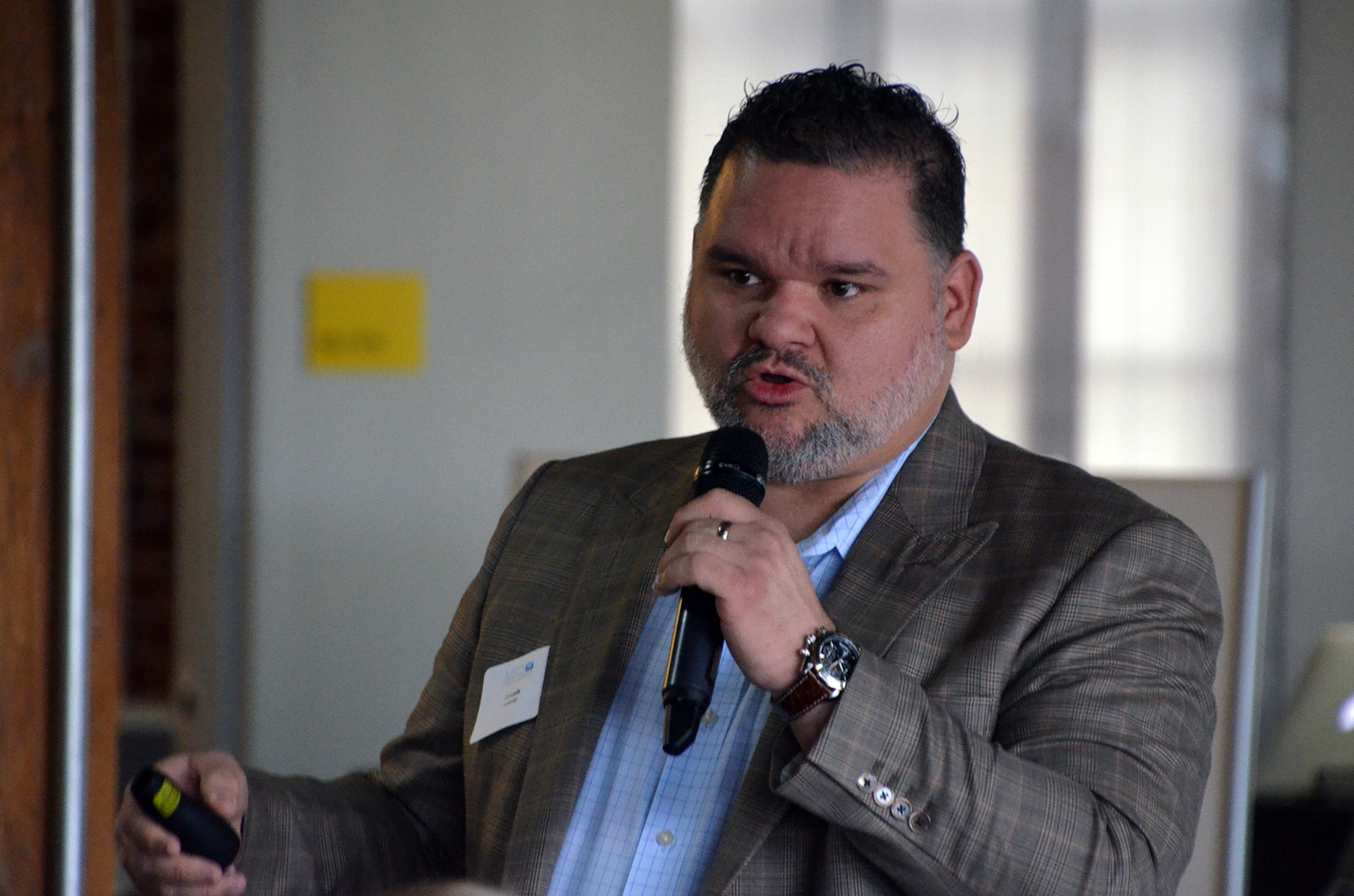
Ed Lada, CEO of MOKAN Goodwill
Goodwill partnered with the Kansas City Startup Foundation, a nonprofit dedicated to fostering entrepreneurship in Kansas City, to pose a question to area high school students last week during one of the foundation’s MECA Challenge events.
“We just want [students] to see that they can take a real complex problem and come up with a viable, maybe even radical solution,” said Katie Kimbrell, director of education at KCSF. “[Students need to know] that their ideas are valid, their ideas are valuable, and they have things to contribute to this world.”
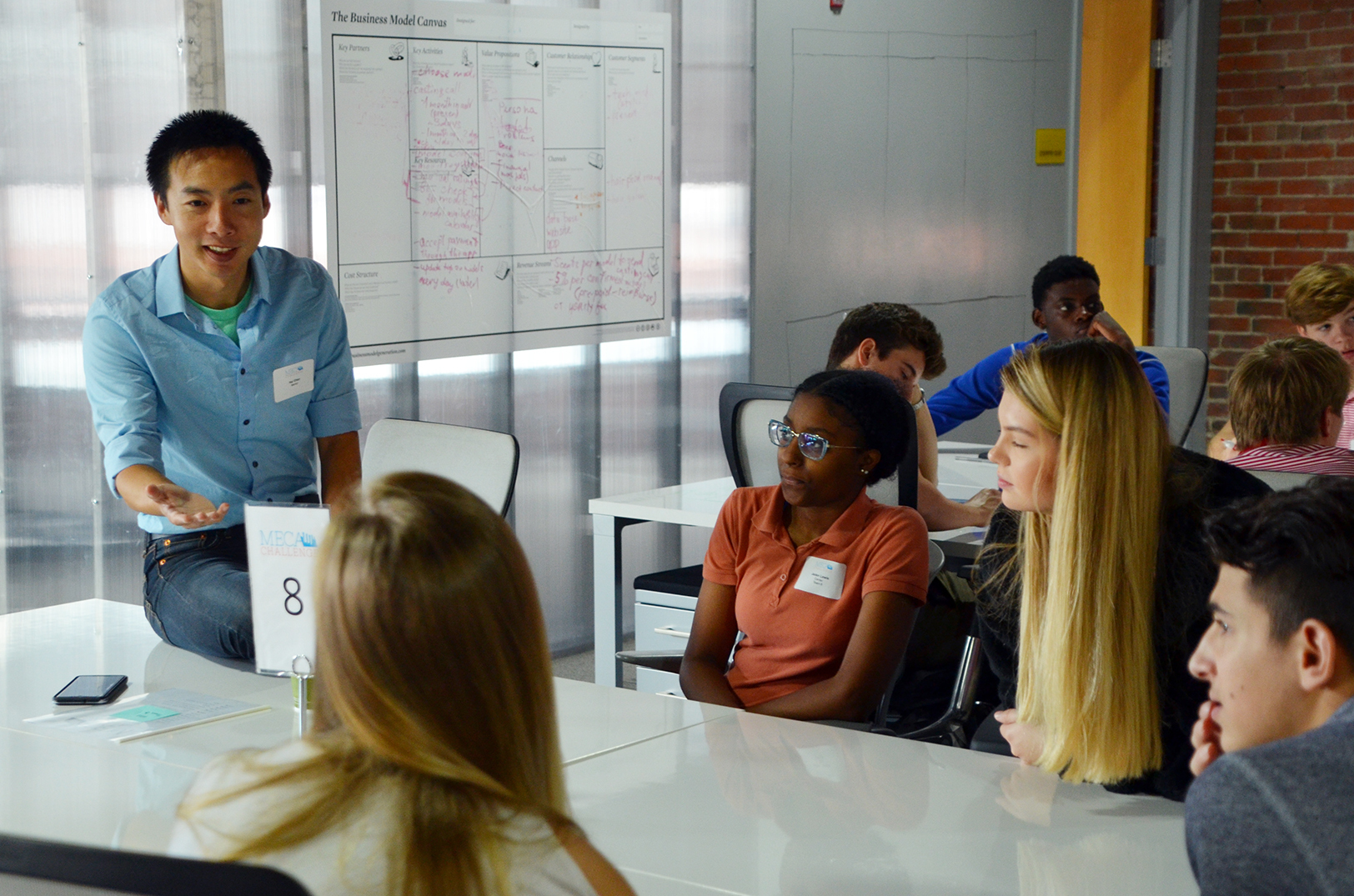
The MECA Challenge — part of KCSF’s response to the challenge to build KC as the Most Entrepreneurial Community in America — is a one-day innovation competition for high school students across the greater Kansas City area who compete to pitch a solution to a real-life problem, across issues in social justice or the marketing of a particular company, in just two hours, said Kimbrell.
The students are put in groups with real-life entrepreneurs serving as mentors to guide discussion and provide expertise, she added.
“How do we bring in people like yourselves and people that aren’t engaged with the mission of Goodwill?” Lada asked 85 students participating in the challenge at the Sprint Accelerator.
“Right now, the brand of Goodwill is thrift. It doesn’t matter whether you’re one of my competitors, every thrift store is a ‘Goodwill,’” Lada said. “So how do you differentiate that? What I heard in that room was: leverage the brands and leverage the quality and leverage the shopping experience, which are three things that Goodwill does not do very well, but it’s what I’m trying to rectify.”
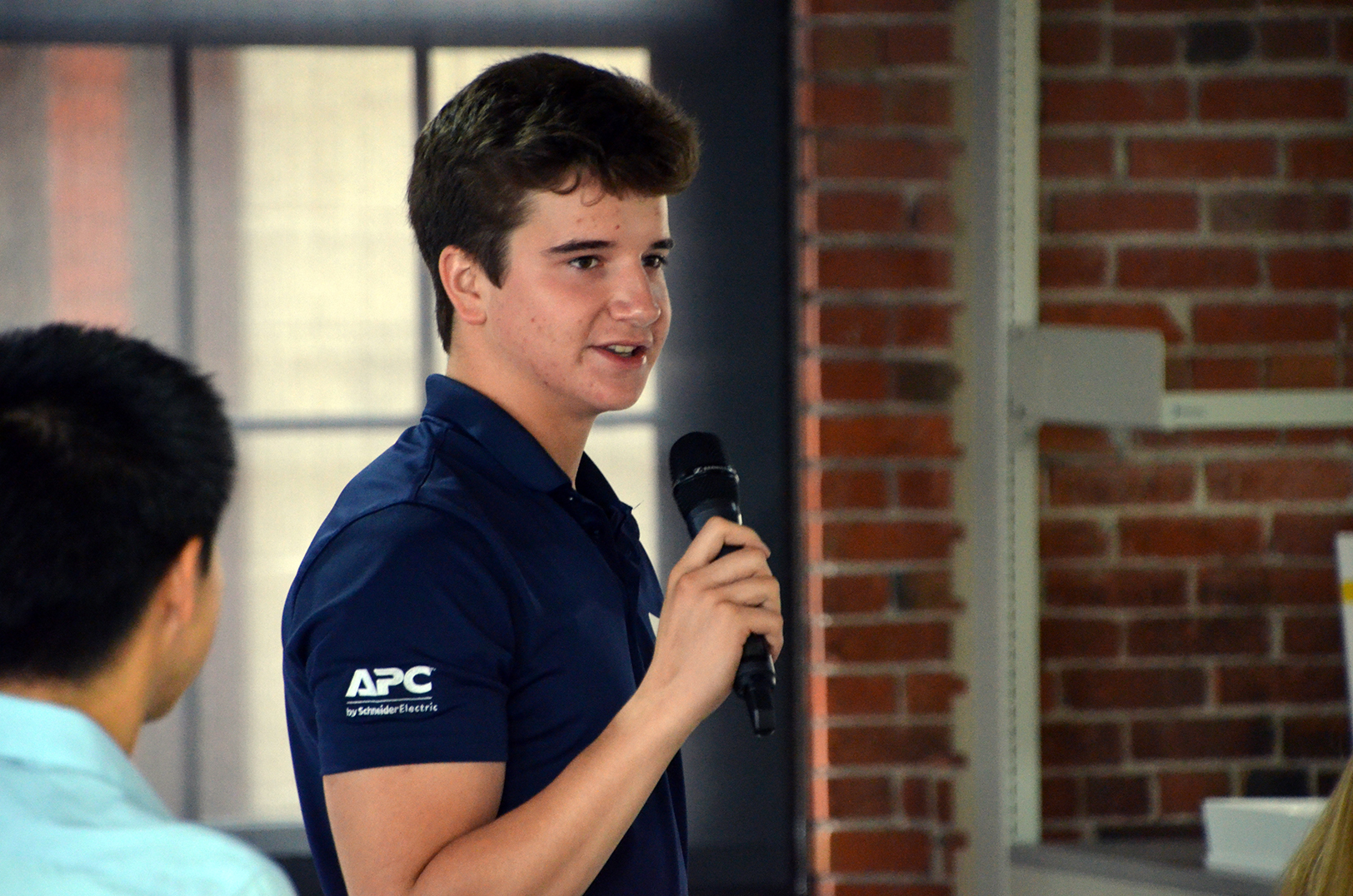
Some of the critical feedback from the students was difficult to hear, admitted Lada, but ultimately a validation of projects the CEO has put in motion over the past four months on the job.
“One striking comment was that they want organizations to have that mission component — but everybody now has that component,” he said. “That was a real interesting paradigm shift for me. For Goodwill, we always say that our mission is our biggest selling point — that’s why people are usually shop there and donate. But Gen Z tends to think about it differently in that, ‘We know that you have the mission and that’s great, but what else can you do?’”
MECA Challenge events present the opportunity for organizations like Goodwill to hear directly from the age group with which they most need to connect, said Adam Arredondo, the chief executive officer at KCSF. The program also connects students to other youths they might not otherwise have met, he added.
“This opportunity for the kids … I thought it was incredible,” Lada said. “Now for me as a business, it’s basically a free market test. You’re getting insight directly to a consumer base that you want to learn from and they’re giving you ideas about how you can improve your business and they think differently, they see things differently. So the amount of value added in that is tremendous as an organization.”
The climate in the world right now is very “us versus them,” said Lauren Conaway, KCSF’s director of operations. The earlier students can be exposed to differing viewpoints, the better.
“We have representations from suburban schools, private schools, and urban schools, and all of these groups that are going to have to work together to find a solution to fix a real problem,” said Conaway. “I think it’s going to be really impactful.”
Featured Business

2018 Startups to Watch
stats here
Related Posts on Startland News
LISTEN: Gripp helps farmers get a handle on multiple ag apps with dead-simple record keeping platform
On this episode of our 12-part Plug and Play Topeka podcast series, we explore how agtech startup Gripp is bringing structure and simplicity to farm operations. Its helps farmers connect their teams, track equipment and assets, and turn everyday routines into shared knowledge. Having grown up on a Wisconsin farm, co-founder and CEO Tracey Wiedmeyer…
A St. Joe CEO handed him a franchise after graduation; two years later, the risk is paying off
Spencer Engelman’s expectations for his post-college career were shredded by an offer he couldn’t refuse. The Northwest Missouri State University graduate was awarded a business of his own — minus the franchise fee — by a veteran entrepreneur who had visited one of his classes. “It’s a crazy opportunity,” said Engelman, who now operates a DocuLock…
What a catch: Kansas City fandom creates custom appeal for taco-loving cartoonist vibe
Drawing from Kansas City’s spotlight moments — whether trendy and new or iconic and timeless — W. Dave Keith balances a quirky aesthetic with a practical focus on what will actually sell. “I’ve slowly learned that if I want to make money off this business, I need to make stuff that people want to buy,”…
Power through purpose: How a winding journey led this eco devo steward to deep-rooted impact
Editor’s note: The following story was written and first published by the Economic Development Corporation of Kansas City, Missouri (EDCKC). Click here to read the original story. [divide] Going behind the scenes of CCED with the people who make it happen Some people are drawn to city-building because of the bricks and steel, the architecture, the skyline, the…