
Don’t just play the game: MECA Challenge urges students to innovate ‘school of the future’
November 2, 2018 | Elyssa Bezner

Challenging Kansas City students to envision “the school of the future” will usher in a paradigm shift wherein teens can see themselves as customers of school, said Katie Kimbrell optimistically.
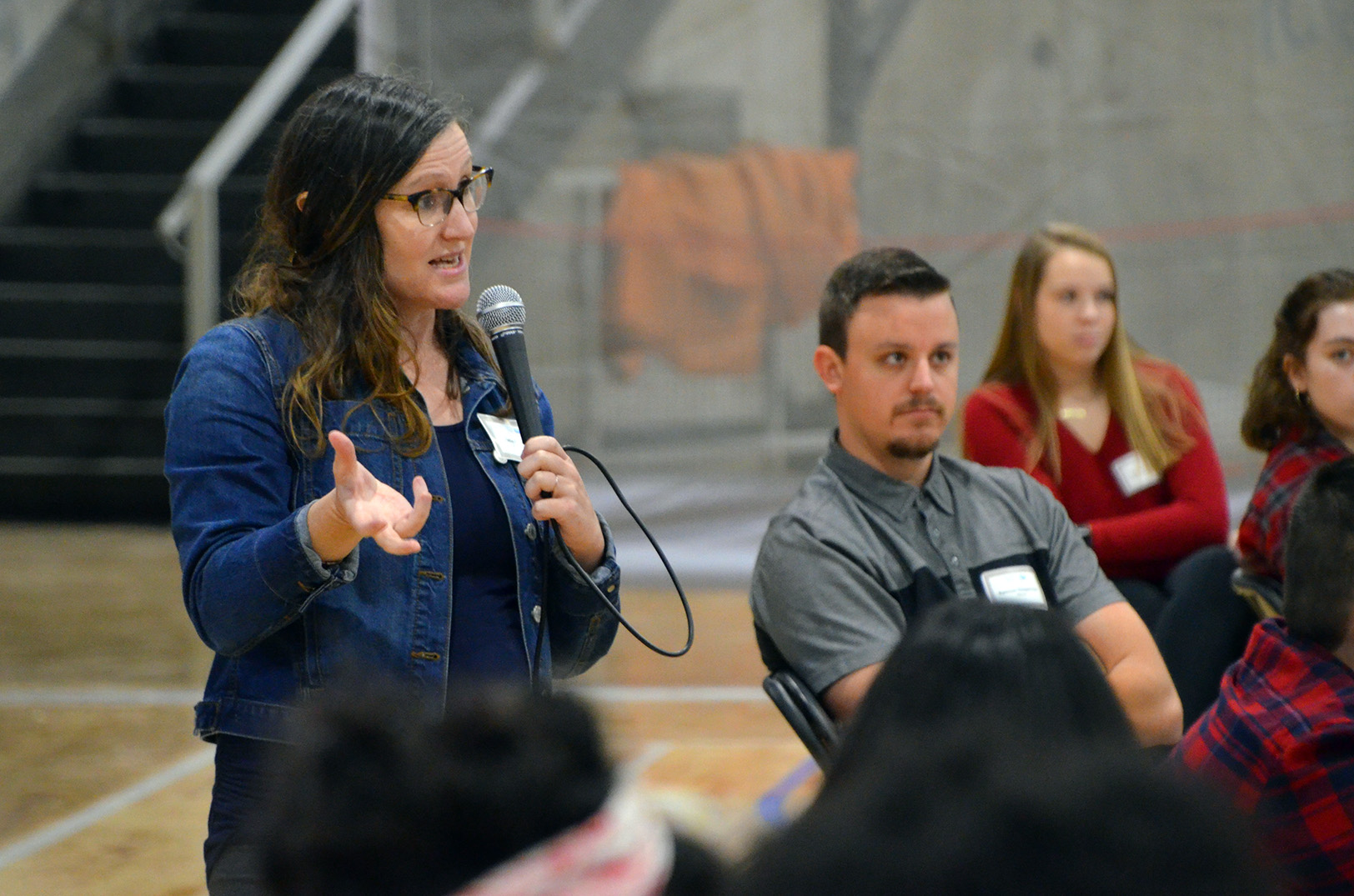
Katie Kimbrell, Kansas City Startup Foundation
“[Students] don’t even think, ‘Oh, I could rethink this whole thing that I’m experiencing,’ and choose — or even demand — something different,” said Kimbrell, director of education at the Kansas City Startup Foundation. “When I went through school, the traditional mindset was just accepted as the way it was. I either have to fit within it or I fail. But once today’s students start thinking like users of school, they can help shape what it looks like and how it can fit their needs.”
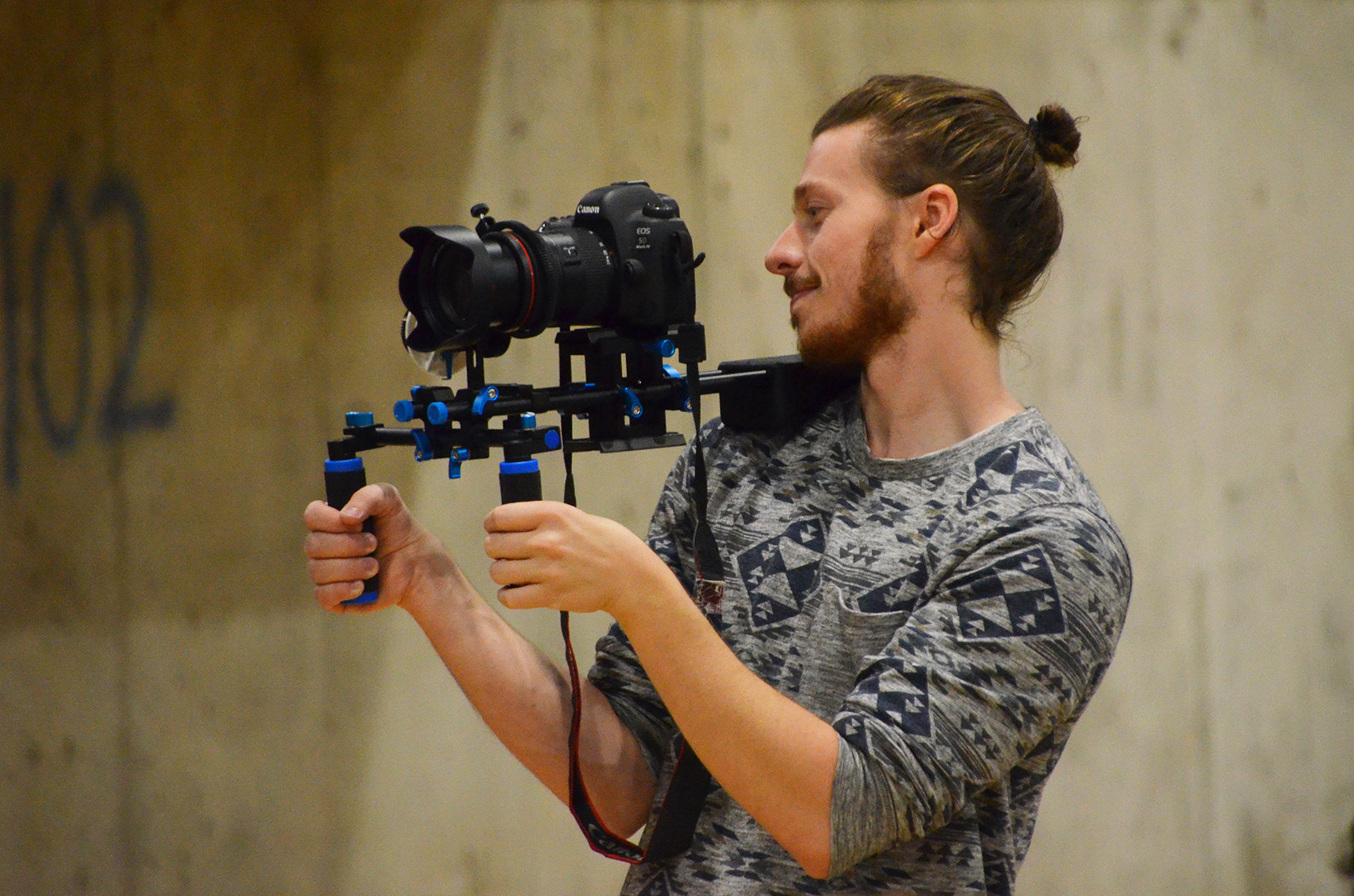
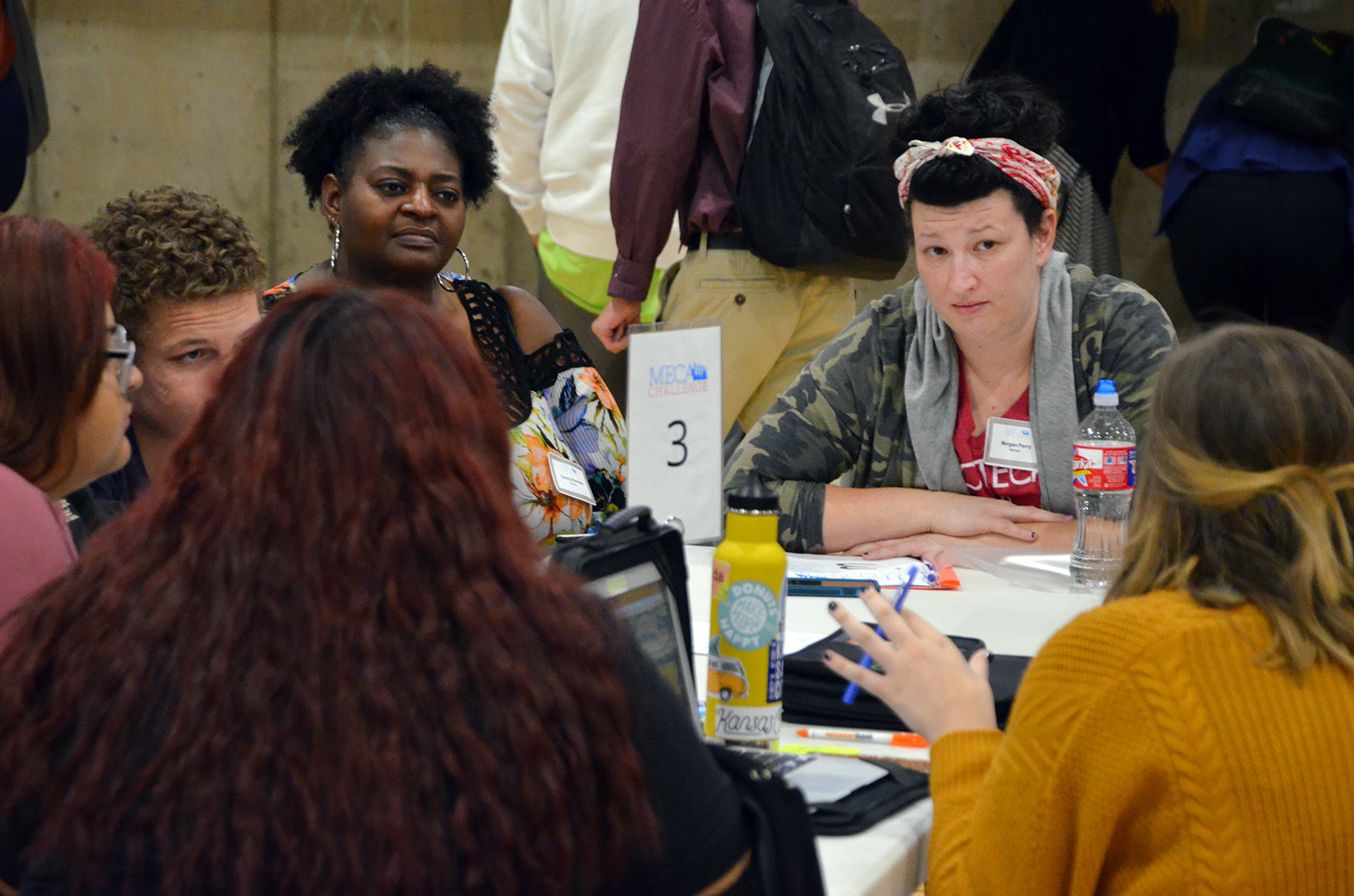
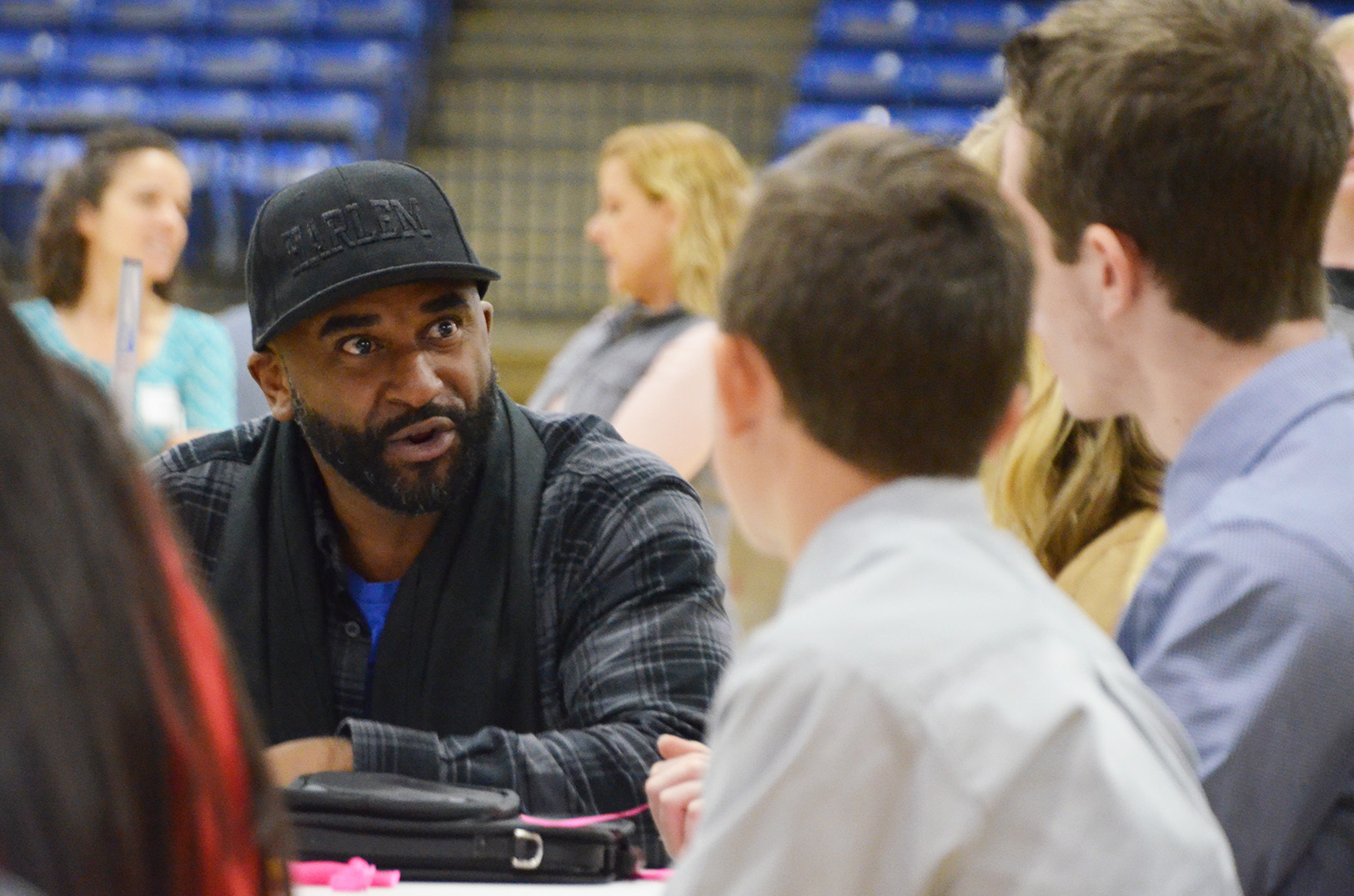
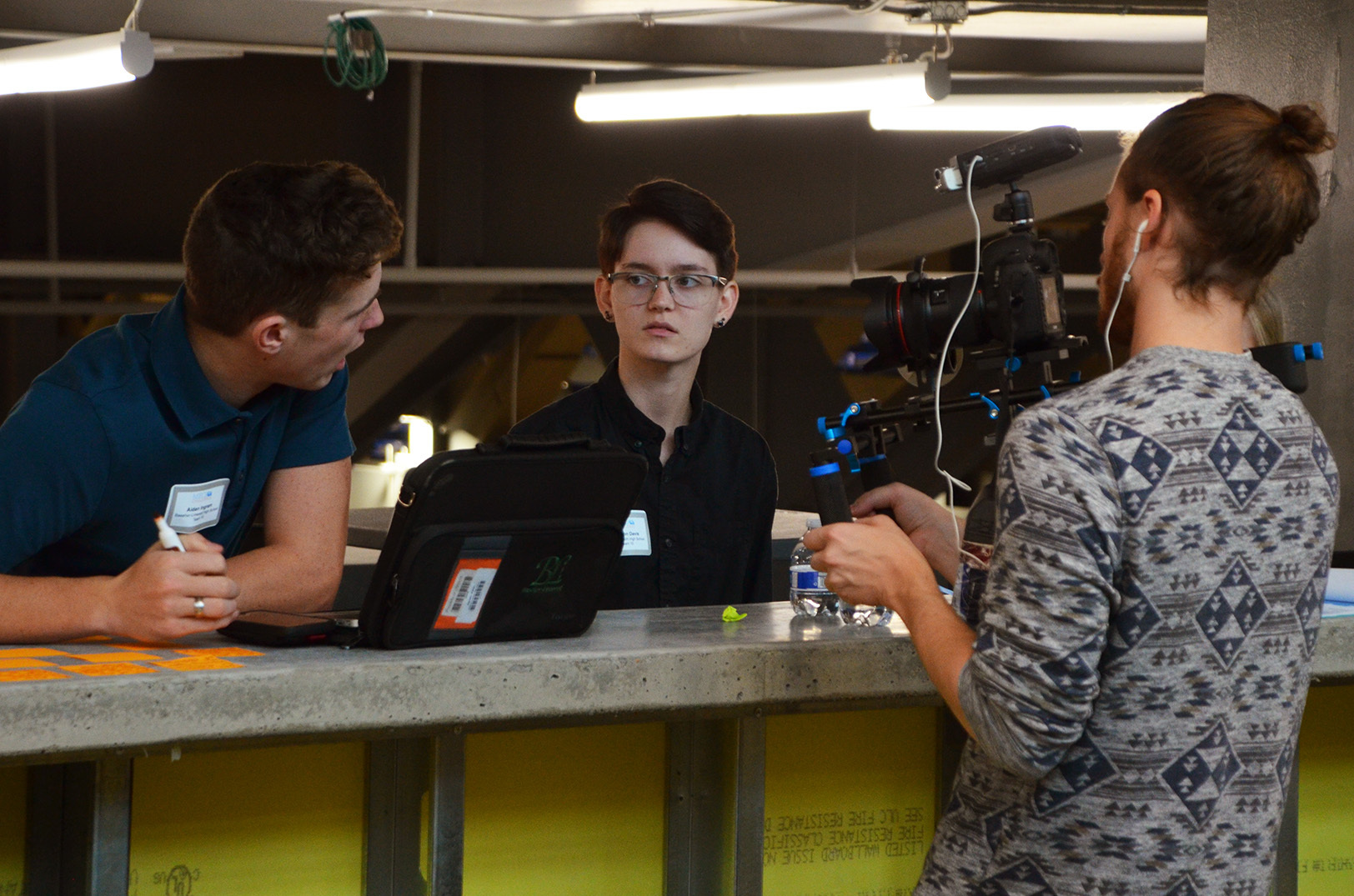
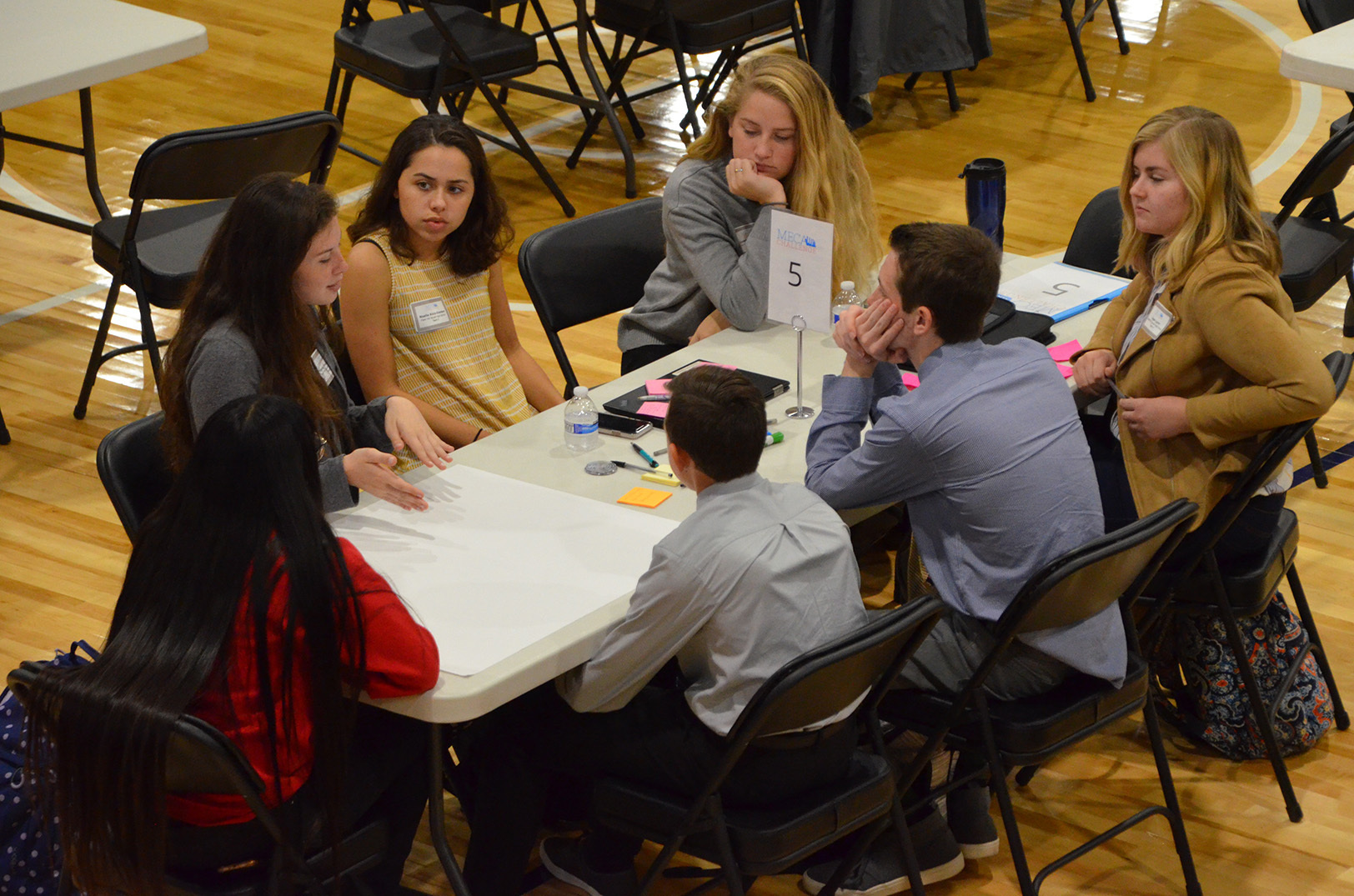
Tuesday’s edition of the MECA Challenge, a one-day innovation competition organized by Kimbrell and KCSF, asked students to point out cracks in the education system and provide potential solutions. The citywide event — presented by the Ewing Marion Kauffman Foundation and KCPT, which filmed portions of the day — drew together teens from Park Hill, Park Hill South, Guadalupe, Basehor-Linwood, and Plattsburg high schools.
Such real-world learning experiences are essential for developing the entrepreneurial mindset, said Miles Sandler, director of engagement in education at the Kauffman Foundation, noting Kansas City-based Kauffman has been hyper-focused on the future of learning in recent years.
“Our first push in that direction is around high school design, and we recognize that there is no particular model or method that is the best method — a school community really has to determine that for themselves,” she said. “But we also know, for schools to service more than 10 to 15 percent of their students with real world learning experiences, they need support.”
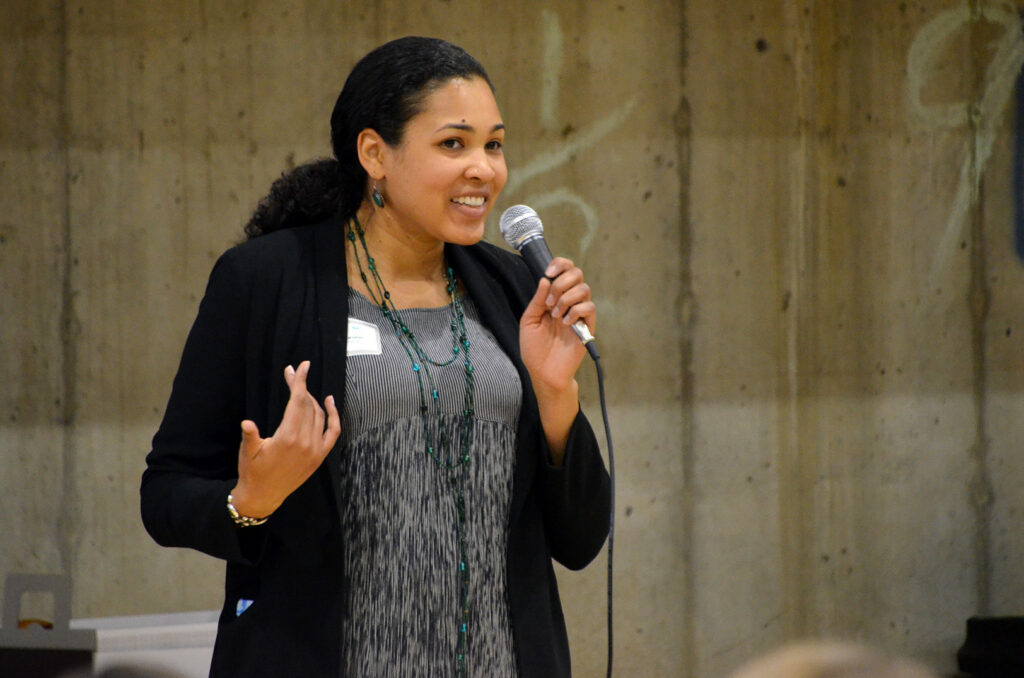
Miles Sandler, Ewing Marion Kauffman Foundation
The traditional education system is not preparing students for the future of work — a reality that is changing because of a shifting economy and evolving technology, she added.
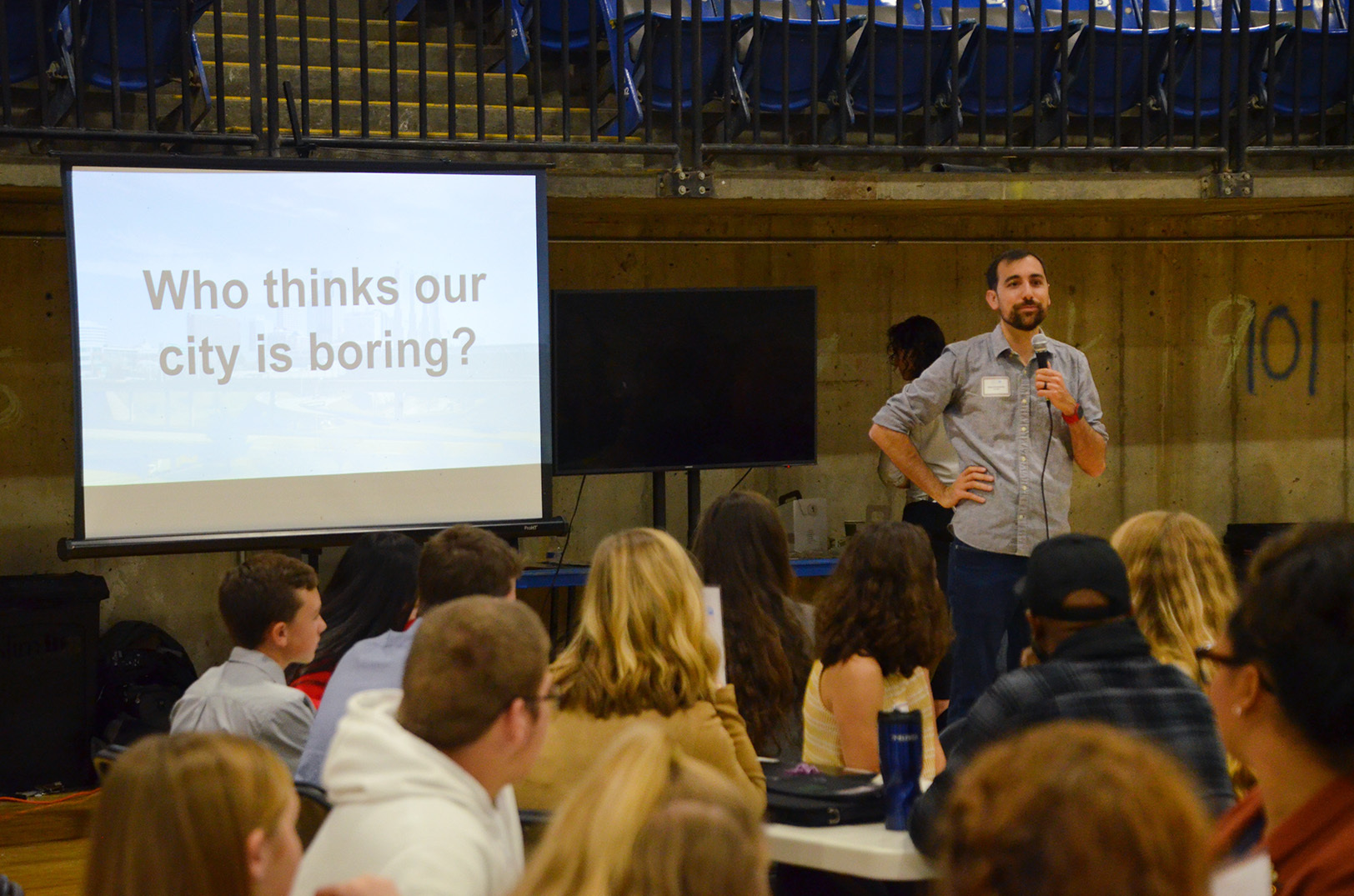
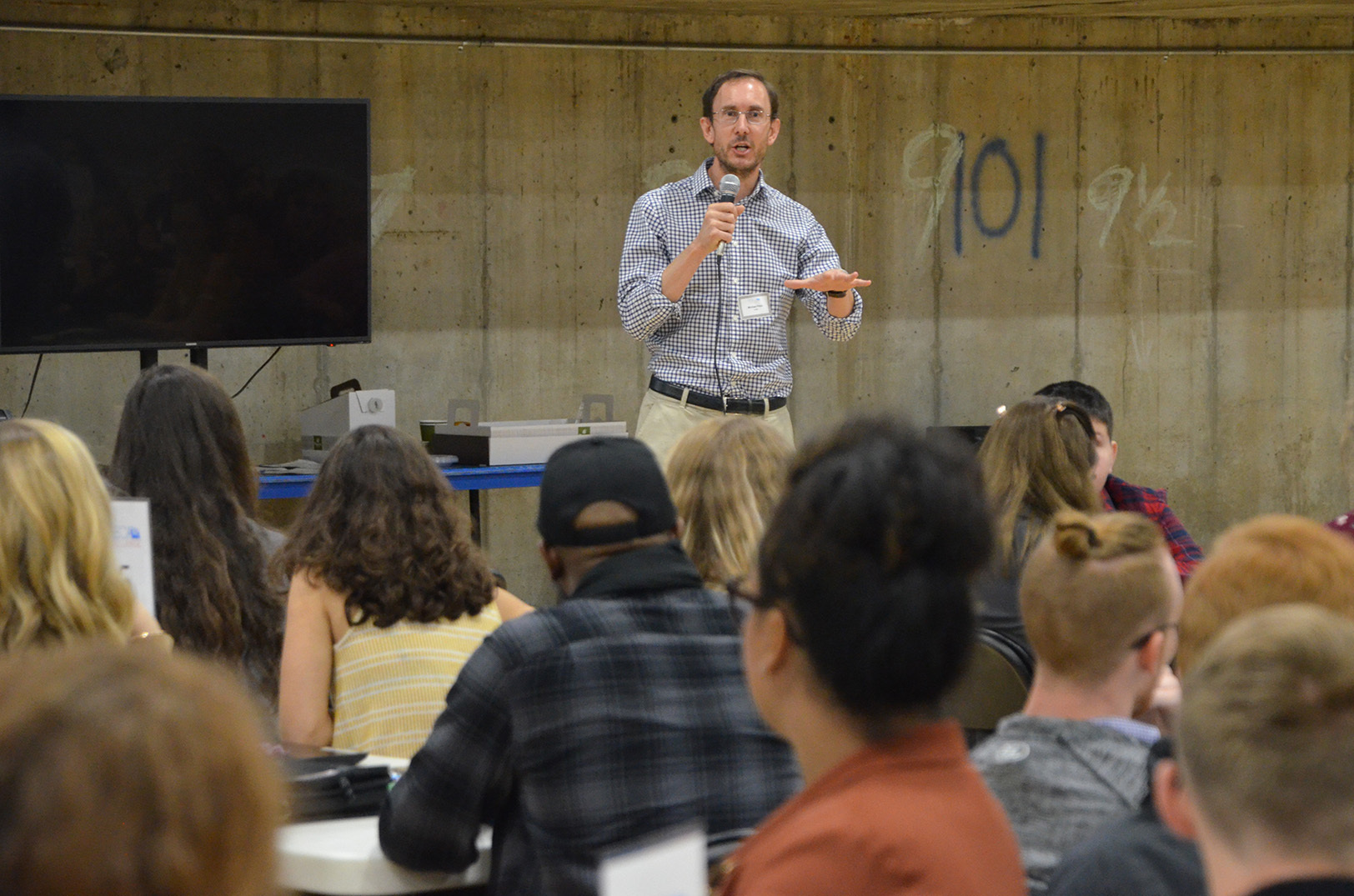
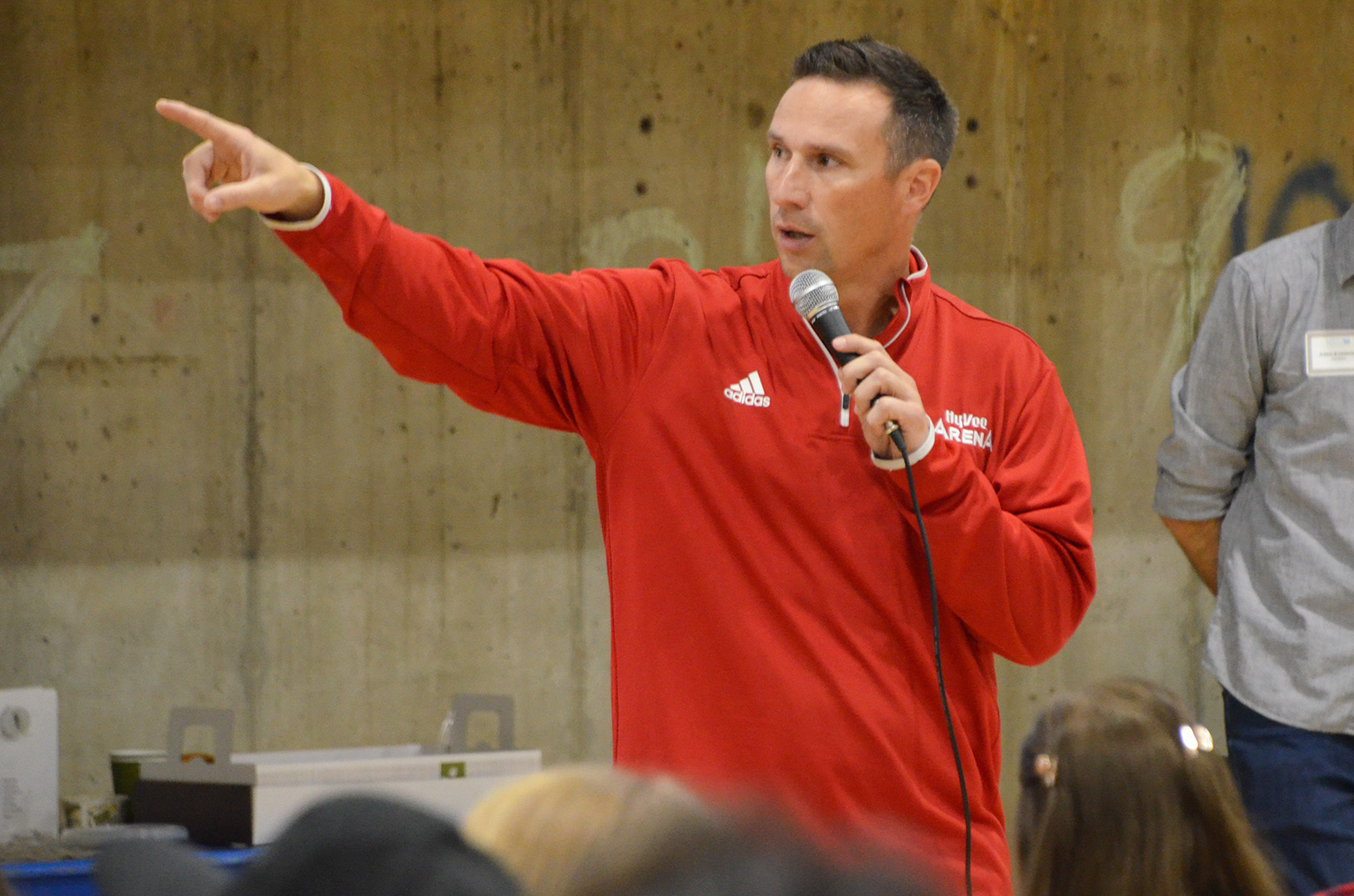
MECA Challenge’s “school of the future” event saw students brainstorming with laptops on stadium seats in the bowl of Hy-Vee Arena and lounging on the first-floor basketball court of the reimagined space.
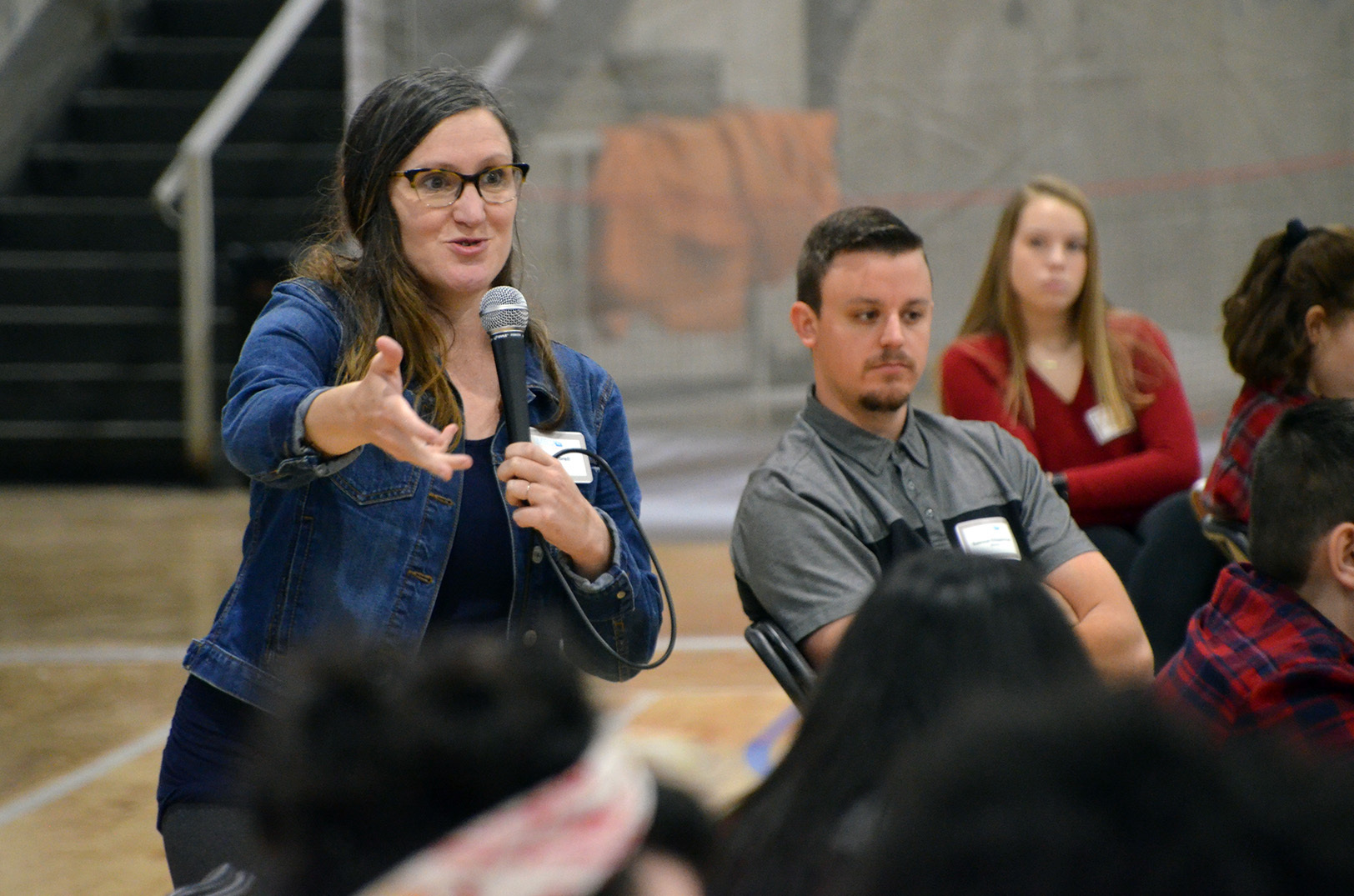
Groups led by curated mentors from within the startup community faced off in a pitch competition, each presenting potential solutions to a panel of expert judges. Ideas tended to follow a trend: the rigid nature of the school experience.
It’s a perception that affects the happiness and health of students, Kimbrell said.
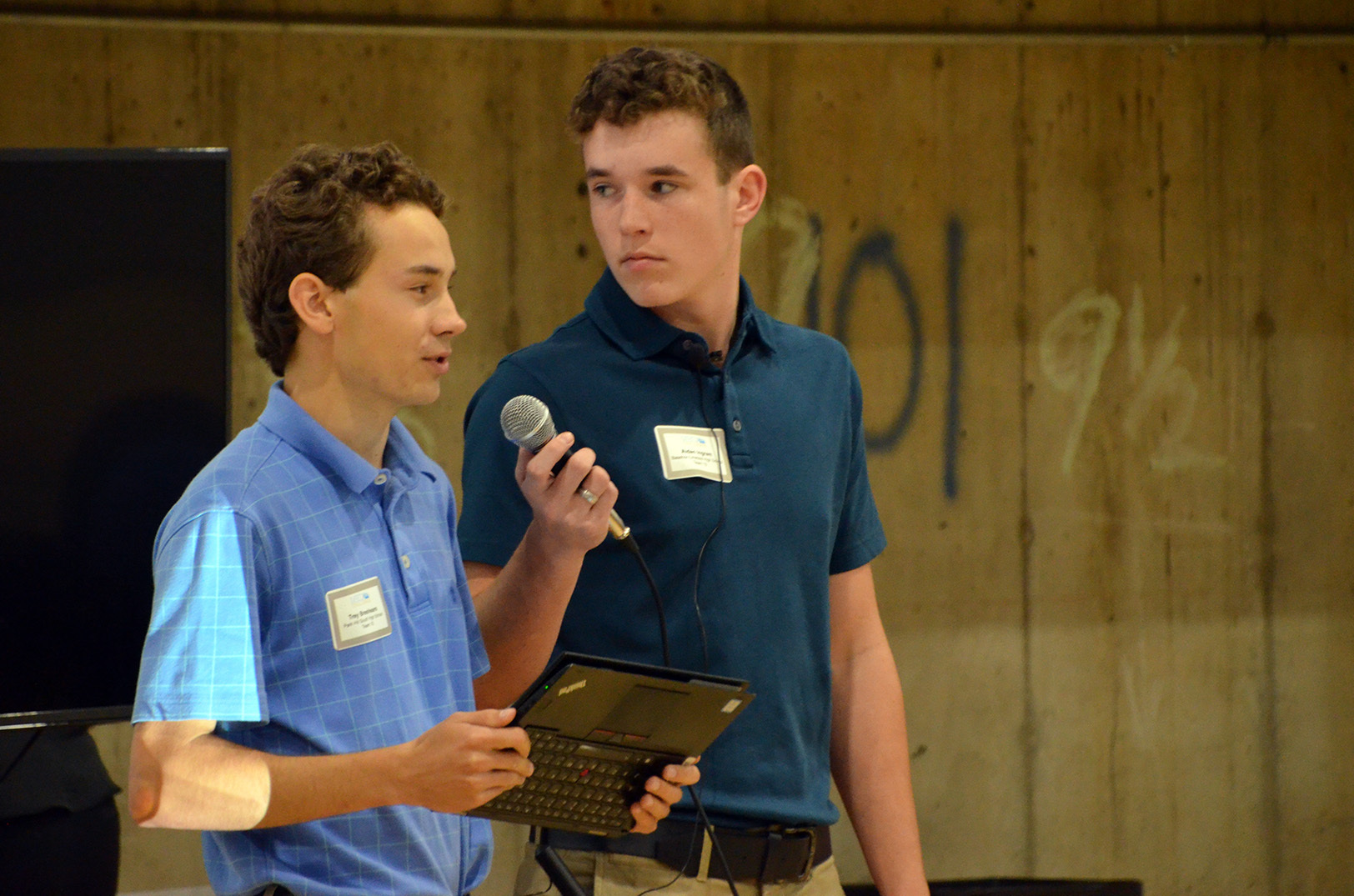
“Right now, the counselors are supposed to be the place to go if you have an issue,” said Eden Black, senior at Park Hill South High School. “But they almost feel like doctor’s offices — they’re very clinical — and you don’t really feel comfortable talking to somebody who you know is [in charge of] all of these other students too.”
Students have learned to “play the game of school really well,” said Kimbrell, describing a playing field built for one type of student — structured long ago by stakeholders disconnected from real school experiences.
“We heard from both [suburban and urban groups] that the system wasn’t necessarily working; you just see one group choose to play the game,” she added. “We heard from one student from one of the local urban schools who was like, ‘I’ve had so many friends who’ve dropped out because it wasn’t working for them.”
Future MECA Challenges could continue to explore the “school of the future” theme with narrower focuses, said Kimbrell, which would allow students to rethink a crucial part of their lives so far, and ways they can affect change.
“I don’t think redesign with education comes from a one-time event where students are in design mode for two hours, but I do think it’s a building block for a larger shift, for sure,” she added.
Featured Business

2018 Startups to Watch
stats here
Related Posts on Startland News
KC selected as part of $42M data initiative
The City of Kansas City, Mo., plans to boost its tech tools thanks to its recent acceptance into a national initiative to improve government data programs. Bloomberg Philanthropies announced Wednesday that Kansas City was selected as part of its $42 million “What Works Cities” program. The initiative aims to help Kansas City and seven other…
Modern Coalition app ‘gamifying’ politics raises $350K
U.S. Congress is doing a lousy job. At least that’s what 78 percent of Americans thought in July, according to Gallup. The research group theorizes that such dissatisfaction is not only resulting in lower voter turnout, but also generally less political engagement — particularly among young people. Kansas City-based Modern Coalition, however, is hoping to…
KC’s startup economy so-so, study says
Kansas City for years has been making waves as an innovative community. Launching and attracting dozens of tech ventures serving a variety of industries, the Kansas City metro’s brand as an entrepreneurial hub continues to grow. But how does it compare to other communities in the U.S.? While focused on St. Louis, a recent report…
New report crowns the ‘Silicon Prairie’ capital
The Windy City was again named the capital of the so-called Silicon Prairie region. Chicago ranked No. 7 in the 2015 Global Startup Ecosystem Ranking, a report compiled by market research firm Compass. The United States dominated the list, which crowned Silicon Valley as No. 1, followed by New York City, Los Angeles and Boston,…