
LEANLAB boosting its K12 Fellowship with $2M in new Chan Zuckerberg, Gates Foundation grants
August 25, 2020 | Startland News Staff

Buoyed by a fresh $2 million in high-profile grants, LEANLAB Education is resuming its innovation research program for schools — this year, focusing its K12 Fellowship search first on the needs of COVID-era pilot schools rather than matching them with already-selected entrepreneur solutions.
“We’ve seen remarkable ingenuity and innovation from schools this past year,” said Katie Boody, CEO of LEANLAB. “There’s never been a time in history where schools have been faced with the need to innovate so swiftly and at such a broad scale as they have in the past six months. Now is an ideal time to conduct research and prioritize truly understanding what works — and in what conditions — in partnership with students, teachers, and parents.”
Click here to learn more about the process for selected pilot schools.
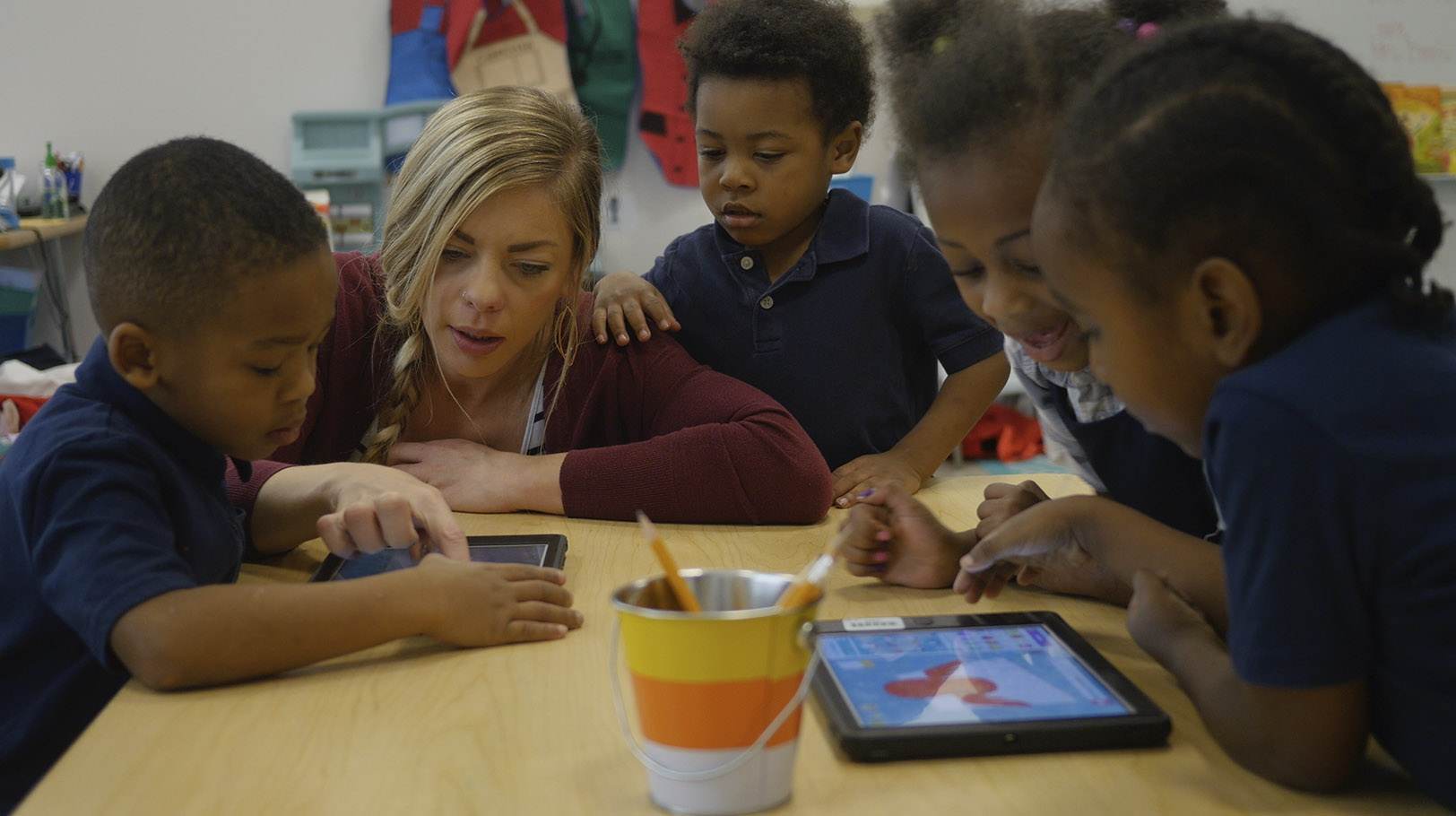
Students at Academy for Integrated Arts interacting with Makers Empire, 2019-2020 K12 Fellowship
Schools applied to receive up to $25,000 each in grant funding to complete a nine-month innovation and pilot process, according to LEANLAB. Selected partner schools will work with nonprofit’s research team and vetted education entrepreneurs to better understand the effectiveness of technologies, tools or services and to share lessons learned with other school communities.
Applications to become a pilot school have closed.
“What makes this process different from the status quo is our community-driven approach,” said Boody. “Innovation and research often feel like they are either being ‘done-to’ communities or happening in a silo, far removed from the communities they serve. We believe that when students, parents, and teachers are empowered to lead the innovation process in real school settings, we will achieve breakthroughs in the field of education faster.”
To support the program, LEANLAB plans to leverage $2 million in multi-year grants recently awarded from the Chan Zuckerberg Initiative (CZI) and the Bill & Melinda Gates Foundation, as well as support from the Ewing Marion Kauffman Foundation, to expand its growing network of innovative schools across Kansas City and its unique community-led approach to developing new classroom innovations over the next three years, she said.
LEANLAB expects to work with selected pilot schools during the 2020-2021 school year to define their biggest problem in need of innovations, match them with an emerging innovator, and study the impact of the solution under the guidance of LEANLAB’s research team.
“Our model has evolved in the past six years, but our theory of change has remained consistent,” said Boody. “We’ve always believed that those closest to the issues in education — parents, students, educators — hold the true insight and expertise to find solutions. We’re grateful to both our new and long-term funders for their support and advocacy of this important work.”
Featured Business

2020 Startups to Watch
stats here
Related Posts on Startland News
OneHQ launches hiring spree for anticipated growth
OneHQ, formerly NexusHQ, is beefing up its staff in anticipation of a projected revenue boom. The insurance and finance software company plans to add 13 employees — bringing its total headcount to 20 — in the next year as it anticipates more than doubling its annual revenue. The company reported revenue of more than $1 million…
Former Kauffman Foundation VP on how to scale via networking
With more than 25 years of leadership experience, Lesa Mitchell knows a thing or two about making — and fostering — valuable connections. Previously the vice president of innovation at the Ewing Marion Kauffman Foundation and a former executive at Marion Labs, Mitchell now is the founder of Networks for Scale, a company that works…
Windhaven Farms, Chemistry take 1 Million Cups stage
The seemingly disparate industries of agriculture and marketing were on display this week at 1 Million Cups with startups Windhaven Farms and Chemistry. Windhaven Farms founder Kristen Wolf first presented her local meat distribution company, which delivers an assortment of locally-raised, organically-grown meat products, including beef, pork, chicken and rabbit. “The product is really, really…