

Laura Gilchrist: What KC can learn from Silicon Valley education
June 9, 2016 | Laura Gilchrist
Editor’s note: The opinions expressed in this commentary are the author’s alone.
A few weeks ago, several of my fellow educators and I toured five innovative Bay Area schools. Being in the heart of Silicon Valley, it’s no surprise that educators there understand the importance of finding new ways to engage and educate kids in an ever-changing, tech-focused world.
Innovation and learner agency — the idea that education is the vessel through which learners develop independent thinking skills — is a top priority of Bay Area schools. The results of such prioritization shine bright in both kids and teachers.
Here are a few observations:
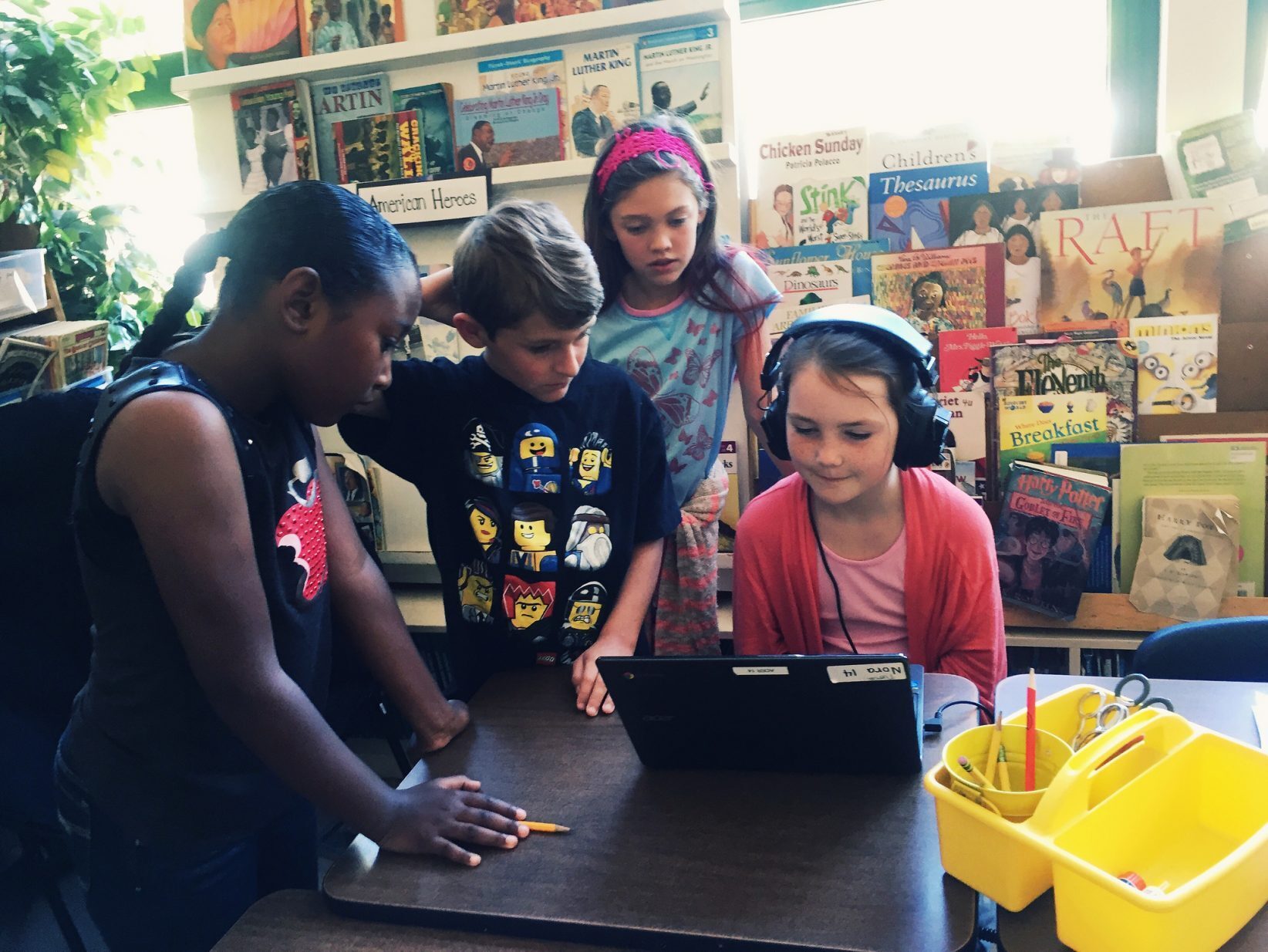
Students at Redwood Heights Elementary in Oakland, CA. Photo by Laura Gilchrist.
- Students and teachers worked together to write and set up learning around kids’ personalized vision and individual learning goals, and teachers autonomously crafted classroom design to fit kids’ needs and develop project-based learning.
- Parents were accepted as leaders in the school’s education ecosystem and were welcome to drop by to help kids learn at any time.
- Teachers and students alike were encouraged to innovate and think big. Students served as ambassadors. They led tours, organized school and community projects, and worked with teachers to design their own learning environments.
Although innovation is happening in Kansas City schools, too, the status quo of hierarchical, traditional leadership and an overemphasis on testing and data are still common. Innovation is not a word you hear frequently ringing through the halls of local schools — yet!
So how can we, as a city full of genius minds and big hearts, work together to empower our youth to create, learn, and lead both in school and the community? Schools can’t — and shouldn’t have to — do it alone. They can only benefit from the community’s entrepreneurial mindset, expertise and knowledge.
Here a few lessons I learned on how we can make all this happen:
1. First and foremost, we need to understand that innovation can be done NOW, in any school, on any budget, and with all kids and communities.
The Bay Area schools showed me that innovation is about mindset, intentionality and passion; not about shiny new buildings, expensive equipment, or years of comprehensive planning. Just start. It will grow.
2. Start “Innovate NOW” with school-wide public exhibition night(s) of student projects.
Each and every one of the five schools I toured had at least one public, open-to-the-community exhibition night per school year. Some schools had as many as one a quarter. Whatever the frequency, these nights were huge motivators for kids and their families. Kids, parents and the community had fun together while sending a message that student work and education are valued as a community affair.
3. Organize regular parent and/or community walk-throughs for feedback and ideas.
One of the Bay Area schools hosts monthly parent walk-throughs during the school day that are essentially reverse tours. Parents give their observations, feedback, and ideas on how to better meet student needs to their tour guide.
Springboarding from that concept, what if we also invited the local innovation community? What ideas might local startups, founders and their employees have about how to bring an entrepreneurial mindset into the classroom? We won’t know until we ask!
4. Embrace social media for storytelling and learning.
Thanks to technology, the walls at our schools separating us from the community figuratively don’t exist, but many schools still operate as if they do.
Cindy Avitia High School has an Instagram account where everyone from the principal down to the students share stories, engage and collaborate with the community. They also have a Twitter, Facebook, Snapchat, Youtube, and school blog. Teachers at Katherine Smith Elementary tweet and use professional learning networks on Twitter to connect with resources and ideas.
The end result is more resources for students and teachers and more involvement from the local innovation community — on platforms the community is already using and which cost nothing to get started.
These simple starting points can be the impetus through which we grow bigger and better ideas for kids’ future. The key is enabling more flexibility for schools and teachers to try new things, and engaging parents and the surrounding community.
See Gilchrist’s full KC Great Schools — Silicon Valley Tour photo album here.
In addition to being a Turner High School instructional coach, Laura Gilchrist is an award-winning educator, KCedu organizer and member of the Kansas Education Redesign Team. Connect with Laura on Twitter @LauraGilchrist4.

Featured Business


2016 Startups to Watch
stats here
Related Posts on Startland News

We all need help, honey: Nearly 3/4 of entrepreneurs are haunted by depression (Holistic Hustle)
Kharissa Forte is a writer, certified health coach, and columnist for Startland News. For more of her self-care tips on how to keep your cup full, visit graceandgrind.co. [divide] You did it. After all the nights dreaming about how amazing it could be and overcoming the endless stream of what-ifs that stopped you from moving…
Just another day in Paradise (EDU): Urban nursery turns soil to nurture STEAM students
When learners dig into the Paradise Garden Club STEAM program, they unearth non-traditional learning opportunities in a classroom cased in chlorophyll. “It starts on a very base level — using your hands to work with raw soil,” said Jessica Teliczan, owner and operator of Crossroads-planted Paradise Garden Club, teasing the newly launched effort — formally branded…

KC workers aren’t leaving — they just want more control over their jobs; Why that isn’t such a weird flex
Editor’s note: The opinions expressed in this commentary are the author’s alone. Bo Fishback, CEO of Airtasker USA, a local services marketplace that connects people who need work done with those who are ready to work, previously founded Kansas City-based Zaarly. The startup was acquired by Airtasker in 2021. [divide] Corporate America’s “Great Resignation” is…
Splitting time between student, entrepreneur lives earns Splitsy co-founder top UMKC honor
Recognition as UMKC’s Student Entrepreneur of the Year is a reminder that innovators often begin early, said Brad Starnes, one of Kansas City’s most-talked-about emerging young startup founders. “When I was about 8 years old, I submitted a drawing to an engineering firm,” said the co-founder of Splitsy, a bill splitting app that launched its…