
Tech takes active-shooter training beyond paper targets as deadly real-world threats rise
January 2, 2025 | Nikki Overfelt Chifalu

COLUMBIA, Missouri — A startup’s portable target system could transform the way law enforcement agencies train for active-shooter scenarios, said Kris Knutson, a former IT consultant propelled into the govtech market amid a rise in real-world threats.
Shot Bot — patented by Knutson in 2019 — provides realistic, adaptable, and comprehensive training experiences, the Missouri entrepreneur explained, setting new standards in law enforcement preparedness. Such advancements could be key to officers’ responses when faced with deadly scenarios like Wednesday’s deadly ramming attack and shootout on Bourbon Street in New Orleans.
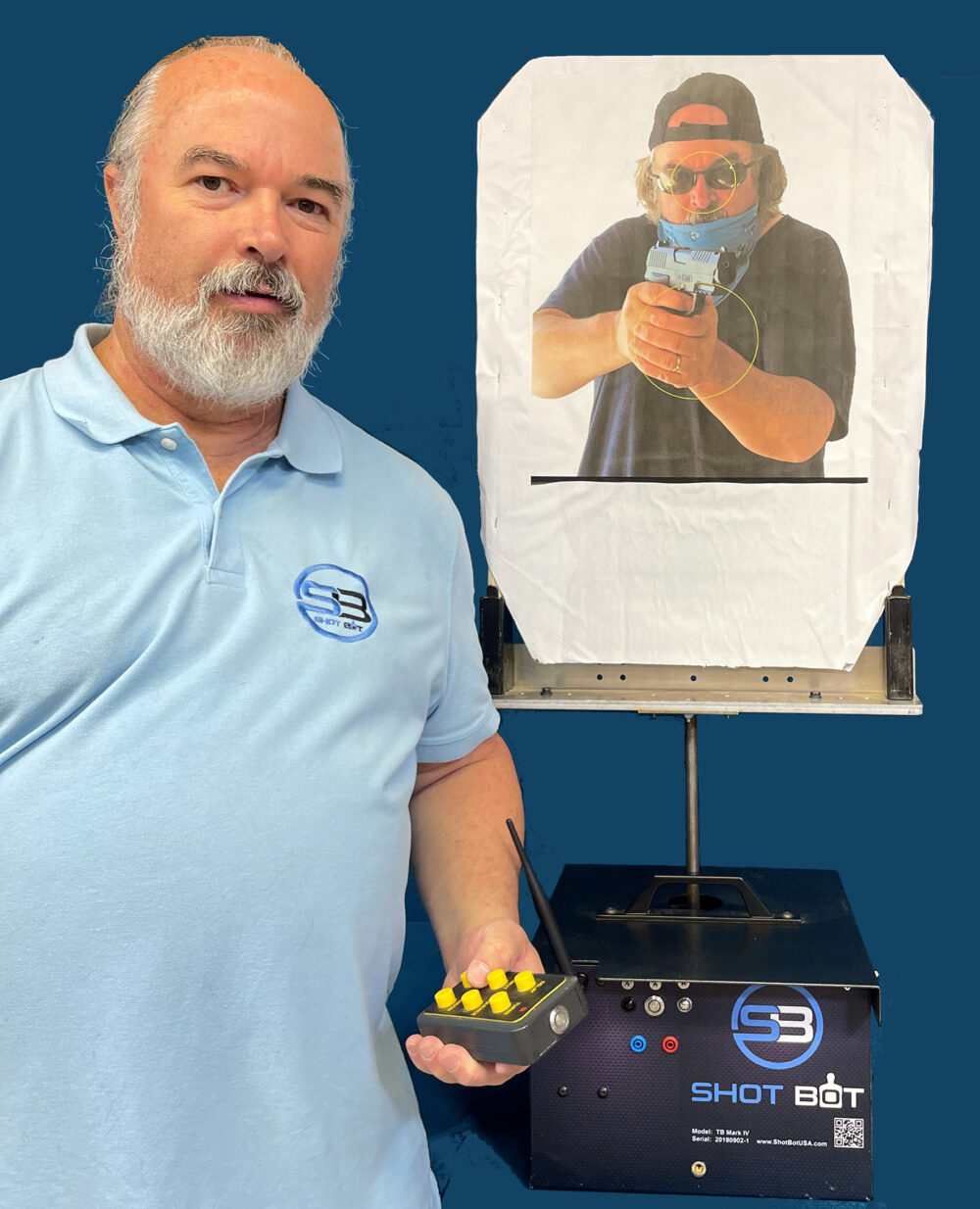
Kris Knutson, Shot Bot; courtesy photo
“It sadly hits home,” Knutson said of the early morning New Year’s Day incident, which left two law enforcement agents injured and the shooter killed by authorities. “It will be interesting to read the After Action Report. In that moment, the bad guy wanted to die while killing anybody around him. Officers responded quickly, but two were hurt. Would more frequent critical incident firearms training, like what Shot Bot product supports, add additional value to their officers in active shooter scenarios?”
“Even more so than a product, my goal is to try to create more training, to reduce the mistakes, and to create a higher-qualified agency,” he added.
“For me, it’s the innovation,” the Shot Bot founder continued. “The programming is just a simple, little Arduino software base, but when I can deliver it and watch officers learn off of it and train more often for cheaper, it becomes more than just a product. It becomes that passion.”
Knutson has had the opportunity to work with the Boone County Sheriff’s Office, Missouri School Resource Officer Division, and the Law Enforcement Training Institute in Columbia, he said. He’s also started building a national brand with sales in Louisiana, Texas, and Tennessee.
“I’ve had an officer that I look up to — a 15-year officer — come up and say, ‘I want to shake your hand; this is great,’” Knutson recalled. “He said, ‘I’ve never had an adrenaline rush like this on simple, little paper targets.’ So that just gave me more fuel to that passion and it continues to add to that passion.”
Click here to see how Shot Bot’s wobble targets work.
Knutson — an information technology consultant who had worked in IT for CarFax for 20 years — started developing the prototype for Shot Bot about seven years ago after connecting with a law enforcement agent in Columbia. The agent — who knew that Knutson had designed a clay-pigeon launcher — asked if he could design an action target that could be placed anywhere.
“He says, ‘My skill set is diminishing,’” Knutson recalled of meeting the agent, who was also a veteran of the Iraq War. “‘We’re not training as hard. We’re not training on active targets, and I’m losing that skill set I had.’”
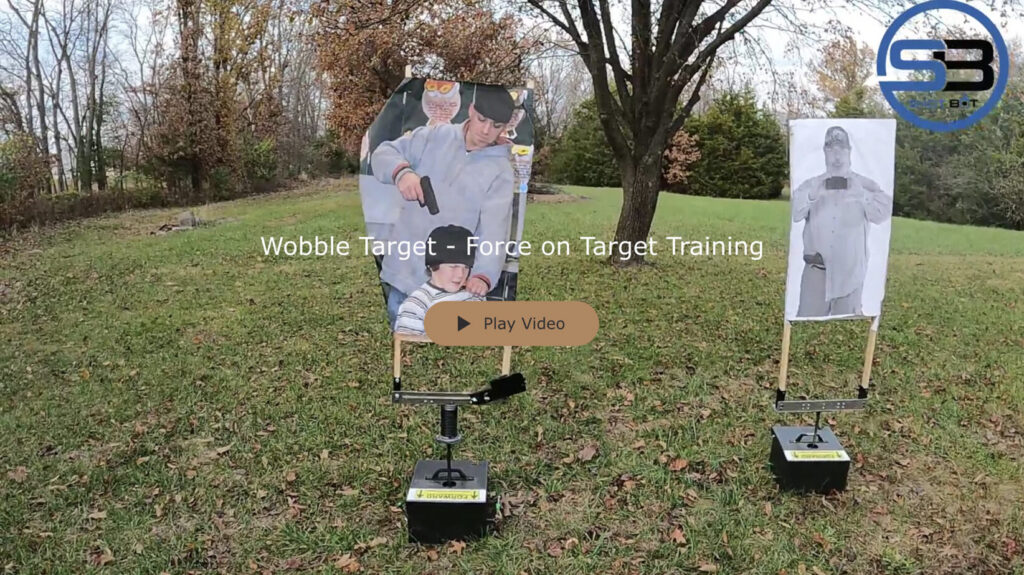
Simulating the unthinkable
Unlike outdated static targets, Shot Bot’s “force-on-target” system — a 12-inch-by-12-inch, 35-pound portable device that can be set up in minutes — simulates unpredictable, high-stakes environments, allowing officers to experience the dynamic nature of real-world threats, Knutson noted.
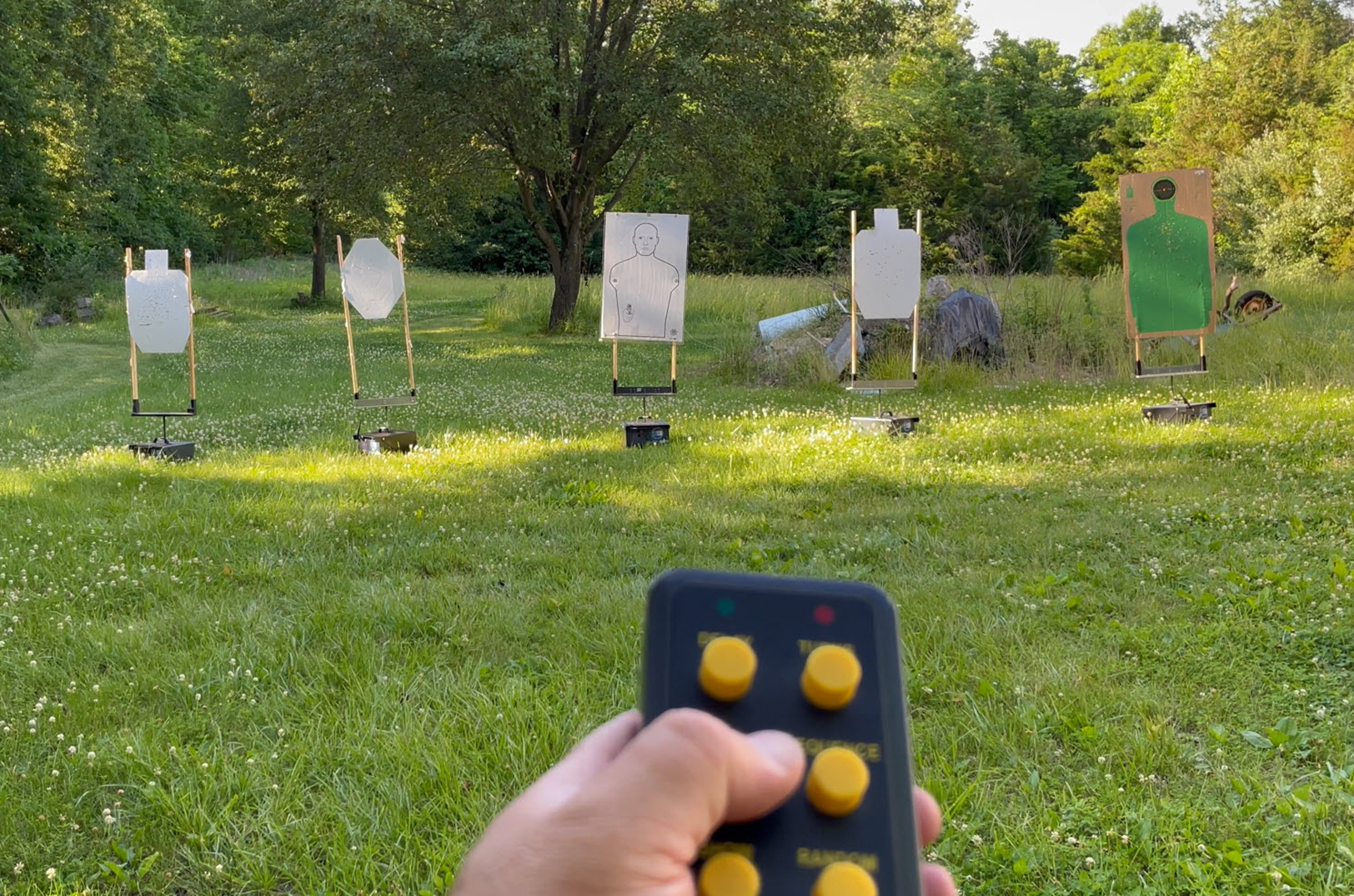
Active target drills featuring Shot Bot’s wobble target technology; courtesy photo
“The trainer can place them in a bathroom stall, in a hallway, out on the range — 200 yards away, 50 yards away for qualifications,” he explained.
Knutson can even lower the height of the target and put it in the front seat of a car to simulate a traffic stop where the officers don’t know if the occupant has a gun, he said.
“How do those officers engage a target that they don’t know is a threat or a no-threat until it turns on them?” he explained.
Right now, Knutson noted, a lot of the moving targets on the market are on big rails or monolithic movers, which are expensive — “They cost $80,000 for a mover with hydraulics” — and they are limited to a shooting range.
“It’s an engineered environment for that target system,” he added, “where mine puts it more into their environment.”
Shot Bot portable target systems empower officers to sharpen their decision-making, situational awareness, and reaction times, he said, ensuring they are ready for the most critical situations. Force-on-force training — a role player scenario — is still the closest thing to real life, he acknowledged, but that takes logistics, more people, and there is liability.
“How often can they get role players that want to be shot at?” he said. “And can they do that every week? Well, that gets difficult, so now we have an action target that we can set up in a bathroom stall and do a bathroom-stall-clearing scenario or down a hallway where you can do it nightly, if you wanted to.”
Virtual reality training systems are available, Knutson noted, which are great — especially for de-escalation training — but they still lack the ability to have the same same physiological effect as the real-world environment, such as a school resource officer running down their school hallway and having a person who is no threat jump out in front of them.
“If they’re carrying their weapon incorrectly, and they jump, they might shoot the no-threat target because it now jumped out in front of them and they were running, they were out of breath,” he explained. “Again, that’s how you try to get as close to the real world as you can and do it more often.”
Support for starting in Missouri
Selling a product in the government sector has been a learning curve for Knutson, he shared.
“How do you negotiate?” he explained. “If you’re not in the budget ahead of time, you have to wait a year. They have to go through evaluation. Then you have political things that happen.”
The Missouri APEX Accelerator and the Missouri Small Business Development Center (SBDC) in Columbia, he noted, have been pivotal in helping him understand government contract acquisition and the intricate details of navigating the government marketplace.
The tailored support they provide — which spans from business model canvas workshops to intensive market research, personalized coaching, and accountability measures — has propelled his startup to not only launch but also to effectively compete in the demanding government sector, he continued.
“The research that I have available at SBDC and APEX, you can’t beat it,” he added. “I will advise any startups from time to time to use those resources. Someone starting new that has no clue about those resources is losing the whole gamut of tools available to them.”

2025 Startups to Watch
stats here
Related Posts on Startland News
Main Street is already harnessing AI to build wealth; adoption now key to region’s growth, heartland leaders say
WICHITA, Kan. — Artificial intelligence is likely to be one of the most transformative technologies of the digital era, said Taylor Eubanks, noting that AI’s thoughtful deployment can be a tool for growth, not displacement. “By engaging directly with entrepreneurs, small businesses, nonprofit leaders and local innovators, we can better support responsible AI adoption that…
AlphaGraphics expansion boasts $1.4M investment, plans to create 16 new KC jobs
A production crew known for eye-catching, colorful designs splashed across Kansas City — including its own East Crossroads headquarters — is expanding its physical and human footprint, marking a key investment in the metro’s growing creative and professional services sector, local leaders said. AlphaGraphics on Tuesday announced an investment of more than $1.4 million and…
Arch Grants taps homegrown founders, Missouri startup recruits for $1.6M in awards
ST. LOUIS — The Missouri maker behind a keychain designed to save lives from opioid overdoses is among nearly two dozen companies — together awarded $1.6 million — selected for the latest Arch Grants program. The innovation economy nonprofit on Thursday honored 19 startups, alongside three new members of its expanded Arch Grants Fellows Program.…
LISTEN: Gripp helps farmers get a handle on multiple ag apps with dead-simple record keeping platform
On this episode of our 12-part Plug and Play Topeka podcast series, we explore how agtech startup Gripp is bringing structure and simplicity to farm operations. Its helps farmers connect their teams, track equipment and assets, and turn everyday routines into shared knowledge. Having grown up on a Wisconsin farm, co-founder and CEO Tracey Wiedmeyer…