
Brewers ferment market opportunity, health benefits with kombucha startups
April 14, 2018 | Tommy Felts

Fermented foods represent more than just trendy, niche products, Kansas City’s kombucha startups say. They’re where gut health and market opportunity meet.
“If it’s not local, it’s not fresh,” said Lisa Bledsoe, emphasizing the quality advantage Kansas City brewers have over national brands competing for cooler space at metro grocery stores.
Bledsoe’s Tea-Biotics Kombucha has grown rapidly since November when the Lenexa-based operation began bottling its fermented beverages, she said. Bottles were in about 60 stores in the first 45 days, Bledsoe said.
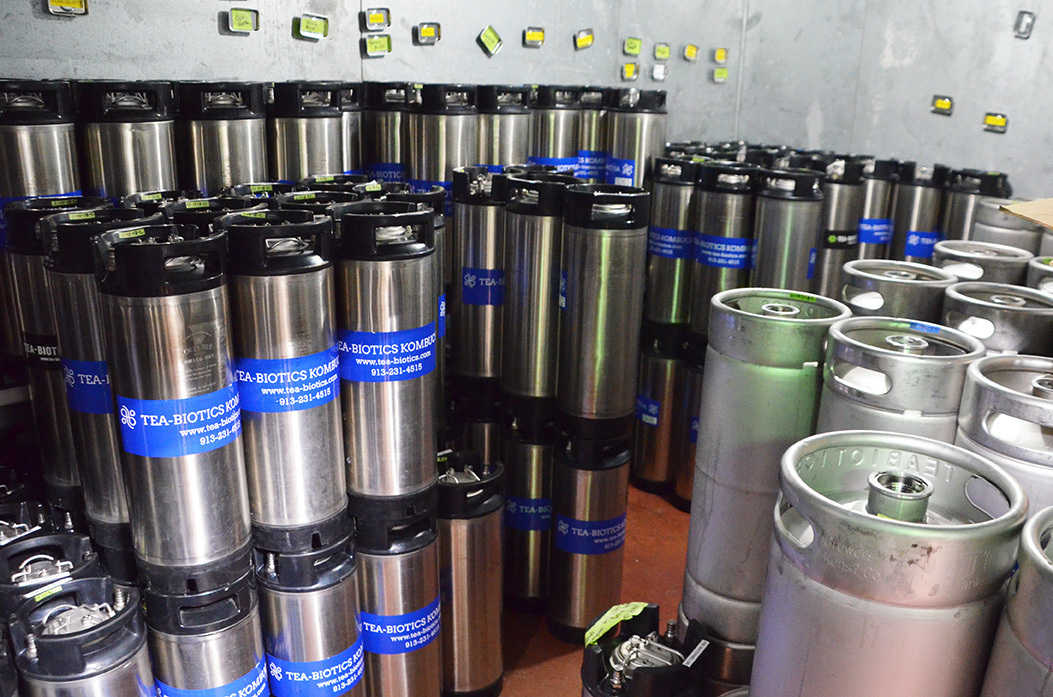
Tea-Biotics Kombucha
In addition to corporate clients like Sporting Kansas City, St. Luke’s Health System, Cerner and Hallmark, which have Tea-Biotics on tap for employees, she said, Bledsoe’s kombucha also pours from a newly built taproom at 11415 Strang Line Road. The 2,000-square-foot facility features 24 flavors, as well as Tea-Biotics’ two-year-old kegging operation at the site.
“We’re busting at the seams, so we had to take on a new space just to have a bottling facility,” she said, referencing a separate 2,000-square-foot space just east of the taproom.
The brewers of another popular local brand — Lucky Elixir Kombucha — opened their own taproom in February in North Kansas City. The Brewkery’s 1443 Swift St. location offers 12 flavors on tap, as well as a casual space for customers to socialize while trying the range of kombucha variations by the glass, bottle, growler or even flights.
“They can come experience kombucha, taste it and see if it’s for them,” said Sean Galloway, co-owner of the Brewkery with his wife, Amy Goldman. “We know this isn’t a beer taproom. People aren’t going to come here and put back three or four drinks, but if they come here and try the flights, they can really discover what they like or don’t like.”
The Brewkery team turned to kombucha after experimenting with business models built around sourdough bread and craft beer, Goldman said. After taking the Ewing Marion Kauffman Foundation’s FastTrac course, the duo realized bread didn’t satisfy their ambitions, and beer had entry challenges.
“We really felt like the market was starting to become oversaturated with craft beer, so we decided to go down the kombucha route because there weren’t that many people in Kansas City making it,” she said. “We thought, ‘Man, this has the potential for a lot of growth in the next 10 years.’”
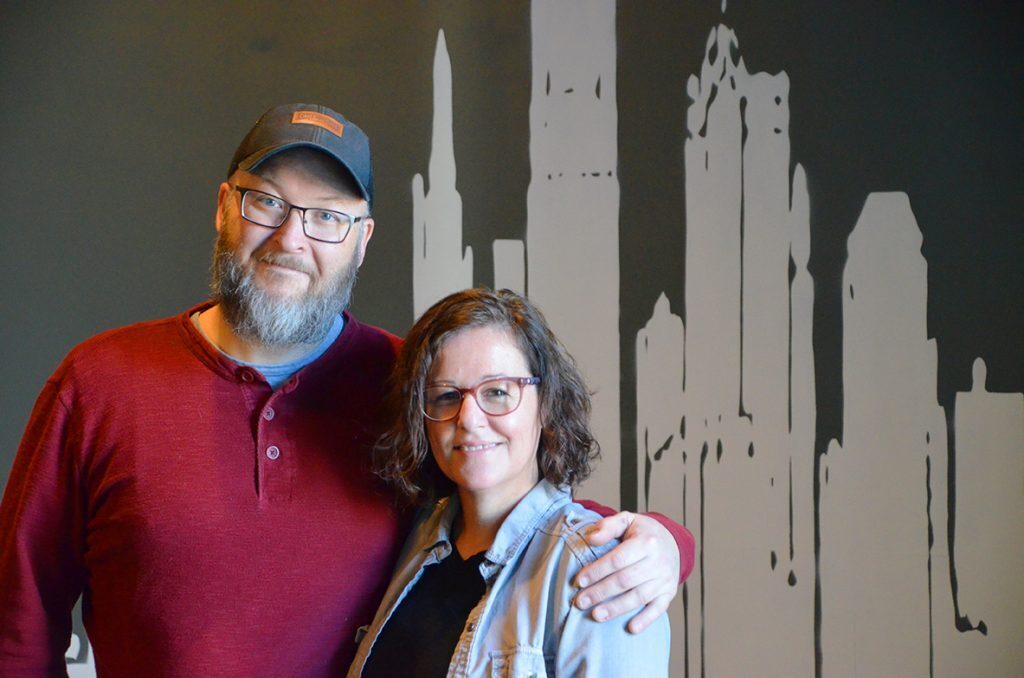
Sean Galloway and Amy Goldman, The Brewkery, Lucky Elixir Kombucha
‘It’s not a hobby anymore’
Bledsoe didn’t intend to grow a sprawling suburban business like Tea-Biotics, she said.
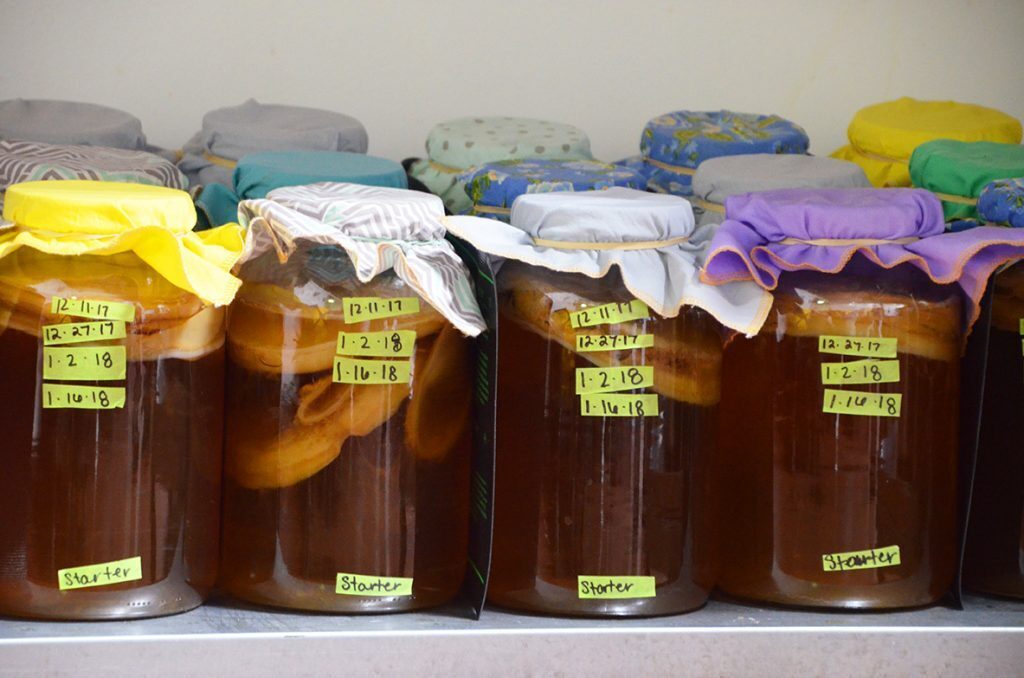
“I was honestly just trying to quit drinking pop. I wanted to be more healthy — I wasn’t at the time,” Bledsoe said. “I stumbled upon kombucha at a farm one day and the lady told me all about it. I didn’t have a clue. She gave me a sample and I loved it. I left that day from her house with a scoby, which creates the kombucha, and I started my own.”
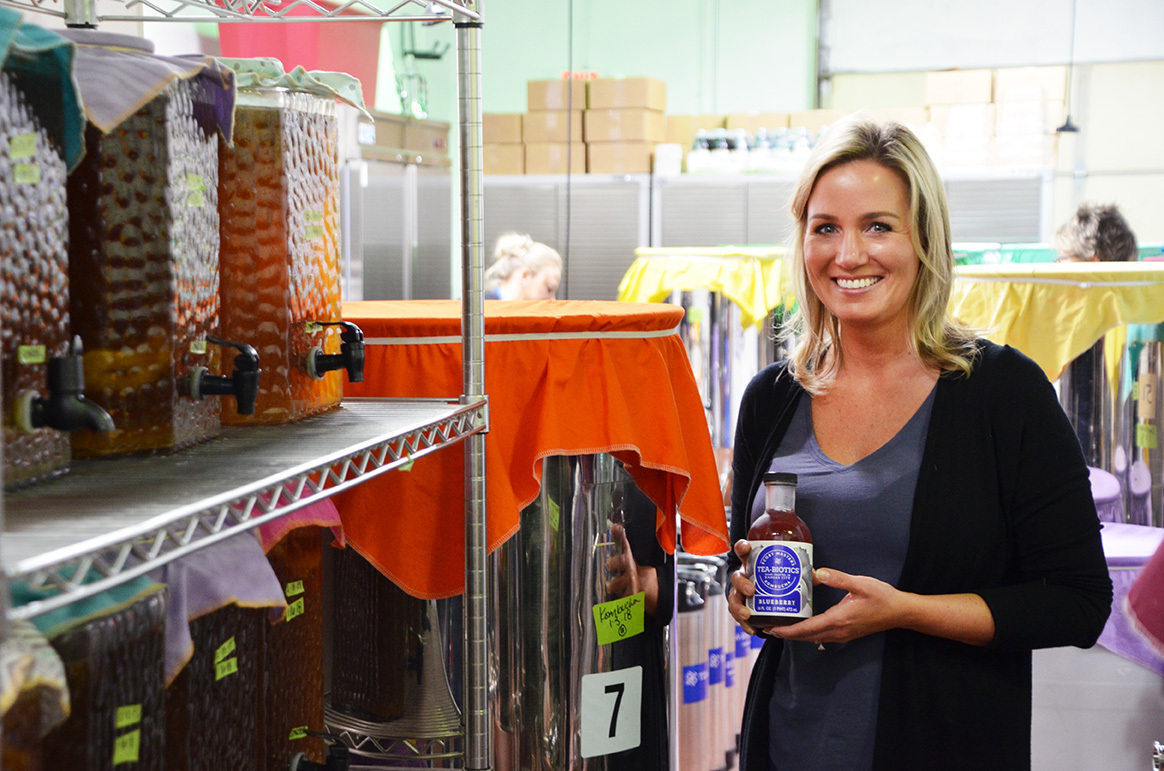
Lisa Bledsoe, Tea-Biotics Kombucha
The scoby — or “symbiotic colony of bacteria and yeast” — is a live, active culture transferred from batch to batch, much like the linked process of making sourdough or friendship breads.
“I started in 2010 with one jar, and then two jars, and then jars and jars and jars. Then I had 5-gallon containers and it quickly took over my house,” Bledsoe said. “At one point, I removed the dining room table and we put in four 55-gallon vats in our kitchen. I was just making it at home and selling it in my garage. We had a little side door and people would come on Mondays — I was open to friends and family, but more and more people started showing up.”
Popularity fermented its own set of problems, she said.
“It was out of hand. I had two kids by that time, and I started telling people, ‘You know, I can’t have my neighbors thinking I’m a drug dealer with all these cars showing up and packing my driveway,’” Bledsoe said.
Customers soon had to make appointments to fill up their bottles, she said. Meanwhile, Bledsoe was experiencing the health benefits of consuming kombucha herself, she said. Her allergies had vanished and she no longer had to use an inhaler, Bledsoe said. (Kombucha is said to influence health from the digestive and immune systems to energy enhancement and weight loss, proponents say.)
Over the course of the next few years, Bledsoe refined Tea-Biotics’ formulas and processes, developing new flavors and moving from only kegging kombucha to more recently expanding the company’s reach through bottling, she said.
“This is the perfect time to ramp up my business and make it profitable — it’s not a hobby anymore,” she said.
In the first 45 days after the pace quickened, Tea-Biotics went from being staffed by just Bledsoe and her husband to hiring nine full-time employees, she said.
“We’re just barely getting started,” Bledsoe said. “I only pushed down the gas pedal in November. We’ll be a million-dollar company by the end of this year. As long as we can get big enough equipment and enough space, there’s no limit to what we can do or how big we can get. We’re shooting for the sky.”
Flavor and freedom
April marks two years since The Brewkery began self-distributing Lucky Elixir to grocery stores, Goldman and Galloway said. The company recently gained a distribution deal that should triple the number of outlets selling the brand, they said.
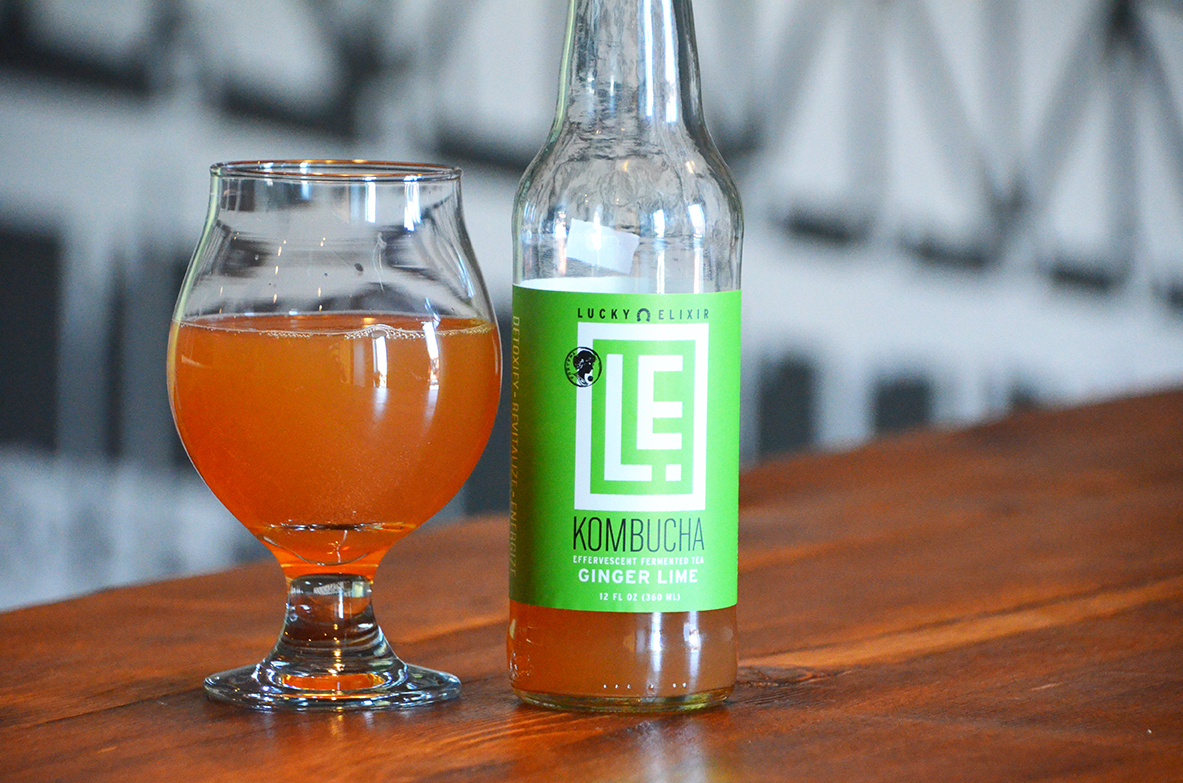
Lucky Elixir Kombucha, The Brewkery
“If you go to the grocery store, the coolers are full of kombucha, especially national brands,” Goldman said. “Tea-Biotics, our competitor, starting bottling a few months ago, so now there are two local options. It’s really hard for a consumer to make a choice. A lot of people are just looking at price, which makes it difficult for a small, local company to compete with a Coke or Pepsi when they enter the kombucha market.”
A third regional kombucha — Kanbucha — is brewed in Lawrence.
With leading brands like GT’s and KeVita leading the national conversation about kombucha, the industry is expected to see a compound annual growth rate of 17.7 percent through 2024, according to global market reports.
Flavor allows local brewers an opportunity to entice consumers with a wider variety of options than their national counterparts, as well as intensity that matches the appetite of the region, Galloway said.
“We want it to be more palatable for the area we’re in. We’re not in San Diego, but we want people to experience the health benefits,” he said, noting Lucky Elixir has a more mellow flavor than some national brands. “If they can’t get past the taste, then that’s never going to happen.”
Kombucha brewing tends to allow more creativity in the craftsmanship process than brewing craft beer, Galloway said.
“You’re not necessarily brewing to a certain style, like it has to be an IPA,” he said. “There’s a lot more freedom.”
The fermented finish isn’t necessarily the end of the creative process, Bledsoe said. Tea-Biotics’ Mule Mix flavor is used at establishments like Barley’s Kitchen + Tap to craft a Moscow Mule with the ginger-tinged kombucha, wine and vodka, she said.
“If you go to California — or even places like Wisconsin — every bar in town has kombucha and they’re making cocktails with it. In Kansas City, we’re just a little bit behind the trend,” Bledsoe said. “It’s a more healthy, probiotic alternative to using Coke or some other pop in cocktails.”
Tea-Biotics Kombucha
Give ’em some sugar
The success of any kombucha depends on the interaction between the scoby and sugars during the fermentation process, Goldman said.
“Lucky Elixir starts as sweet tea. We use black tea from China and organic cane sugar,” she said. “The yeast in the culture consumes the sugar and that creates alcohol, and then the bacteria in the culture consumes the alcohol. It also produces acetic acid, which is where the sour flavor comes from. You’re left with a really low-sugar drink after the yeast does its job.”
“After the first ferment, it’s finished kombucha,” Goldman added. “You can drink it just like that without any flavoring. It almost has an apple cider vinegar taste.”
Adding elements like ginger and lime, however, can transform the flavor into more of a ginger beer experience, she said.
Other, perhaps less tangible, variables also are at play, Bledsoe said.
“Energy is very important to me. It’s contagious, and it can be negative,” she said referencing the potential impact of staff members at Tea-Biotics. “So it’s super important to me that we all are being the best people that we can be.”
“Kombucha is a living beverage, and I’m very passionate about the fact that the energy in this room affects how the kombucha ferments — not that it knows how much we love it or anything, but I do sometimes talk to my scobys,” Bledsoe added. “I tell them thank you and that I appreciate them.”
That human touch helps craft a brew that can’t be matched by larger, automated, more-industrial kombucha operations, she said.
“This is literally handcrafted from every step of the process,” she said.
Featured Business

2018 Startups to Watch
stats here
Related Posts on Startland News
Digital Sandbox partners with Olathe to lift startups
Business incubator Digital Sandbox KC is widening its reach to suburban Kansas City. Digital Sandbox is partnering with the City of Olathe, Kan., to help launch businesses and boost entrepreneurship with its proof-of-concept model. The organization invests up to $25,000 in businesses for specific projects that help them secure additional funding. “Digital Sandbox has done…
FCC commissioner Ajit Pai visits with local entrepreneurs
In a reunion trip to Kansas City, a federal communications official visited with entrepreneurs and business leaders to discuss the effects of high-speed Internet access in the area. Ajit Pai, a commissioner with the Federal Communications Commission, stopped by the Kansas City Startup Village Thursday on a tour to gain more information on broadband expansion…
New focus at Sprint Accelerator hopes to lure local firms
Now wrapped up with its second startup class, the Sprint Mobile Health Accelerator has begun prepping for its new mission in 2016. Instead of focusing specifically on mobile health technologies, the Techstars-led accelerator will broadly welcome startups in all mobile technology. The Kansas City-based accelerator welcomes about 10 startups each year from around the world…
Kansas City sculpts new program to fund artists
The City of Kansas City, Mo., is putting its money where its mouth is in support of local artists. Moving forward, artists will be eligible to receive funding through a micro-lending program, piloting to support the growth and stability of their creative practice. Created through a collaboration between the city, the Economic Development Corporation of…