
KC coders developing government accountability tool for newsrooms, public
July 2, 2020 | Jack Anstine

As an ongoing pandemic keeps COVID-19 in the headlines, it’s difficult for Kansas City journalists to cover all local government meetings — too often resulting in critical developments and decisions falling through the cracks, say newsroom leaders.
Even in the best of times, activity is spread across 119 different municipalities in the region, proving a challenge for reporters, noted Mary King.“Sometimes looking for information with local governments can be like searching through a wormhole,” said King, editor of the Jackson County Advocate in Grandview. “I may need information I’m working on pretty quickly, but the real world outside of journalism is on a different timeline.”
KC Digital Drive, a civic nonprofit focused on making Kansas City a digital leader, is developing a new tool to help, said Aaron Deacon, managing director of the group.
“The hope is [to streamline the process and make leaders’ activity more accessible] and that will make the reporting job of those who cover local government more efficient,” Deacon said, who also is co-founder of the health tech startup Helix Health.
Inspiration for the tool came from an informal Kansas City media collaborative that began meeting virtually this spring to discuss COVID-19’s impact on journalism. Organized by the nonprofit investigative journalism operation at The Beacon, the collaborative included The Columbia Missourian at the University of Missouri School of Journalism, Jackson County Advocate, The Kansas City Star, Kansas Press Association, KCUR, KLC Journal, Northeast News, Shawnee Mission Post and Startland News.

Jennifer Hack Wolf, The Beacon
Members of the group expressed concern that an abundance of coverage for COVID-19 would mean local government could go unwatched as reporters chased the latest pandemic developments, said Jennifer Hack Wolf, audience development manager at The Beacon.
“It’s very easy for a lot of local government work to go uncovered, especially as newsroom staffs are shrinking,” Hack Wolf said.
“And then with COVID-19, we saw a new problem … local governments were adapting to doing business through virtual models,” she continued. “That created some difficulties for access to that information.”
Enter Deacon and his group of coders.
“KC Digital Drive was curious about this collaborative we were forming and wanted to know if there might be a technical tool that we could all work on together,” Hack Wolf said. “We came up with this idea for our local government reporting tool.”

Wireframing concepts in the design process; image courtesy of Code for KC
Taking the concept to KC Digital Drive’s volunteer civic hacker program — Code for KC, the local chapter of the Code for America network — the process began with user experience (UX) research.
“We interviewed a lot of local government reporters to really understand what they need out of this tool,” said Bree Walter, who led the UX effort with Jason Lopez.
The team quickly determined government bodies provide information inconsistently, Deacon said.
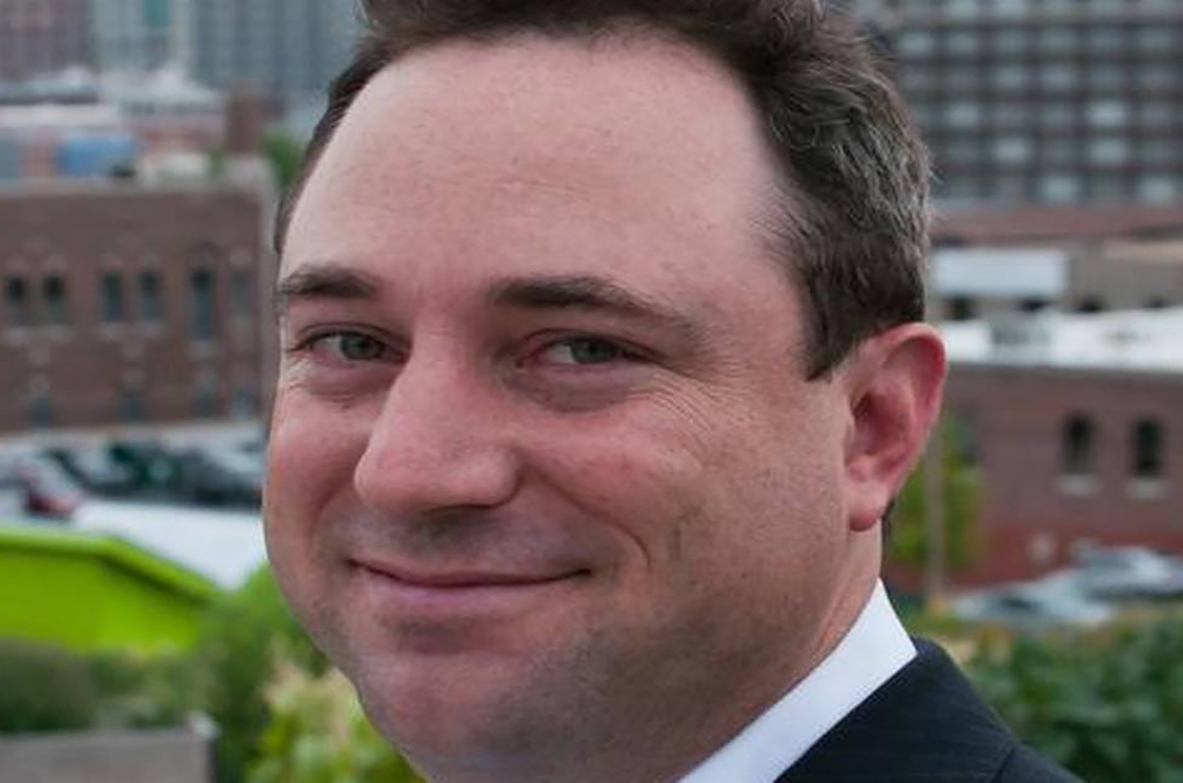
Aaron Deacon, KC Digital Drive, Helix Health
“It’s kind of a hodgepodge of links and PDF documents and Zoom meetings,” he said. “It’s not always easy to track the flow of resolutions and ordinances through committee and into council.”
The feature Walter said will be the most valuable: a filtering function that narrows search results based on location and content. Reporters can use the tool to map local trends, and do more independent investigating, she added.
“This tool can do so much to not just give reporters information that they’re looking for, but even helping them to see beyond just the text,” Walter said.
The UX team has begun working on the tool’s website framework, early prototype designs and recruiting developers for the project, Deacon said. Development could begin as early as a few weeks from now.
The tool ultimately will help all people, not just journalists, Hack Wolf, said.
“People want to know what’s going on in their communities. And with so much information available at our fingertips, a lot of people want to be able to dig in and decide for themselves,” she said. “So if they could be able to research what was going on in their local neighborhood, that’d be helpful.”
The project also will hold local governments accountable, Hack Wolf added.
“The people in charge need to know that someone’s paying attention,” she said. “We think government transparency is good for everyone.”
[divide]
This story was produced through a collaboration between Missouri Business Alert and Startland News.
[divide]

This story is possible thanks to support from the Ewing Marion Kauffman Foundation, a private, nonpartisan foundation that works together with communities in education and entrepreneurship to create uncommon solutions and empower people to shape their futures and be successful.
For more information, visit www.kauffman.org and connect at www.twitter.com/kauffmanfdn and www.facebook.com/kauffmanfdn
Featured Business

2020 Startups to Watch
stats here
Related Posts on Startland News
SNAP cuts are ‘worse than they look on paper’: Food access advocates warn shelves could go bare overnight
Chef Shanita McAfee-Bryant doesn’t mince words about perceptions of the hungry Kansas Citians she serves daily through her award-winning culinary social venture. “These are the people who — if you listen to the rhetoric — are deemed ‘lazy,’” the founder of The Prospect KC’s NourishKC Community Kitchen told Startland News. “We know the narratives being…
LISTEN: Fermenting a clean future through products from meat alternatives to skin creams and baby formula
On this episode of Startland News’ Plug and Play Topeka founder podcast series, we chat with Francesca Gallucci of Natáur, a Baltimore-based biotech company that’s reimagining how essential nutrients are made. Combining synthetic biology, metabolic engineering, and eco-friendly fermentation, they’re producing bio-based taurine (and other naturally occurring sulfur compounds) without relying on petroleum. Gallucci takes…
KCMO slashes fees for outdoor dining permits, launches dining trail for grant winning projects
Kansas City has officially eliminated outdoor dining permit fees, reducing the cost from $850 to zero, thanks to the momentum created by a city-led initiative to encourage investment in outdoor dining experiences, city leaders announced this week, unveiling new plans to promote funded businesses and their projects. Launched in 2024, the Outdoor Dining Enhancement Program…
World Cup will produce KC small biz millionaires in just weeks, leaders say, but it’s only the start
Kansas City can’t look at the World Cup in 2026 as one big event where businesses are going to make good money for a while, and then everything goes back to normal, said Wes Rogers. “This has to be the beginning of the next chapter of our city,” the 2nd District Councilman for Kansas City,…