
Biden-Harris official tours KC BioHub; region prepares to reapply for federal Tech Hubs funding
October 7, 2024 | Startland News Staff

A visit from a top federal economic development leader early this month offered regional leaders an opportunity to showcase and build upon Kansas City’s strategy to increase domestic production of life-saving vaccines within the footprint of the newly established KC BioHub.

Maryam Janani-Flores, chief of staff for the U.S. Department of Commerce’s Economic Development Administration (EDA), toured biotech sites in Kansas City last week, guided by officials from the Kansas City Inclusive Biologics and Biomanufacturing Tech Hub (KC BioHub) initiative, which serves Kansas and Missouri.
“It’s thrilling to see the momentum behind Kansas City’s biotech industry,” said Melissa Roberts Chapman, president of KC BioHub, who was among those leading Janani-Flores through KC’s potential as a source for preventative technologies. “I’m excited to lead our region as we build our capacity to discover, test, and manufacture the life-saving vaccines and therapeutics that will keep our loved ones and our country safe.”
The Biden-Harris Administration, through the EDA, designated the KC BioHub, a coalition led by the BioNexus KC, as a Tech Hub in October 2023. Groups backing the initiative joined forces this spring to submit a $75 million funding proposal via the Tech Hubs program. While the plan failed to gain traction in Washington, D.C., the KC BioHub in July was awarded $500,000 in federal dollars to keep the effort moving forward.
KC BioHub leaders currently are retooling and refining their proposal, gathering community input, and waiting for the Tech Hubs initiative — a flagship initiative aimed at advancing U.S. leadership in technologies and industries critical to national security — to resume taking new applications.

Erika Brice, social investment officer for the Kresge Foundation, speaks to a group of economic development leaders, startup founders, KC BioHub officials and representatives from the U.S. Department of Commerce’s Economic Development Administration (EDA) during a recent tour of Kansas City; photo courtesy of BioNexus KC
The Kansas City region boasts a unique confluence of factors that propel the growth of the biologics and biomanufacturing industry, according to the KC BioHub, which touts such regional factors as:
- Fostering Collaboration: KC connects a diverse network of researchers, industry leaders, and investors, sparking innovation and accelerating the commercialization of biomanufacturing technologies.
- Leveraging Regional Strengths: With a strong talent pool, central location, and established bioscience infrastructure, KC attracts partnerships and investments that push the industry forward.
- Coordinating Resources: As a central hub, KC strategically communicates regional expertise, assets, and funding opportunities, driving the development of lifesaving biologics and biomanufacturing processes.
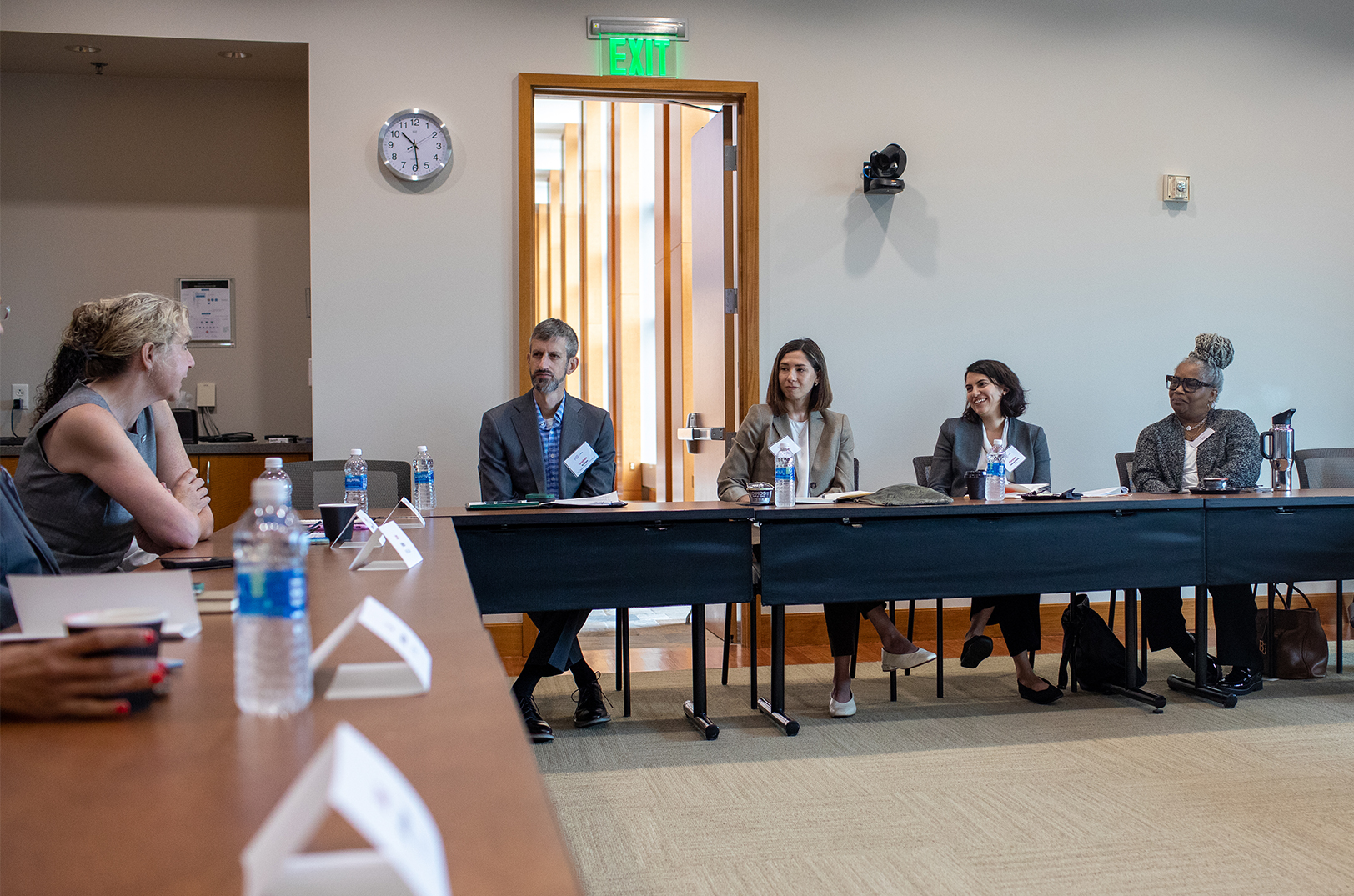
Regional leaders speak with Maryam Janani-Flores, chief of staff for the U.S. Department of Commerce’s Economic Development Administration (EDA), during a roundtable discussion in Kansas City; photo courtesy of BioNexus KC
The designation of the KC BioHub in 2023 when the Tech Hubs program launched is a strong endorsement of the region’s plan to supercharge its critical technology ecosystem and become a global leader in biomanufacturing over the next decade, advancing U.S. national security and global competitiveness, said Gina Raimondo, U.S. secretary of Commerce.
“KC BioHub embodies the spirit and potential of the Tech Hubs Program to take centers of excellence and make them world-class tech ecosystems through targeted investments,” said Raimondo. “That’s precisely why I’ve asked Maryam Janani-Flores to travel to Kansas and Missouri with a team to meet with leadership and provide technical assistance on their strategy. The Tech Hubs Program is crucial to ensuring tech industries vital to U.S. economic and national security start, stay, and grow in the U.S., and that’s why I’m committed to future rounds of funding and working with lawmakers to support additional federal resources to support all of our designees.”
The Tech Hubs Program, authorized for $10 billion in the bipartisan CHIPS and Science Act, is designed to increase the capacity and pace with which Americans make, deliver, and deploy innovative technologies, creating new, growing companies and new, good jobs.
Featured Business

2024 Startups to Watch
stats here
Related Posts on Startland News
ECJC relocates office, updates brand
The Enterprise Center in Johnson County is shaking things up. The non-profit organization that connects entrepreneurs to the resources they need to grow revealed Thursday an updated website, brand identity, and new office location. “This move is the culmination of a long, strategic transition to ensure that as Kansas City’s entrepreneurial community changes, we change…
Former Sprint COO LeMay dishes on KC capital, failure
There are few people in Kansas City more connected into the area’s investor, corporate and startup community than FarmLink CEO Ron LeMay. Also now managing director of Kansas City-based OpenAir Equity Partners, LeMay frequently sees the successes and failures of the metro area’s capital landscape. The former Sprint COO recently spoke with dozens of Kansas…
RFP365 partners with Kansas City, raises $950K
On the heels of a six-figure raise, area tech firm RFP365 recently landed the City of Kansas City as a client for its software that eases the request for proposal process. The company’s deal with Kansas City was born from the city’s “Innovation Partnership” program, which affords entrepreneurs the opportunity to “test drive” their technologies…
Study: Gov should take long-term approach to grow new businesses
A recent study by the Ewing Marion Kauffman Foundation reports that while governments have long supported entrepreneurship, new business creation is waning. The study — Guidelines for Local and State Governments to Promote Entrepreneurship — found that new businesses comprised about 8 percent of all U.S. businesses in 2011, down from roughly 15 percent in the…