
The problem with asking customers what they want? They lie (but not to this KC data duo)
January 4, 2022 | Katie Bean

For years, Diana Kander has researched how to interview customers — specifically how to get the truth from them, she said. It’s been key to helping her work with companies to innovate and grow.
But in early 2021 the consultant and author of “All In Startup” and “The Curiosity Muscle” was perplexed by a problem shared with her by a colleague: Customers registering and completing a company’s onboarding process, but then failing to use the product they had signed up for.
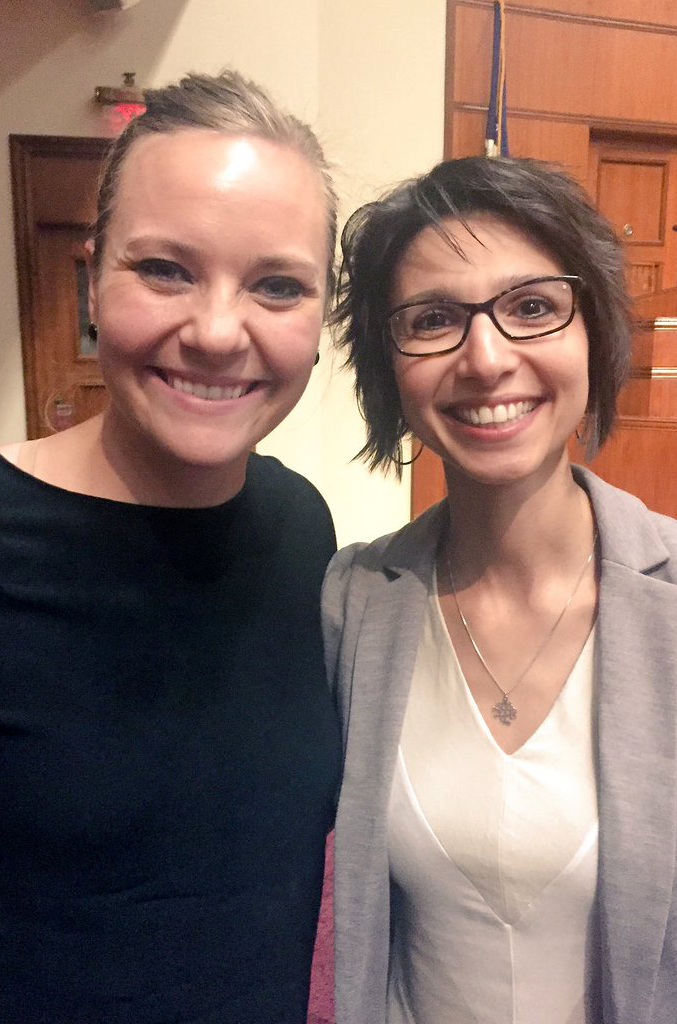
Jessie Jacob and Diana Kander, JD Insights
She reached out to longtime collaborator Jessie Jacob for help.
After Jacob, a fellow Kansas Citian and startup community mainstay, interviewed about 40 customers by phone, the data boon got to the bottom of their quandary. The duo also observed people were much more willing people to talk to an independent third party about their experience, rather than their contact at the company.
They quickly recognized the issue wasn’t unique to any one company, and the experience prompted Kander and Jacob’s new partnership: JD Insights.
Practicing what they preach, they first polled various companies to float the idea and find out where it would have the most value. Through their research and work this year, Kander and Jacob homed in on working with product teams, primarily at B2B software companies. Their research often can help the team prioritize what customers want most, they said.
The secret sauce
It’s no easy task to get a former customer or prospect to pick up the phone and honestly say why they chose not to work with a certain company. In addition to asking people to make time, there’s also the psychology of the situation, Kander said: they’re wired to lie.
It’s a version of what locally is referred to as “Kansas City nice.”

Diana Kander
“One of these scientific principles is that people, they don’t want to hurt your feelings or the company, and because they’re so kind, they will tell you what they think you want to hear,” she said. “So it takes a lot of training to spot someone being nice to you.”
She’s studied this phenomenon for years and written about it in her books. Using that deep knowledge of customer psyche, Kander has learned how to get to the real answers her clients need, Jacob said.
“Diana is uniquely strong at asking really good questions,” she continued. “That’s also part of the secret sauce of being warm and friendly and welcoming and approachable on the phone, but also being able to put together thoughtful questions that we know will be able to answer the ultimate hypothesis.”
People frequently are interested in sharing their opinions, and, in many cases, their issue hasn’t yet been resolved, the duo has found. Talking to JD Insights as a third party defuses some of the emotional charge of revealing their decision-making process, and the promise of anonymity also entices people to share the truth, they said.
Combining such factors has led JD Insights to “magical” results, Jacob said: Many times, 20 percent to 30 percent of the people on a client’s list are willing to chat.
“The fact that our customers are having 45-minute phone calls with us is also mind-blowing,” she said. “They are very passionate and want things to get better, and they want to feel heard and want a solution for whatever problem they’re experiencing.”
Turning insights into innovation
For Jacob and Kander, the overarching goal of JD Insights is to support clients in creating a team dynamic that spurs innovation — which builds on Jacob’s experience in culture creation and Kander’s expertise in creating agile teams. Jacob has worked with many companies to create and monitor employee engagement, but she says it’s equally important to take the pulse of customer engagement.
By gaining those valuable answers about customers, the results JD Insights brings to the table have helped teams at client companies work more efficiently in tandem, rather than existing in silos, they said.

Jessie Jacob
One benefit Kander and Jacob have seen: a shift to reliance on data rather than gut feelings for strategy.
“The average organization has all these different departments. … (Product teams are) having a struggle prioritizing the road map and knowing what’s central, what’s the priority — ‘How do we efficiently build? What does our team have the capacity to build on the engineering side of things?’” Jacob said. “So we’re helping to either validate or invalidate the product strategy.”
In less than a year, their efforts are paying off: Clients are asking JD Insights to do recurring projects. Kander and Jacob are considering a subscription model and might expand their offerings to include employee exit interviews or “current employee stay interviews,” Jacob said, which stems from their passion for culture and, like their external surveys, can help uncover the true sentiment in the workplace.
With the robust results the company has seen comes the need to add team members to conduct client interviews. But the goal is to stay small, Jacob said.
“We’re not trying to have a huge team, not trying to scale this to be a large enterprise,” she said. “We’re intentionally wanting to keep it small and be more of a white-glove service for the small amount of companies that we do work with.”
Kander and Jacob want to ensure they stay focused on delivering actionable insights to their clients.
“The report is like gold to a lot of these organizations,” Jacob said.
[divide]
This story is possible thanks to support from the Ewing Marion Kauffman Foundation, a private, nonpartisan foundation that works together with communities in education and entrepreneurship to create uncommon solutions and empower people to shape their futures and be successful.
For more information, visit www.kauffman.org and connect at www.twitter.com/kauffmanfdn and www.facebook.com/kauffmanfdn

2022 Startups to Watch
stats here
Related Posts on Startland News
Coming UMKC innovation center to serve students, entrepreneurs
With funding shored up from private and public donors, the University of Missouri-Kansas City is planning to move ahead with its plan to build the Robert W. Plaster Free Enterprise Center to support students and entrepreneurs. Missouri Gov. Jay Nixon announced Tuesday that the state is allocating $7.4 million to the center, which represents half…
Security firm Nodal nabs $100K, ramps up hiring
Good news is stacking up for Kansas City-based Nodal Industries. The security hardware tech company recently snagged $100,000 in seed funding as part of an opportunity to participate in the 500 Startup accelerator program, based in Mountain View, Calif. The funding will allow Nodal to hire up to eight people, as well as ramp up production…
Play-It Health lands in top-ranked digital health accelerator
As with many successful startups, the idea for Play-It Health was born out of personal experience with an unsolved industry need. Kim Gandy, a former clinician and now the founder and CEO of Play-It Health, recognized that patients were having trouble engaging and adhering to their medical regimen. In the worst cases, this led to…
LaunchKC, Techweek to welcome 10 tech firms to KC in style
In roughly four months, Kansas City will welcome a crop of tech startups bolstered by thousands of dollars in funding and a rockstar arrival. Kansas City’s LaunchKC competition — which aims to attract 10 tech firms to relocate to KC with $50,000 grants — has partnered with national tech conference Techweek to offer the winners…