
Start small, build demand, then scale: Founders offer blueprint to creating streetwear brands that outlast today’s trend
February 4, 2025 | Taylor Wilmore

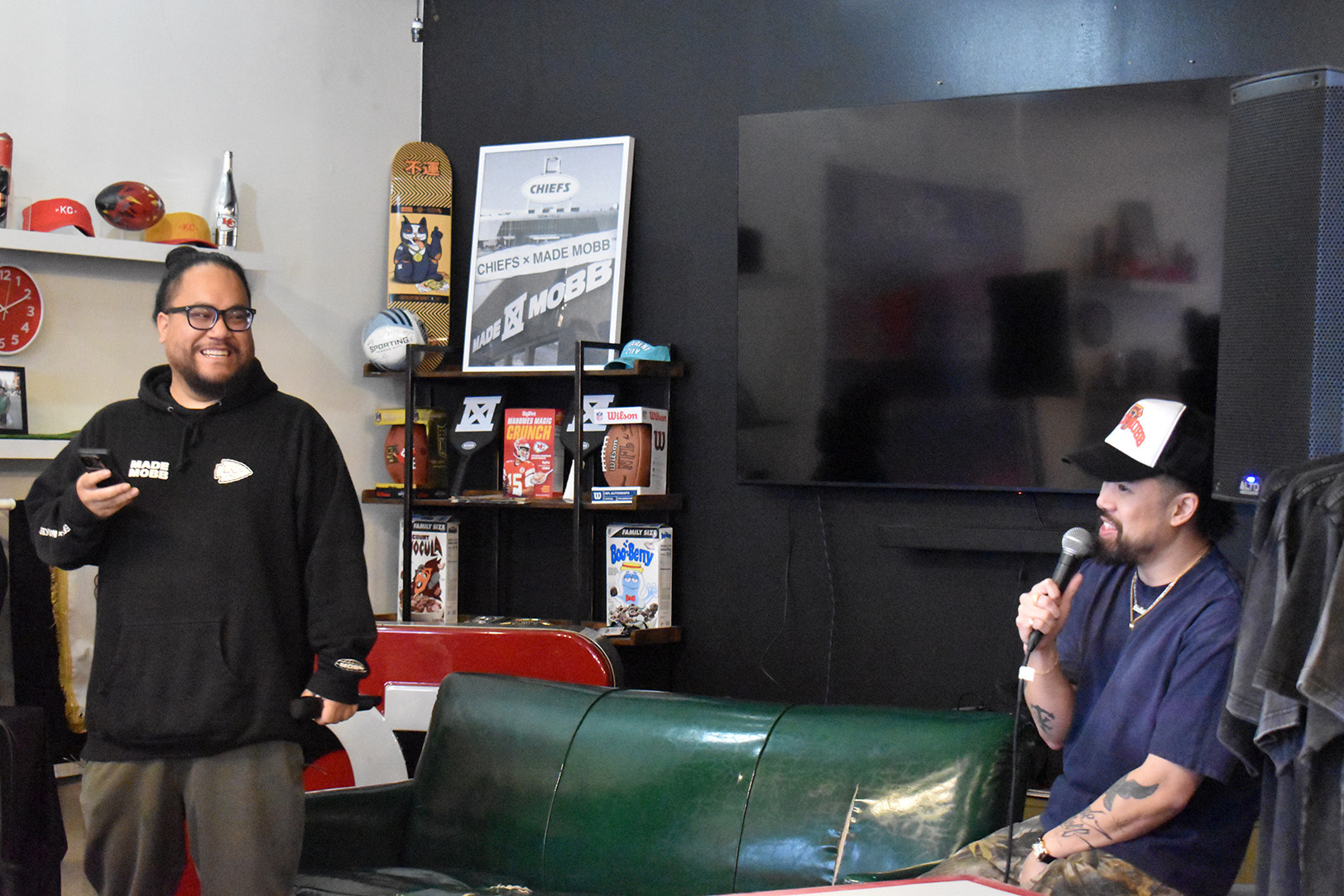
With Kansas City’s often-crowded apparel scene mobbed by designers hoping to cash in on the Chiefs’ Super Bowl success, building a lasting brand is about much more than just having a good idea that meets the moment, said Vu Radley.
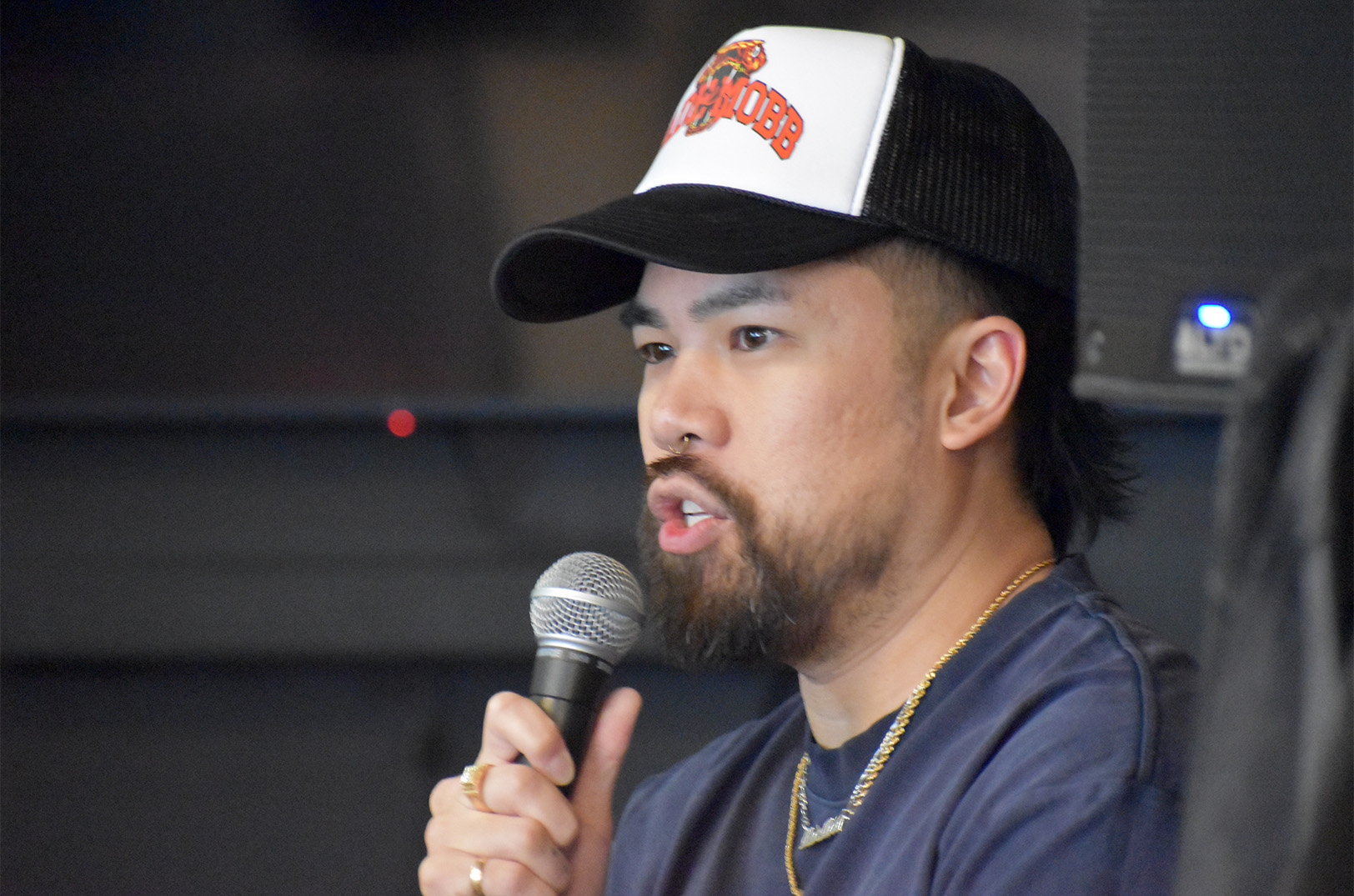
Vu Radley, MADE MOBB, during “The Blueprint: How To Launch Your Own Brand” event; photo by Taylor Wilmore, Startland News
“You have to know your ‘why’, who you are and why you’re doing it,” the MADE MOBB co-founder said. “That’s what keeps you going beyond the money.”
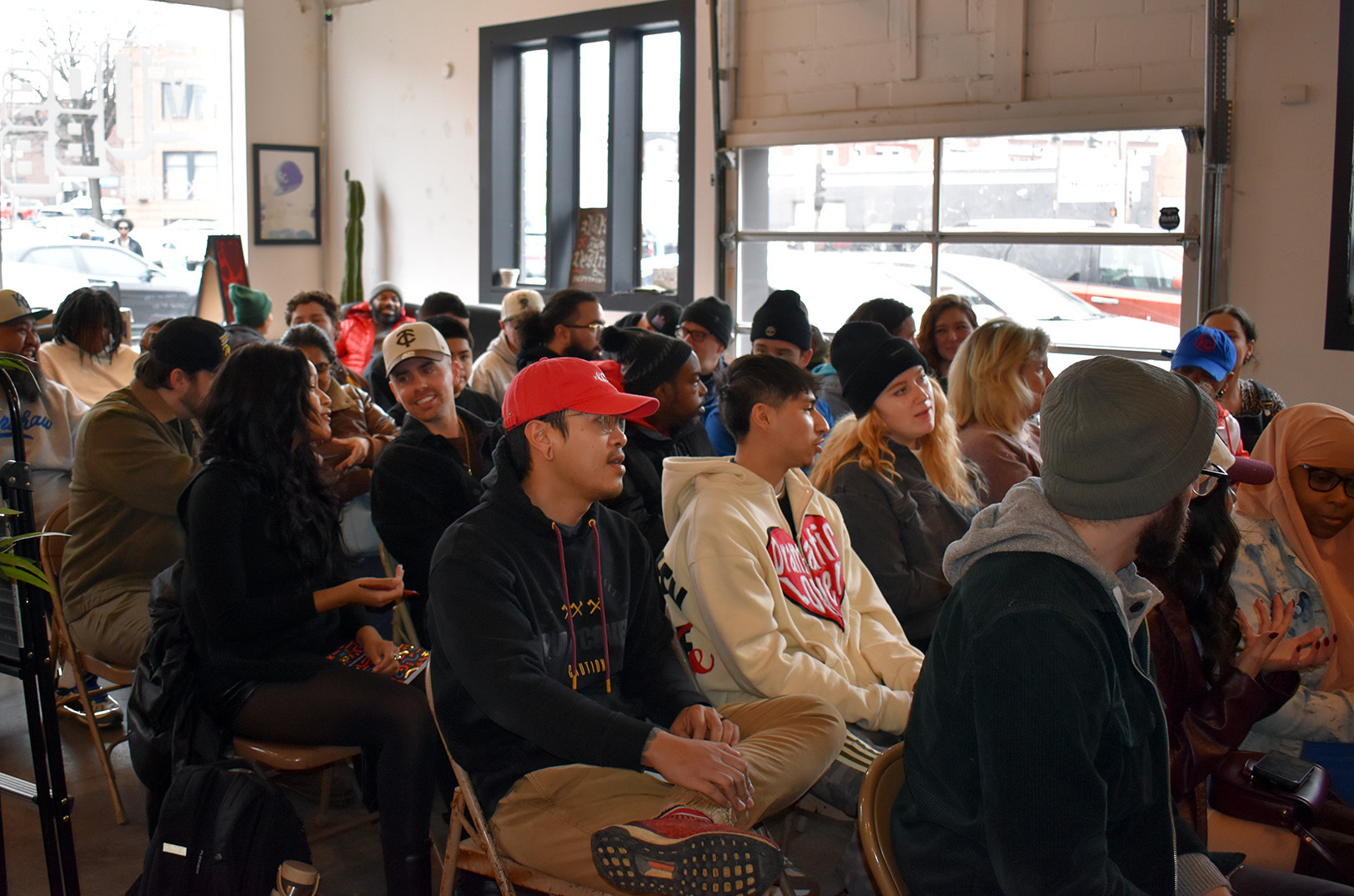
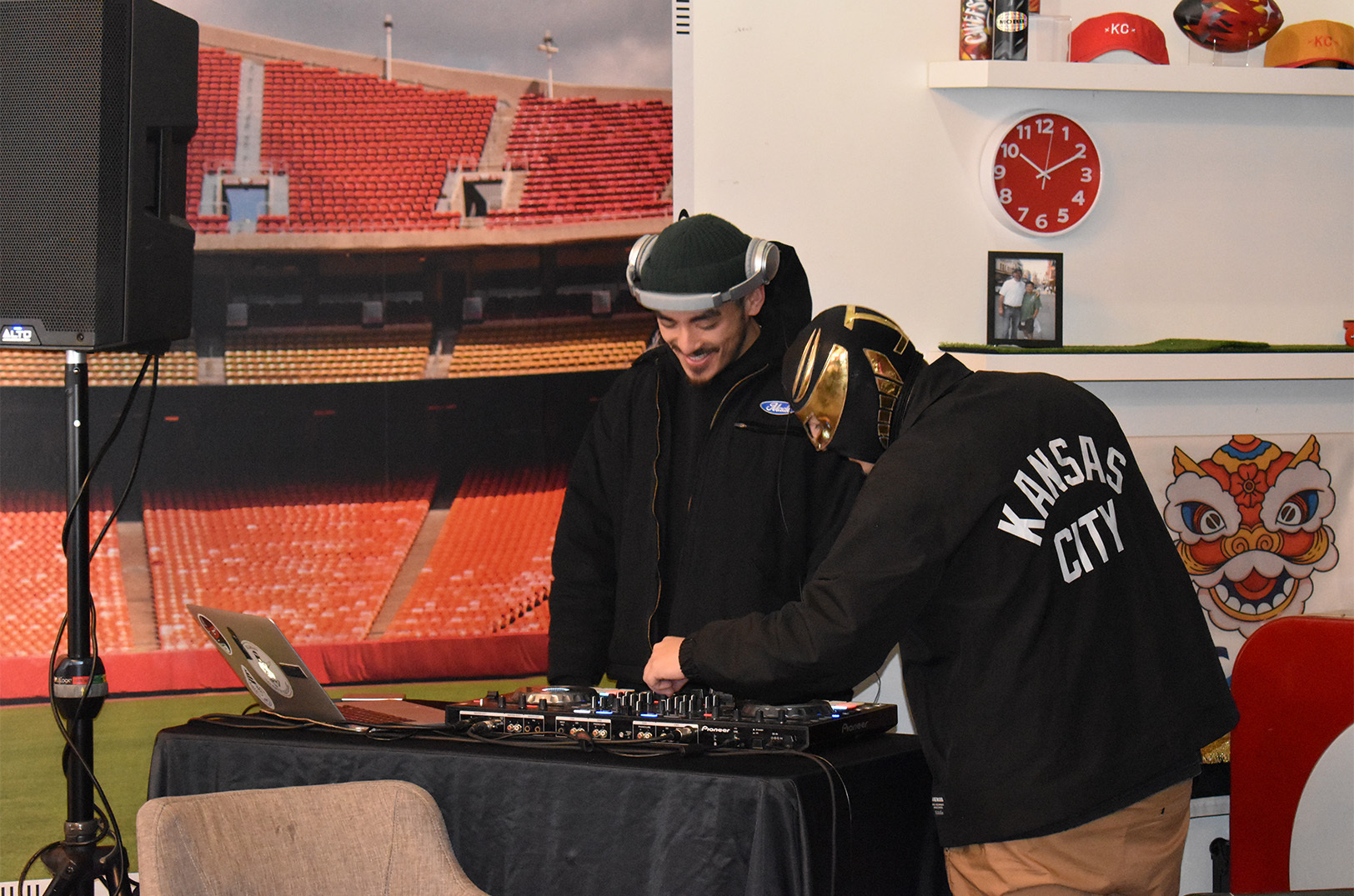
Aspiring streetwear and apparel entrepreneurs gathered Saturday in Radley’s storefront on Southwest Boulevard for a crash course in turning creative vision into a profitable business. Bringing together industry professionals from Kansas City’s fashion and marketing scene, the one-time event showcased underground insights on everything from production to branding.
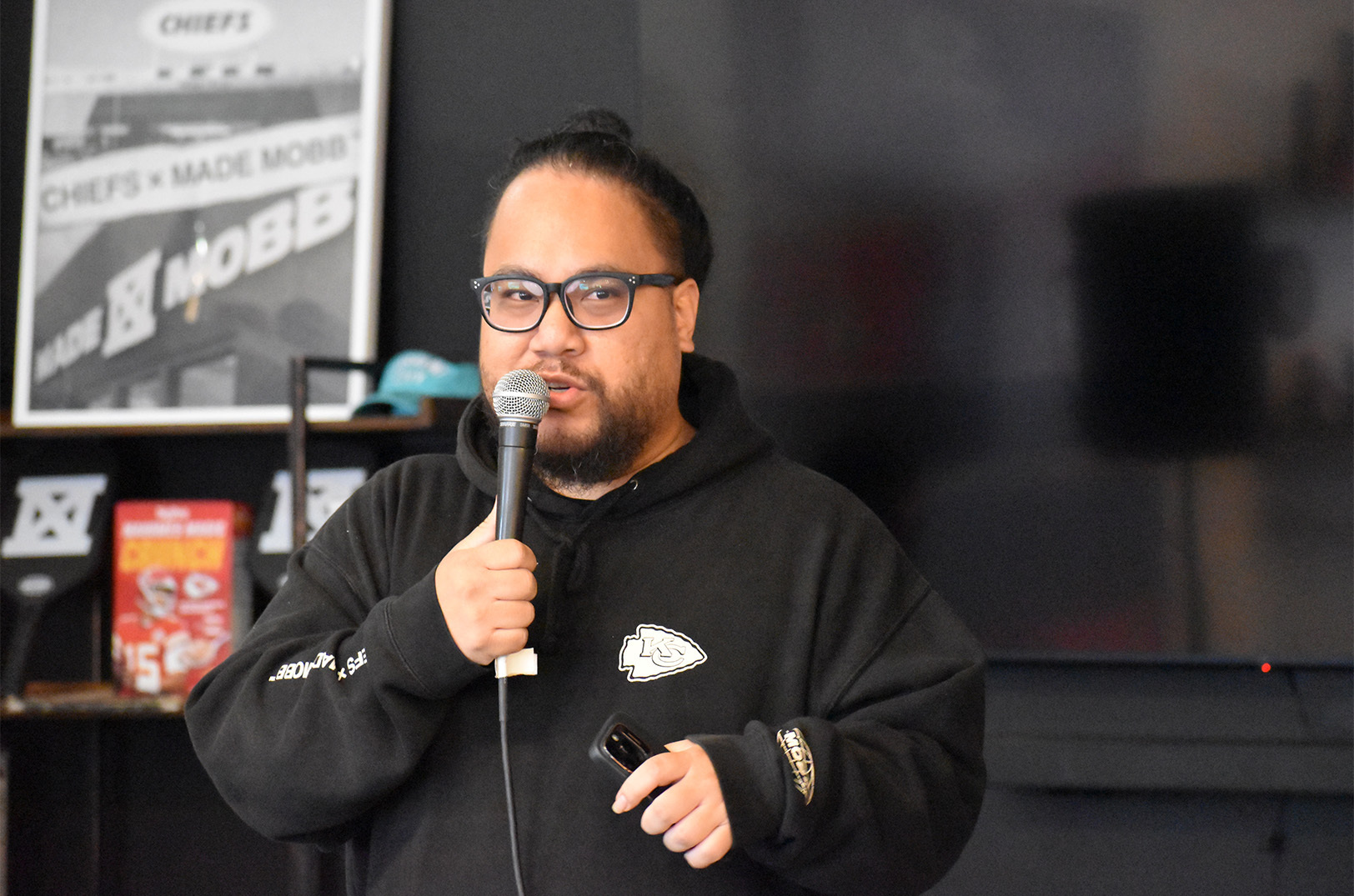
“I’m giving y’all free game,” Mark Launiu, co-founder of MADE MOBB told the packed crowd.
“There’s no reinventing the wheel,” he added. “The blueprint is already out there, and we’re here to show people how to follow it in a way that works for them.”
Making the hustle last
Understanding that the life of a clothing brand begins with truly understanding production is one of the biggest hurdles entrepreneurs face, said Tyler Love and Alex Trinkle, co-founders of the creator-focused print shop Streetwearhouse.
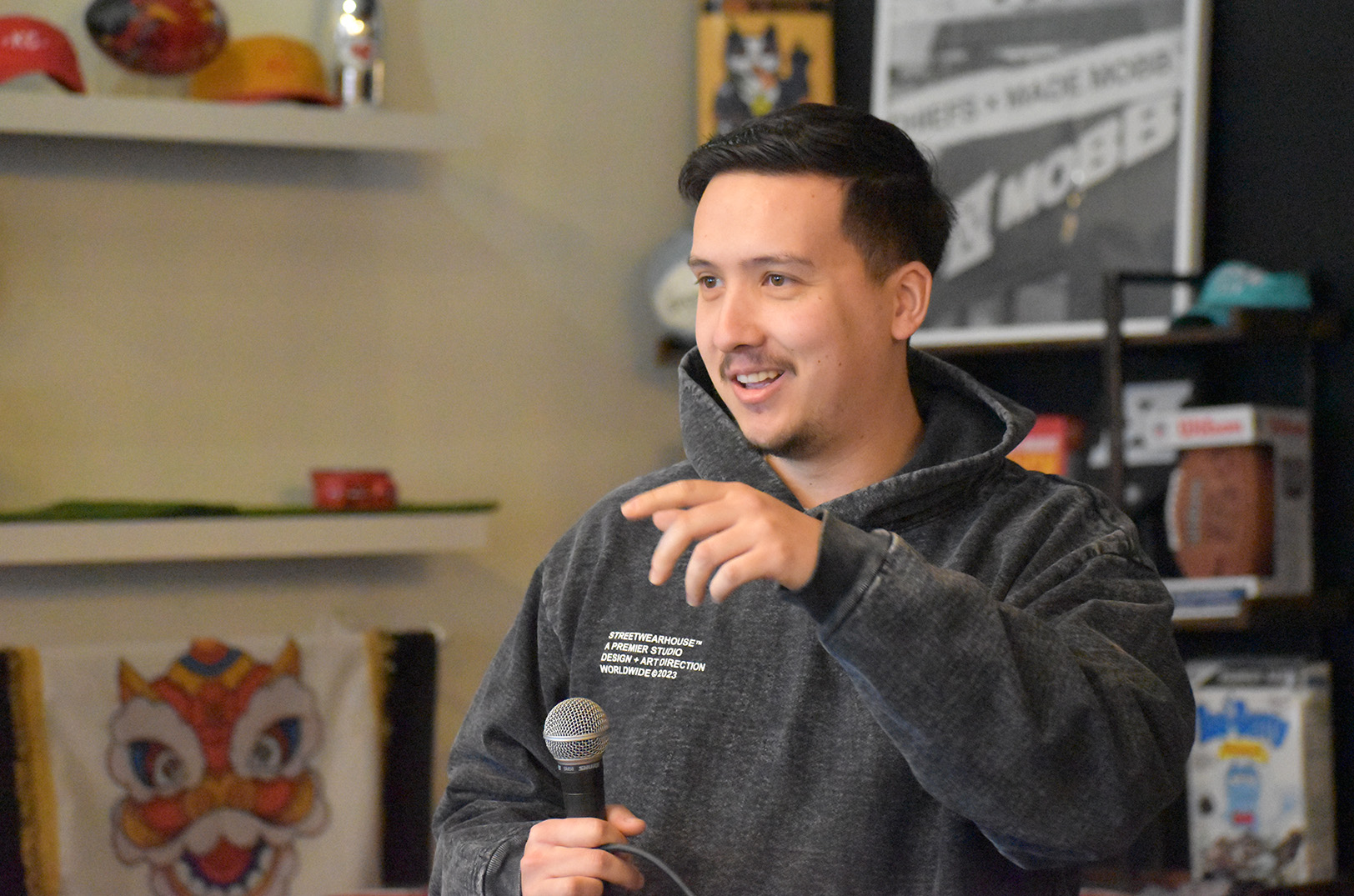
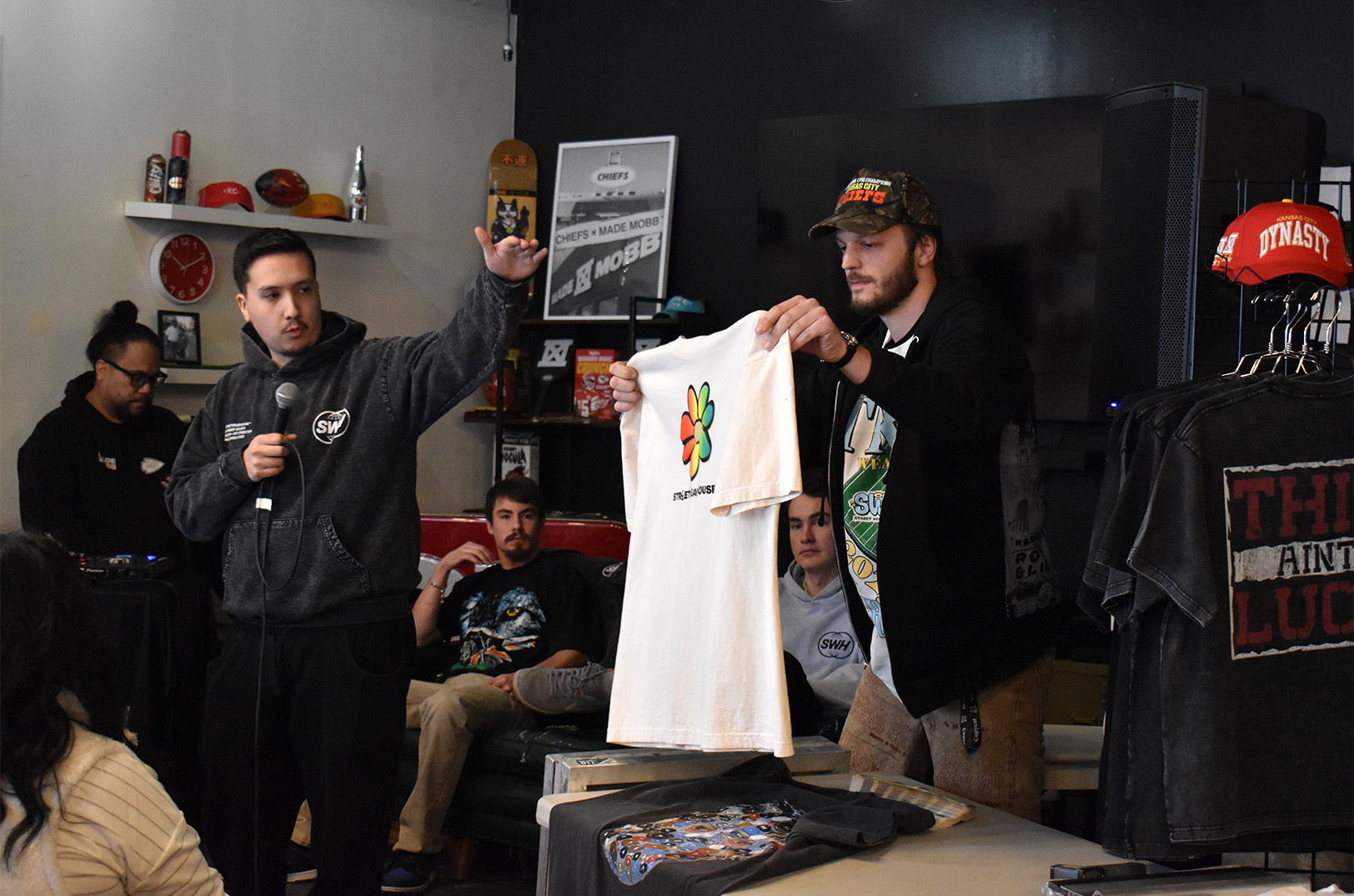
Tyler Love, Streetwearhouse, speaks at MADE MOBB during “The Blueprint: How To Launch Your Own Brand” event; photo by Taylor Wilmore, Startland News
“A lot of people think they need to start with a massive collection, but it’s really about testing the market first,” Love said. “If you have a dope design, you don’t need to print 100 pieces right away. Start small, build demand, and then scale.”
Trinkle stressed the importance of material selection and printing techniques.
“Screen printing lasts the longest, that’s why vintage shirts from the ’80s are still around today,” he explained. “Direct-to-garment printing has its place, but if you’re building a serious brand, you need to invest in quality.”
Streetwearhouse provided deeper insight into the screen-printing process, going in-depth on mesh count, ink selection, and curing techniques — topics that might seem trivial to hobbyist designers trying to rush orders before the Super Bowl, but critical for a company that wants to last beyond a two-week window.
“Every screen has a mesh fabric, and the lower the mesh, the lower the detail but the more ink it lets through,” Trinkle explained. “If you want to print something with fine detail, you need a high mesh count, like 305. But if you’re doing bold block letters, a lower mesh count, like 110, works just fine.”
Kyle Hemshrot, lead screen printer at Streetwear House, touched on curing ink properly to ensure long-lasting prints.
“If your ink isn’t cured at least 300 degrees, it’s going to crack and wash out,” he said. “A proper stretch test will tell you if the ink is set. If it cracks easily, it wasn’t cured correctly.”
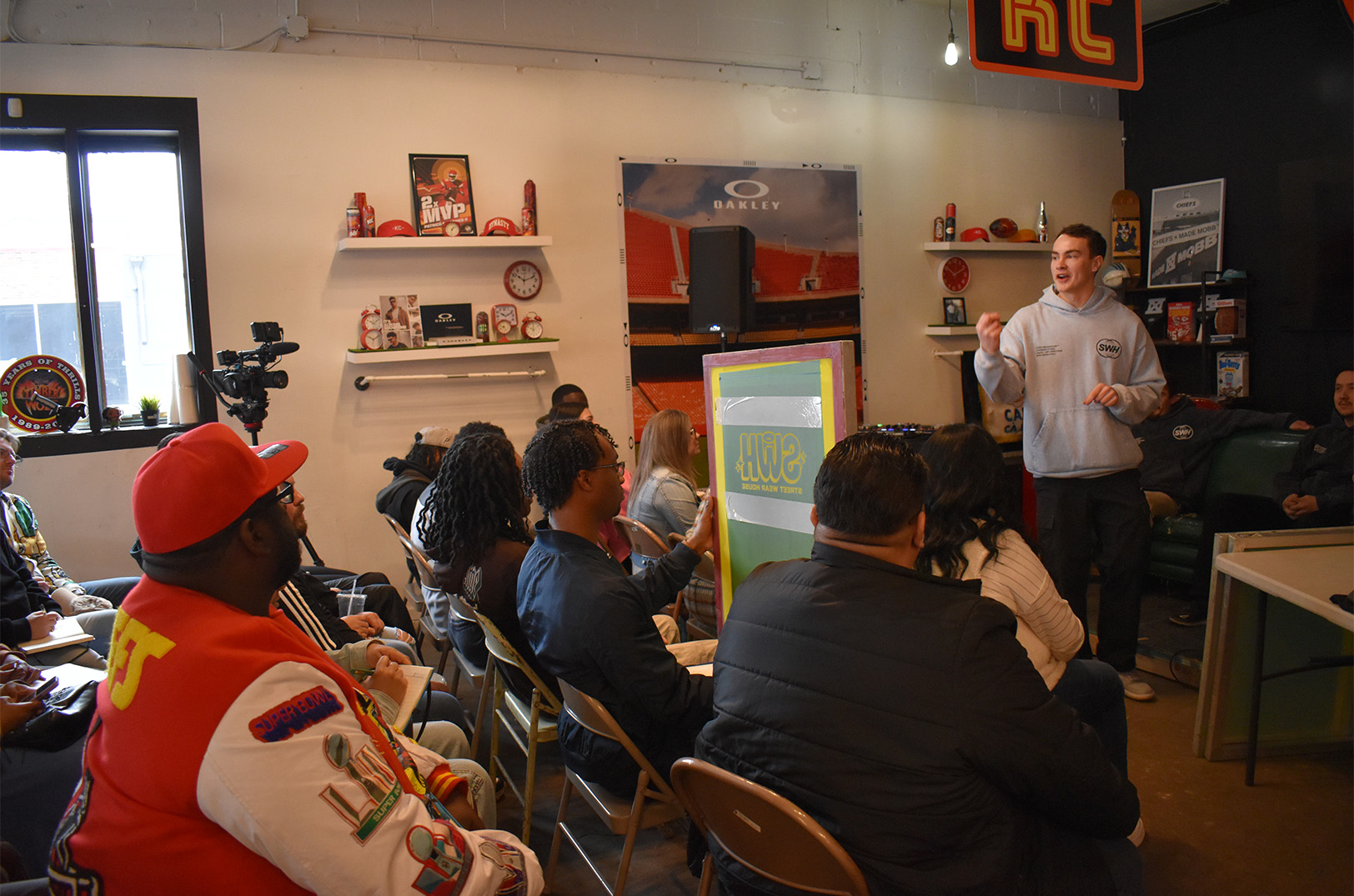
Alex Trinkle, Streetwearhouse, goes deep on screen printing during “The Blueprint: How To Launch Your Own Brand” event; photo by Taylor Wilmore, Startland News
Quality comes first
Love and Trinkle emphasized the importance of quality materials and understanding minimum order quantities (MOQs).
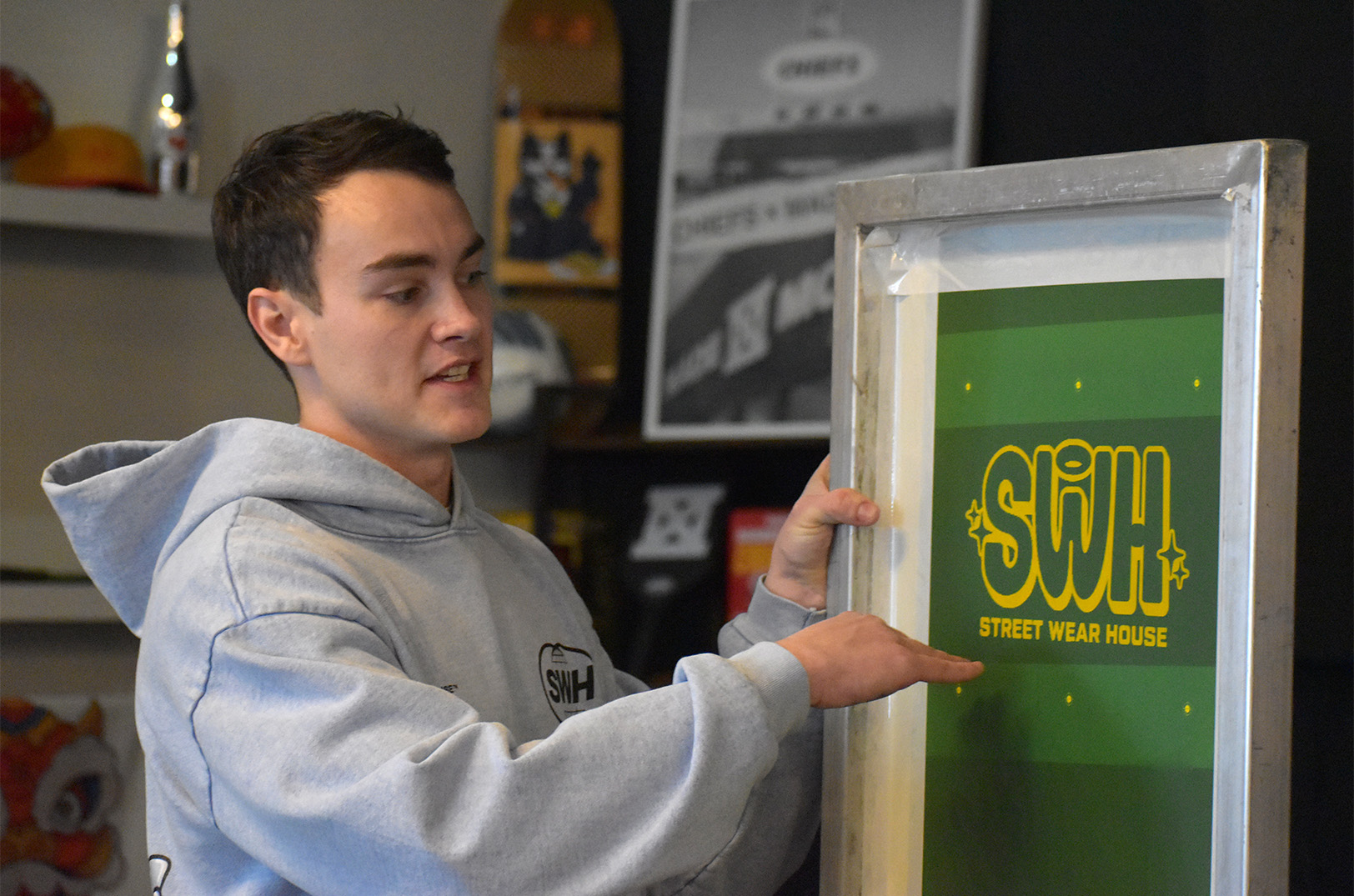
Alex Trinkle, Streetwearhouse, details screen printing techniques during “The Blueprint: How To Launch Your Own Brand” event; photo by Taylor Wilmore, Startland News
“If you want something basic, 24 pieces is the minimum. But if your design has four colors, we need a 48-piece minimum,” Trinkle explained. “Past seven colors, it usually requires 72 pieces because each color needs its own pass.”
Love added, “People focus too much on crazy designs, but simple designs can work just as well. Good art is crucial, but the other half is the quality of the shirt itself. Are you putting out something high-quality or something that wrinkles immediately?”
Beyond the shirts, Trinkle highlighted the impact of packaging.
“Your brand isn’t just the clothes; it’s the experience,” he said. “I used to ship merch in custom paint containers, and people loved it. It made them feel part of something special.”
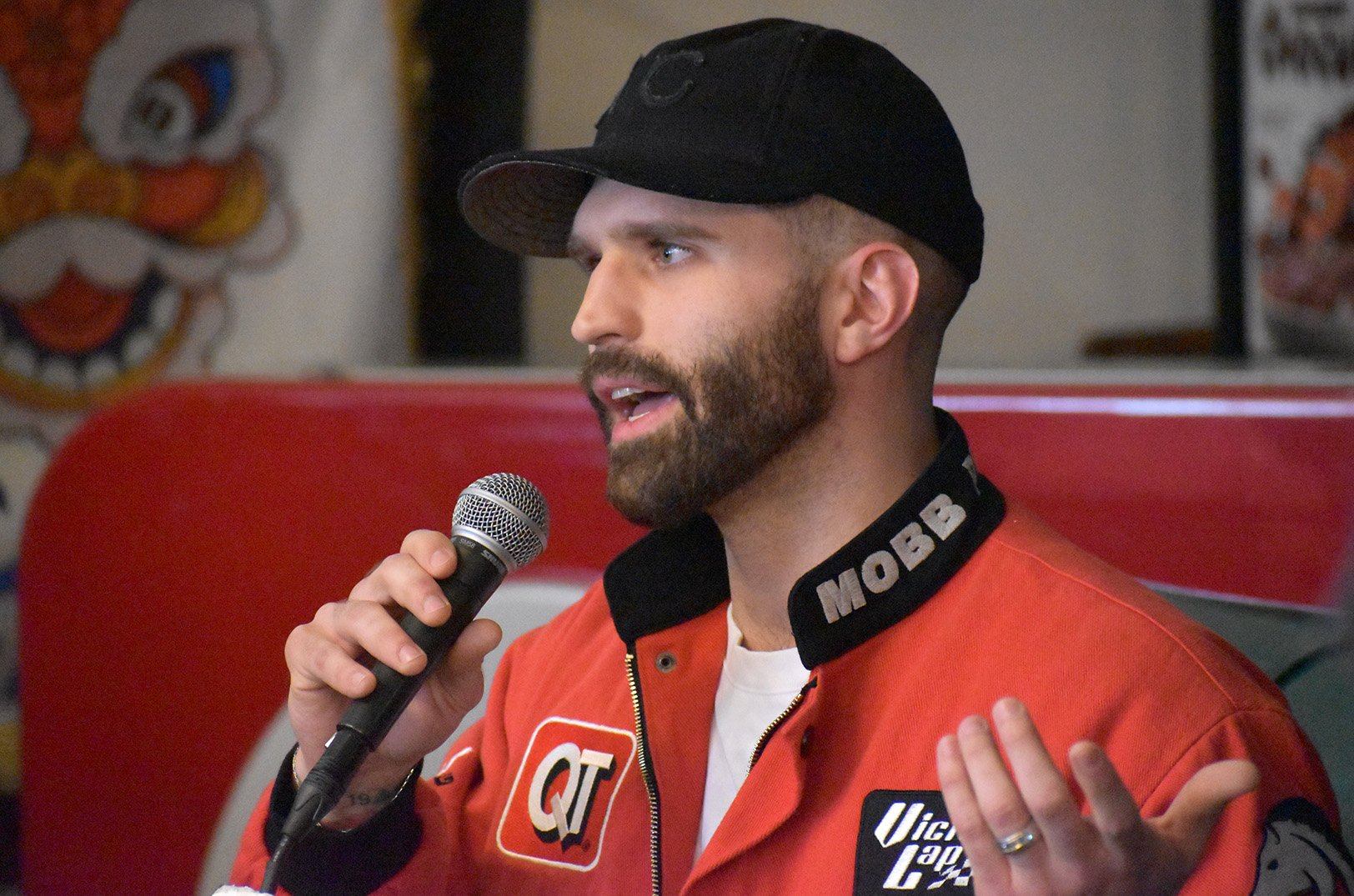
Sam Kulikov, Social Apex Media, speaks at MADE MOBB during “The Blueprint: How To Launch Your Own Brand” event; photo by Taylor Wilmore, Startland News
Making a brand pop
A successful brand isn’t just about the product, Sam Kulikov said; marketing matters.
“When you’re starting out, don’t waste money on ads,” the co-founder of Social Apex Media said, emphasizing authenticity. “Build community first. People don’t buy just because something looks cool; they buy because they feel connected to your brand.”
He pointed to MADE MOBB’s success and its involvement in the community as an example.
“They didn’t just drop clothes and hope people would buy them,” he said. “They were out in the community, hosting events, showing up where their audience was. That’s how you build a lasting brand.”
Instead of focusing on paid social media ads early on, Kulikov suggested entrepreneurs create a culture around their brand.
“It has to be organic,” he said. “Host an event, partner with someone, build something meaningful, the customers will come.”
Getting Into retail with Made in KC
Emma Wolf, a buyer at Made in KC, wrapped up Saturday’s gathering with tips on wholesale distribution and pitching to retailers.
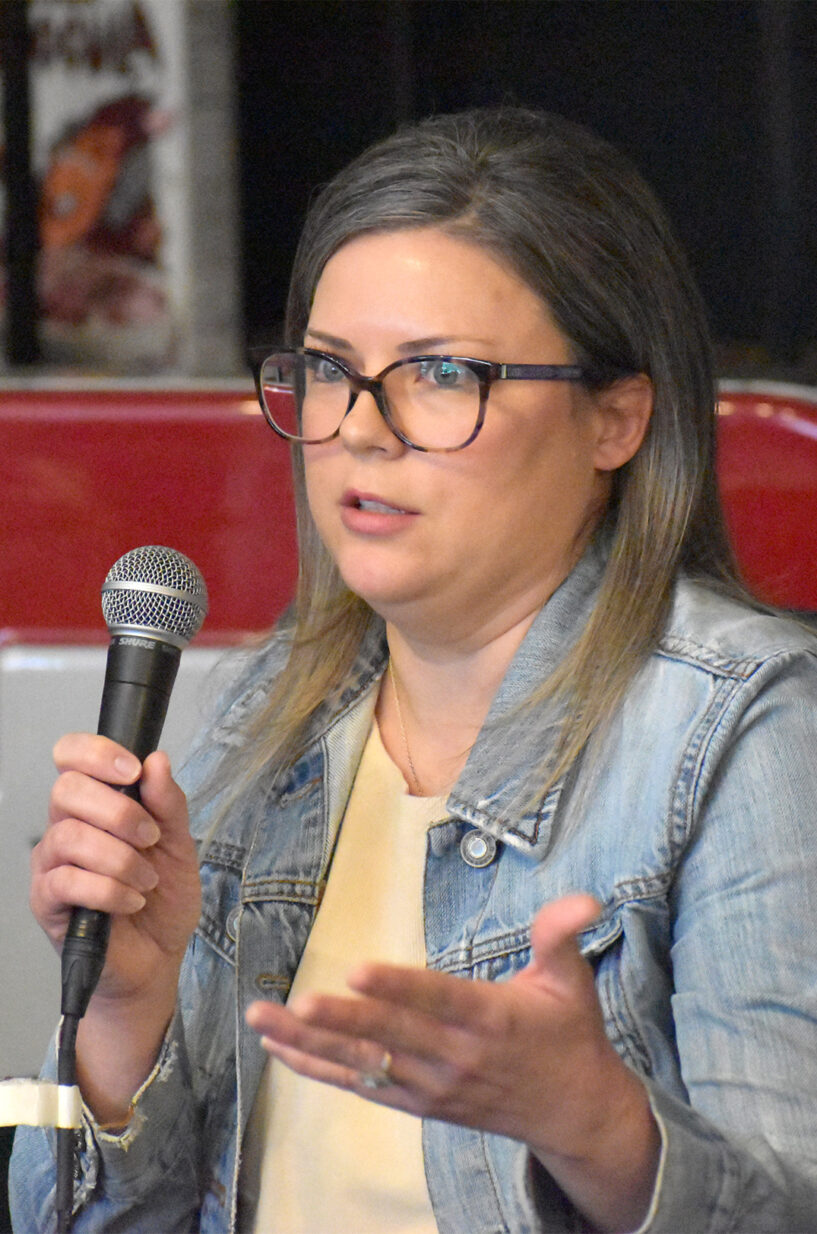
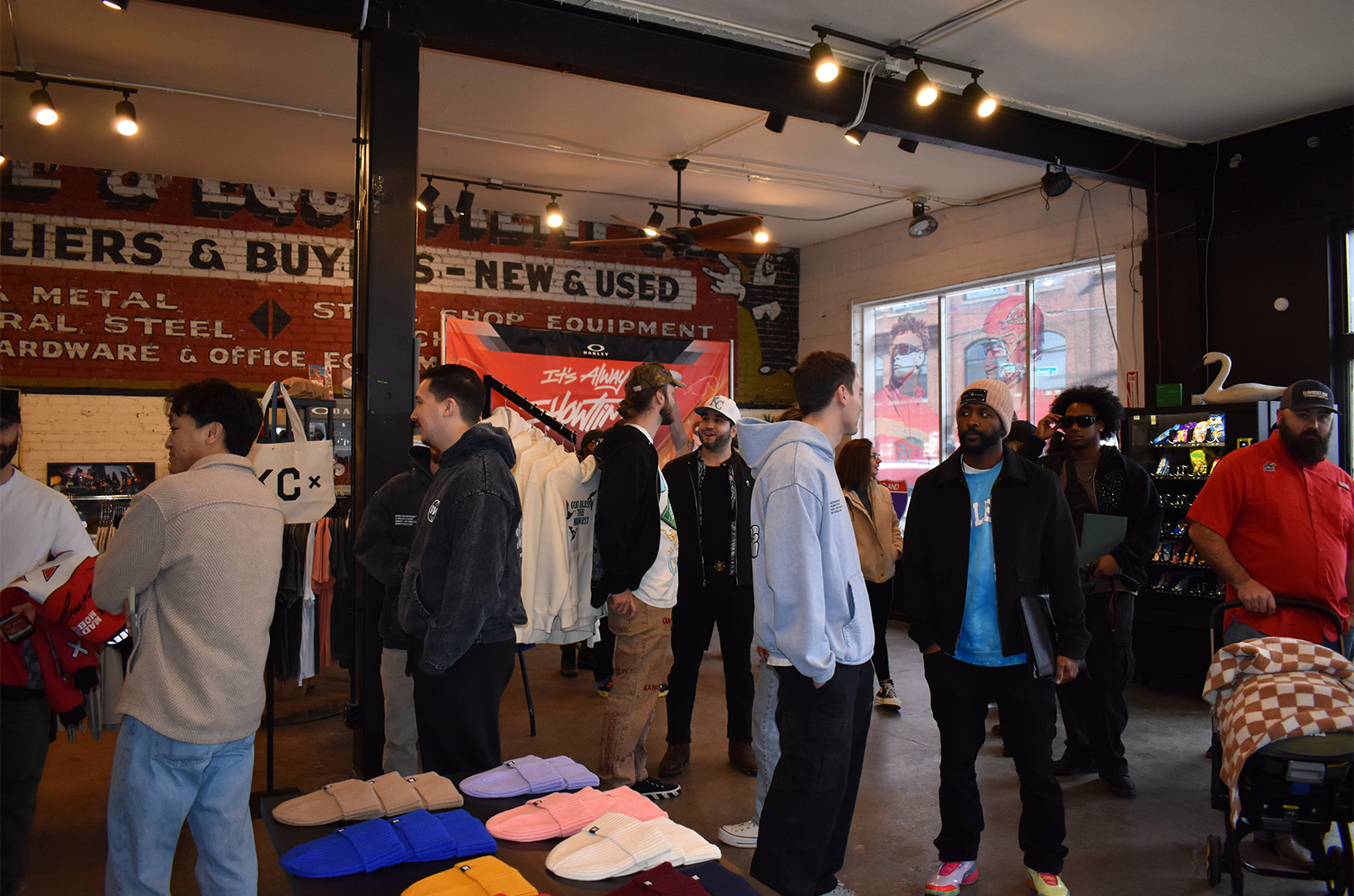
Emma Wolf, Made in KC, speaks at MADE MOBB during “The Blueprint: How To Launch Your Own Brand” event; photo by Taylor Wilmore, Startland News
A top priority: Entrepreneurs need a website or wholesale portal (MADE MOBB uses BrandBoom) to present their wholesale products professionally, she said.
“If all you send me is an Instagram link, it’s harder for me to work with. I need a website where everything is laid out properly,” Wolf said, giving advice on how to fill out Made in KC’s vendor forms.
She also stressed strategic bulk ordering.
“If you’re doing seasonal launches, develop relationships with retailers and keep them informed,” Wolf explained. “That way, they can place orders in advance, and you know exactly what quantities to produce.”
Like Radley, she encouraged entrepreneurs to think further than just selling a product and to reflect on what their brand represents.
“We’re not just looking for a great design. We want to know the story behind it,” Wolf said. “What does your brand stand for? How does it connect with Kansas City? That’s what makes a brand compelling.”
RELATED: Fantrepreneurs back in play as Super Bowl boosts small biz
Power of purpose and partners
In the fashion industry — especially Kansas City — networking and collaboration take brands to the next level, Launiu said.
“Partnerships help us go further,” he said. “When you leave here, don’t just take notes; connect with someone. Your network is your net worth.”
Brands need to be built on passion, persistence, and community, the panelists agreed. In other words: purpose.
“If you’re just chasing a check, you won’t last,” Launiu said. “You have to love what you’re doing because there will be hard times, and passion is what keeps you going. If you stay true to your vision and put in the work, success will follow.”
View this post on Instagram
Featured Business

2025 Startups to Watch
stats here
Related Posts on Startland News
SNAP cuts are ‘worse than they look on paper’: Food access advocates warn shelves could go bare overnight
Chef Shanita McAfee-Bryant doesn’t mince words about perceptions of the hungry Kansas Citians she serves daily through her award-winning culinary social venture. “These are the people who — if you listen to the rhetoric — are deemed ‘lazy,’” the founder of The Prospect KC’s NourishKC Community Kitchen told Startland News. “We know the narratives being…
LISTEN: Fermenting a clean future through products from meat alternatives to skin creams and baby formula
On this episode of Startland News’ Plug and Play Topeka founder podcast series, we chat with Francesca Gallucci of Natáur, a Baltimore-based biotech company that’s reimagining how essential nutrients are made. Combining synthetic biology, metabolic engineering, and eco-friendly fermentation, they’re producing bio-based taurine (and other naturally occurring sulfur compounds) without relying on petroleum. Gallucci takes…
KCMO slashes fees for outdoor dining permits, launches dining trail for grant winning projects
Kansas City has officially eliminated outdoor dining permit fees, reducing the cost from $850 to zero, thanks to the momentum created by a city-led initiative to encourage investment in outdoor dining experiences, city leaders announced this week, unveiling new plans to promote funded businesses and their projects. Launched in 2024, the Outdoor Dining Enhancement Program…
World Cup will produce KC small biz millionaires in just weeks, leaders say, but it’s only the start
Kansas City can’t look at the World Cup in 2026 as one big event where businesses are going to make good money for a while, and then everything goes back to normal, said Wes Rogers. “This has to be the beginning of the next chapter of our city,” the 2nd District Councilman for Kansas City,…