
New in KC: Hollywood veteran designs animation academy to make young artists more hirable
November 2, 2021 | Pete Dulin

Editor’s note: New in KC is an ongoing profile series that highlights newly relocated members of the Kansas City startup community, their reasons for a change of scenery, and what they’ve found so far in KC. This series is sponsored by C2FO, a Leawood-based, global financial services company. Click here to read more New in KC profiles.
A touch of Hollywood magic is coming to Kansas City as a veteran director and animator plans a first-of-its-kind trade school designed to prepare students for jobs in the film, gaming, and television industry.

Targeting a 2022 premiere, the Hollywood Animation Academy is expected to detail processes and programs used by Hollywood studios and game developers via a two-year program, explained Gavin Dell, an Overland Park native who recently returned to Kansas City from the West Coast. The goal: Help students build a practical portfolio that can serve as a launchpad for their careers in animation.
Dell is set to host a webinar — “What It Takes To Be An Animator” — 7 p.m. to 9 p.m. Nov. 9 for students interested in the field.
Click here to read more about Hollywood Animation Academy’s admissions and courses.
After living in Los Angeles — where he worked for 32 years as a director, animator, character development artist, and storyboard artist — Dell moved back to the metro, buoyed by his work on more than two-dozen shows and movies includes Teenage Mutant Ninja Turtles, Family Guy, Disenchantment, Scooby Doo, and The Looney Tunes Show.
Ever-increasing costs, overcrowded living, smog, and wildfire pollution made residing in Los Angeles less appealing each year. The opportunity to reconnect with family in Kansas City and the ability to work remotely, especially during the pandemic, made the homecoming decision a snap.
The entertainment industry clearly needs more trained animators, Dell realized once he resettled. But he also noticed a dearth of local institutions or programs that could adequately prepare students for such a career. Based on experience and research, he knew demand for talent would only increase, he said.
“The Bureau of Labor Statistics projects that jobs for animators will grow 16 percent over the next 10 years. That rate is well above other career growth,” Dell said. “There’s so much animation now in television, film, and gaming for mobile phones. All of that content needs artists to make it and give it life. There’s a hole in the market for people doing character animation.”
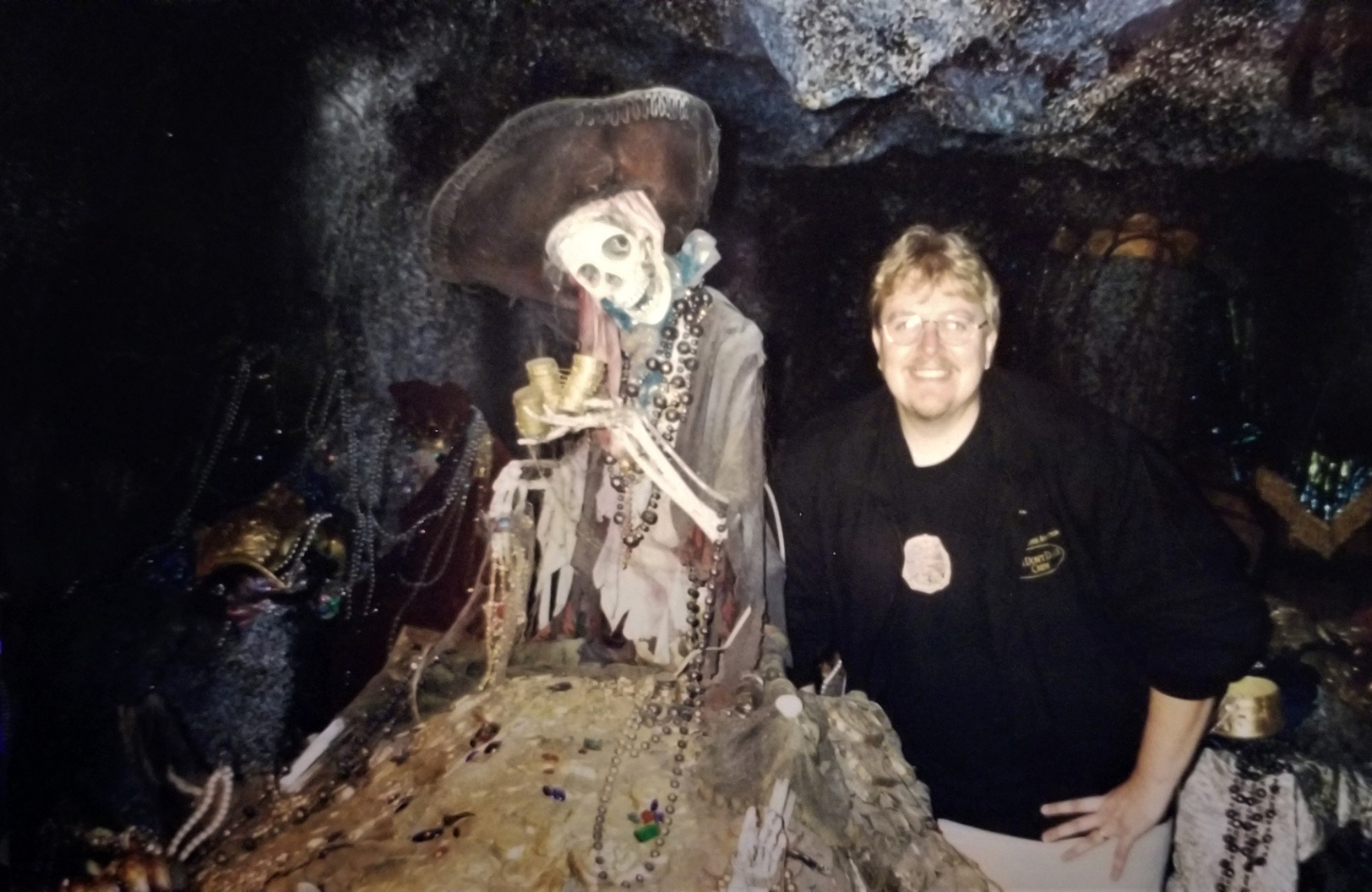
Gavin Dell, Pirates of the Caribbean
Future drawn by experience
An insufficient supply of animators is part of the challenge, he said, noting how budding animators are taught and groomed to enter the industry with professional-level skills is a separate hurdle.
Contemporary entry-level training and preparation differs from Dell’s youthful days as an artist, he said. Dell taught himself how to draw while attending high school in the Shawnee Mission School District. He studied dragons and barbarians prominent in fantasy artwork in Heavy Metal and other magazines. Next he attended a two-year art program at Johnson County Community College.
“It was my first exposure to commercial art and work as an illustrator. After graduating, I was lost. What do I do next?” Dell recalled.
Post-graduation, Dell learned of a friend who studied at California Institute of the Arts. The program intrigued him more than working as an illustrator at a local employer like Hallmark, he said.
“Their products featured cuddly kittens and imagery at the time,” Dell explained. “It wasn’t a fit for dragons and fantasy art.”
Dell, then one of 69 newly-enrolled students in his freshman class at CalArts, produced a student film of note. It earned him the only spot for a freshman in a featured showcase that later helped to propel his fledgling career.
But months of work on a student film to yield a portfolio piece is no longer a smart strategy today to jumpstart a career, Dell advised.
“Making a student film is the old way. You only have 10 seconds to earn the attention of a recruiter to look at your portfolio for another ten seconds,” Dell said. “It’s better to have 10 different assignments in 10 styles to get attention. My vision for the Academy is to break the student film mold. Students will craft a portfolio for the sector of animation that they’re interested in.”
“Art schools have loose rules and are too open to expression. Commercial art is where the jobs are,” he added. “Hollywood Animation Academy students will develop a portfolio to be hirable.”
The art of adaptation
Since Dell’s college days, technology and processes to produce animation have become more sophisticated. Competition for jobs is crowded and roles are more specialized. Accordingly, Dell aims to better prepare students and help them to discern different roles in a growing industry.

Gavin Dell
“Animation” is an umbrella term for numerous artists working in the field, he explained. Character designers, one of the “biggest money makers in the industry,” differ from storyboard artists, for example.
“A character designer is the first artist to develop what the character looks like,” Dell said. “The designer sets the style for the character and the show. It’s one of my favorite things to do.”
Classes at Hollywood Animation Academy are expected to limit initial enrollment to 15 students to ensure a small classroom experience. Dell will serve as the foundational skills teacher.
“I’ll have guest instructors, designers and directors from Hollywood, teaching via Zoom,” he said. “A master class of top talent.”
Courses will range from perspective drawing for storyboards to 2D character development to the art of combat in game animation. Students will also receive support for portfolio preparation, learn the “art of working the business,” career assistance, and referrals, he said.
“Students will take courses in all three industries so they are well-rounded for film, games, and television,” Dell said. “You don’t need a college degree for this field. You need a portfolio that gets you a job. An art school brings you to an introductory level. We will take you to a professional level. I want to be a mentor.”
Click here to explore Hollywood Animation Academy.
By capping admissions to 40 students by the third year, Dell plans to keep tuition low, he said.
“Our school will be priced at about half [the cost] of most large art schools, making it a great value,” Dell detailed.
He also offered one more insight for future animators seeking to break into the industry: Working for Hollywood doesn’t require living there.
In response to the COVID-19 pandemic, the entire animation industry has worked remotely for nearly two years, Dell noted.
“We expect it to continue. New studios are opening all over the country,” he said. “Hollywood is no longer the only place to work. There are jobs in Seattle; Pixar is in San Francisco; PlayStation is in San Diego; Austin and Atlanta are growing. Epic Games, the makers of Fortnite, are in North Carolina. There are hundreds [of studios] spread out all over the world.”
Dell is currently in the process of securing a location with a “modern industrial look” for Hollywood Animation Academy and is in talks with like-minded organizations in the area.


2021 Startups to Watch
stats here
Related Posts on Startland News
A St. Joe CEO handed him a franchise after graduation; two years later, the risk is paying off
Spencer Engelman’s expectations for his post-college career were shredded by an offer he couldn’t refuse. The Northwest Missouri State University graduate was awarded a business of his own — minus the franchise fee — by a veteran entrepreneur who had visited one of his classes. “It’s a crazy opportunity,” said Engelman, who now operates a DocuLock…
What a catch: Kansas City fandom creates custom appeal for taco-loving cartoonist vibe
Drawing from Kansas City’s spotlight moments — whether trendy and new or iconic and timeless — W. Dave Keith balances a quirky aesthetic with a practical focus on what will actually sell. “I’ve slowly learned that if I want to make money off this business, I need to make stuff that people want to buy,”…
Power through purpose: How a winding journey led this eco devo steward to deep-rooted impact
Editor’s note: The following story was written and first published by the Economic Development Corporation of Kansas City, Missouri (EDCKC). Click here to read the original story. [divide] Going behind the scenes of CCED with the people who make it happen Some people are drawn to city-building because of the bricks and steel, the architecture, the skyline, the…
Missouri’s weapon in the AI race with China: KC tech companies, says GOP lawmaker
As artificial intelligence reshapes the way Kansas City works, civic and elected leaders want to ensure small businesses and the region’s tech community have seats at the table. Federal regulation could help, said Eric Schmitt. “For me, [it’s about] making sure that the big tech companies don’t block out a lot of the innovators, say…