
Sustainable apartments in KC’s River Market will be among the world’s largest ‘passive houses’
December 20, 2016 | Meghan LeVota

The future of sustainable real estate development may be taking shape in Kansas City.
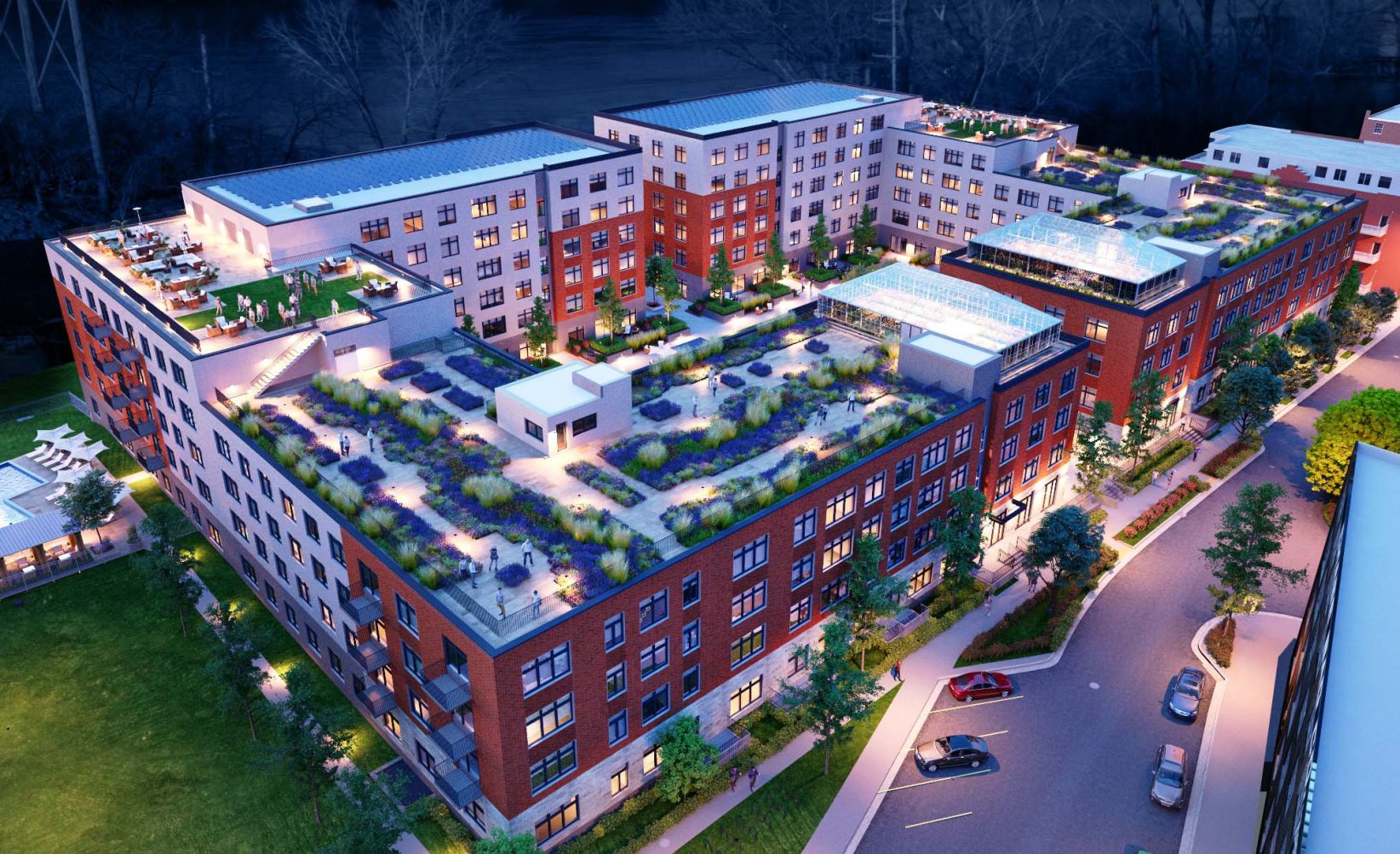
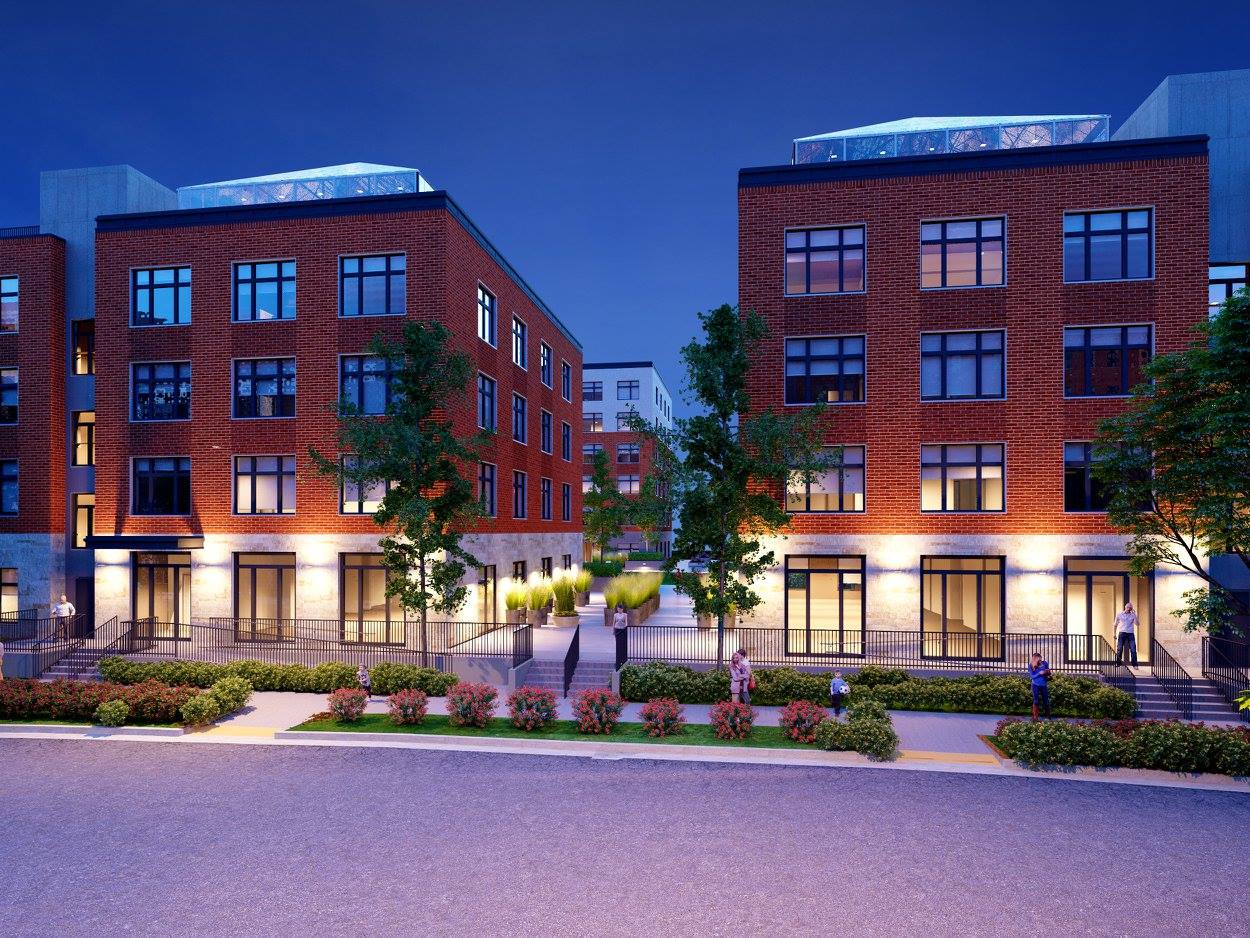
The $60 million, 276-unit Second and Delaware project aims to not only be one of most environmentally conscious residential buildings but also a global example in sustainable housing, said Jonathan Arnold, CEO of Arnold Development Group. The Arnold Development Group along with several other partners launched construction on the project about one year ago with bold hopes of change.
“The goal is to not just build these units, but to transform the housing industry in a similar way that Tesla is doing to cars,” Arnold said. “It’s important that business leaders today take on the civic responsibility of building neighborhoods and real estate assets that are going to outlive us.”
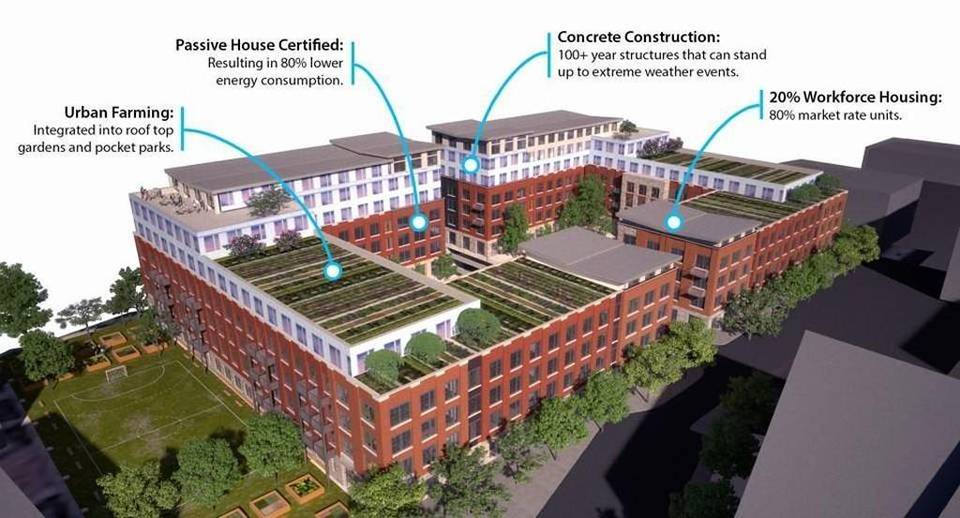
Slated for an October 2017 opening, Second and Delaware is a “Passive House Certified” building, which reduces energy consumption by 70 to 90 percent, Arnold said.
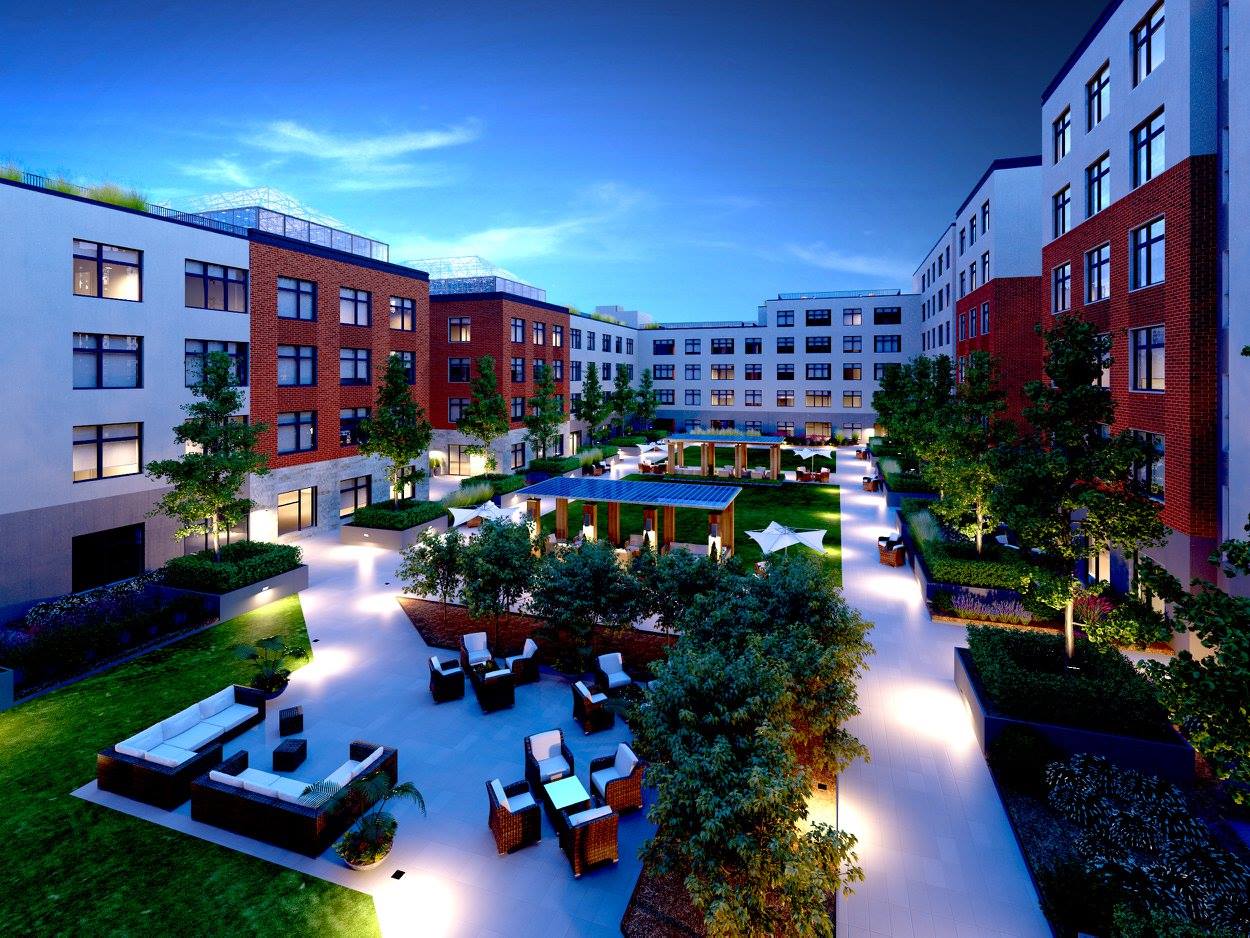
Located in Kansas City’s River Market district, the building will feature 16-inch concrete walls, triple-pane windows, an array solar panels and technology that more effectively recycles heat, Arnold said. The building’s thermal properties also mean significantly less utility costs for residents — with an average utility cost of about $25 per month, depending on the unit’s size. The project will also offer residents a gym, shared conference room, pool, toddler playroom, shared courtyard and a rooftop garden.
The project construction manager is HarenLaughlin Construction Inc., with local architecture services from Clockwork Architecture and Design. Second and Delaware closed on financing through the U.S. Department of Housing and Urban Development, nabbing a $49 million fixed-rate, government-insured mortgage loan, the Kansas City Star reported. It’s paired with the issuance of $30 million in tax-exempt Multifamily Housing Revenue Bonds.
Arnold has grand ambitions to scale the model around the nation. He hopes to replicate the project in five cities around the U.S. to create 20,000 energy-efficient units by 2026.
Consumer demand is driving the project, Arnold said. About 70 percent of millennials want to live in a walkable neighborhood, and Arnold wants to ensure that this demand is met in a conscientious way.
“Because of this demand, if we’re not careful there’s going to be a lot of junk that’ll be built,” Arnold said. “Then we’ll have to figure out what to do with buildings that are rotting. I want to be able to tell my children that I didn’t just bury my head in the sand.”
Arnold is confident that his decision to make sustainability a priority won’t take away from profit. In fact, he believes it will save him money in the long run. To mitigate short-term costs, Arnold is using the “lean” construction methodology — or as he puts it “doing more with less.”
The lean construction model develops and manages a project through relationships, shared knowledge and common goals, according to the Lean Construction Institute. Rather than focusing on individual groups in a project, the planning and logistics of it are holistically reorganized to improve scheduling, reduce labor waste and thus increase productivity.
Lean construction is a combination of operational research and practical development in design and construction with an adaption of lean manufacturing principles and practices to the end-to-end design and construction process. Unlike manufacturing, construction is a project based-production process. Arnold said that the methodology will increase crew’s productivity by 30 percent and lower costs by about 15 percent.
In addition to producing a profitable and quality product, Arnold said Second and Delaware fulfills a responsibility to be conscientious stewards of the environment. He hopes to not only create beautiful homes for Kansas Citians, but also validate the concept to others in his industry.
“Let’s say that there really is an impact that’s being made on our environment through human activity,” Arnold said. “If you’re in the real estate development industry, I think there is a moral imperative to do what we can — especially when it makes better business sense.”
The Arnold Development Group is one of two certified B-Corps in the Kansas City metro, joining Global Prairie with the designation. A “B Corp” — or benefit corporation — is a for-profit business designation that promotes a positive impact on the firm’s employees, its community, society and the environment. To earn the designation, companies undergo a rigorous vetting process by the nonprofit B Lab to demonstrate its positive impact and must remain transparent metrics on that impact.
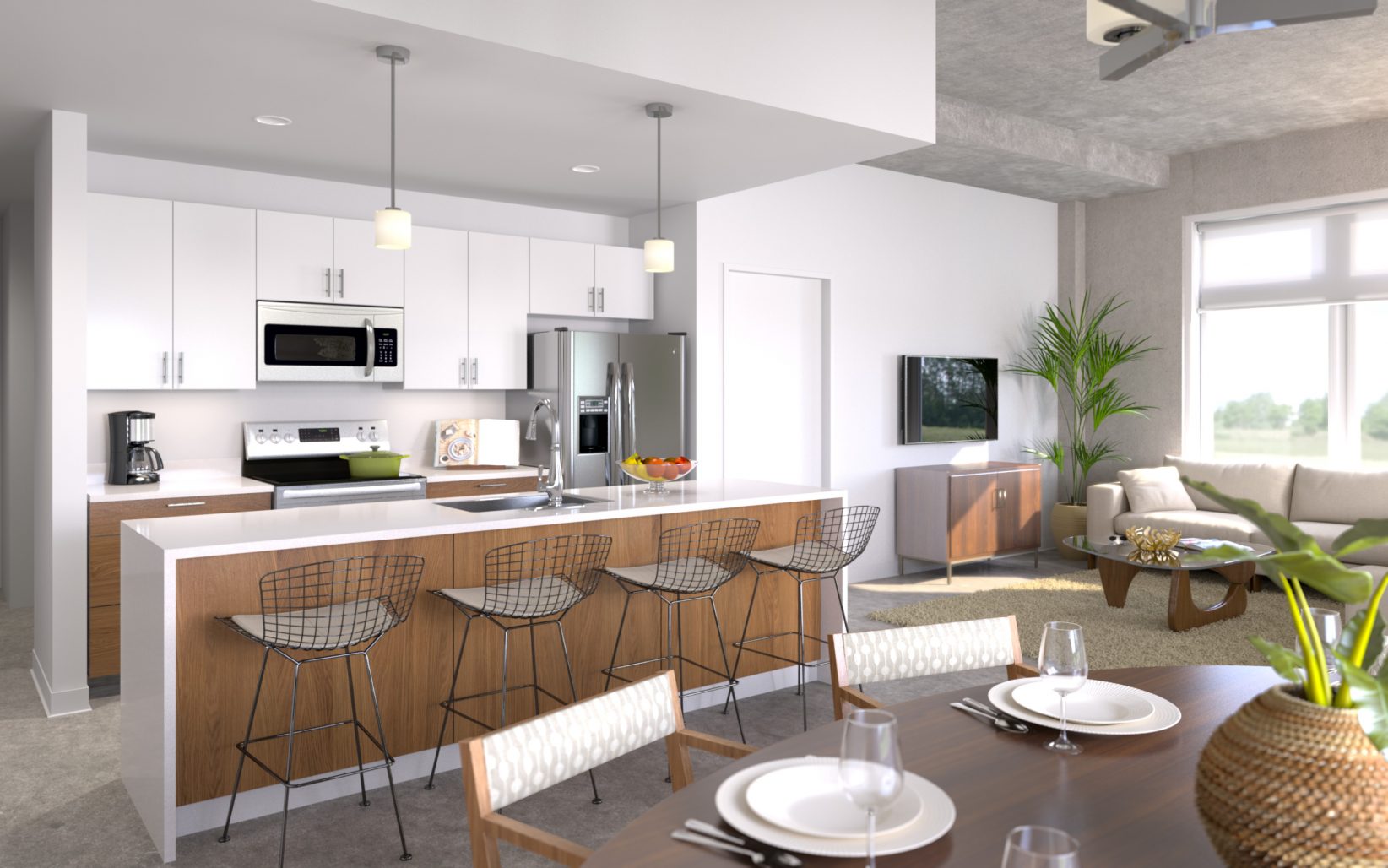
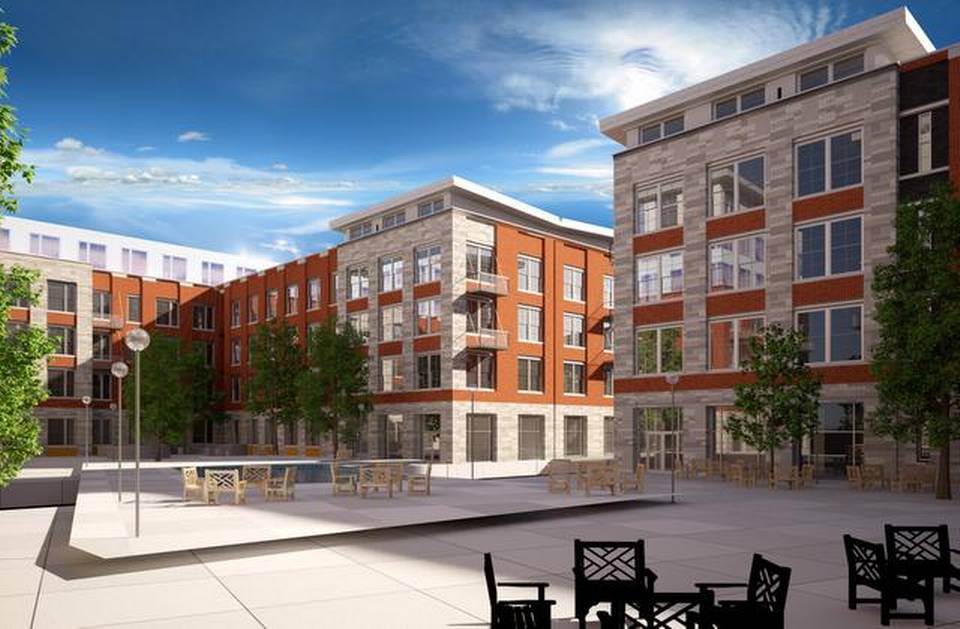
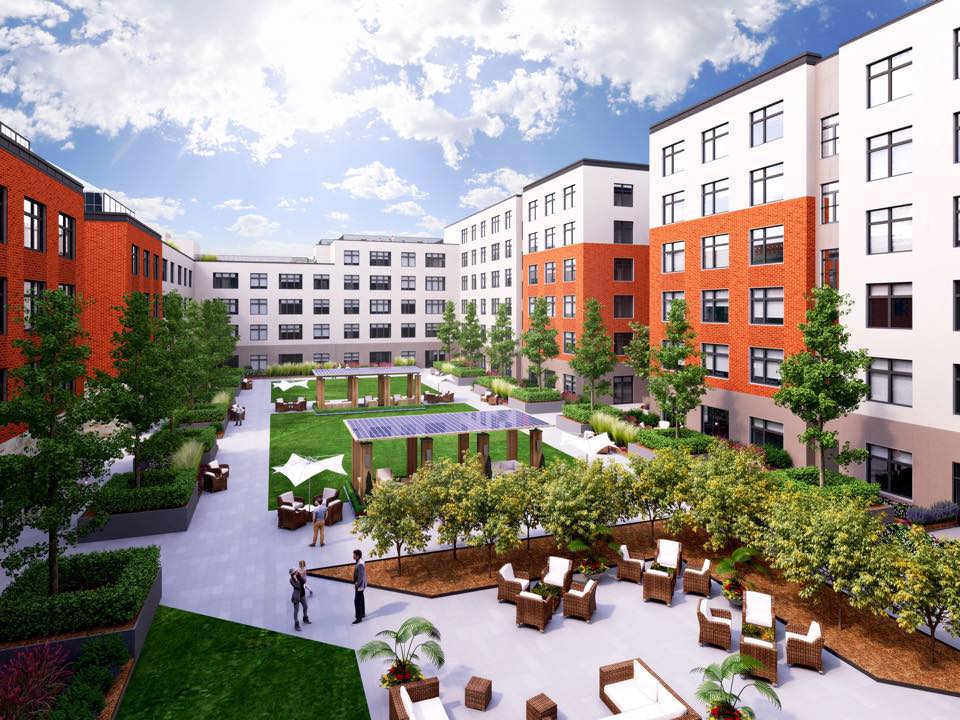
Check out renderings of the apartment in the gallery below:

Featured Business

2016 Startups to Watch
stats here
Related Posts on Startland News
KC’s first innovation officer reflects on work, city’s tech future
After more than two years of service, Ashley Hand is leaving the driver’s seat of Kansas City’s innovation efforts. Hand, who soon will be departing as Kansas City’s chief innovation officer, was tasked with implementing innovative strategies to improve how city government can better serve Kansas Citians. The city will be accepting applications for the…
Welcome to Startland News
Scrappy. Determined. Gritty. Those often were the words attributed to the Kansas City Royals as the team unexpectedly surged into the 2014 World Series and captured the national spotlight. Those very words are apt for this city, which has been built on the grit and determination of successful entrepreneurs like Ewing Kauffman, Joyce Hall, Henry…
Kansas budget woes render uncertainty for angel tax credits
As state budgetary concerns loom in the background, early-stage firms in Kansas are hoping a bill to extend the Sunflower State’s Angel Investor Tax Credit program will become a priority for legislators. Scheduled to sunset after the 2016 fiscal year, the program annually allocates $6 million in credits to entice investments in early-stage, growth-oriented companies…
KC virtual reality firm partners with KU, NFL coaches
A Kansas City-based virtual reality company hopes some marquee partnerships will plug it into a market projected to reach $150 billion in five years. Founded in 2013, Eon Sports VR recently landed the University of Kansas football team as a client for its mobile virtual reality platform to help players train without the risk of…