
10 years later: Google Fiber boosted city’s ‘capacity for collaboration,’ former mayor says
October 14, 2022 | Matthew Gwin

Instant success catalyzed by the arrival of high-speed internet 10 years ago uploaded more than hype for Kansas City, said Sly James, noting Google Fiber’s significant role in reshaping the community as a tech city to envy.
Opening unparalleled innovation and civic brand-building opportunities, Google’s selection of Kansas City, Kansas, and Kansas City, Missouri, as the first communities to receive its high-speed internet service in 2012 came at just the right time, said James, who served as KCMO mayor from 2011 to 2019.

“When all this was going on, we were coming out of the recession,” he said, referencing the Great Recession of 2008. “We were coming out of four years of absolutely nothing happening in the city. We were still in that attitude of comparing ourselves to other places. Why can’t we be like Minneapolis? Why can’t we be like St. Louis? Why can’t we be like anybody other than Kansas City?”
Kansas City, Kansas, was chosen to be the first Google Fiber community in March 2011 — from more than 1,100 U.S. cities that applied — and soon after Google chose to also include Kansas City, Missouri. The network became available to residents in September 2012.
James said he wasn’t sure whether Google Fiber lived up to the hype of that time — Google Fiber has been criticized by some for overpromising and underdelivering — but he argued those early expectations were now beside the point.
“I kind of liked the hype of saying something and doing something that would make us unique,” James added. “I don’t know whether living up to the hype is a big thing or not. I never looked at it like that. I looked at it as an opportunity for us to distinguish ourselves from other places doing other things, because I was all about wanting to make sure that we changed our attitude about who we were.”
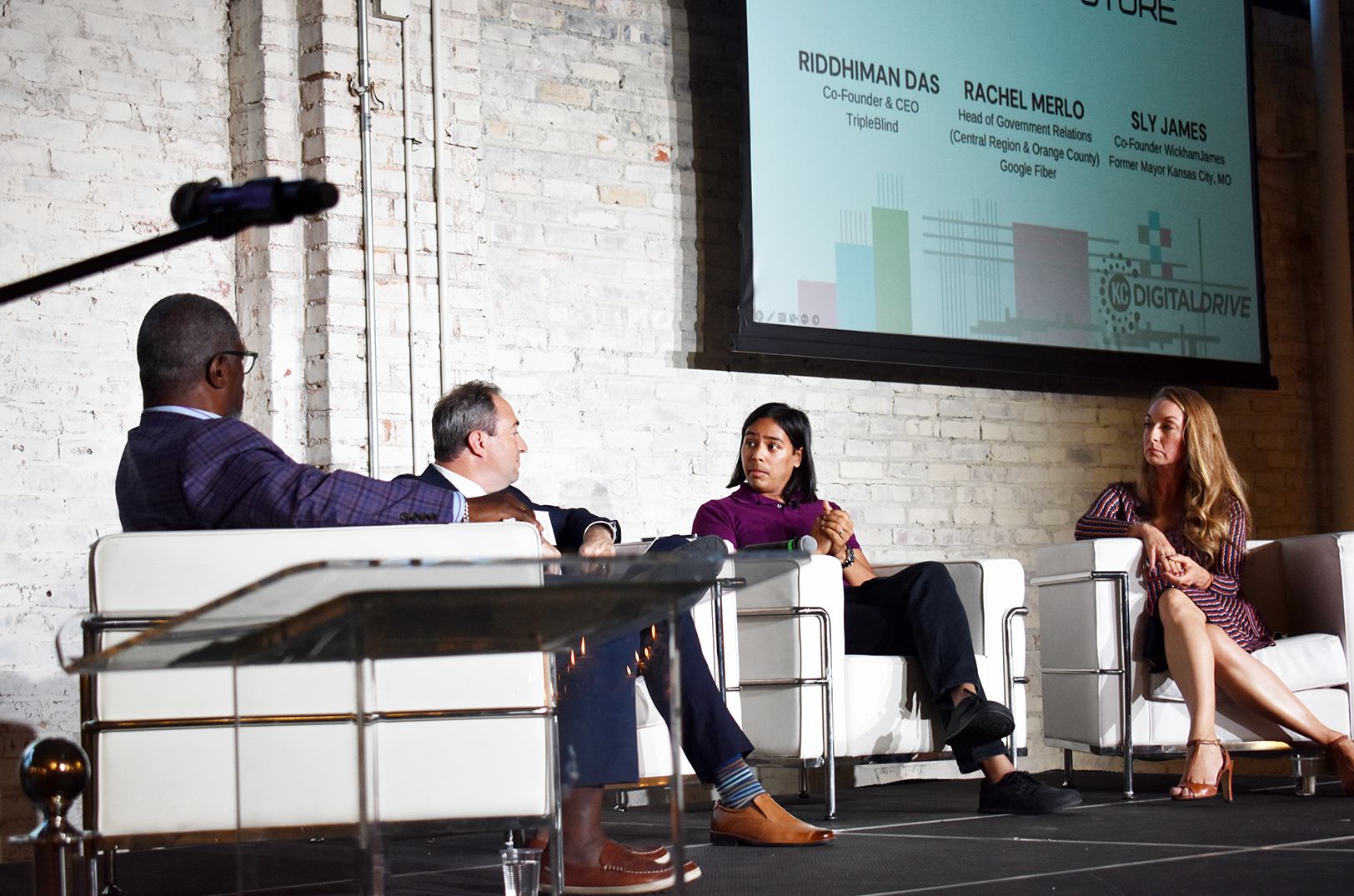
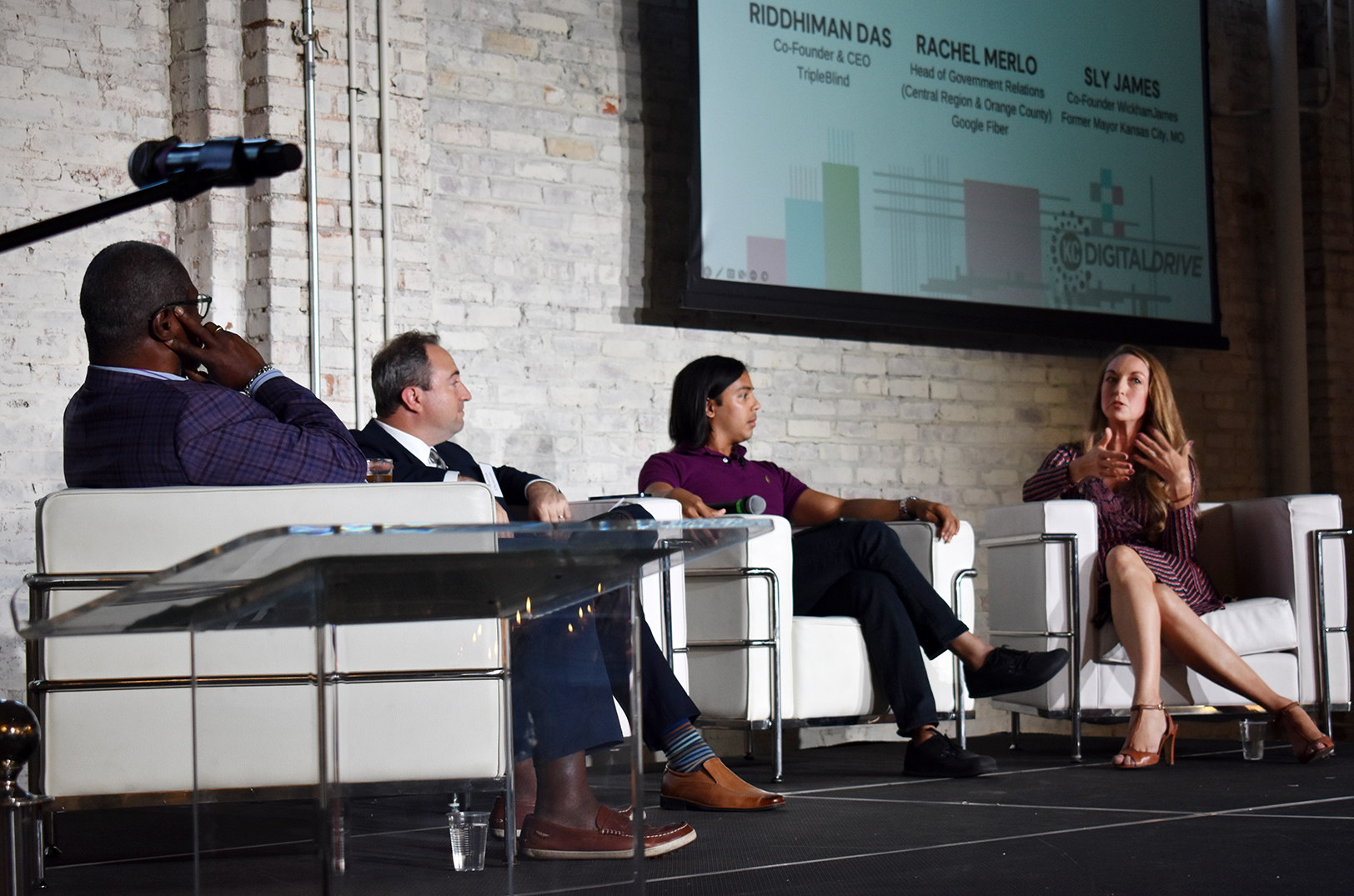
Riddhiman Das, TripleBlind, speaks during a panel conversation marking the 10-year anniversary of KC Digital Drive
Opening access to a billion
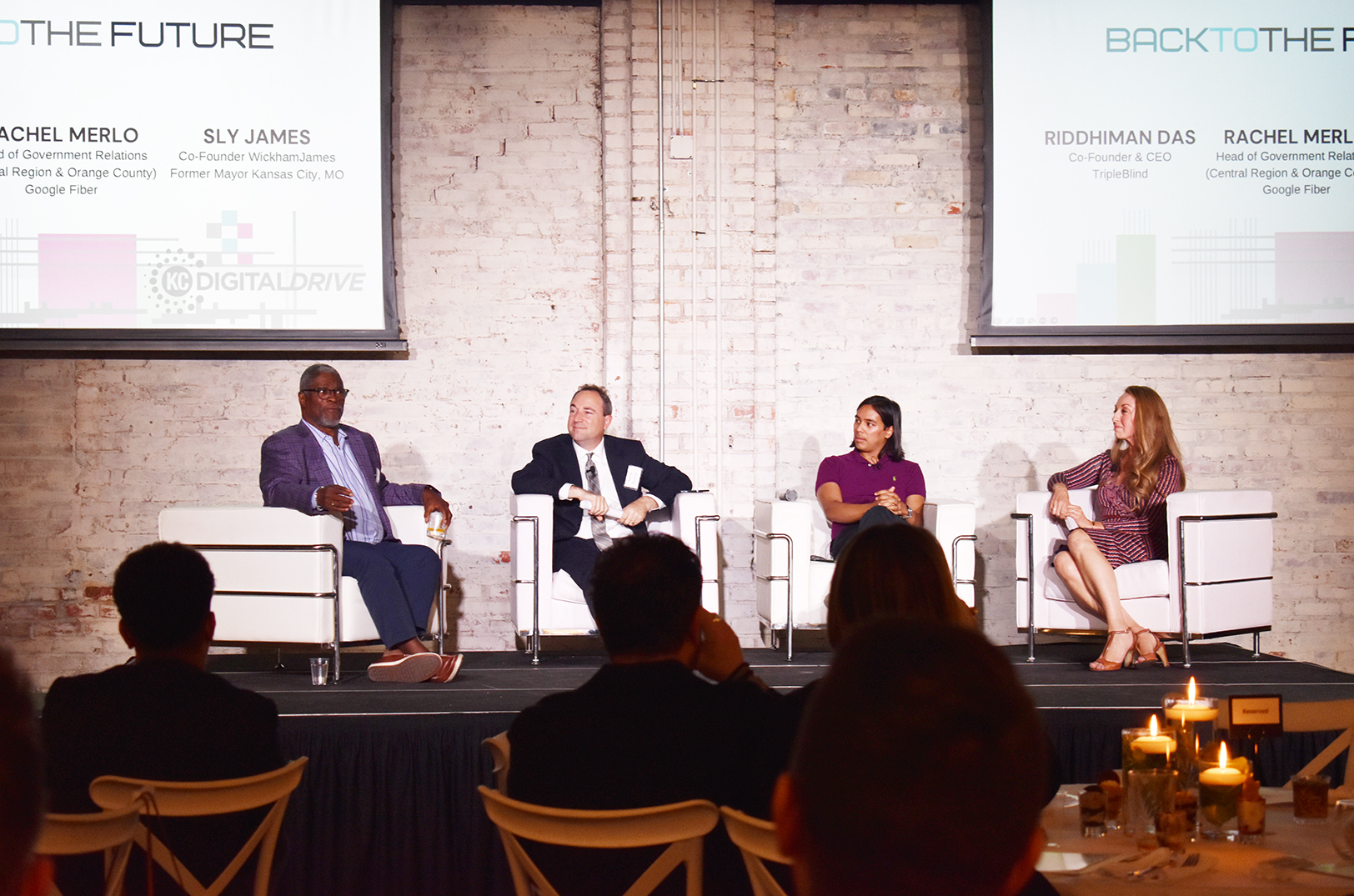
James was joined in a panel discussion Wednesday evening by Riddhiman Das, co-founder and CEO of TripleBlind, a data encryption software company; and Rachel Merlo, head of government relations for Google Fiber. The former mayor co-founded Wickham James Strategic Solutions with Joni Wickham, his former chief of staff, after leaving City Hall.
The “Back to the Future” panel was moderated by Aaron Deacon, managing director of KC Digital Drive, who hosted and organized the “Forward to the Future” fundraiser.
KC Digital Drive was celebrating its own 10-year anniversary, as the organization was established by the governments of KCK and KCMO to address digital equity issues revealed when Google Fiber came to the area.
Das, a UMKC graduate and successful tech entrepreneur, noted how Kansas City companies, especially those in tech sectors, turned fiber access into capital.
“The hype also creates a lot of equity, and I think we rode that wave really well,” Das said. “I was just thinking as I was driving up here, that I can think of possibly a billion dollars of equity value that was generated as a direct consequence of hype. It brought attention to the region, and it brought attention in a way that showed that real things can happen here.”
Das shared a story about how in 2012, a Kansas City tech startup’s potential deal with a Bay Area venture capitalist fell through when the VC learned the company wasn’t located “within biking distance” of his firm’s San Francisco office.
“I think that is no longer true 10 years later,” Das said. “I think hype had a lot to do with it. It was a causational effect not a correlational effect, where it put Kansas City — and tech in Kansas City — on the map in a way that showed this place can be innovative … and those companies can go on to change the world.”
That shift in mindset led more tech workers to “give Kansas City a shot” rather than leave for traditional coastal tech hubs, Das said, calling Google Fiber a “catalyst” that “electrified that [KC tech] community.”
“As I look back at the long arc of the last 10 years, I would say [Google Fiber] was very, very transformational for tech in Kansas City,” he continued. “The number of exits that we’ve had, the number of patents and innovations that have come out of that ecosystem, the number of software products … I think that was catalyzed by Google Fiber. It was catalyzed by the sense of community.
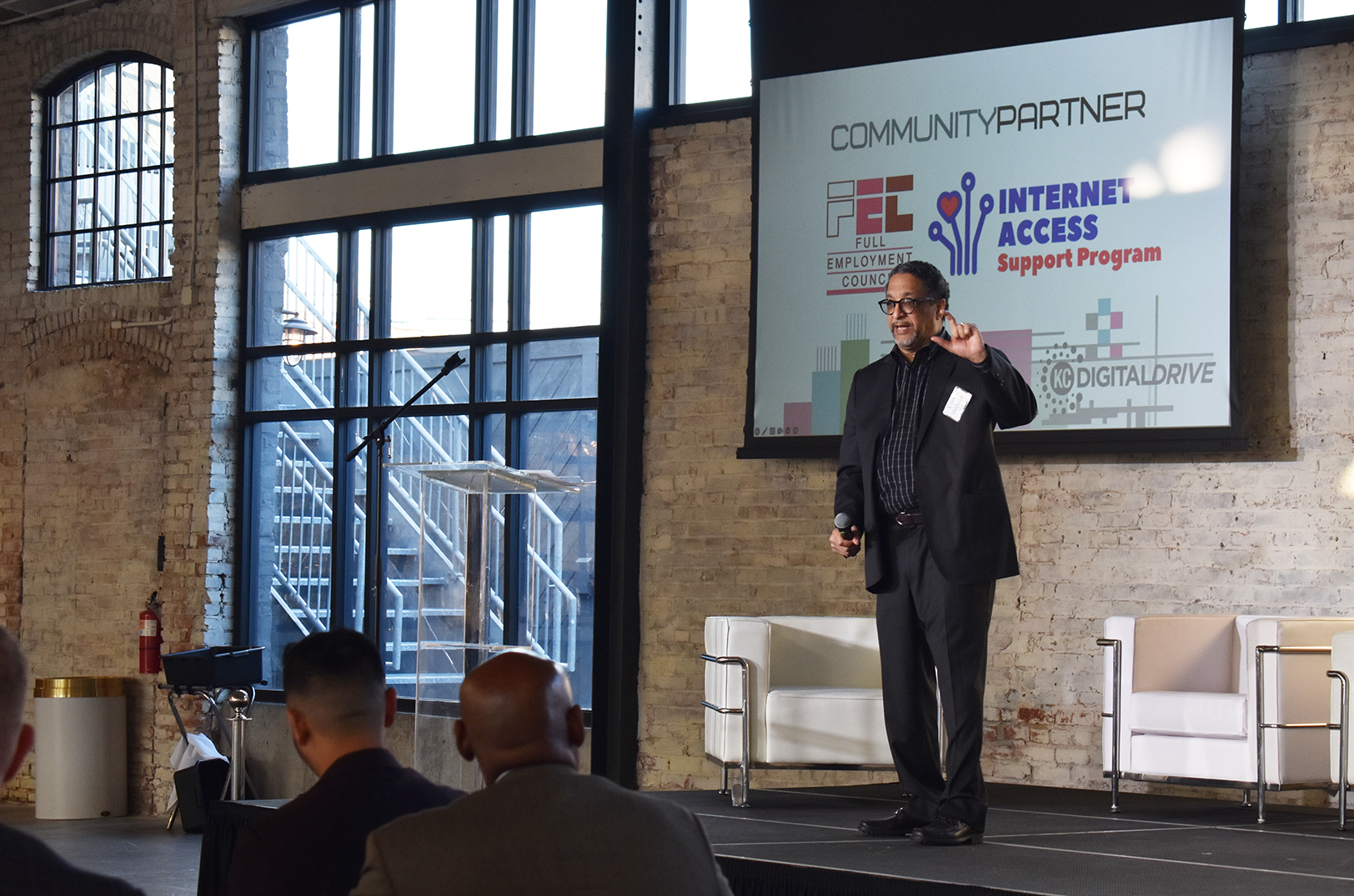
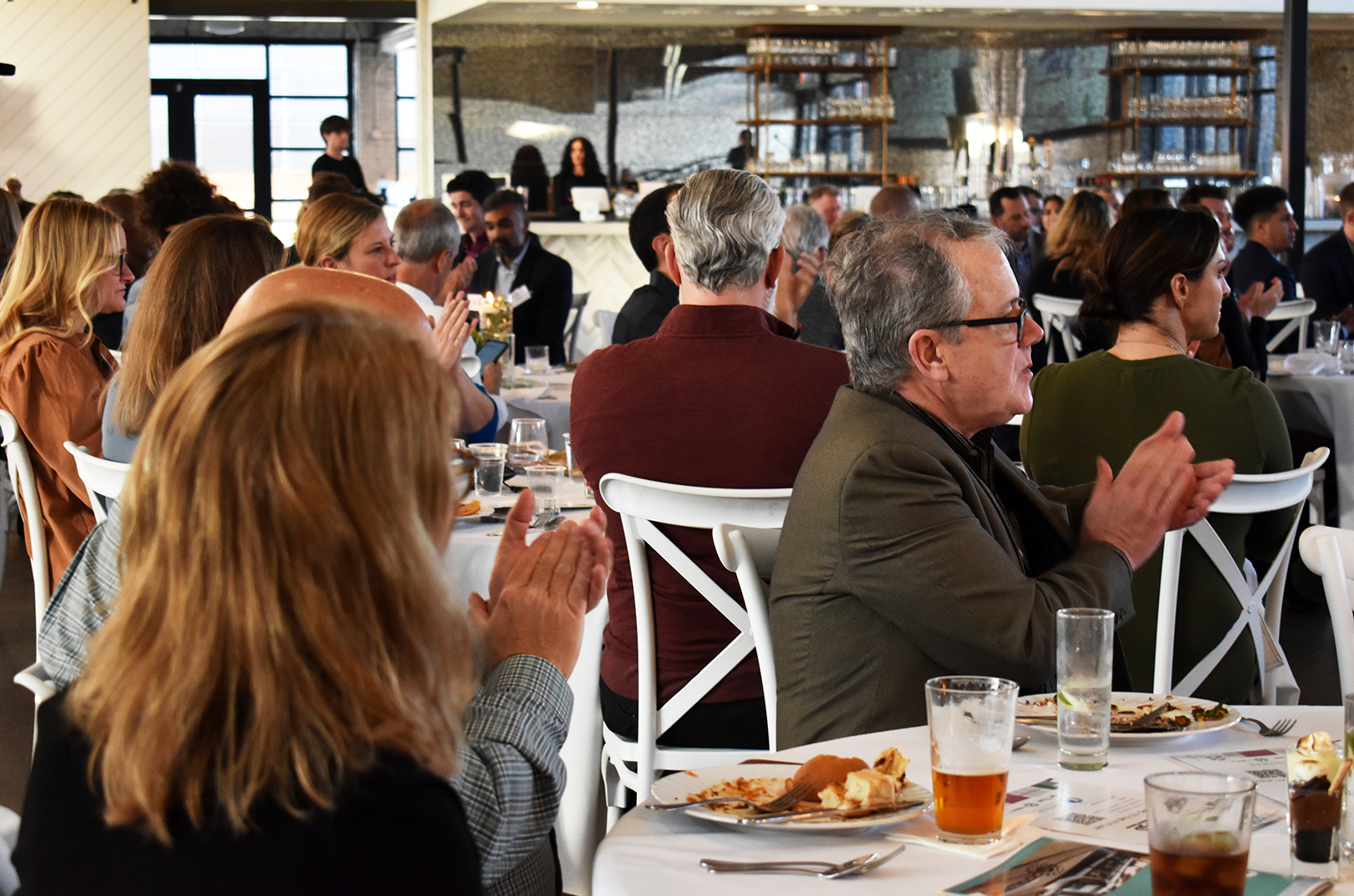
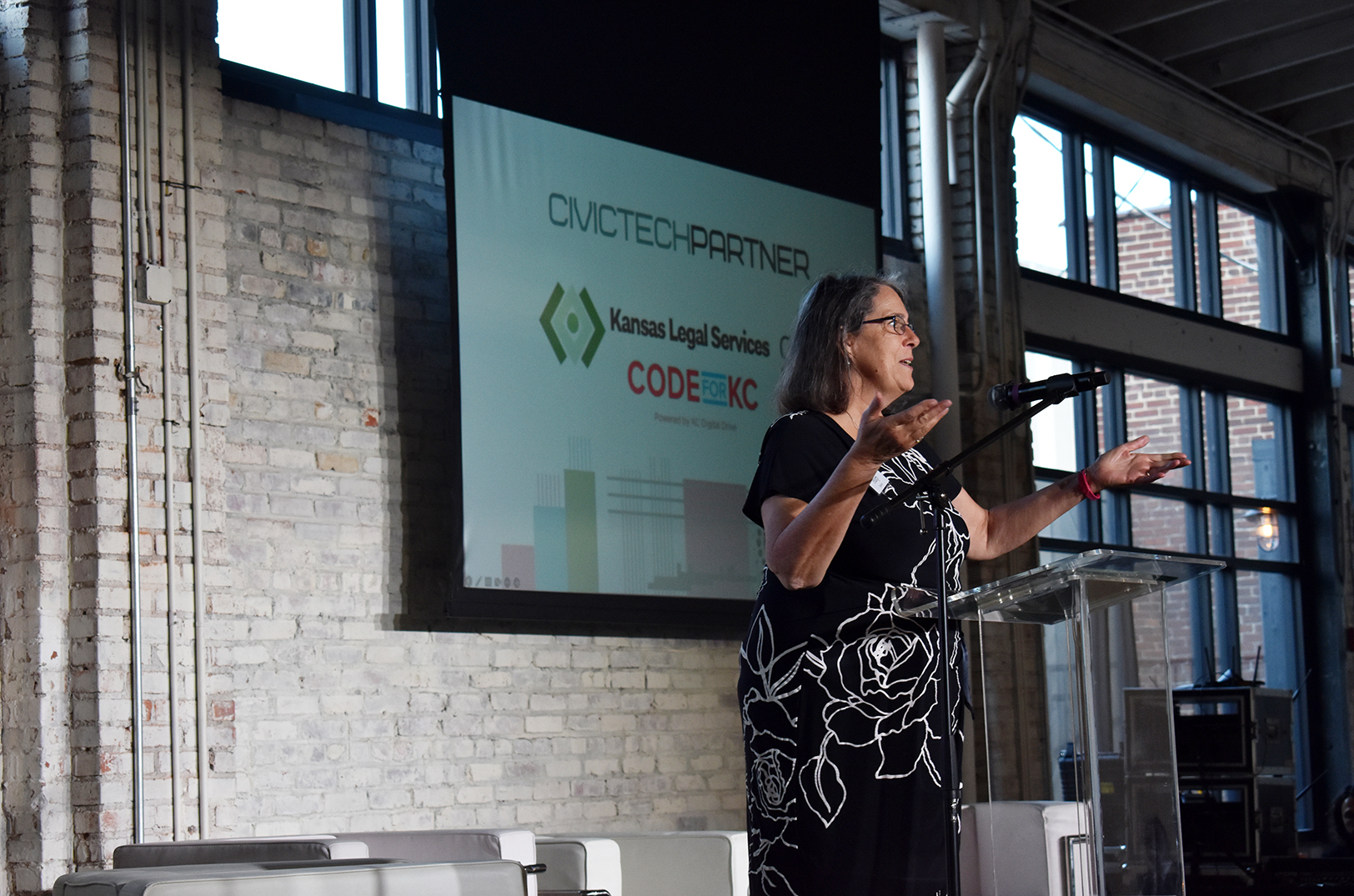
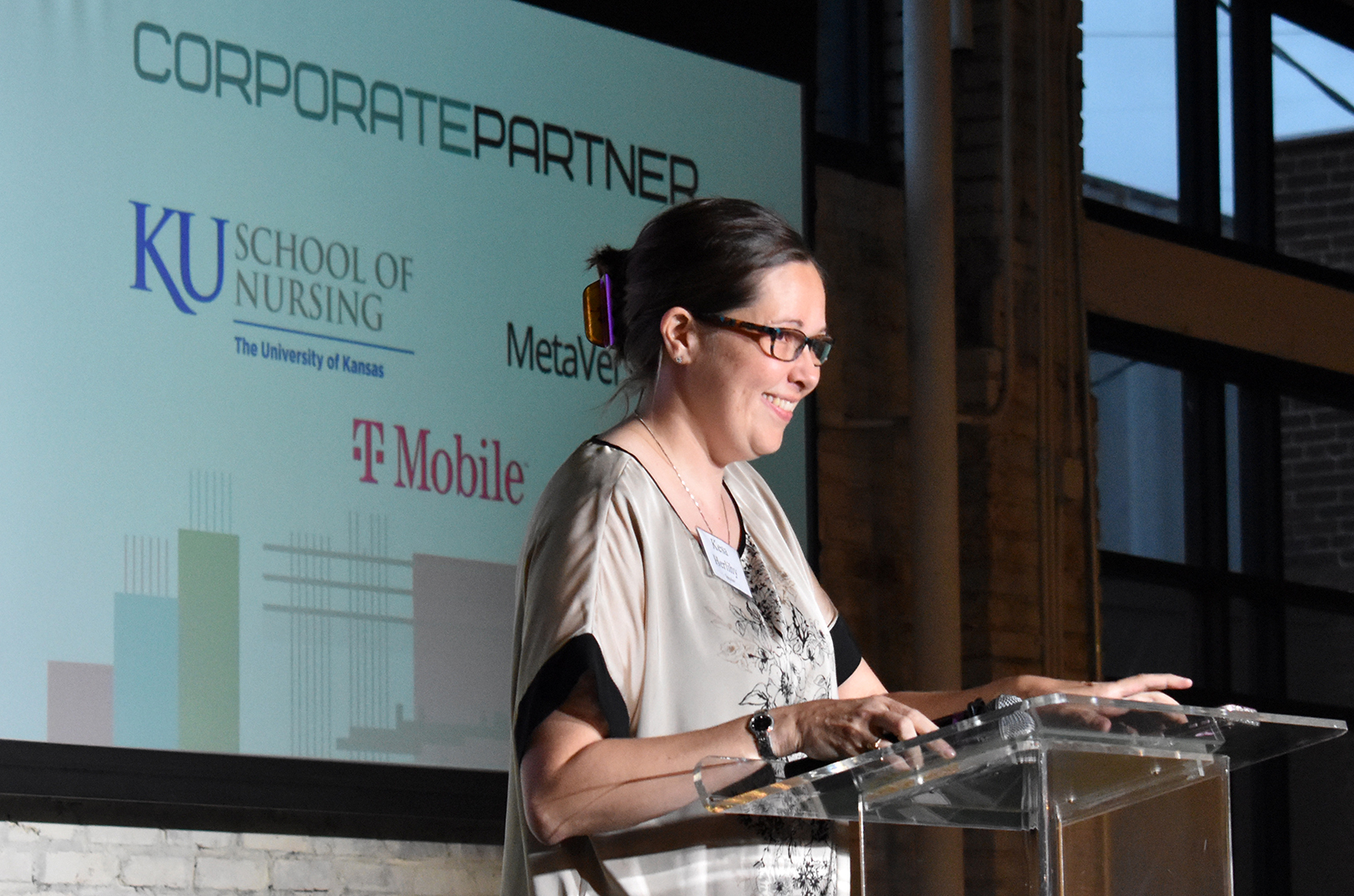
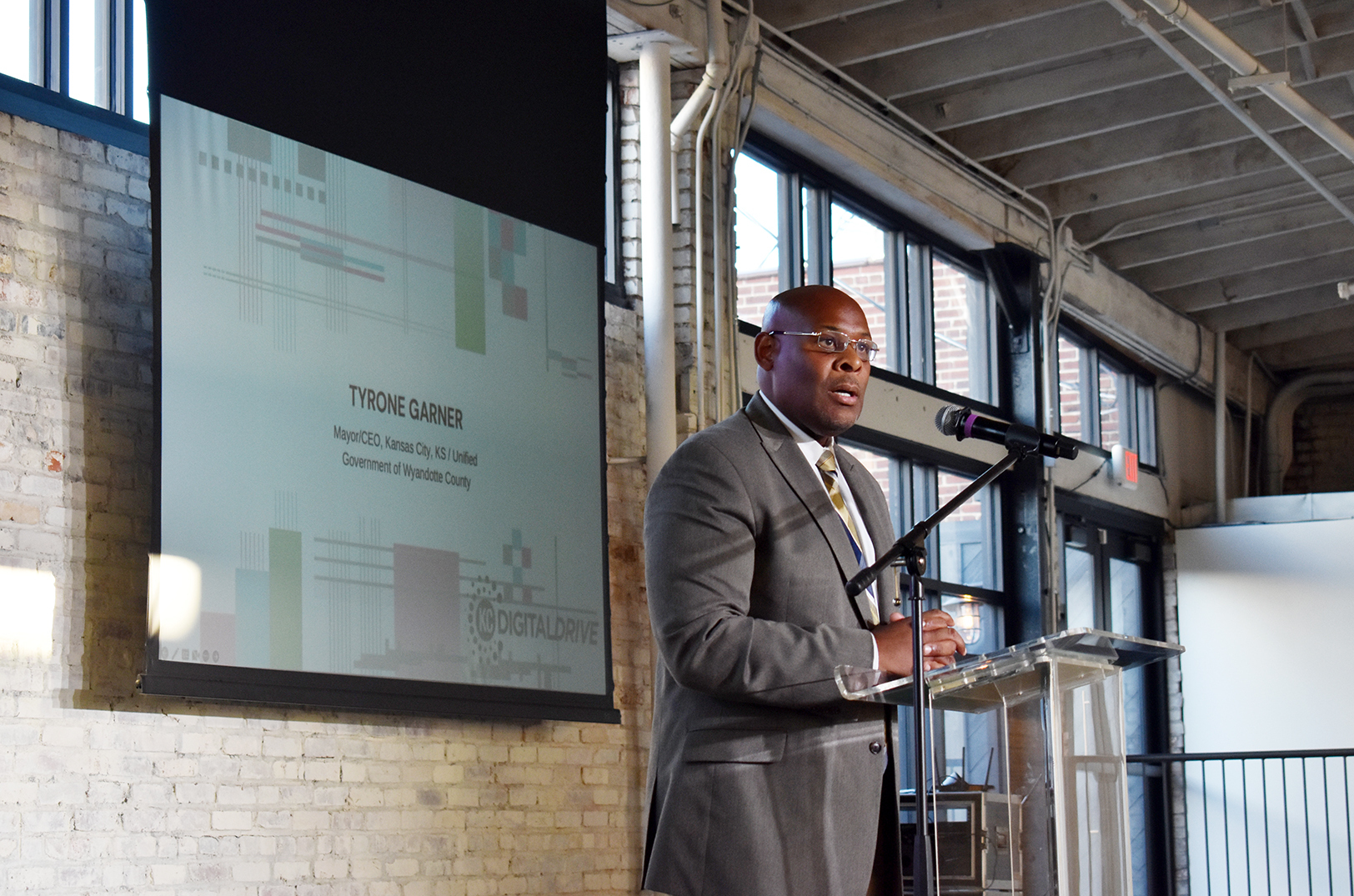
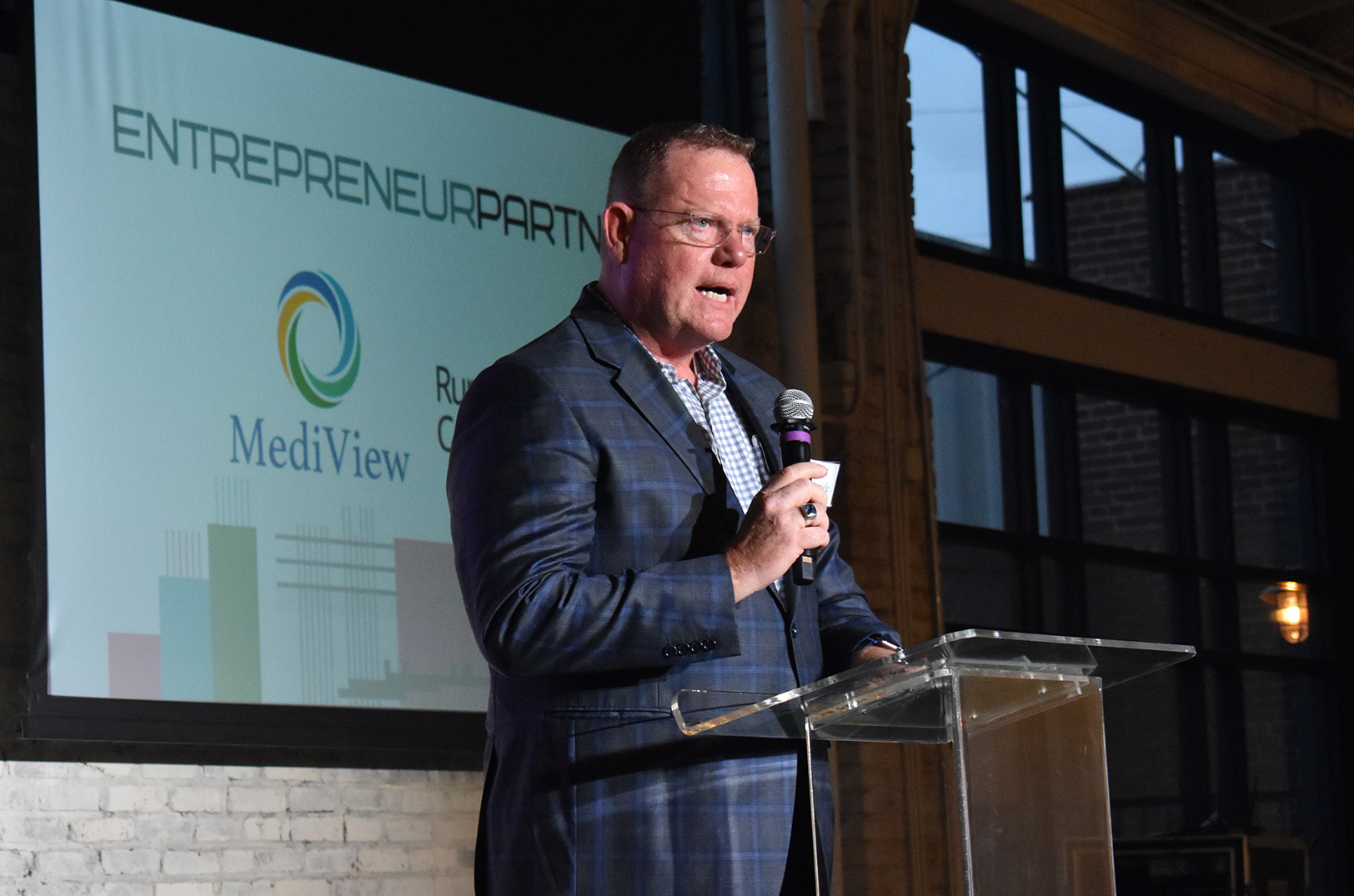
Check out a brief photo gallery of event speakers, then keep reading.
‘Why can’t we be like Kansas City?’
This spirit of innovation and community collaboration extended into municipal endeavors, James said, including the airport expansion project — expected to culminate with the new single terminal’s opening in March 2023 — and the 2012 MLB All-Star Game, which many believe set the stage for the Royals’ World Series runs in 2014 and 2015.
Calling it “the best thing” that came out of Fiber implementation, James said Kansas City benefited from an increased “capacity for collaboration” that can be used to transform the city.
“It gave us the understanding that we really could achieve beyond where we thought we could, and that the only way that we could achieve that is by working together,” James said.
Seeing immediate success as the result of a collaborative approach had the power of uniting — and ultimately — transforming Kansas City’s future, the former mayor said.
“We were able to take that core, build it out, and keep adding layers to it,” James said. “We had instant success and positive reinforcement about what it meant for us as a city to unite behind an idea and push it forward. That is transformative, because that transformation applies to whatever we do.”
In contrast with a decade ago, Kansas City is now viewed enviously by other cities who hope to replicate the area’s growth, James said.
“Kansas City has done so many really unique things that our reputation outside of this area is greater than some of the people who live in this area think,” he said. “Everyone who’s a Kansas City resident or Kansas City-area resident should be exceptionally proud of the reputation that we have in this country and around the world.”
“Just as a point of pride, having other cities say, ‘Why can’t we be like Kansas City?’ I love that crap. I love that,” James added. “We were wanting to be like everybody else and then all of a sudden, people want to be like us — and they still do.”
Featured Business

2022 Startups to Watch
stats here
Related Posts on Startland News
She scored music on Netflix and LA’s star-studded stages; now BodaciousThang is getting vulnerable in KC
When Cheyenne Jolene steps on stage in the shoes of her alter ego, the singer-songwriter’s voice carries both raw emotion and unapologetic truth. Performing as BodaciousThang, Jolene blends R&B, hip hop, rock, and soul into what she describes as “genre bending” music. Her songs are steeped in authenticity and storytelling, offering listeners intimate glimpses into…
SNAP cuts are ‘worse than they look on paper’: Food access advocates warn shelves could go bare overnight
Chef Shanita McAfee-Bryant doesn’t mince words about perceptions of the hungry Kansas Citians she serves daily through her award-winning culinary social venture. “These are the people who — if you listen to the rhetoric — are deemed ‘lazy,’” the founder of The Prospect KC’s NourishKC Community Kitchen told Startland News. “We know the narratives being…
LISTEN: Fermenting a clean future through products from meat alternatives to skin creams and baby formula
On this episode of Startland News’ Plug and Play Topeka founder podcast series, we chat with Francesca Gallucci of Natáur, a Baltimore-based biotech company that’s reimagining how essential nutrients are made. Combining synthetic biology, metabolic engineering, and eco-friendly fermentation, they’re producing bio-based taurine (and other naturally occurring sulfur compounds) without relying on petroleum. Gallucci takes…
KCMO slashes fees for outdoor dining permits, launches dining trail for grant winning projects
Kansas City has officially eliminated outdoor dining permit fees, reducing the cost from $850 to zero, thanks to the momentum created by a city-led initiative to encourage investment in outdoor dining experiences, city leaders announced this week, unveiling new plans to promote funded businesses and their projects. Launched in 2024, the Outdoor Dining Enhancement Program…