

Wrap up: Miss FUND Conference Kansas City? Don’t forget to craft your narrative
November 5, 2019 | Brandon Warrington
Editor’s note: The opinions expressed in this commentary are the author’s alone. Brandon Warrington is an attorney at Husch Blackwell in Omaha. This op-ed is sponsored by Husch Blackwell.
[divide]

Brandon M. Warrington, Husch Blackwell
Kansas City’s inaugural FUND Conference buzzed with startups and emerging companies, from social ventures still in the ideation phase to companies having just finished their Series A financing rounds.
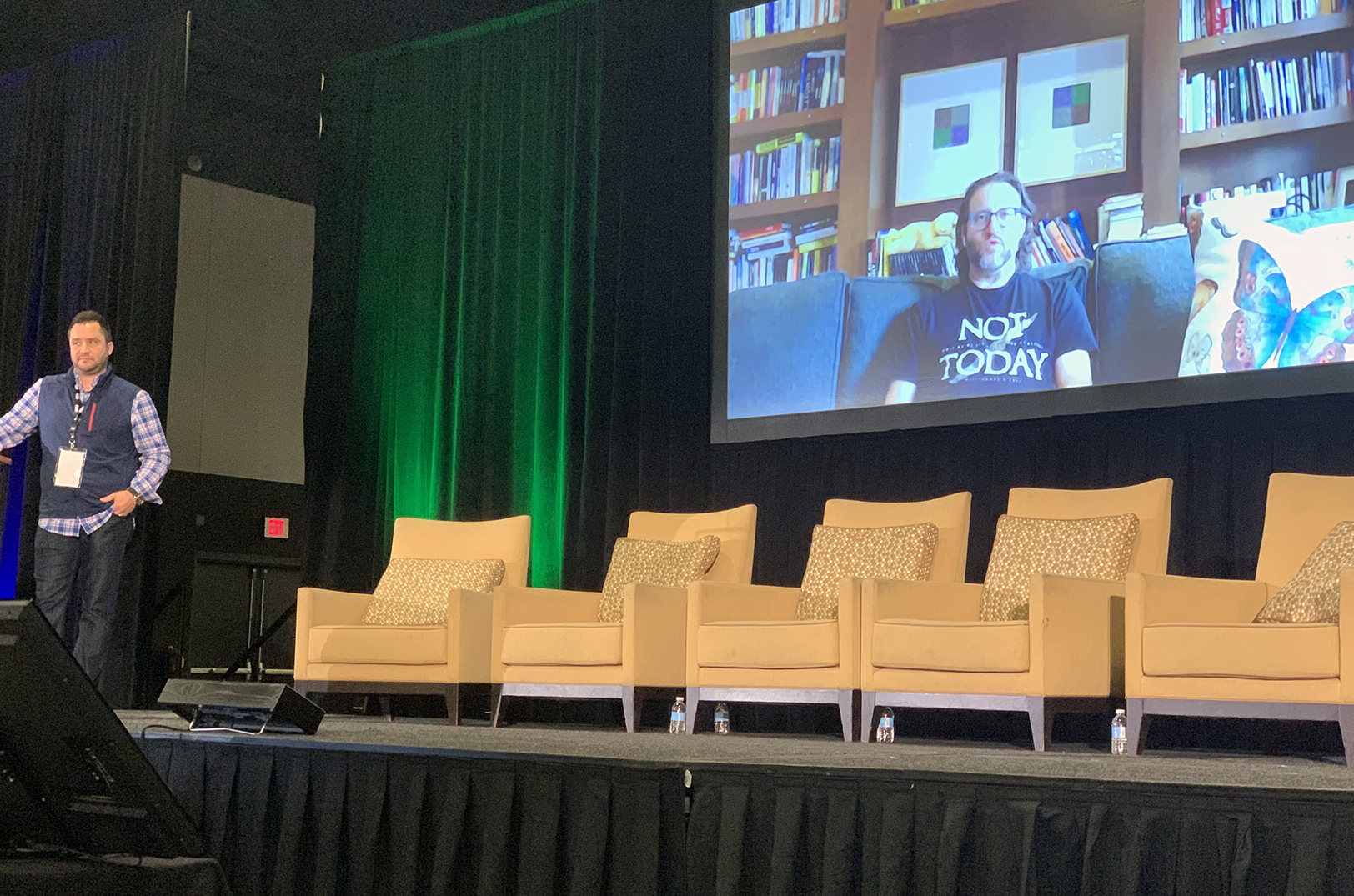
Entrepreneurs, investors and business partners from Kansas City and cities across the Midwest convened to hear Brad Feld, a venture capitalist at Foundry Group, deliver a powerful talk on the complexity of entrepreneurship and engage on topics ranging from the mindset behind Midwestern money to the state of early-stage investment in the region. Throw in a sleek networking event among investors, sponsors, founders and more, and you have two-days that show we don’t coast here in the Midwest. If you missed out, here are three takeaways for every entrepreneur to consider:
Think bigger
Bryan Boots of University of Missouri-Kansas City’s Regnier Institute for Entrepreneurship and Innovation set the tone for both days of the conference with his theme of “Think Bigger.” For example, instead of thinking about how your company could change the streets of Kansas City, think about how your company could change public policy across corporate America; or, don’t just think about how your app could change the way people hail cabs, consider that it could create the gig economy.
This challenge to think bigger applies to investors and local government too. The Midwest is a hub of innovation, and local startups are thirsty for capital. Rather than raising a fund here to invest on the coasts, think about the opportunities at your doorstep. With lower overhead, ever more appealing real estate prices, opportunity zones in key locations, and some of the world’s best research universities, it makes more sense than ever to invest in the Heartland. Gone are the days where tax abatements to build skylines should shape public policy; we live in an era where real economic development and the entrepreneurial spirit are married, and policy should reflect that. The think bigger notion challenges investors and governments alike to abandon any short-term “ribbon cutting” mentalities, opting for ones that favor growing communities and companies through modern economic policy and local investment.
Start planning yesterday
Nobody wants to buy a lawsuit. More than that, nobody wants to pay money without understanding what they’re getting in return. From day one companies should understand how day-to-day decisions can change their valuation by orders of magnitude down the line. Did you promise someone equity if they would be your Chief Technology Officer? You need to document that in a clear agreement. Did you outsource your coding and web development to someone else? You need to make sure you have clear assignments of intellectual property locked down.
These decisions that might be made over lunch in the first trimester of your company’s existence can wreak havoc later if they aren’t dealt with properly from both a business and legal perspective. As Husch Blackwell’s Ed Wilson pointed out, these decisions aren’t easy to understand without adequate legal counsel and business advice. Say you promised your best friend “3 percent of the company” if she would handle marketing: is that 3 percent now, a year from now, or after a Series Seed? Is that 3 percent of the equity undiluted or fully diluted? Is it 3 percent equity or 3 percent of revenue? Nailing down these answers early on, and planning for their effects, is essential to making your company marketable for funding, as well as for avoiding litigation someday.
Good ideas are cheap, but the ability to execute on them is priceless. More than knowing what they’re buying, VCs and angels need to know they’re investing in a team that can execute. Planning for this and building a team and a board with a diverse array of experiences is vital to your company’s success now and when you exit. A wealth of knowledge and diversity of perspective is what investors want to see. A tech company that has no one who can read a balance sheet? You might want to find an accountant or business person who could sit on the board. Trying to sell craft ciders to local bars with a sales specialist and chef on the board? You might need legal expertise to guide you in the right direction. Planning now for what your team needs to succeed and execute on your vision will pay off when it’s time to seek capital.
Always be crafting your narrative
In the Poetics Aristotle said that narratives have shape: a clear beginning, middle, and end. Perhaps more than anything else, crafting your narrative and having it ready for investors and business partners alike will open doors to success. Both days, speakers highlighted the importance of being able to communicate where you have been, where you are, and where you are headed through your pitch, your marketing, and your financials. Whether it be nailing an elevator pitch, being able to man a table in an exhibition hall or engaging in FUND Conference’s Fund-Founder Face-Off it is crucial to be able to communicate to investors what your business is solving, where that solution is at, and what the addressable market for that solution is. Whether it’s with smart reporting and cap-table management software, an online CFO service, or just practicing your elevator pitch with friends, always be crafting your company’s narrative.
The importance of narrative was nowhere more evident than in the Launch Hall exhibition. Featuring everything from event-planning apps to innovative breweries to real-estate fund trading platforms, the diversity of Midwestern entrepreneurship was on display with twenty-plus companies pitching to area business professionals and investors.
Brandon M. Warrington is an attorney with Husch Blackwell LLP.

Featured Business


2019 Startups to Watch
stats here
Related Posts on Startland News

Alex Altomare: How KC students touched by gun violence changed my perspective
Editor’s note: Kansas City entrepreneur Alex Altomare served as a mentor for Tuesday’s MECA Challenge, which prompted students in Kansas City’s urban core to develop solutions for school shootings. The following is Altomare’s reflection on the experience. MECA Challenge and Startland News are both programs of the Kansas City Startup Foundation. [divide] Volunteering, especially with…

Ginsburg’s Podcast Preview: ‘Social Media Marketing’ as a multi-tactic strategy
Editor’s note: The opinions expressed in this commentary are the author’s alone. [divide] If you’re new to either podcasts or this occasional column, click here for background information. We preview specific podcasts to reveal their topics, formats and lessons from listening. Featured Podcast This podcast is the backbone of Social Media Examiner, a California-based host…

Letter to the editor: Former KC innovation officer weighs in on new short-term rental law
The following is a letter to the editor written by former Kansas City, Missouri, chief innovation officer Ashley Z. Hand in response to a recent series of Startland articles focused on Kansas City’s new short-term rental regulations. All opinions in the commentary are the author’s alone. [divide color=”#685c3f”] I find it interesting that there is…

April Boyd-Noronha: Quest Moffat talks Project United Knowledge’s STEM inspiration
Editor’s note: The opinions expressed in this commentary are the author’s alone. [divide] My columns this month feature four minority-owned STEM businesses in the Kansas City metro. The cool thing about each of these businesses? They include at least one (if not more) aspect of the STEM concept — science, technology, engineering, and math. For…