
Selling ‘the infinite commodity’: Farmobile leverages blockchain to build secure data store
July 19, 2018 | Tommy Felts

With more than a million acres of field data amassed by Farmobile, farmers now need an exchange to securely connect them with buyers of the digital machine and agronomic information they’ve harvested, said Jason Tatge.
A newly opened Farmobile DataStore, which leverages elements of blockchain technology fueled by Intel Sawtooth and Amazon Web Services to increase transparency and traceability for both the farmer and data buyer, is a first-of-its-kind solution, the Farmobile CEO said.
“We started Farmobile based on the belief that data is one of the most valuable things a farmer harvests – it’s the infinite commodity. That will never change. This milestone proves that the market believes it too,” Tatge said. “We have data buyers calling us like crazy. From reinsurance companies to technology giants to chemical and seed companies, buyers are hungry for a consistent stream of high-quality, layered, ground-truthed farm data. We’re the only ones who can provide it.”
Tapping a new revenue stream
Launched in 2014, Leawood-based Farmobile’s data collection device collects more point-by-point farm data from more sources than anyone else in the industry, the company said. Stored in a standardized geo-tagged format called an Electronic Field Record, or EFR, the Farmobile DataStore now may include detailed agronomic data for planting, harvesting, foraging, spraying, and spreading; field data (boundaries, variety, and crop type); and location data.
“We standardize the data; We’ll put it in the right format, have you confirm its accuracy, then we let you put it into a store where we bring your data buyers who are vetted,” Tatge said. “Farmers get the final choice whether to sell. If they choose to sell, we split the revenue with them.”
Using the new data store, approved data buyers are able to easily query and make offers for farm data based on their specific needs.
“Buyers love the model because now they have access to high quality data,” said Matt Kamphoefner, vice president of product of Farmobile. “Farmers love it because they are receiving a direct ROI for quality collection of data. It’s a win-win.”
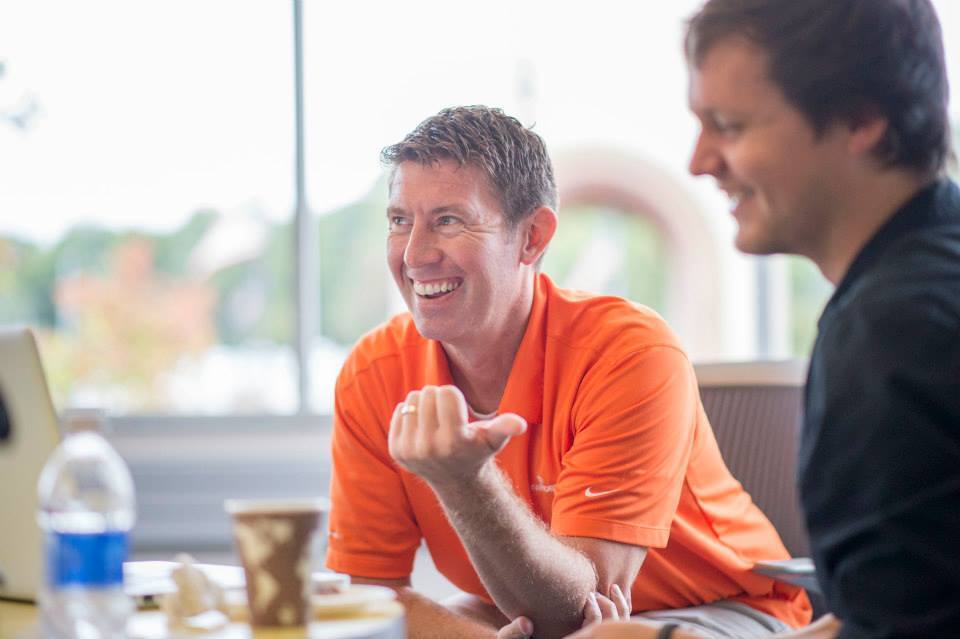
Jason Tatge, Farmobile founder
Whose data is it?
Data needs to be respected as a proprietary recipe, said Tatge, referencing frequent headlines in the news about the sharing and selling of information on social media by companies like Facebook and Google.
“One of the questions I get asked all the time is ‘Who has access to my data?’ Honestly, I don’t know,” he said. “Here’s what we do know: We were able, as a company, to figure out how to plug a device into the diagnostic port and collect messages. My guess is others have been able to figure that out as well. Where it gets a little eye-opening is the fact that most people don’t understand that the tractors are now equipped with modems. Most people don’t know that about new cars as well. So whether you turn on the service or not, that modem is still in there and sometimes it’s still being connected.”
“So whose data is that?” Tatge asked.
It’s like the digital Wild West now, but society will soon have to establish more concrete legal restrictions to answer the question, he said, especially as new industries develop around information people seemingly give up willingly.
Facebook and Google are different from Farmobile in that their business models and tactics have adapted over time, Tatge said. Farmobile’s approach to data collection and selling has been intentional since its inception, he said, noting the company’s emphasis on fairly securing the farmer’s stake in the process.
“Farmers are harvesting critical business knowledge that is contained within the data,” Tatge said. “Oftentimes it’s collected without the farmers say — without the knowledge that they may have clicked through an agreement somewhere. I’ve been asked to sign something at the point of purchase of a piece of equipment, and many people truly don’t understand what may be happening there.”
Tatge doesn’t shy away from using products offered by Facebook and Google, he said. The founder simply is careful about what he shares, knowing that the data might be used for other purposes — a risk users often unintentionally embrace when taking advantages of such free services, he said.
Farmobile attempts to take away any of that ambiguity or guesswork about its clients’ data, Tatge said.
A new Farmobile DataServices group, a collection of Farmobile-approved agronomy professionals, has been rolled out to help farmers open up new revenue streams by easing the process of certifying their data, Tatge said.
“The challenge we found over the last year has less to do with collecting the data or creating a demand, but in creating a system that is properly incentivized and easy to use,” he said. “We don’t think farmers have to become engineers or data scientists to extract value from their digital assets.”

2018 Startups to Watch
stats here
Related Posts on Startland News
Founders discuss tough decisions entrepreneurs face
Two founders took the stage at Kansas City’s chapter of 1 Million Cups to discuss the vast variety of tough decisions entrepreneurs face when starting and running a business. Stuart Ludlow, co-founder of RFP 365 and Sarah Shipley, co-founder of BikeWalkKC, offered insights and advice for those launching a business. Read about RFP365’s recent funding…
Lenexa studio joins national coworking relief effort for Nepal
Despite the nearly 8,000 miles between them, a Kansas City-area coworking studio is helping with relief efforts in Nepal after a 7.8 magnitude earthquake destroyed hundreds of buildings and claimed thousands of lives. Lenexa-based Plexpod has joined the international “Coworking for Nepal” movement that has attracted dozens of studios to encourage fundraising for Nepal relief…
KC’s first innovation officer reflects on work, city’s tech future
After more than two years of service, Ashley Hand is leaving the driver’s seat of Kansas City’s innovation efforts. Hand, who soon will be departing as Kansas City’s chief innovation officer, was tasked with implementing innovative strategies to improve how city government can better serve Kansas Citians. The city will be accepting applications for the…
Welcome to Startland News
Scrappy. Determined. Gritty. Those often were the words attributed to the Kansas City Royals as the team unexpectedly surged into the 2014 World Series and captured the national spotlight. Those very words are apt for this city, which has been built on the grit and determination of successful entrepreneurs like Ewing Kauffman, Joyce Hall, Henry…