
Expensive billboards aren’t enough: Digital content startup pushes platform for engaging signage
June 16, 2020 | Austin Barnes

Startland News’ Startup Road Trip series explores innovative and uncommon ideas finding success in rural America and Midwestern startup hubs outside the Kansas City metro. This series is possible thanks to the Ewing Marion Kauffman Foundation, which leads a collaborative, nationwide effort to identify and remove large and small barriers to new business creation.
WICHITA — With direct human interaction stretched like never before, clear messaging from small businesses, churches and schools is critical as entrepreneurs and officials maneuver a mid-pandemic world, said Ivan Gomez.
And that takes more than a simple billboard or even an expensive sign with scrolling digital text, the Wichita-based startup executive added.

Ivan Gomez, Project Content
“You can have a five- or six-figure piece of marketing equipment and if you’re running red text or the time and temperature on it, you’re not marketing your message well,” Gomez, director of sales and business development for Project Content, said of ways companies are missing marketing opportunities and limiting their return on investment.
An offshoot of Next LED, on display since 2016, Project Content hopes its newly launched Presto platform — an online design tool, full of stock content that customers can instantly modify to create impactful, visual messaging — will allow for flexibility and convenience amid rapidly changing times for those dealing with members of the public.
“We kind of tried to take those lemons and make lemonade out of the situation,” he said.
“So many people pass a sign day in and day out. You just have a small amount of time or a small window to capture that user’s attention, subconsciously,” explained Luke Luttrel, CEO and owner.
“If you’re doing something from a content perspective that really sticks out and really resonates, that’s making an impact in that customer’s mind. We feel like if you’re a business owner and you’re paying that level of attention or [putting] that level of professionalism on the content that’s running on your sign, then that’s a good reflection on the type of business that you are and maybe of the services you provide.”
Click here to further explore Presto and Project Content.
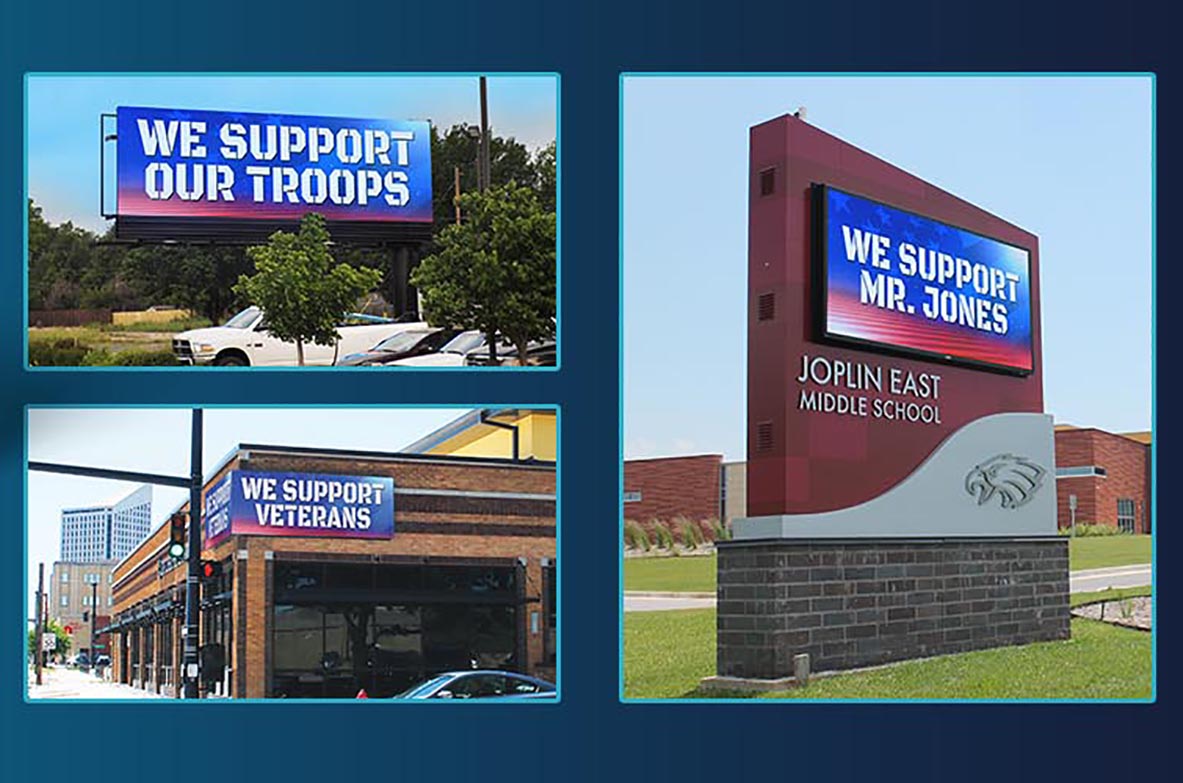
Presto by Project Content
Noteworthy Project Content customers include Arby’s and Pittsburg State University, the company said.
But in recent weeks, school districts have made the biggest splash with the startup’s digital content, Gomez added.
“About a month ago, we launched a senior showcase campaign as a way to [say:] ‘Hey, you’ve got this marquee sign that maybe isn’t getting the use that it should right now with the schools closed down and we can help you with that,’” he said, detailing the Presto template that allows school signage to display pictures of graduates alongside congratulatory messages.
Additional perks of the Presto service include its cost and the ability to design and deploy high quality signage with a few simple clicks, Gomez added.
“Schools are difficult because they work with very limited budgets and they’re very hesitant to spend big dollars — or really money at all — around marketing strategies,” he said. “They tend to gravitate toward, ‘Oh, you know, we’ll just do that in house,’ and it’s always been kind of a head scratcher for us because schools are big customers of signage and lots of them have marquees.”
Church and government customers fall into a similar pattern, Gomez noted.
With the addition of Presto to its product offerings, Project Content hopes such groups can begin to see the value in investing in paid content services and make the most out of their initial investment in digital signage.
“Digital signs are usually five- or six-figure investments — if you get into bigger projects, sometimes seven figures. That is big, big money that we’re talking about,” Gomez said. “We’ve seen a lot of business owners over the past few years just not really devote the right kind of attention and dedication to their content strategy. They make these huge investments and they get the sign on the pole, or they get the billboard up and then they say, OK, now what?’”
[divide]

This story is possible thanks to support from the Ewing Marion Kauffman Foundation, a private, nonpartisan foundation that works together with communities in education and entrepreneurship to create uncommon solutions and empower people to shape their futures and be successful.
For more information, visit www.kauffman.org and connect at www.twitter.com/kauffmanfdn and www.facebook.com/kauffmanfdn
Featured Business

2020 Startups to Watch
stats here
Related Posts on Startland News
ECJC relocates office, updates brand
The Enterprise Center in Johnson County is shaking things up. The non-profit organization that connects entrepreneurs to the resources they need to grow revealed Thursday an updated website, brand identity, and new office location. “This move is the culmination of a long, strategic transition to ensure that as Kansas City’s entrepreneurial community changes, we change…
Former Sprint COO LeMay dishes on KC capital, failure
There are few people in Kansas City more connected into the area’s investor, corporate and startup community than FarmLink CEO Ron LeMay. Also now managing director of Kansas City-based OpenAir Equity Partners, LeMay frequently sees the successes and failures of the metro area’s capital landscape. The former Sprint COO recently spoke with dozens of Kansas…
RFP365 partners with Kansas City, raises $950K
On the heels of a six-figure raise, area tech firm RFP365 recently landed the City of Kansas City as a client for its software that eases the request for proposal process. The company’s deal with Kansas City was born from the city’s “Innovation Partnership” program, which affords entrepreneurs the opportunity to “test drive” their technologies…
Study: Gov should take long-term approach to grow new businesses
A recent study by the Ewing Marion Kauffman Foundation reports that while governments have long supported entrepreneurship, new business creation is waning. The study — Guidelines for Local and State Governments to Promote Entrepreneurship — found that new businesses comprised about 8 percent of all U.S. businesses in 2011, down from roughly 15 percent in the…