
Young brains rewired by non-stop screen time in classrooms, neurotherapist tells district
February 19, 2019 | Austin Barnes

[Editor’s note: The following is part of a limited Startland series, exploring parent advocates’ objections to 1:1 technology initiatives, which typically put a tablet device in the hands of each student and are popularly used as classroom innovation models across Kansas City and the nation.]
[divide]
A rise in ADHD diagnosis and increased risk of suicide could be but two potential outcomes of irresponsible management of tech initiatives in Kansas City classrooms, Susan Dunaway warned.
[pullquote]
Doubting Digital
Other stories in this series:
• Questioning 1:1 initiatives: Tech devices don’t equal innovation, disillusioned parents argue
• Mother stresses lack of parental consent for school devices amid privacy, development worries
[/pullquote]
“You’re going to see more cyber bullying, more self-mutilation. I could just follow the train here. This is where it’s going to lead,” Dunaway, a neurotherapist and Shawnee Mission parent, said of developmental threats posed by the increased presence of tech in the classroom under a Shawnee Mission School District 1:1 technology initiative.
“Brain research says that the more [kids are] in front of the screen and the younger they are, the more it changes both the functioning and structure of the frontal lobe. Specifically, it loads down or damages the development of the prefrontal cortex,” she continued. “That’s the part of the brain that does executive skills — focused attention, motivation, decision making, anticipating consequences, task initiation, follow through — the things that the adult brain does that kids are bad at.”
As part of her fight to protect developing brains from potentially harmful, emerging technological threats, Dunaway — who runs Amend Neurocounseling in Overland Park — once provided a two-page resource list that outlined her concerns and highlighted potential risks to SMSD leaders as they initially prepared to pass the district’s 1:1 initiative, she recalled.
The Shawnee Mission School District did not respond to requests from Startland to participate in this series.
“I didn’t hear anything back from anybody [and that was five years ago],” she said, expressing amazement. “Now, we have a new superintendent. We went back in front of [the school board] recently and 15 parents talked at that school board meeting with different aspects of how [classroom tech use] was affecting their kids or the concerns that they have.”

Photo by Annie Spratt
Studying brainwaves, seeing bias
A concern that’s top of mind for many SMSD parents is poor communication about devices and how they’re used, Dunaway explained.
“I was at the school board meeting [five years ago] and I’ve talked to the teachers [who’ve said] it was like all of a sudden we have all these iPads and they’re like, ‘Use them.’ The decision by them was a closed door decision,” she said with frustration, noting that a survey was sent to parents before the closed session vote — but it could have returned skewed results, she speculated.
Click here to read more about recent parent concerns in the Shawnee Mission School District.
From a parent’s perspective, Dunaway feels duped by the district she’s entrusted with her children’s education, she said. From a medical professional’s perspective, she feels responsible for educating local school leaders who might not understand the power held by the devices they’ve issued, she added.
“I spend my day reading brainwaves and teaching people how to regulate their brainwaves, which works with a lot of different things like ADHD and anxiety, depression, concussions. It’s just a whole lot of places where the brain gets dysregulated,” she said of her work that’s largely centered around adolescents. “What I started noticing was that the more a kid was on a screen … the screen [time] would cause symptoms that look like ADHD, for example.”
Armed with such knowledge, Dunaway has buckled down on her efforts to share her research with school officials and encourage them to establish guidelines for classroom screen time — limitations that could set boundaries and curb the misdiagnosis of behavioral issues, she explained.
“It seemed like the research that the schools were being given or that they knew about, tended to be [conducted] by somebody — I think — with a dog in the fight. So they were generally [studies by] Microsoft or Google or you know, backed by a technology company as opposed to peer reviewed research,” Dunaway said. “It comes out differently when it’s not biased and none of it is good.”
Return on investment?
Arguably used to sell kids on the allure of iPads and other devices, tech-wired classrooms could be the latest corporate strategy for selling addiction — much like soda and junk food companies, which once turned to schools as a means for building brand loyalty, Dunaway said.
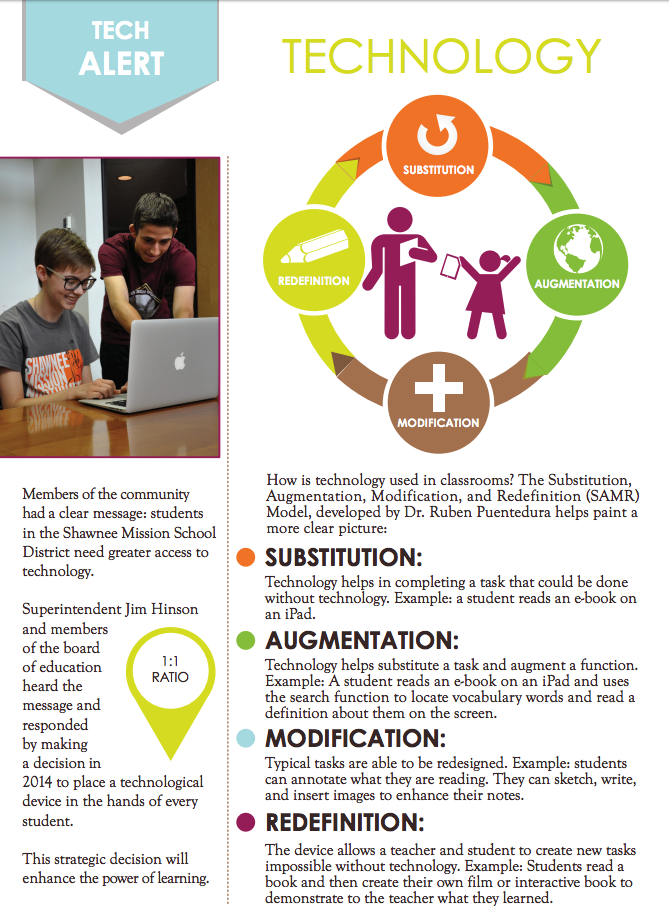
From the Shawnee Mission School District Strategic Plan, 2014-2015
“The problems with technology and the school system [across the metro] is that they are calling an iPad ‘technology,’” she shared candidly of her perception. “This is a thing that they’re calling ‘making our kids tech-ready’ — because we’re handing them a piece of equipment and they’re really confusing [that with innovation] … But instead, what they’re really doing is replacing paper with [digital course work] on the iPad.”
Part of the district’s push for increased tech use in the classroom, could be tied to the expense of devices — with the district having shelled out $20 million in capital outlay funds on its 1:1 initiative, Dunaway explained.
“Teachers were starting to get a lot of pressure to use [devices]. They have to prove that this was a worthy investment,” she said. “And so part of that, is that weird psychology that any time we spend a lot of money on something that human brain goes, ‘I better really like this. I really like this’ — otherwise, I’m pretty dumb.”
As more parents voice concerns over the potential developmental dangers of increased tech use, Dunaway suggests initiating informed conversations with school decision makers in order to spark change, she said.
“The main questions that you would ask are, ‘What is being replaced by this technology? How much time is my child going to be on it? How is that tracked? What are my options to opt out?’”
Empowered parents can potentially save their kids from long-term developmental struggles as they grow, Dunaway concluded.
“I do see this as a moral and ethical dilemma, that I don’t feel like [schools are] debating well enough,” she said.
[divide]
Doubting Digital
Other stories in this series:
• Questioning 1:1 initiatives: Tech devices don’t equal innovation, disillusioned parents argue
• Mother stresses lack of parental consent for school devices amid privacy, development worries
Featured Business

2019 Startups to Watch
stats here
Related Posts on Startland News
Just funded: Trio of startups join Digital Sandbox KC, emerging onto competitive innovation scene
Not only will proof-of-concept funding from one of Kansas City’s most pivotal startup supporters help CEO Gharib Gharibi rapidly iterate development of his company, the Archia founder said; Digital Sandbox KC connects him to a thriving local tech ecosystem at a crucial inflection point for his artificial intelligence-based solutions. “We are excited to leverage both…
Check out the entrepreneur winners of this library pitch competition (and beyond-the-shelf resources)
Overwhelmed and excited to make a bigger impact, Rasheedah Villarreal expressed joy and gratitude Thursday after her name was announced as the top winner among a wide-ranging catalog of entrepreneurs pitching for cash prizes, community support, and serious momentum. Her business, Social Emotional Yoga with Mrs. V, also earned “Crowd Favorite” honors, sending the founder…
Controlled Burn: BoysGrow sets the table for fire-infused meal sparked by farm’s teen entrepreneurs, KC chefs
A live fire culinary event at the BoysGrow farm in south Kansas City is a dream come true for John Gordon, he shared, detailing plans for a fundraiser that harvests an immersive and unforgettable dining experience from the teen-focused ag entrepreneurship program. The one-night-only “Controlled Burn” heats up Oct. 5 at the 10-acre farm where…