
Mother stresses lack of parental consent for school devices amid privacy, development worries
February 19, 2019 | Austin Barnes

[Editor’s note: The following is part of a limited Startland series, exploring parent advocates’ objections to 1:1 technology initiatives, which typically put a tablet device in the hands of each student and are popularly used as classroom innovation models across Kansas City and the nation.]
[divide]
Digital dangers are lurking in Shawnee Mission classrooms, as schools increasingly become tech-wired teaching environments, Melanie Haas explained.
[pullquote]
Doubting Digital
Other stories in this series:
• Questioning 1:1 initiatives: Tech devices don’t equal innovation, disillusioned parents argue
• Young brains rewired by non-stop screen time in classrooms, neurotherapist tells district
[/pullquote]
“There’s this digital footprint that’s being created for my kids and I don’t have any idea what it looks like or who has access to it, or who it’s being sold to,” Haas, the mother of two elementary school students, said of her experience with the district’s lauded 1:1 technology initiative.
While Haas’ concerns about her daughters’ safety are driven largely by parental instinct, a career as a technologist — comprised of jobs at such companies as VML and DST Systems — has exposed her to knowledge and data trends that trip even more alarms of concern, she said.
“I certainly have deep concerns about how our kids are being tracked online, what the district is doing to protect them,” she said. “And I still have a lot of questions that I’d like to ask at a district level of somebody who can help me better understand what does that BPM [business process management] look like? What agreements do we have with companies like Google and what have we agreed to give up in terms of privacy?”
A lack of access to what is loaded on school-issued devices and VPN settings that allow her kids to bypass home internet filters to access such sites as YouTube, are secondary causes for concern in the Haas home, she said.
The Shawnee Mission School District did not respond to requests from Startland to participate in this series.
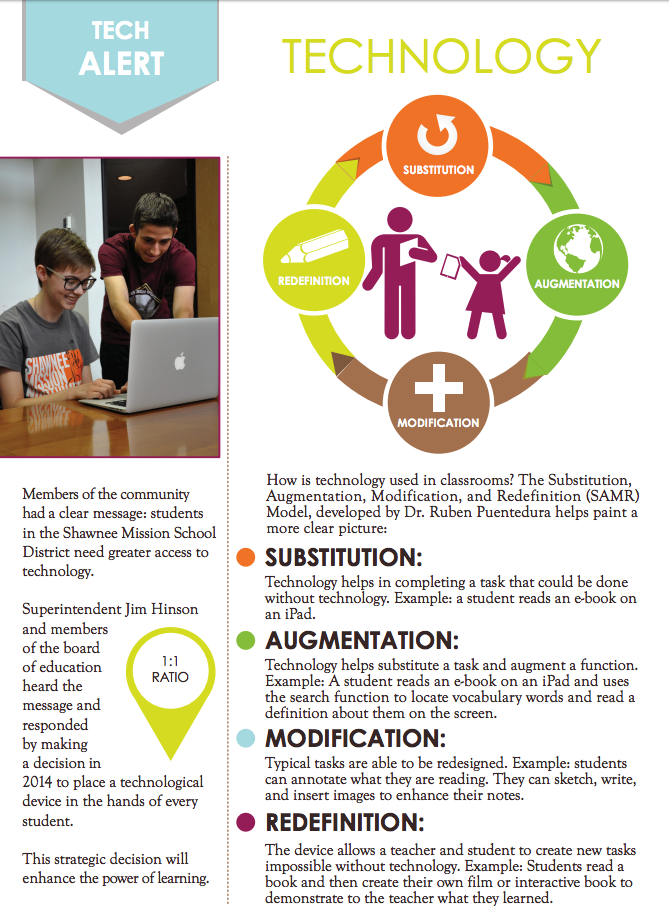
From the Shawnee Mission School District Strategic Plan, 2014-2015
“We also recognize that in the world today, there are a number of security threats,” said Drew Lane, SMSD executive director of information and communication technologies, in a 2017 interview with Ed Tech — a digital magazine. “Instead of treating security as kind of a bolt on an afterthought, we looked at how can we integrate security throughout everything that we do.”
As a result, the district partnered with Cisco to provide security measures as connectivity grew across the SMSD’s 44 schools, Lane continued.
In the present day, such measures have either not lived up to expectation or aren’t effectively communicated to parents, Haas said.
“As a privacy advocate for my own kids, I really feel like I’m kinda in the dark and [school officials] haven’t shared a lot of that information,” she said. “Anytime you’re collecting data, there’s a very good chance that somebody is selling that data.”
Part of the illumination process for Haas and other SMSD parents includes a newly formed advisory group, aimed at bridging gaps and providing an open platform for communication between concerned parents and school officials, Haas explained.
Click here to read more about the SMSD parent task force.
Addicted to ‘Every kid should have this device’
Not only could 1:1 initiatives be classroom data harvests, they’re promoting addictive habits Haas stressed.

Photo by Rietveld Ruben
“We see so many parallels between the apps that they use in the classroom and the apps that adults are addicted to — like Facebook,” she said. “It’s all about that dopamine hit and app developers know that if they can get a kid to spend more time in the app and click again, then they’re going to be that much more likely to keep coming back.”
Alarmed, Haas said there’s no evidence to support the idea that classroom-used apps are vetted by districts in the same way textbooks would be.
“[Textbooks] have to meet core curriculum standards. These apps aren’t being embedded against standards and these app developers, they’re just developers that are trying to make money as app developers. They are not necessarily people with education degrees or even backgrounds,” she said.
While tech isn’t necessarily the enemy, the way its used could be, she said. Protection for her children — which has evolved beyond physical safeguarding in the tech age — is the overall goal Haas wants to see achieved in SMSD, she said.
“I think they jumped into this without really thinking about the ramifications — the effect that technology would have on this very diverse set of students,” she said. “As a blanket statement to just say, ‘Every kid should have a device’ shows to me clearly that they did not do their due diligence and they didn’t understand the research that has been widely available that talks about how these devices are not appropriate developmentally at different ages.”
Click here to read more about developmental habits and 1:1 initiatives.
Innovation or babysitters?
Haas has experience with reduced tech exposure in education on her side, she said, describing a stark contrast.
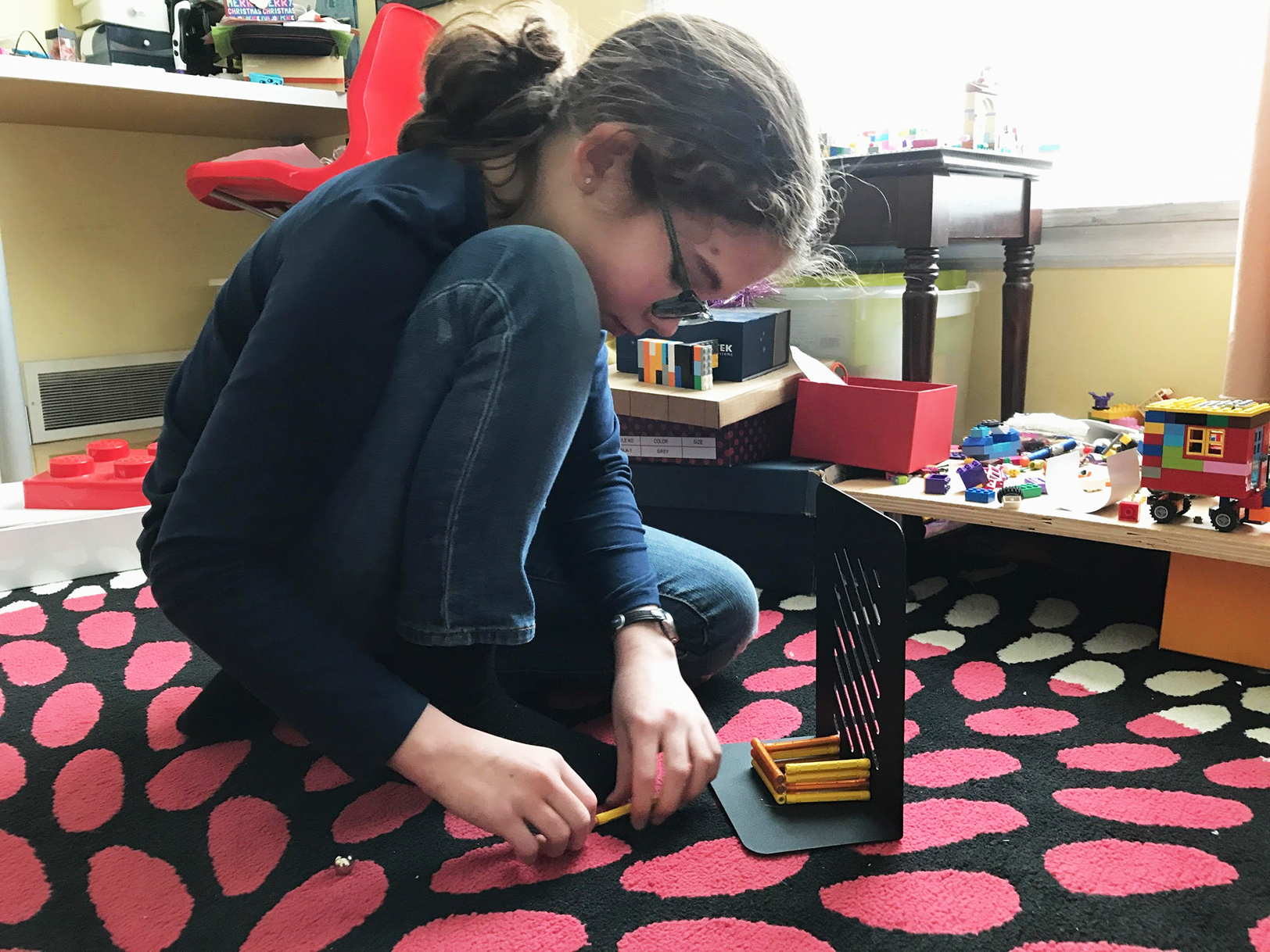
Photo courtesy of Melanie Haas
“We were in a private Montessori school [before enrolling our kids in SMSD last year],” she said. “Montessori believes pretty strongly that they shouldn’t have any exposure to technology as children.”
While avoiding tech exposure is nearly impossible in today’s world, Haas noted, the quality of education her kids have received has noticeable changed.
“When we started in Shawnee Mission, they immediately came home with iPads … I thought it was kind of interesting that they had made that sort of investment — that every single kid in the district would have a device — but, very quickly, I came to realize that those devices were serving, in a way, as babysitters,” she said.
Haas falls into a growing camp of parents in SMSD who argue devices alone don’t equate to innovation, she said.
“I think [the school district is] in way over their heads and I think that they don’t have the right technology resources. I think they don’t have the right people in place to make smart decisions about how they’re implementing the use of what they consider a technology tool in the classroom,” Haas said.
Encouraged by progress, but not completely sold on the value of the 1:1 initiative, Haas is eager to see the impact of more parent involvement as bridges between school officials and guardians are built and schools learn to approach technology with more thought, she said.
[divide]
Doubting Digital
Other stories in this series:
• Questioning 1:1 initiatives: Tech devices don’t equal innovation, disillusioned parents argue
• Young brains rewired by non-stop screen time in classrooms, neurotherapist tells district
Featured Business

2019 Startups to Watch
stats here
Related Posts on Startland News
Annie Austen’s newest store opens, building around ‘an actual human being’ and her gut instincts
That glow within downtown Overland Park isn’t just coming from the freshly stocked shelves at the new Annie Austen storefront; it’s yet another product of the pandemic-pivot entrepreneur’s contagious positivity — lightening the mood just steps away from a massive farmers market overhaul. “There really aren’t any safe options in life. Sometimes the rug gets…
This voter-approved investor backed Zhou B Arts, KD Academy and a new hotel at 18th and Vine; now it has a new home
EDCKC absorbing initiative built to strengthen KC’s urban core after $60M in investments A move to transition the Central City Economic Development (CCED) program under the umbrella of a larger KCMO impact agency is expected to boost the urban core-focused initiative’s ability to uplift both the people and the places at the heart of Kansas…
Hidden costs of grief: Chef’s murder illustrates economic toll of gun violence in KC
Editor’s note: This story was originally published by The Beacon, a member of the KC Media Collective, which also includes Startland News, KCUR 89.3, American Public Square, Kansas City PBS/Flatland, and Missouri Business Alert. Click here to read the original story from The Beacon, an online news outlet focused on local, in-depth journalism in the public interest.…