
Dimensional Innovations scores with massive Target Center design overhaul
May 22, 2018 | Tommy Felts

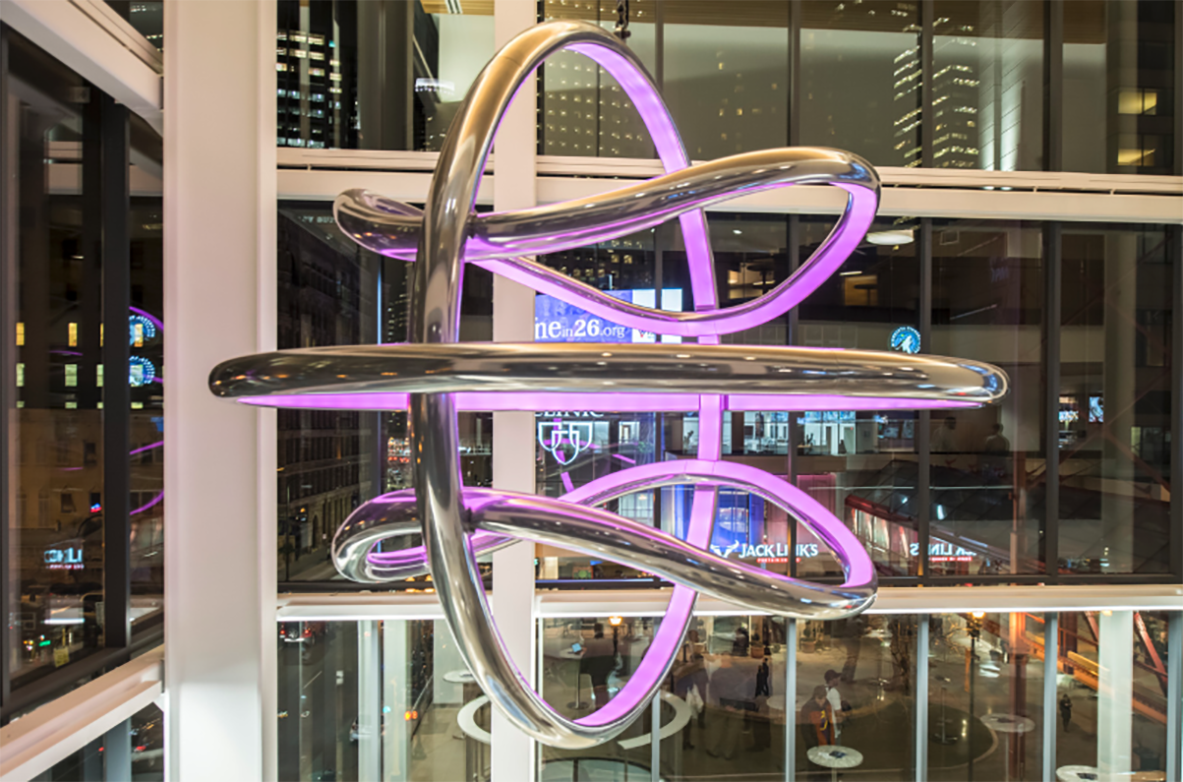
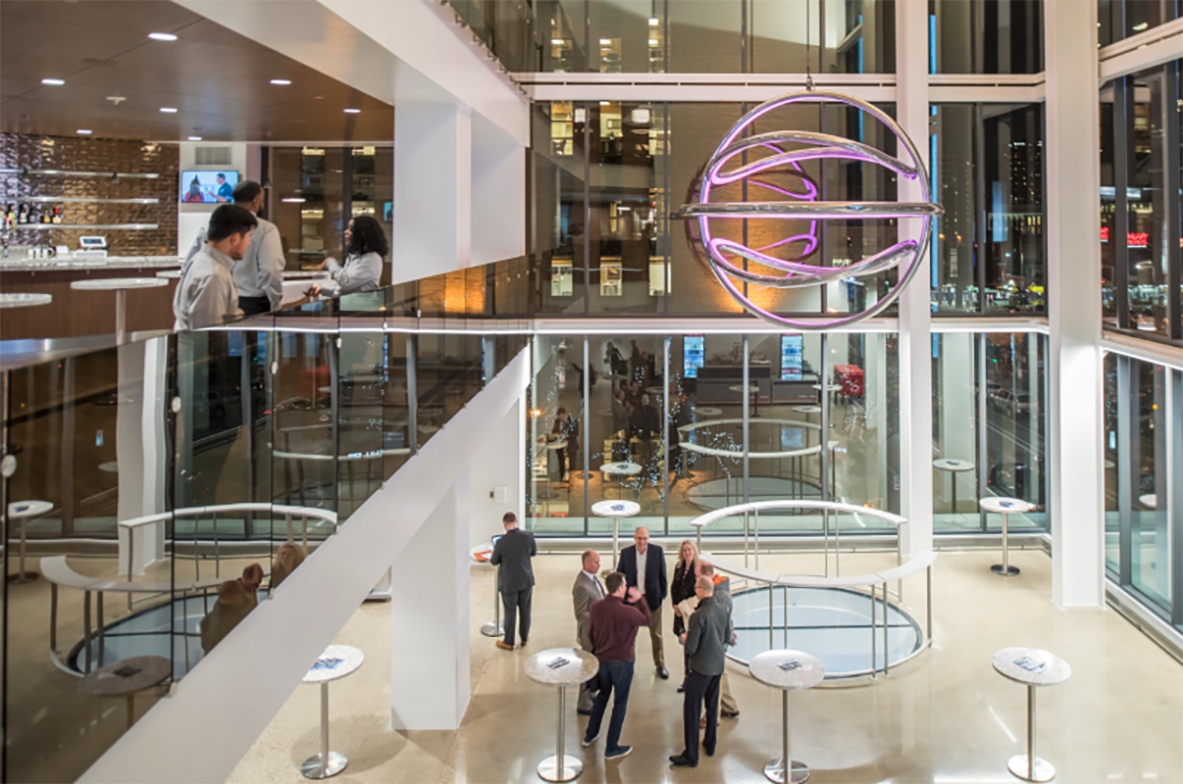
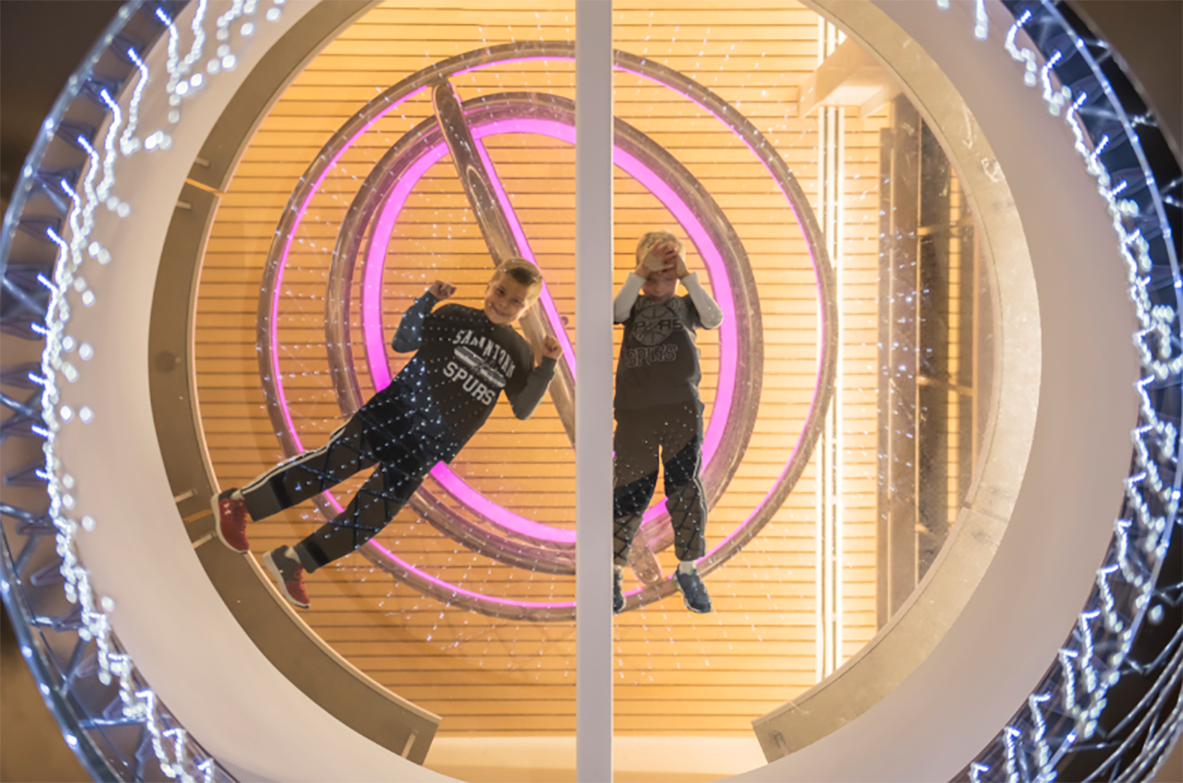
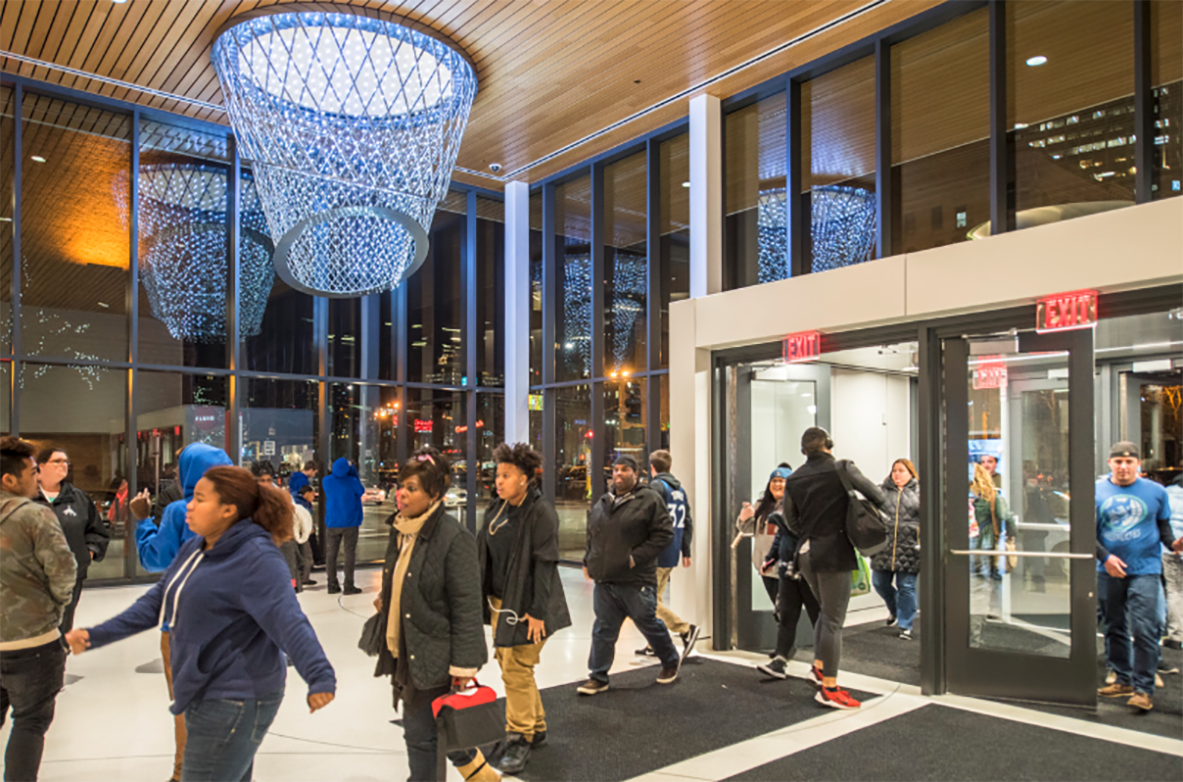
Amid the hustle of a Minnesota Timberwolves game, fans peer through a glass floor at passersby in a lobby below. Looking up, a giant, neon-colored basketball sculpture looms overhead. It’s a moment created for curiosity and connection — designed by Overland Park’s Dimensional Innovations.
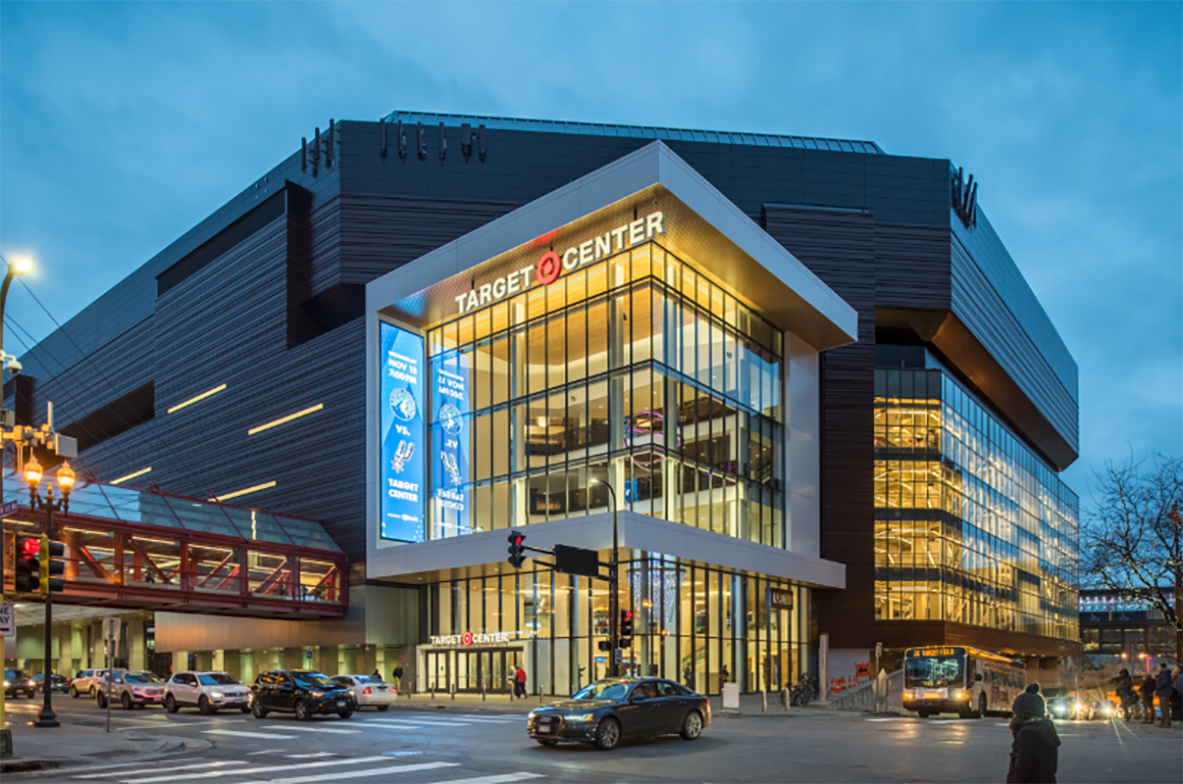
Extending through multiple floors of the four-story Target Center in Minneapolis, the eye-catching ball-and-net visual element is a key component of a $145 million overhaul of the nearly 30-year-old sports and concert venue.
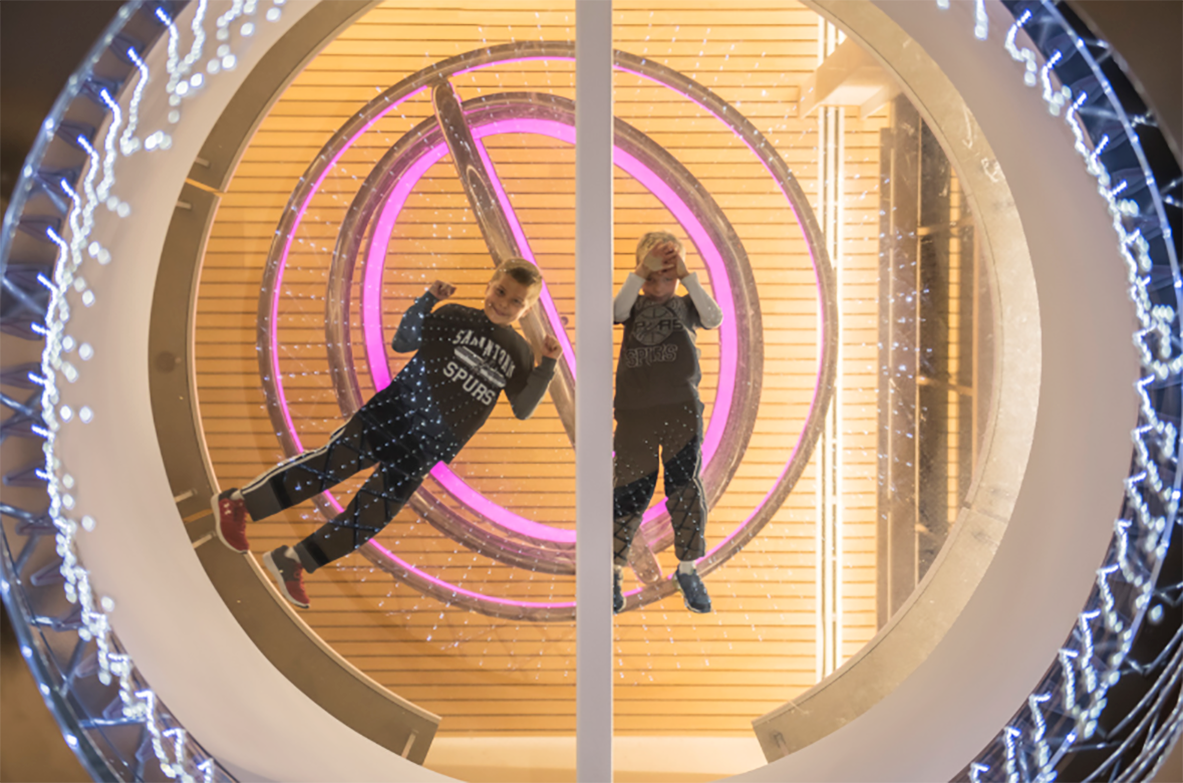
Photo courtesy of Dimensional Innovations
“The ball and the net were born from many different sculptural ideas, but really we were trying to distill basketball to its essence,” said Rick Smith, executive creative director for Dimensional Innovations. “The shape of the ball is a stylized representation of the black rubber lines on a basketball.”
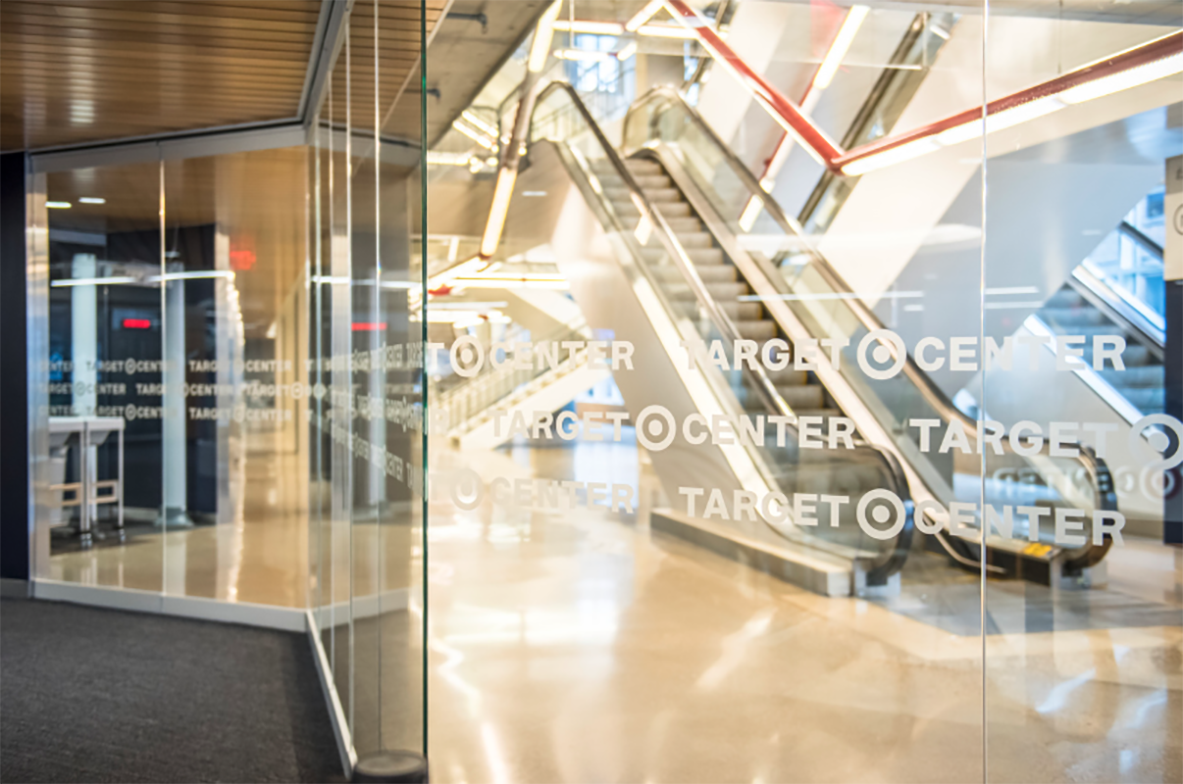
While DI worked with a $2.9 million budget for experiential graphics on the project, the Kansas company’s scope also included interior and exterior signage, wayfinding and branding activations.
“As a company, we offer a turnkey solution so that we can come in and do both the technical and graphic sides,” said Ashley Siebert, lead designer for DI. “Having a shop in-house, we have a leg up on the fabrication of bigger ‘moments,’ like the basketball. It probably would have been much more difficult to work with a subcontractor to execute that portion of the project.”
Armed with CNC routers, paint booths, an engineering department, full metal shop and innovation lab, DI was able to overcome a variety of challenges associated with the sculpture, Siebert said, preventing a loss of nuance within the finished product.
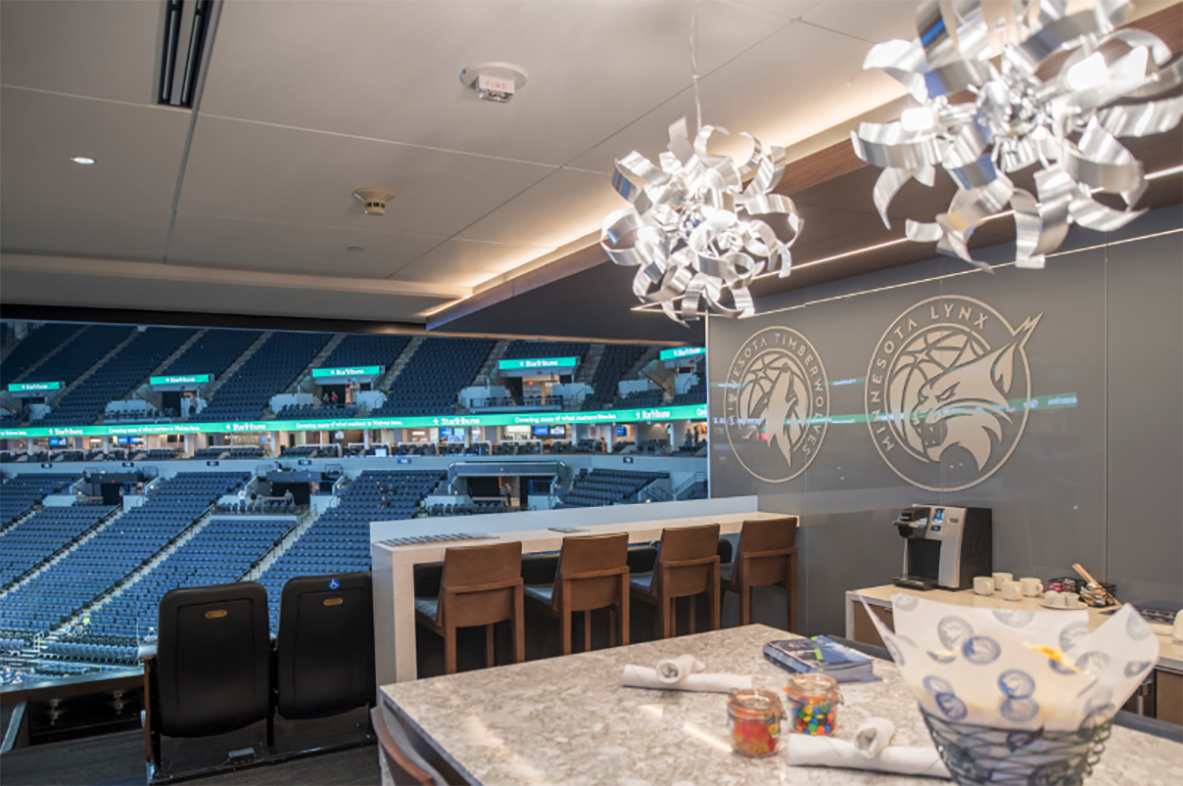
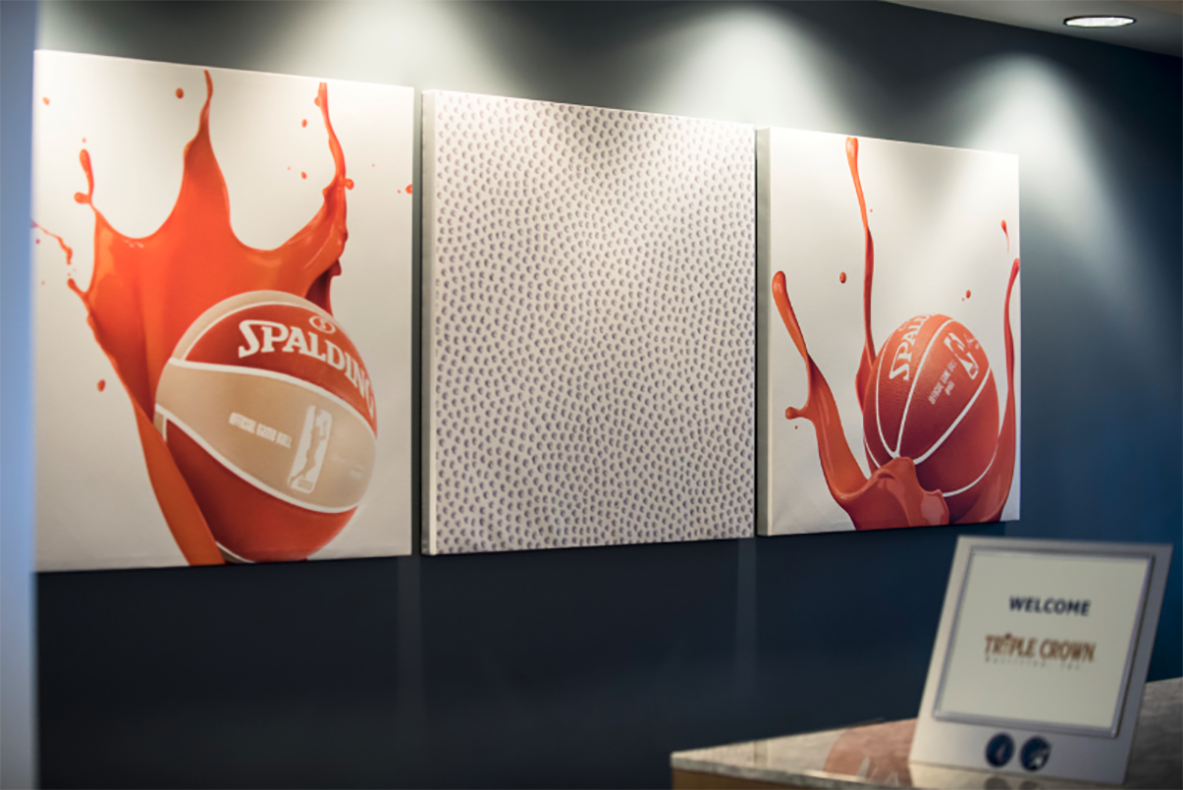
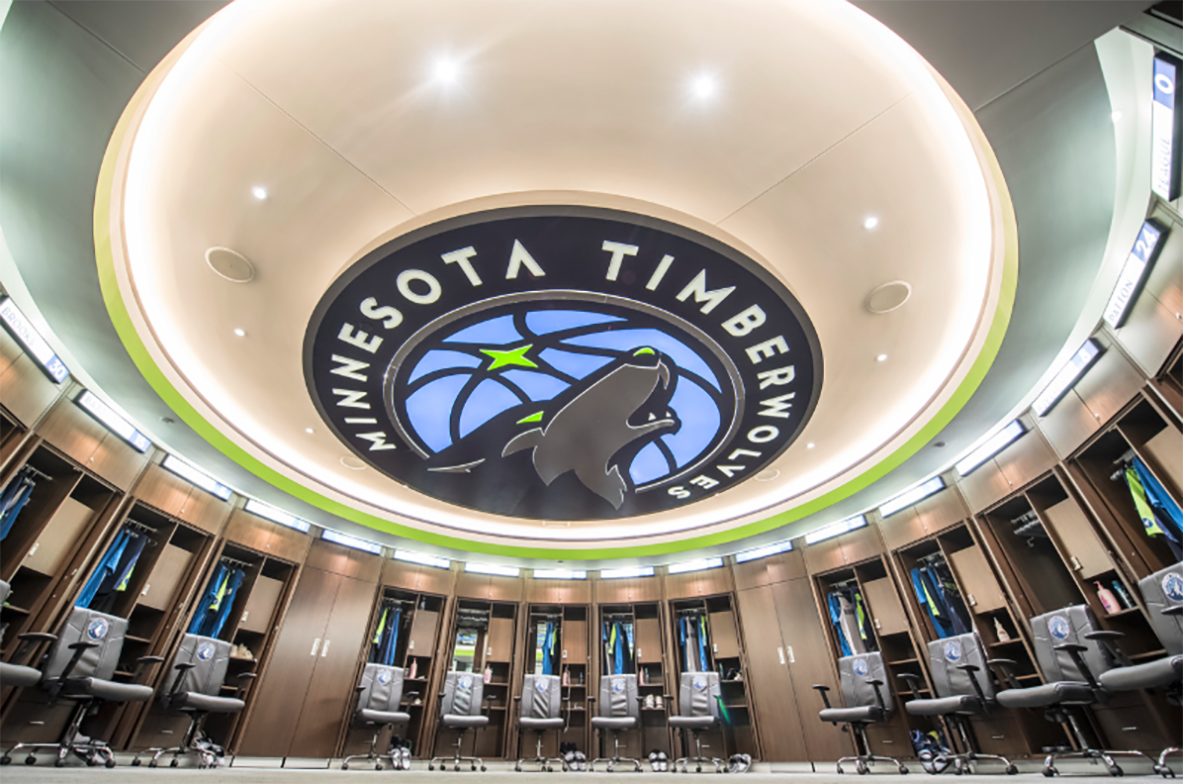
The local designers’ creativity also was extended to the Target Center’s concourse, lobby, suites, club areas and locker rooms.
“Lately we’ve been leaning into really design-heavy projects,” she said. “And within the past few years, we set up a separate tech division because really can’t be competitive without it. There’s so much tech involved in the market that we work in. I’d like to think that, even if we’re established, we still have a startup mindset. We’re still trying to get into these emerging markets to stay relevant and competitive.”
DI’s footprint is expanding with its headquarters in Overland Park, as well as offices in Lenexa, Atlanta and now Minneapolis.
Keep reading after the photo gallery.
Finding the way
While the striking basketball design gets top billing, functional aspects of DI’s work within the space were equally compelling for the Overland Park team, Siebert said.
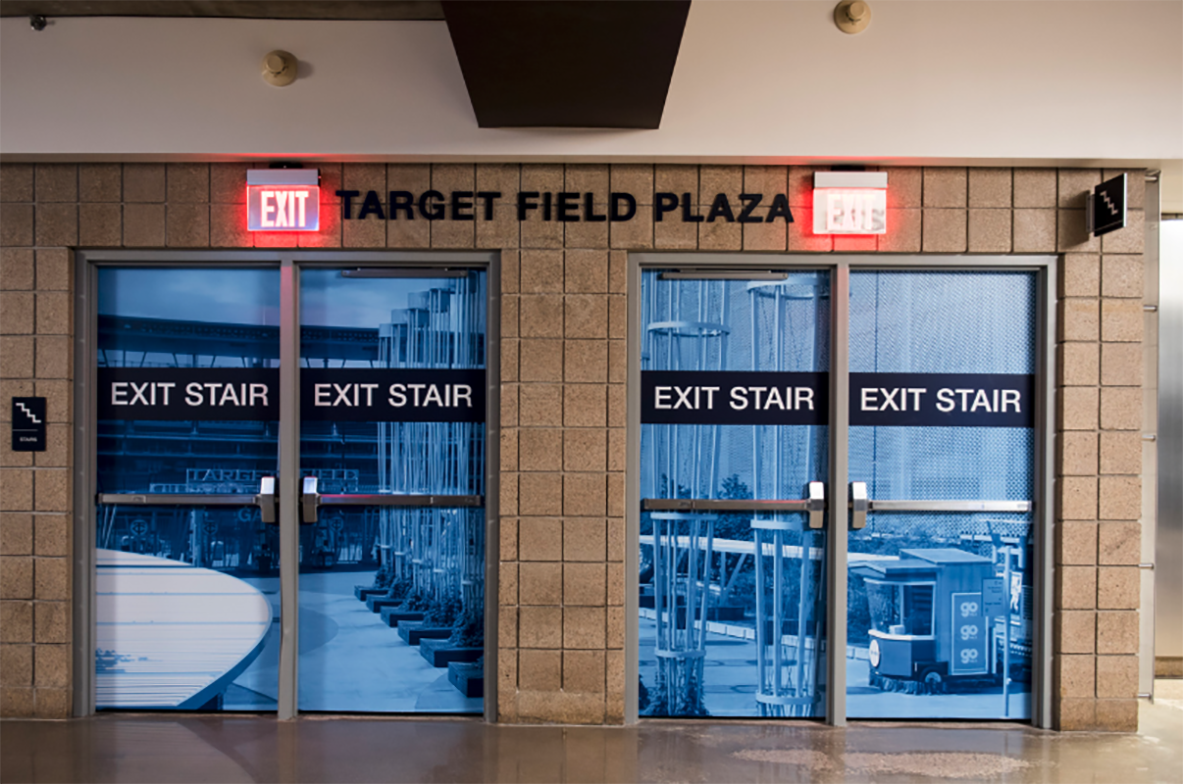
Photo courtesy of Dimensional Innovations
“The wayfinding was a pretty critical component of the project,” she said, referencing the use of graphics and signage to direct people through the building. “Obviously the Target Center is a big facility and moving people in and out of it efficiently is critical on game days when there’s heavy traffic. That was a huge chunk of our work. The rest was really just partnering with the architects and the other design firms to dress up the spaces that they had designed from an architectural standpoint.”
Balancing hands-on and oversight roles on the years-long project, Siebert found there was no substitute for walking the space herself, she said. Visits to the Target Center on game days proved particularly useful in understanding the needs of the clients — the Minnesota Timberwolves, Minnesota Lynx, City of Minneapolis, and AEG (Anschutz Entertainment Group).
“You could definitely see the pinch points in the space,” she said. “They have one primary vertical circulation area. As you enter, there’s one set of escalators that goes all the way up, four stories.”
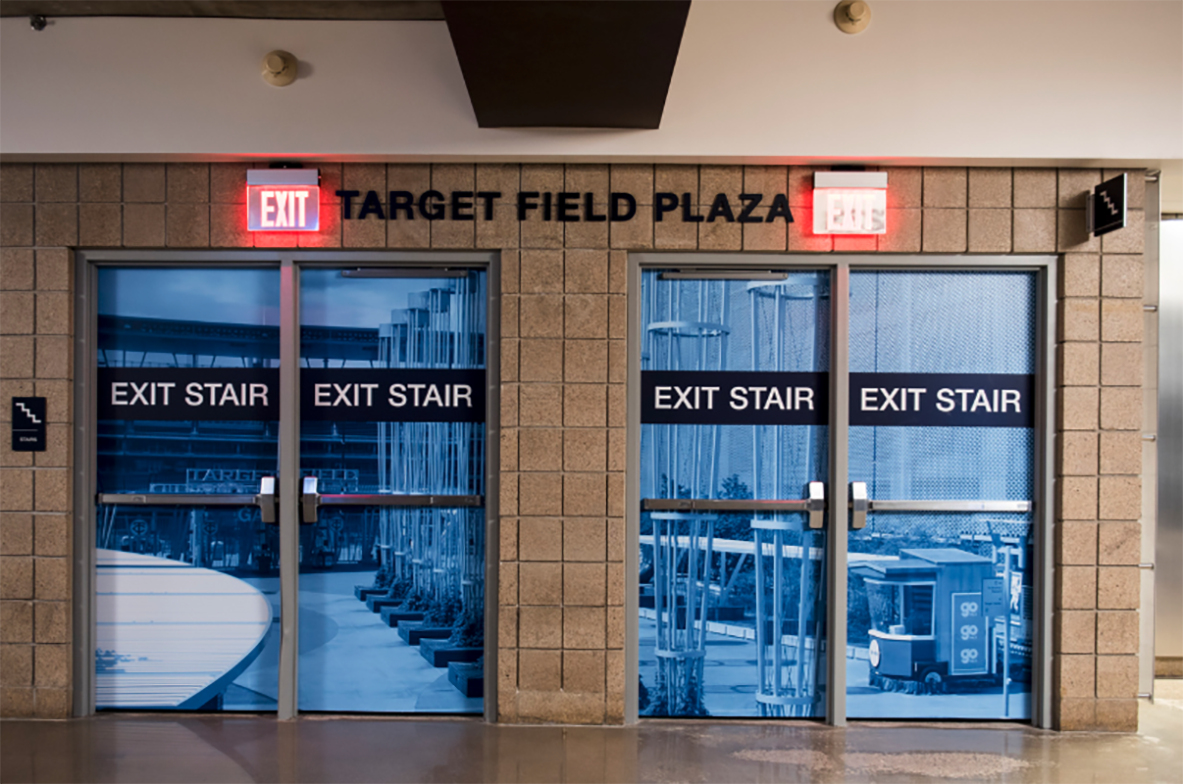
The challenge: Get fans to leave through alternate exits, rather than simply return to the central escalators and entrance where they arrived.
DI’s solution: Activate the existing plain doors — which appeared to fans to be emergency exits — with visuals that would communicate where the doors would take them.
“When you get into a space like that, people get turned around,” Siebert said. “So with each secondary exit, we used graphics to convey where they’re going to land if they were to utilize that exit to get back to the street level.”
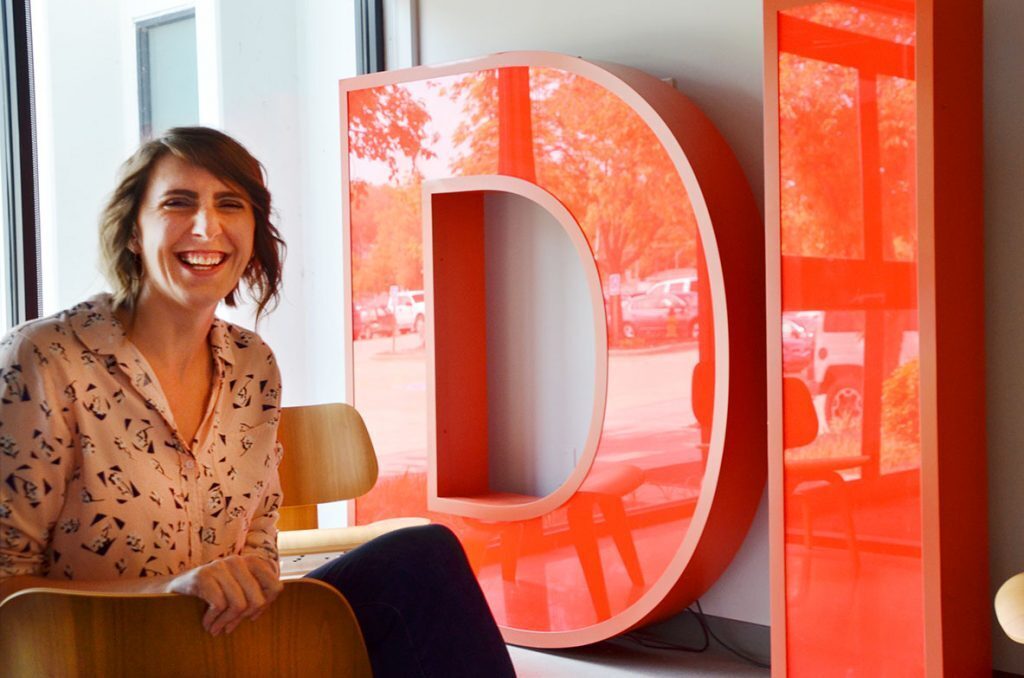
Ashley Siebert, Dimensional Innovations
A niche built on innovation
An industrial design graduate of the University of Kansas, Siebert finds glamour in the small pieces of a project like the Target Center.
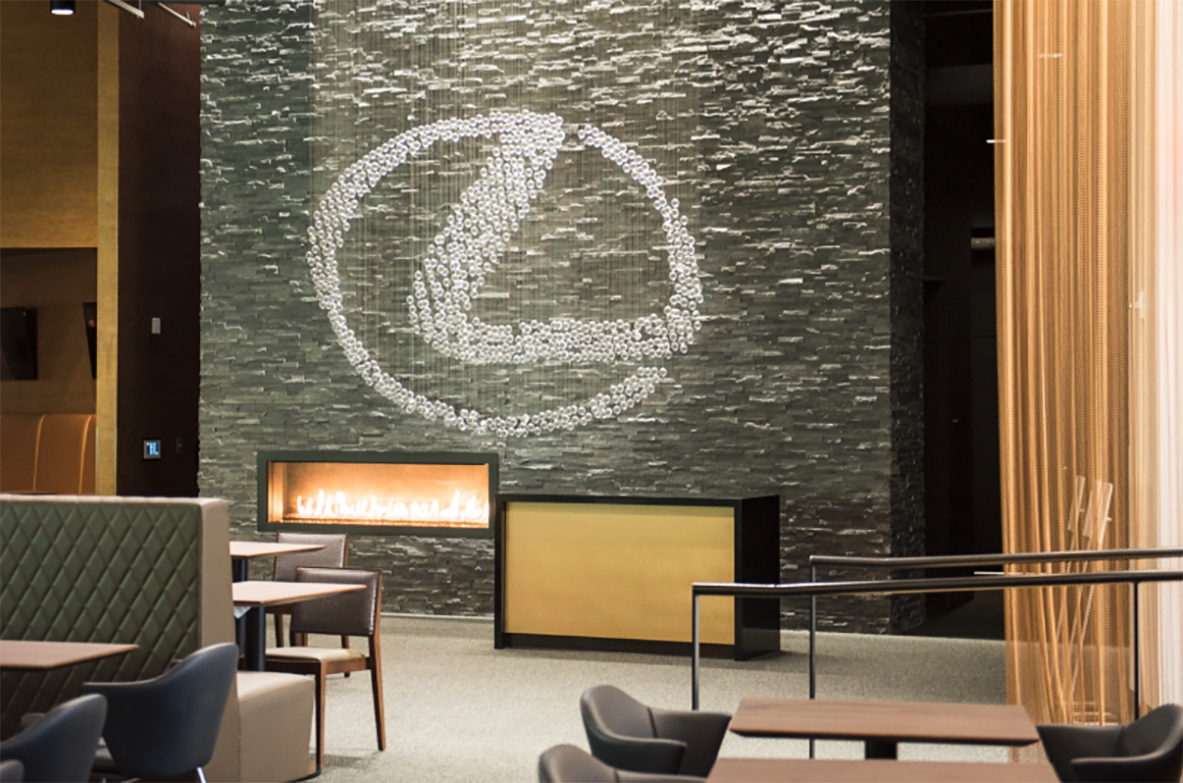
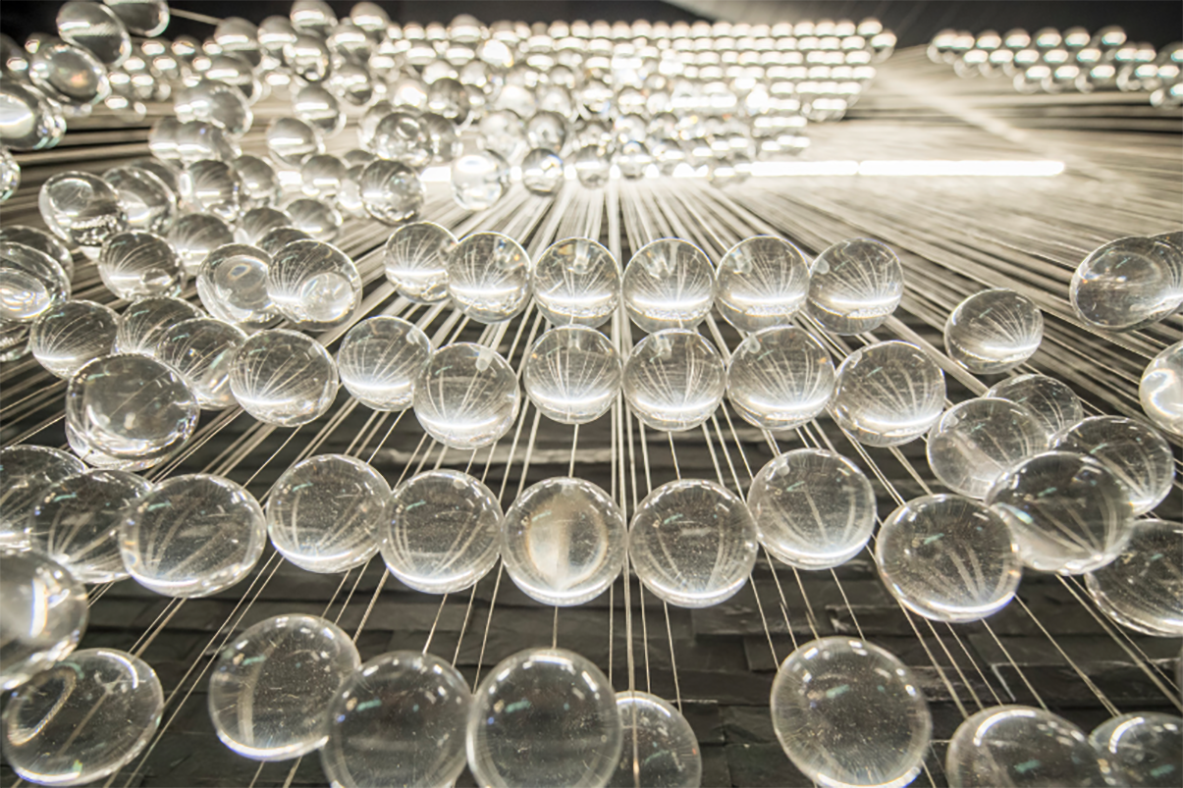
She smiles just as wide discussing the branding of concession stand graphics as the intricate acrylic spheres used to craft a Lexus logo in a sponsored area.
“For a week, we were just jamming on food signs,” Siebert said, laughing.
DI’s strength lies in its designers’ attention to detail, she added.
“We really sell ourselves on innovation — that’s what we bring to the table. There’s a certain expectation — not just from our name — but from our reputation. It’s pressure, but really fun,” she said. “Someone comes up with a huge ball-and-net concept and then there’s a moment where we’re like, ‘Oh! We have to build this!’ Of course, then there are a lot of details that have to be worked out.”
It’s a lesson she learned at KU’s woods and metal shop, which exposed Siebert to hands-on problem solving, she said.
“It actually was pretty good preparation for my work now. People would come in and say, ‘I have this idea, but I don’t know how to build it,’” she said. “I like to think that I’ve found a niche in the middle, between getting an idea of the creative intent and having enough understanding of the back end to fill the gap between the two.”
A native of Merriam, Siebert expresses pride in exporting Kansas City design sensibilities across the country to places like Minneapolis, but also internationally with companies like Cinemark and Caribbean Cinemas.
“Some people assume that I haven’t ventured out enough or that I just stuck around town. Look, I travel a lot. I know what other places are like, and I know what Kansas City offers. There’s value in it for me,” she said.
Featured Business

2018 Startups to Watch
stats here
Related Posts on Startland News
Main Street is already harnessing AI to build wealth; adoption now key to region’s growth, heartland leaders say
WICHITA, Kan. — Artificial intelligence is likely to be one of the most transformative technologies of the digital era, said Taylor Eubanks, noting that AI’s thoughtful deployment can be a tool for growth, not displacement. “By engaging directly with entrepreneurs, small businesses, nonprofit leaders and local innovators, we can better support responsible AI adoption that…
AlphaGraphics expansion boasts $1.4M investment, plans to create 16 new KC jobs
A production crew known for eye-catching, colorful designs splashed across Kansas City — including its own East Crossroads headquarters — is expanding its physical and human footprint, marking a key investment in the metro’s growing creative and professional services sector, local leaders said. AlphaGraphics on Tuesday announced an investment of more than $1.4 million and…
Goodwill’s adult high school launches first day; work continues toward long-term campus
The region’s first-of-its-kind adult high school opened classes Monday, offering a glimpse into programming and projected outcomes for the Goodwill-run Excel Center now operating out of space at Metropolitan Community College’s Penn Valley campus. “The opening of the Excel Center is a major step, not just for our organization, but for the entire region,” said…
Arch Grants taps homegrown founders, Missouri startup recruits for $1.6M in awards
ST. LOUIS — The Missouri maker behind a keychain designed to save lives from opioid overdoses is among nearly two dozen companies — together awarded $1.6 million — selected for the latest Arch Grants program. The innovation economy nonprofit on Thursday honored 19 startups, alongside three new members of its expanded Arch Grants Fellows Program.…