
Pathways to inclusive prosperity: Racial and economic disparity impact all of Kansas City
December 27, 2019 | David Warm

Editor’s note: The following is excerpted from opening remarks by David Warm, executive director of the Mid-America Regional Council, at the 9th Annual Greater Kansas City Education and Workforce Summit, which assembled more than 150 education, workforce, civic and business leaders to explore expanding pathways to inclusive prosperity. The summit was hosted by Ewing Marion Kauffman Foundation, with support from the DeBruce Foundation. The opinions expressed in this commentary are the author’s alone.
[divide]
People and organizations across the Kansas City region are already convinced of the importance of ensuring that everyone has opportunity for educational and career success. Many have dedicated their careers to this cause, and care deeply about educational and lifelong outcomes for every one of their individual constituents or students.
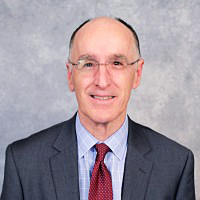
David Warm, Mid-America Regional Council
Yet, as globalization and technology innovation have shifted our social and economic realities, our understanding of the importance of inclusion has not only deepened, it has become more compelling and more urgent.
To be clear, promoting opportunity has always been at the heart of great societies. Inclusion has always been a moral imperative. Valuing the potential in every person is the core of what we believe when we are the best versions of ourselves. But what we are beginning to understand is that the best chance for any of us to succeed is when we all succeed. This is not simply as an ideal to strive for — it is a very present and tangible economic reality.
What we know today is that metropolitan economies grow faster, stronger, and for longer periods of time when prosperity isn’t limited to just a few segments of the population. Inclusive regional economies tap into deeper veins of talent and draw from a more educated workforce with a broader range of skills. Inclusive places have higher rates of upward mobility. They add productivity and economic growth for everyone at all levels.
We know this from the work of institutions across the globe, from the Brookings Institution to the World Bank to the Organization for Economic Co-operation and Development. We know this from the work of the Kauffman Foundation and our own regional analysis about Kansas City that underpins our KC Rising partnership. We know this from thought leaders and advocates across our region and across the nation. From all these sources, we know that:
- Poverty is bad for growth, not simply because poverty depresses the amount of money people have to spend on goods and services in the economy, but even more importantly, because economies with lower levels of social mobility fail to take full advantage of their most prized asset — human capital.
- We know that the fiscal costs of poverty are huge. More people in decent paying jobs will reduce social welfare spending, increase tax revenue and reduce the demand for services, all of which will free up resources to support growth through investment in people, places and innovation, rather than dealing with the consequences of poverty.
- But what is a relatively new understanding of the last few decades is that work no longer ensures a way out of poverty. People at the bottom end of the labor market often become trapped in low-paid, insecure jobs that offer little prospects for advancement. Globalization and technology are shaping a more polarized labor market with more high and low-skill jobs but fewer mid-skill jobs.
And this is especially true in Kansas City. Over the last decade or so, the share of low-income households in our region grew by 40 percent, while high-income households grew by 33 percent, and middle-income households by only 27 percent. And in Kansas City, like many places, economic disparity is connected to racial disparity.
No matter how you measure it, there are huge racial disparities in our region. Whites have higher levels of income, home ownership and education than people of color — roughly 1.5 to 2 times higher. At the other end of the scale, People of color have higher rates of poverty, unemployment and lack of health insurance than whites — roughly 1.5 to 3.7 times higher.
And that matters to all of us. Racial and economic disparity not only affects minorities and low-income families — it affects all of us:
- It diminishes and divides our society and our civic life.
- It reduces our capacity as a region by continuing patterns of disinvestment and concentrated poverty, which inhibit our ability to come together and invest in the assets that build the economy and our quality of life — infrastructure, transit, schools, universities, housing choices.
- And it limits the pool of talent and skills we need to enable businesses to flourish.
The labor pool in Greater Kansas City will grow by some 75,000 people in the next decade, and 88% of that growth will be among people of color. Let me say that again: nearly 90 percent of our workforce growth in this region will be people of color.
If educational attainment for people of color continues to be only half that of whites, businesses will simply will not have talent and skills they need to compete with other regions. Businesses don’t outpace their regions.
Our challenge today is to unravel these issues and find ways to ensure that we foster an economy and human talent pool that enables all of us to succeed, which is our best chance for any of us to succeed. And we take confidence in knowing that this town is working hard on this issue. There has never been a time in Kansas City when so many groups and leaders are working strategically and collaboratively to build new systems and strategies to advance an inclusive economy.
[divide]
David Warm is executive director of the Mid-America Regional Council.

2019 Startups to Watch
stats here