

Cutting the card in a digital world? Behold the staying power of the analog business card
July 2, 2019 | Dan Woehrman
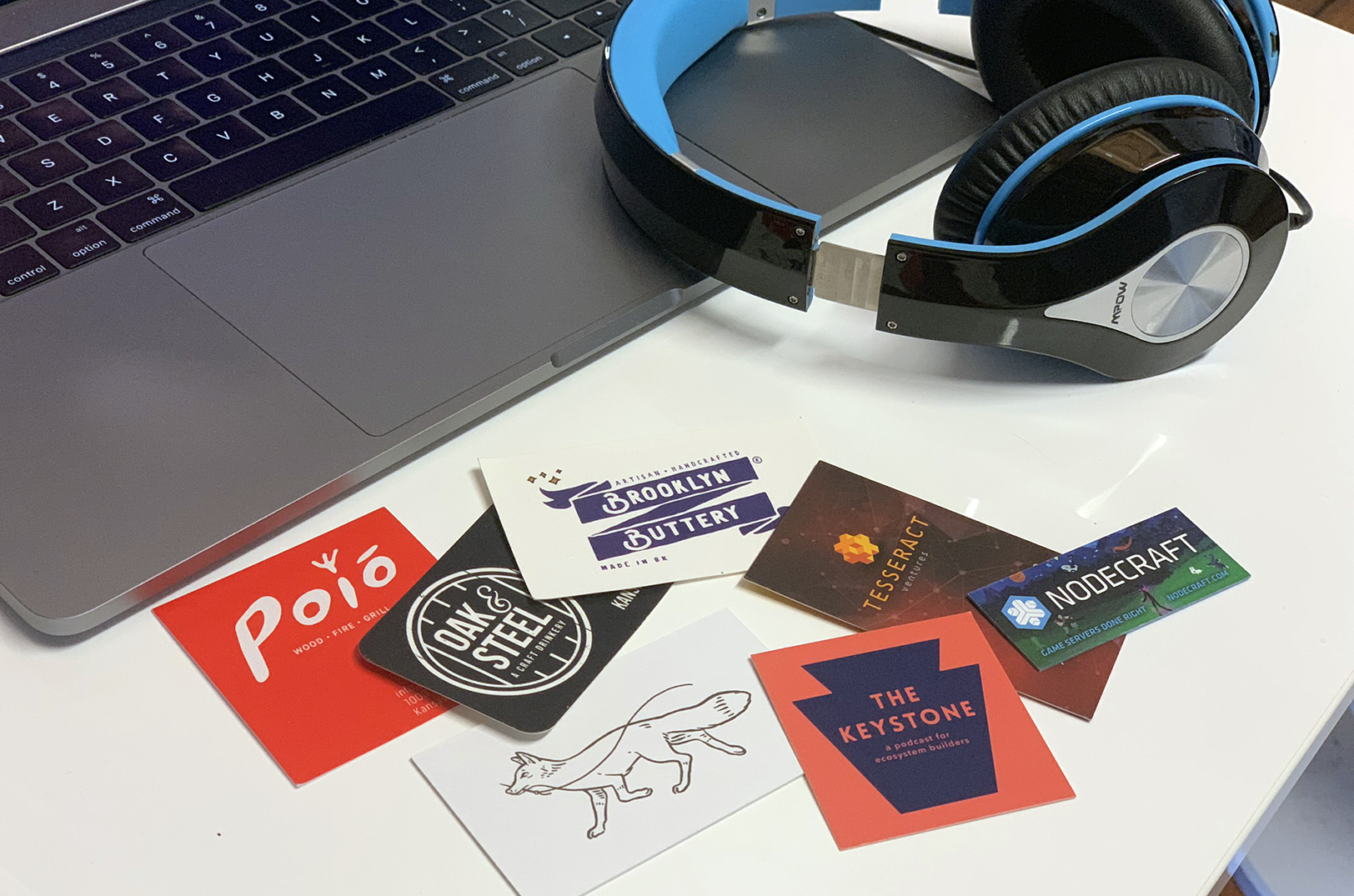
Editor’s note: The opinions expressed in this commentary are the author’s alone.
[divide]
Anyone remember Bump? You might not, but the ultra-popular app has about 125 million downloads since its debut in 2009. Free for both Android and iPhone, the app allowed you to instantly share your contact information by literally “bumping” your smartphones together in some kind of techno mating ritual.

Dan Woehrman, Callender Printing
Along with QR codes, Bump was one of the latest advances that was supposed to make business cards obsolete.
Bump was deleted in 2014. Business cards are still being printed.
Now, I’m not as young as I used to be, but I’m not against technology. I just don’t like throwing the baby out with the bathwater. With more than 27 million business cards printed daily, it’s clear we’re not ready to cut the card just yet.
And if you’re a startup entrepreneur, that’s great news because that 3.5-by-2-inch piece of quality paper (if you’re going the traditional route) is an affordable way to build your new company’s legitimacy in the marketplace.
A first impression
With a history dating to 15th-century China, the business card has always served many roles: calling card, trade card, even a small advertisement. At today’s networking event or business meeting, they play an additional (yet crucial) part of your first impression.
Done right, business cards reinforce who you are and serve as a strong signifier of your company’s brand, taking you from the small garage or basement operation to a full-fledged business.
Duree Ross with Durée & Company.com elaborates in Forbes: “I am a tactile person, and the look and feel (paper thickness!) of a business card speaks volumes about the person and the company. For someone in PR, I think they are critical to show your brand and elevate your look among competitors. I have my business cards handprinted on a letterpress and always get a comment whenever I hand one out.”
Unlike an email address or a digital encounter, business cards serve as a physical reminder of you as a person. One of the first hurdles to be overcome in business is simply to be remembered — to be top of mind when a need arises — and a business card can be a powerful memory cue. That prospect will connect your business card to the personal encounter you exchanged.
Even the younger generations recognize that kind of value, explains Jeff Tan with Dentsu Aegis Network: “Perhaps I’m an old-school, new-generation Millennial, but I still love exchanging business cards … Like a physical paperback compared to an e-reader, there is something still meaningful and personal in giving and receiving cards when meeting people.”
Paper. Is. Everything.
While the variety of printing techniques available today may make you feel like you have to go all-out to keep up, it’s actually quite simple to create a high-quality card that not only reflects your company personality but is also memorable for a reasonable price. When it comes to manifestations of your new company, business cards can give you the best return on investment.
A few tips to keep in mind for your next card:
- Stay on-brand: Someone once said, “A business card is like a baseball jersey — the team on the front is more important than the name on the back.” Whether you’re working for yourself or for a global brand, your card should be consistent with the brand, personality and reputation you’re hoping to convey.
- Use color: While I grew up looking at a lot of plain white (or ivory) cards with simple type, today’s cards can easily feature vibrant and rich hues that tie back to the company’s brand. Plus, they’re more effective, sticking around as much as 10 times as long as a plain white card.
- Paper is everything: Just like a limp handshake, a cheap, low-quality paper will make your card feel like a wet noodle — which is all the recipient will remember. Make sure to work with a printer that can recommend the best stock for your particular project.
Balance is key
There’s no denying we live in a digital world. From email to Slack, LinkedIn to FaceTime, we have more ways to connect than ever before. But even as we embrace these new tools and enjoy the productivity they bring, there will always be a human craving for connection — one that can only be experienced in a face-to-face, tactile world.
Your business card validates your venture, and while it may feel like a humble gesture, it’s just the personal touch your business needs to keep the balance in your favor.
[divide]
Dan Woehrman is owner of Callender Printing, offering full-service printing capabilities, including letterpress, offset and digital. What are your thoughts on the future of business cards? Share your thoughts on Facebook!



2019 Startups to Watch
stats here
Related Posts on Startland News

Women entrepreneurship: Miles to go and room to grow
I am an unabashed coffee fan, but conflicting research on my favorite brew has both raised and dashed my hopes. One study reveals that my two-cups-a-day may increase longevity, while another points to an increased risk of heart disease. Sipping a cup recently while reviewing data on women-owned businesses and entrepreneurship, it occurred to me…
Roberts: Can’t stand the options? Disrupt elections with a vote for nobody
Editor’s Note: The following piece was written by Melissa Roberts on how voters who have made the decision not to vote for the available candidates should still submit a ballot — even if it’s blank. The opinions expressed in this commentary are hers. It’s election season, which means it’s probably best to avoid Facebook altogether. Despite…

The WTF Series: Triple constraint
One of the hardest parts of software development is managing stakeholder expectations. Of course, everyone wants as much as they can get, as fast as possible, for the lowest price. Why wouldn’t you? The problem is that most programmers get frustrated when a stakeholder asks for too much too fast, and don’t know how…

Schukman: Forge new corporate gigs with social intrapreneurship
Entrepreneurship is all the rage these days. You’ve probably noticed the rising trend of people throwing off the shackles of corporate America to launch their own ventures. Millennials especially are known to be a very entrepreneurial generation who weathered the Great Recession to start their own businesses in greater numbers than ever before seen. While…