
Brazil to KC: Carol Espinosa showcases path to creativity, opportunity
January 9, 2018 | Tommy Felts

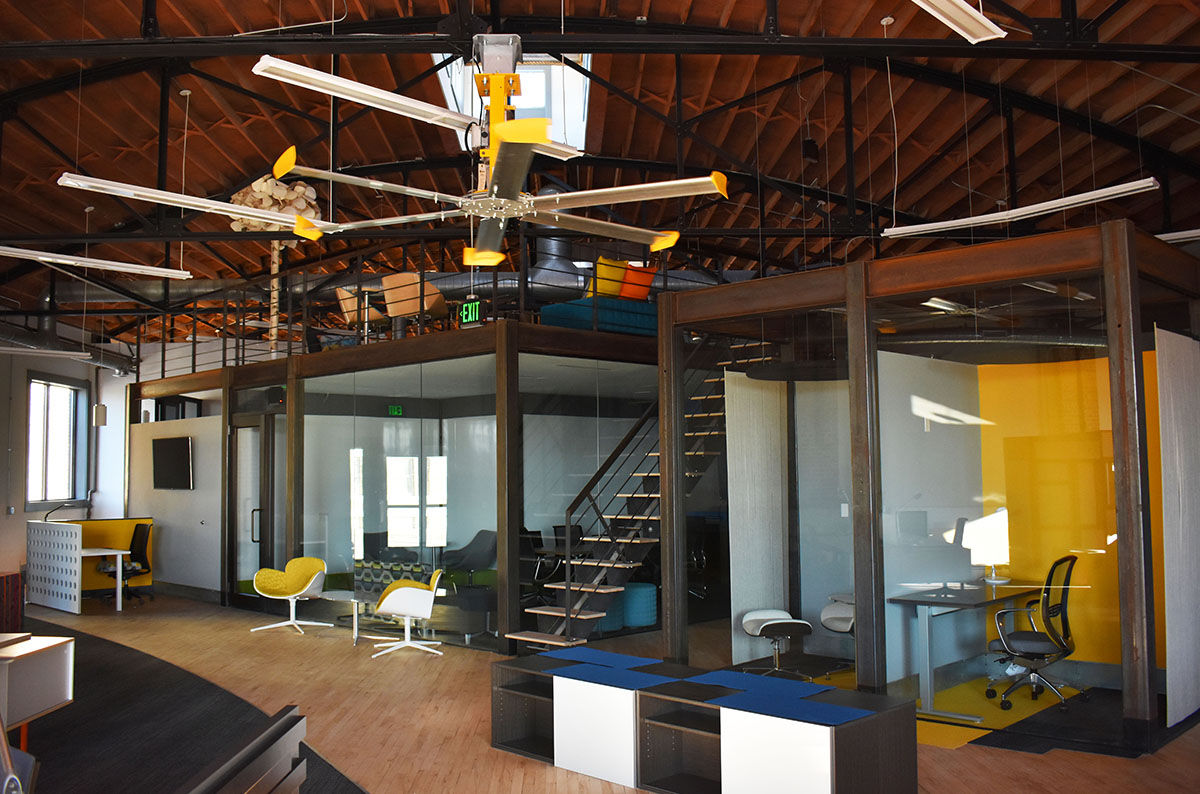
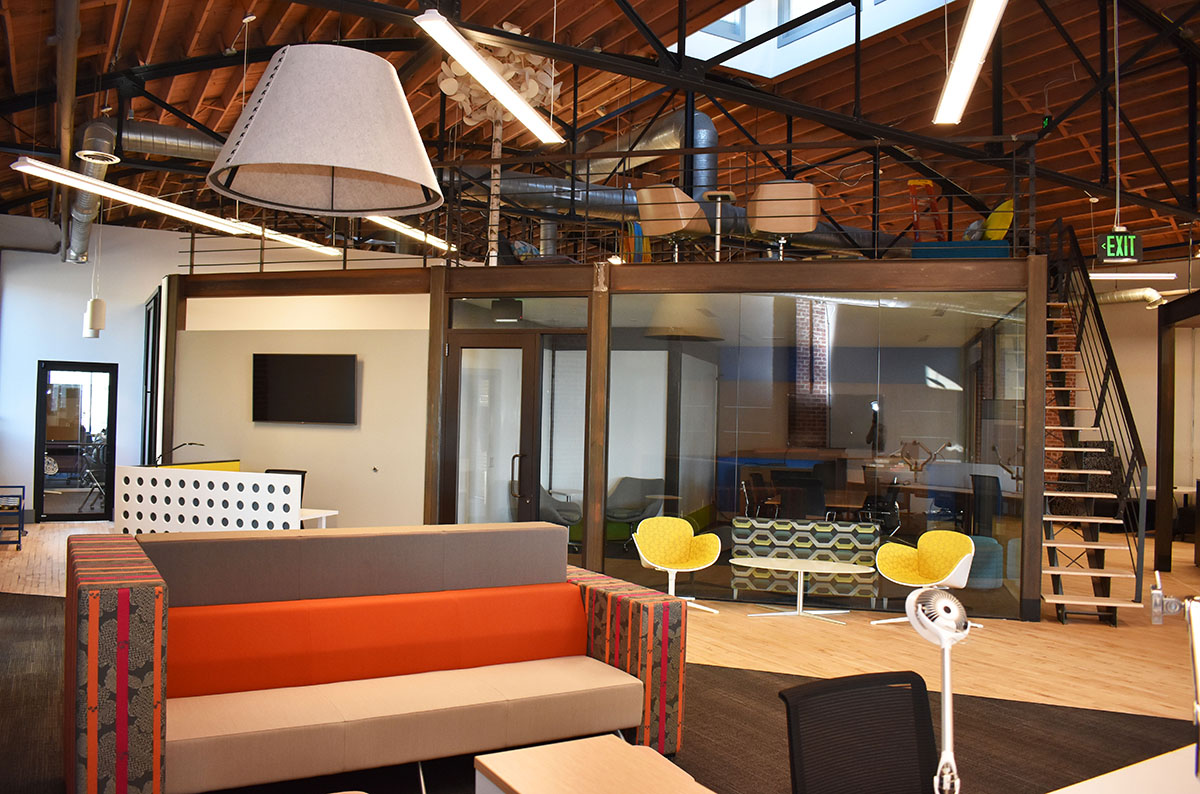
She arrived in the United States with just two suitcases and her own creativity, but today Carol Espinosa fills a 7,000-square-foot Westport storefront with enough modern workplace designs to unpack for weeks, she said.
“This company was built from nothing,” said Espinosa, founder of Freedom Interiors. “It started with no customers, no product offerings — just an idea, a hope and a dream. Here in America, we have a chance to build something and share it with other people.”
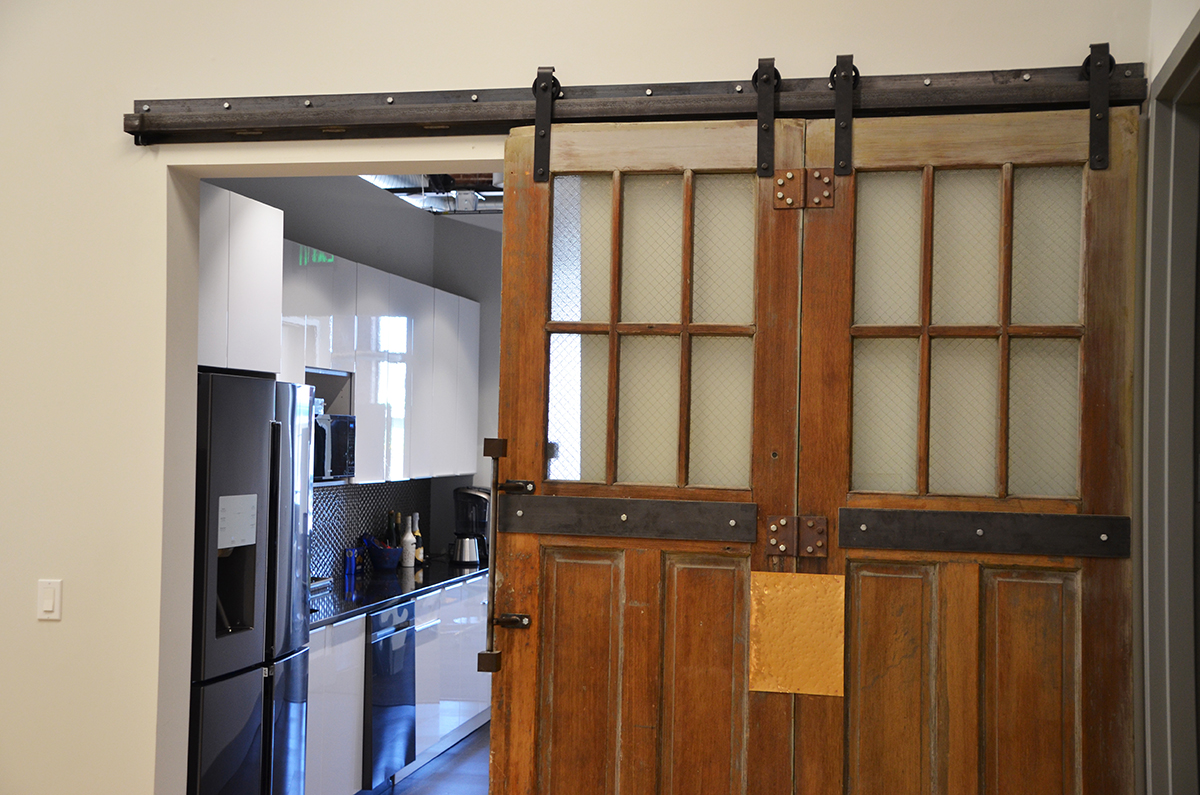
A 2017 graduate of Blue Hills Community Services construction incubator, Freedom and its team moved in mid-December to an expansive new showroom at 4000 Washington St., the former Westport post office. It was the culmination of seven years of growth and planning, Espinosa said.
“And now, to be able to contribute to the economic development of Westport is really amazing,” she said. “I see this area being very different five or 10 years from now. To be right here, right now, is really cool.”
Check out five inspiration points at Freedom’s new space here.
Brazilian-born Espinosa arrived in Kansas in 2000, studying creative writing at the University of Kansas before turning her attention to interior design and 3-D visualization — specifically for 21st-century corporate and government workplaces, as well as educational spaces.
“I fell in love with Kansas City,” she said. “I got married and became a U.S. citizen — one of the proudest moments of my life — and this is my home. This is the country that embraced me and supported me. I’m so grateful for this opportunity.”
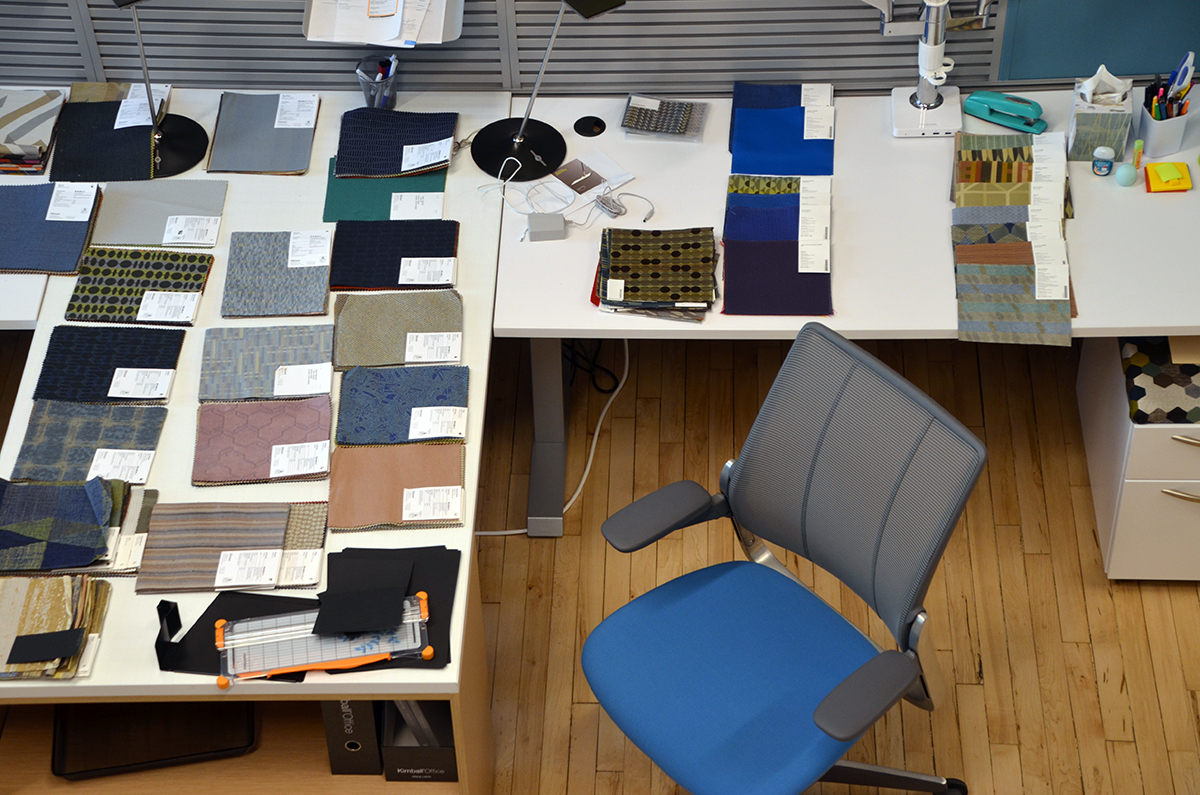
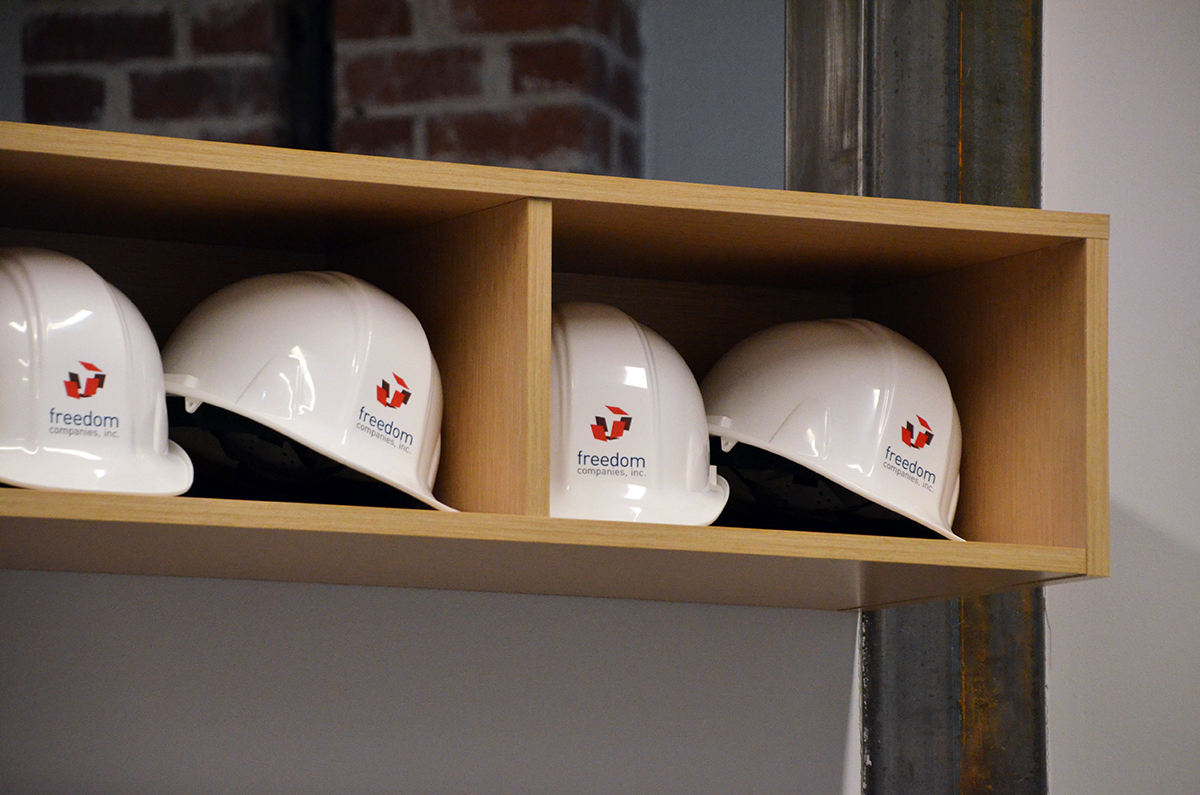
Check out a photo gallery from Freedom Interiors’ new showroom below.
A driving force among startups
The success of founders like Espinosa emphasizes the role of immigration in the startup ecosystem, as well as the U.S. economy as a whole, according to John Dearie, founder and president of the nonpartisan Center for American Entrepreneurship.
“Foreign-born entrepreneurs have been an important part of America’s economic landscape for decades,” Dearie said. “With global competition for innovation and growth increasingly fierce, ensuring that the next generation of great companies are launched here in America requires an explicit legal pathway to attract and retain the world’s best entrepreneurial talent.”
Looking at larger-scale businesses, 43 percent of 2017’s Fortune 500 were founded or co-founded by an immigrant or the child of an immigrant, according to a study released in December by the Center for American Entrepreneurship. Immigrant-founded Fortune 500 firms are headquartered in 68 metropolitan areas across 33 states, employ 12.8 million people worldwide, and accounted for $5.3 trillion in global revenue in 2016, the study reported.
“In particular, the analysis provides compelling support for the creation of an entrepreneur visa, an important aspect of the Startup Act, bipartisan legislation reintroduced by Sens. Jerry Moran, R-Kansas, and Mark Warner, D-Virginia,” the center said in a release.
The study’s results also back up findings from the Ewing Marion Kauffman Foundation.
“We know that, at least in the United States, immigrants tend to be unusually entrepreneurial: available data suggest that immigrants are over-represented within the group of business founders and innovators,” Kauffman’s State of the Field immigration section reads. “The rates of immigrant ownership vary greatly by sector, with highest rates found in engineering and technology.”
While theories seeking to explain such trends vary wildly, according to Kauffman, the source could come from the immigrant founders’ life circumstances.
“The main claim of much of this work is that immigrants have intrinsic capabilities — risk propensity, high education, unique knowledge, or identity — that increases the likelihood of entrepreneurship compared to their host country counterparts,” the Kauffman report reads. “In addition to possessing intrinsic abilities, immigrants also have access to social capital, transnational resources, knowledge networks, and ready role models that can help sustain entrepreneurial activities.”
Potential to spur growth, inspire talent
At Freedom, Espinosa too feels called to help her fellow entrepreneurs, she said. Having completed JE Dunn’s 2015 Minority Contractor Business Development Program, Espinosa continued her relationship with the construction firm, which served as general contractor for the Westport showroom project and hired minority-, women- and veteran-owned small businesses whenever possible, she said.
Organizations like the Stanford Latino Entrepreneur Initiative Program, from which Espinosa graduated in December, encourage Latino-owned businesses to support one another and their communities, she said.
“The program was extremely important in scaling Freedom up and building the culture that’s so important to how we work,” Espinosa said.
And while her showroom is primarily geared toward corporate, government and education industry buyers, Espinosa said the space and its use of 3-D visualization technology also includes opportunities for young people to explore the possibilities of interior design and creative thinking.
“I want to make sure that we’re sharing that with kids — especially urban kids,” she said. “Sometimes they don’t have examples of what they can be when they grow up. So I want all of the Kansas City, Missouri, school kids to think, ‘Hey! Maybe I can do that one day!'”










Featured Business

2018 Startups to Watch
stats here
Related Posts on Startland News
André’s planted its flag in KC 70 years ago; chocolatier says that’s just a taste of what’s to come
Nearly 5,000 miles from Switzerland, a small group toured the inner sanctum of an iconic 70-year-old Kansas City company — a family-run brand that helped redefine accessible luxury in the Midwest, one Swiss chocolate-covered almond at a time. “What people get excited about André’s is the legacy, that we take a lot of pride in…
Here’s how ULAH’s new boutique model aims to rack success for local brands, not inventory debt
The new KC Collective consignment-based program for local brands at ULAH is a win for both the Westwood boutique and Kansas City creatives, said Joey Mendez and Buck Wimberly, announcing a fresh model to help the struggling store stay open and financially stable. “We’ve always had local brands,” said Mendez, co-founder of ULAH, explaining the…
Tiki Taco ticks up giving alongside expansion; CEO owns up to taco shop’s neighborhood impact model
A month-long campaign in the popular Kansas City-based chain offers easy add-on: joining KC GIFT’s network of donors Restaurant executive Eric Knott wants Tiki Taco’s operators to own the neighborhoods into which the popular taco shop expands, he said, but that doesn’t just mean dominating the fast-casual market in each pocket of Kansas City. “Our…