
One-size-fits-all neighborhoods are a blueprint for development failure, C3KC panel says
March 11, 2022 | Blythe Dorrian and Tommy Felts

Editor’s note: Startland News is a non-financial media sponsor of the 3CKC conference organized by the Junior League of Kansas City, Missouri.
[divide]
The formula for creating a vibrant neighborhood might seem simple, but replicating it between variable demographics, geographies and economies is more challenging than many planners think, said Kavya Shankar.
“The strength of the neighborhood is made up of the residents,” said Shankar, COO and co-founder of Trust Neighborhoods, during a “Future of Neighborhoods” session at Tuesday’s C3KC conference at Union Station.
Among the elements contributing most to that strength: mixed income, diversity, easy access to amenities, good schools, and social ties, she said.
“If everyone is the same, we have a problem,” fellow panelist Jacob Wagner added.

Moderator Phyllis Hardwick and panelist Kavya Shankar embrace at the C3KC “Future of Neighborhoods” session
Moderator Phyllis Hardwick — executive director at Community Capital Fund — led Shankar, Wagner, an associate professor of Urban Planning and Design at the University of Missouri-Kansas City, and Sam De Jong, a project architect for BNIM, in a conversation about how such factors as equity and health, development, appraisals, and zoning can reshape a city, street corner by street corner.
“Neighborhood work is complex and evolving,” Hardwick said.
But a common thread emerged throughout the discussion: the importance of multifaceted diversity in creating place.
“Space provides a variety of options for people,” De Jong said. “A variety of housing types makes a strong neighborhood. Not just single family homes for sale or multi-family for rent.”
Panelists acknowledged the challenges that come with building smaller, diverse housing units for people. Gaps with income, housing, and transportation increase the difficulty in getting financial, civic and community buy-in.
But that doesn’t make the work any less critical, Wagner said.
“If you only build one kind of housing at one price point, you will only have one kind of family who can afford to be in that neighborhood,” he said.
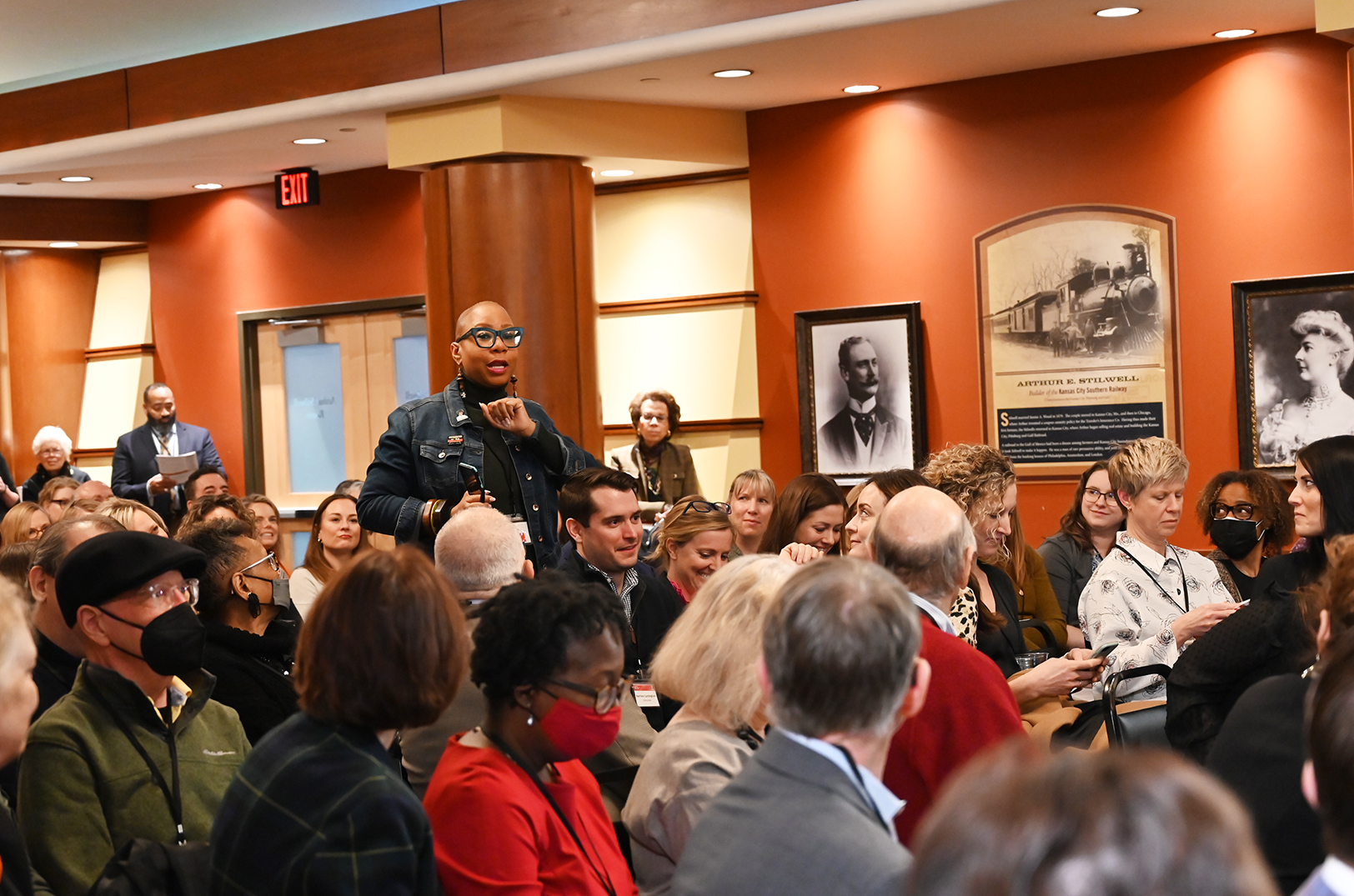
Denesha Snell, American Public Square, asks panelists a question at the C3KC “Future of Neighborhoods” session
Moves to abolish limitations like zoning for single family homes aren’t the answer, panelists agreed, since specific zoning rules actually work for some neighborhoods — and one-size-fits-all approaches are doomed to fail because they don’t take individual neighborhoods’ unique needs into account.
Zoning modifications within communities may be a necessary tool for neighborhoods, but they also can be wielded as a weapon by those who have different motivations than current residents, Wagner said, noting the threat of gentrification through development that does not run parallel to community needs.
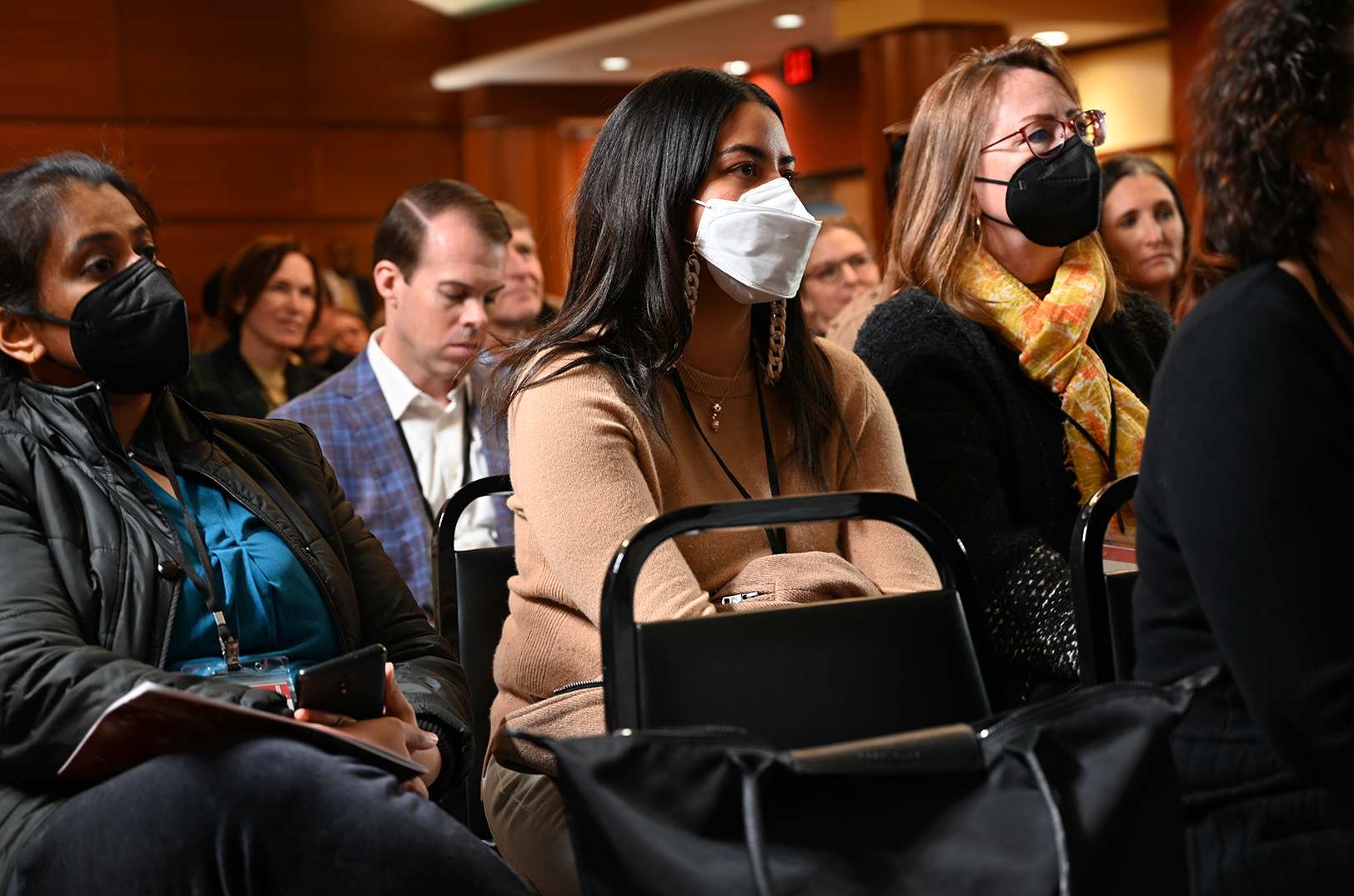
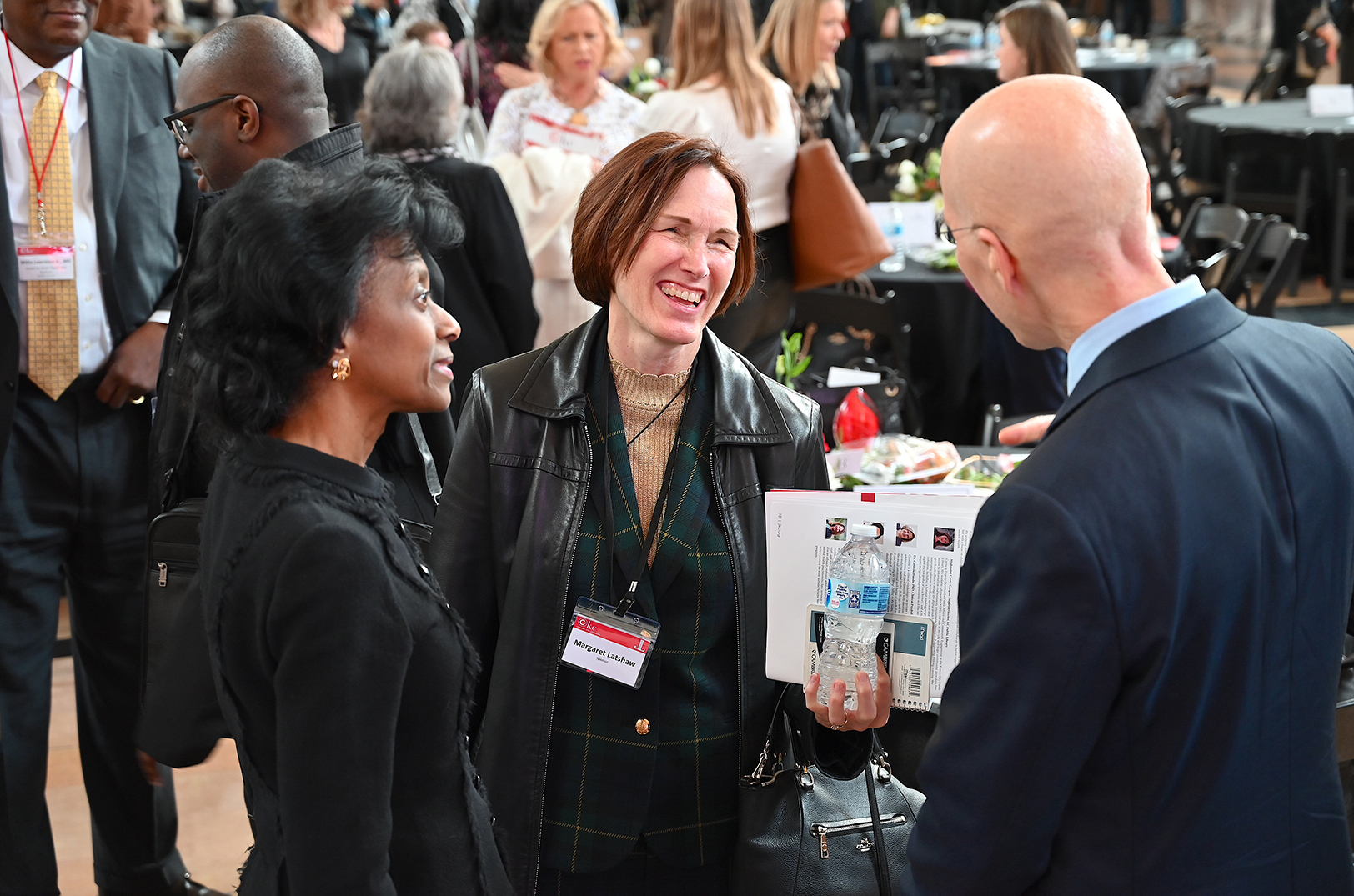
Audience members at the C3KC “Future of Neighborhoods” session
Development — a critical aspect of urban planning, Wanger said — doesn’t have to be a negative, especially when communities and their residents join in the process, Shankar said.
“They should not just have input, but control and power,” she said.
“Working with developers needs to go beyond engagement,” Shankar continued. “It can’t just be a meeting where everyone tries to get their opinion out in one conversation.”
Developers frequently have an upper hand in reshaping neighborhoods because of their financial backing and familiarity with the planning process, Wagner said. Greater leadership from banks and architects could help upset that balance of power, he added.
“We have to meet people where they are,” Wagner said. “We have to work with the neighborhoods we have, and we need to work to build strong places to build equity.”
The 3CKC event was organized by the Junior League of Kansas City, Missouri.
Click here to learn more about the sessions Tuesday at Union Station.
[divide]

This story is possible thanks to support from the Ewing Marion Kauffman Foundation, a private, nonpartisan foundation that works together with communities in education and entrepreneurship to create uncommon solutions and empower people to shape their futures and be successful.
For more information, visit www.kauffman.org and connect at www.twitter.com/kauffmanfdn and www.facebook.com/kauffmanfdn
Featured Business

2022 Startups to Watch
stats here
Related Posts on Startland News
Kauffman Foundation selects familiar face as new CEO
After a yearlong, nationwide search for a new CEO, the Ewing Marion Kauffman Foundation wound up selecting one of its own. The Kansas City-based foundation selected Wendy Guillies as the Foundation’s new president and CEO. Guillies, who previously served as interim CEO and vice president of communications for the foundation, joined the organization in April…
EyeVerify enters new European market with Vodafone deal
Biometrics tech company EyeVerify is continuing its global expansion into Europe with a new deal. The Kansas City-based firm recently announced a licensing and marketing agreement with Turkish security tech company Olcsan CAD. The deal makes Olcsan the exclusive distributor of EyeVerify’s eye vein biometrics technology, or Eyeprint ID, throughout Turkey. “We’re pleased to partner…
What’s in a name? MindMixer gets new moniker
A year after its move to Kansas City, MindMixer is making a name change. Formerly based in Omaha, MindMixer now will go by the name of its new software product, mySidewalk, which engages communities to share ideas and stay informed of new initiatives. “Like all businesses, the more we learn about the people we serve,…
Event-staffing tech firm Pop Bookings opens seed round at $250K
Kansas City-based Pop Bookings is scoring local love from angel investors as it hopes to bolster its seed round to further develop its online event-staffing platform. A recent graduate of business accelerator SparkLabKC, Pop Bookings opened its round in April at $250,000, with lead investments from Kansas City-area angel investors. Pop Bookings CEO Erika Klotz said…