
Built on speed, grown through community: The Kansas City Startup Village marks 4 years
December 15, 2016 | Bobby Burch

Editor’s note: St. Louis-based magazine EQ invited Startland News to write a feature story about one of the Kansas City’s innovation districts, Kansas City Startup Village, on the heels of its fourth anniversary. This story was originally published in EQ.
As many entrepreneurs can attest, inspiration strikes anytime — including a late Sunday night.
“This is going to be a smoking hot little startup area,” Ben Barreth wrote in an email to a handful of fellow Kansas City entrepreneurs at 11 p.m., Sept. 30, 2012. “I think it’s going to get some national attention focused on our city.”
Barreth was only half right in that first coalescing message of what would eventually become the Kansas City Startup Village, a community of fledging firms born in the first neighborhood to nab Google Fiber’s gigabit internet.
Indeed, the village became a hot spot as Barreth said, but it would allure more than just the national spotlight. The village — which has just celebrated its four-year anniversary — has garnered foreign delegates representing more than 80 countries, international press and thousands of curious visitors.
Guests from far and wide arrive with hopes to learn how to replicate the entrepreneurial hamlet whose success they believe was driven by Google Fiber. But as village leaders well know, the visitors often walk away with lessons on the value of a vibrant, connected community rather than the need for super-fast internet access.
Built on Speed, Grown Through Community
It’s Nov. 13, 2012, and Kansas City’s Spring Valley neighborhood is in a frenzy.
TV vans line the streets near 4454 State Line Road, the first house to receive Google’s ultra-fast internet service in the Kansas City, Kan. neighborhood. Reporters jockey for access to a handful of entrepreneurs and techies that moved to area homes to access gigabit speeds. A row of tripod-mount cameras forms a wall on the adjacent sidewalk, fixated on the front door.
In the basement of the large, 1920s home, Matthew Marcus huddles together with neighborhood entrepreneurs. The group is anxious but giddy to address the press that’s waiting outside. Amid giggles and pacing, the group ultimately agrees they’ll affiliate themselves as part of a new organization: the Kansas City Startup Village.
Walking out the front door with the screen door slamming behind him, Marcus said the moment felt surreal.
“You really had to pinch yourself to make sure you weren’t dreaming,” said Marcus, who owns the first home to receive Google Fiber. “The national startup spotlight was finally pointing towards Kansas City, and we found ourselves right in the middle of it.”
Since the torrent of press — from the likes of CNN, the New York Times, Wall Street Journal and The Economist — the Kansas City Startup Village has been used as an example of how to build an entrepreneurial ecosystem. Area politicians have tapped the story for stump speeches, highlighting vibrancy in the community. Corporations throughout Kansas City have pointed to the village as a symbol of the possibilities that gigabit Internet can enable. Google itself even mentioned the village during a U.S. Congressional hearing on the benefits of gigabit internet.
As the story has circulated, the village itself has grown organically despite lacking a strategic direction. And to Marcus, therein lies its power.
“Because the village has been largely led by volunteers, you rely a lot on the value of serendipity,” he said. “You cast the net of luck as far and wide as possible because you don’t know what it will result in. It’s worked so well — why would you stop it?”
A Village of Innovators
That organic approach indeed has worked for the village. Since 2012, it’s hosted 48 startups, yielded a co-working studio and produced an array of social events and programs for entrepreneurs pining for a community of friendly faces.
But to develop a better picture of the village, a walking tour is a must.
Walking north on the Kansas-Missouri border, past 45th Street and State Line Road, you first see Marcus’ home, 4454 State Line Road. It’s the first home in the world to receive Google Fiber, and Marcus’ 11-minute video of a technician installing Google Fiber has more than 160,000 views on YouTube. Over the years, more than 10 startups have called the property their home, transforming its attic, bedrooms, living room and basement into offices.
About 100 feet to the north lies Village Square Coworking Studio. In early 2015, Village Square opened to offer a shared workspace for more than 20 people and serves as a meeting hub for nearby startups. Beer swaps, barbeques and yard games are social staples. It also helped usher in several new startups, including Cambrian Tech, a firm that develops artificial intelligence and machine vision software.
Another 300 feet north is the Homes For Hackers program. Founded by Ben Barreth in 2013, Homes For Hackers offers techies from around the world free rent for six months to tinker on their startups via Google Fiber. It’s hosted 24 people from around the world and contains an AirBnb room that helps offset operational costs.
Barreth said that the village and the program he founded helps translate the world of entrepreneurship for those outside of it.
“Many people in the Midwest seem to misunderstand what a startup even looks like,” Barreth said. “The startup village is critical to the entire region because nowhere else are startups so concentrated and distilled into their purest form. … It’s always fun watching the faces of new visitors light up when they get it for the first time.”
Directly to the west, on the other side of the back alley, sits venture capitalist and Techstars co-founder Brad Feld’s home. The house — which recently was remodeled for more startups — serves in part as a landing pad for firms that finished the Techstars-led Sprint Accelerator program in Kansas City. Feld has also previously offered several competitions that allow startups to tap his insights and live in his home for one-year rent-free.
A few houses north of Feld’s home is the village’s latest asset — an incubator called the Kansas City Startup House, which arrived in June. Sports Photos founder Brandon Schatz launched the program to host entrepreneurs developing smart home technologies that like to collaborate.
“There would be no Kansas City Startup House without the village,” Schatz said. “The village is a shared vision of building this community of entrepreneurs that spurs investment of time and money to build out the neighborhood. … Entrepreneurs, city programs, press, and much more have rallied around the village to help us grow our companies. It’s really helped my team with mentorship, education and a community.”
A Broader Impact
In general, village firms tend to be focused on tech, providing either software or internet services. But it’s also attracted startups in security, logistics, health, education and design.
10 of the village’s 48 companies have outgrown it to find larger office space for an expanding headcount — most recently RFP365, OneHQ and SquareOffs — while five have failed. Since 2012, village companies have raised about $19 million in investment capital.
But even more than its economic impact, the village offers its startups a community with which to grow.
Kyle Ginavan, CEO of insurance tech company OneHQ, said that the village was valuable to his business in part for fast Internet from Google, but more so for the community it offered.
While OneHQ outgrew its basement and living room office space in the village, Ginavan said he’s thankful for the firm’s time in a concentrated area of innovative thinkers.
“So many great companies like Apple, Amazon, Google, Disney and Nike started in the garage, basement or kitchen table,” he said. “Most companies have humble beginnings and spending your startup’s limited resources on expensive office space is not smart. Furthermore, the collisions that occurred by being around other successful startup founders was huge for me.”
To maximize that communal impact, Marcus has partnered with village co-leader Adam Arredondo to launch more strategic efforts to support their hamlet. The two spearheaded an effort to start the Kansas City Startup Foundation, which hopes to unite startups and entrepreneurs in the area, as well as recruit companies.
Marcus hopes to facilitate the KCSV’s growth by being more strategic with attracting companies to the village in the future. An official 501(c)3 public charity, the foundation chose the village as a special interest group, providing it with support and resources in a variety of ways.
“The foundation is most effective at the earliest of stages of entrepreneurship where serendipity is valuable,” Arredondo said. “Efforts like the village and others that bring people together are invaluable to creating a vibrant entrepreneurial ecosystem.” Arredondo, vice chairman of the foundation, said that the organization hopes to champion entrepreneurship in Kansas City while offering the community an avenue to support it.
While the village has at time struggled to cultivate support from the broader community, Marcus isn’t fretting. With its ebbs and flows, the village continues to move Kansas City forward, he said.
“The village isn’t going away,” he said. “It’s like the universe, continually expanding and contracting for the greater good.”
It Takes a Village
There are a handful of people that have significantly contributed to the nexus of innovation and community that is the Kansas City Startup Village. Here are those leaders in their own words explaining why the village is so special.
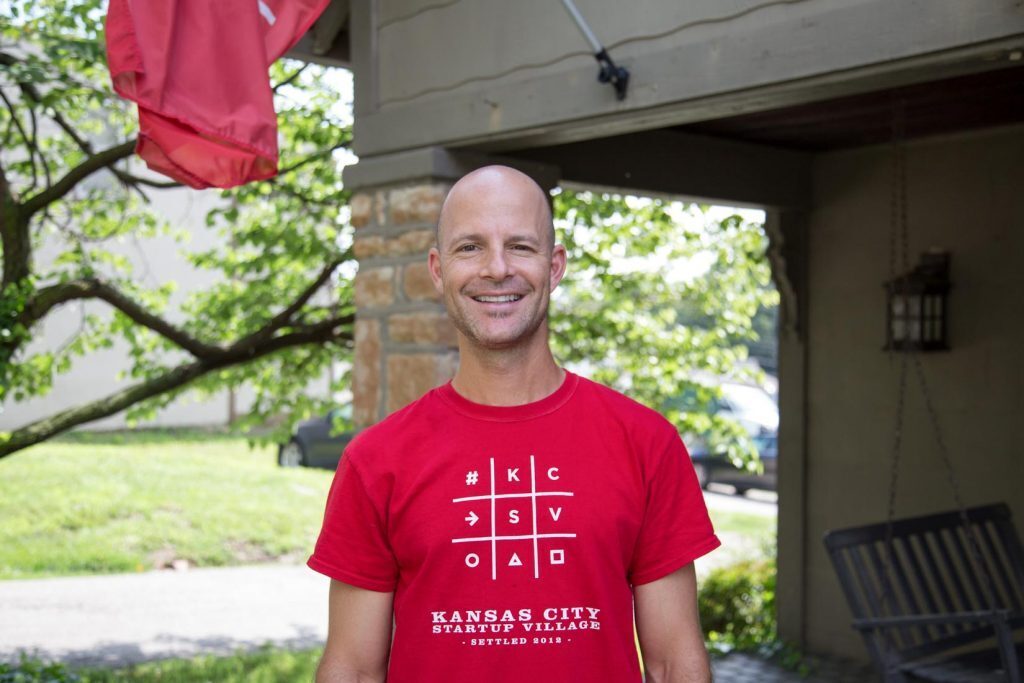
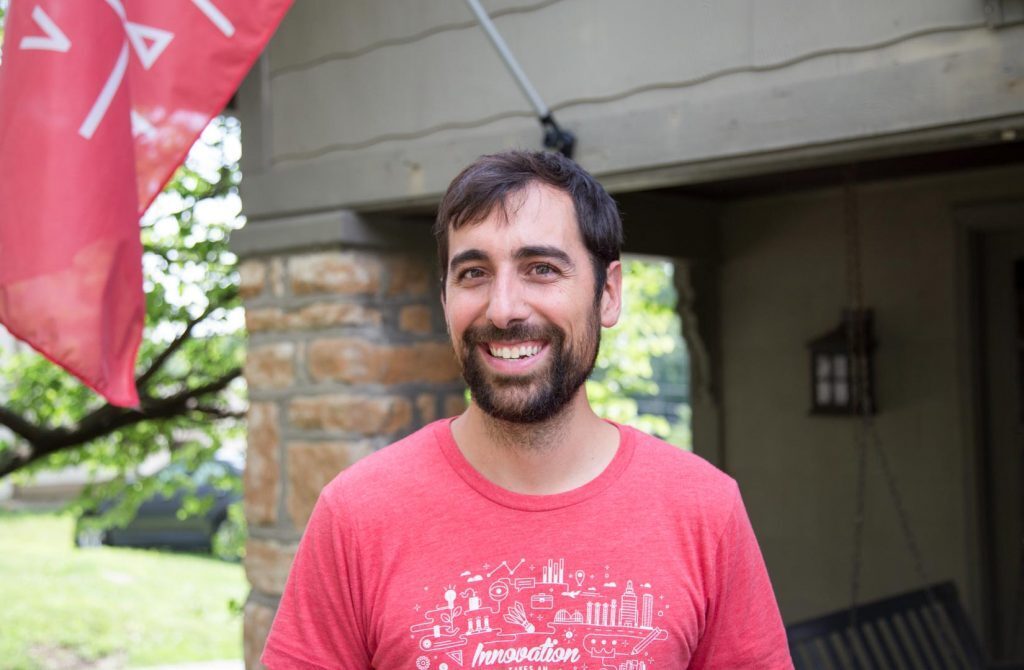
The village has captured the imagination of people from around the world. It’s a key catalyst for Kansas City’s rapidly improving reputation both locally and nationally as a hub for innovation.
– Adam Arredondo, 31, Director of Entrepreneurship for CEED
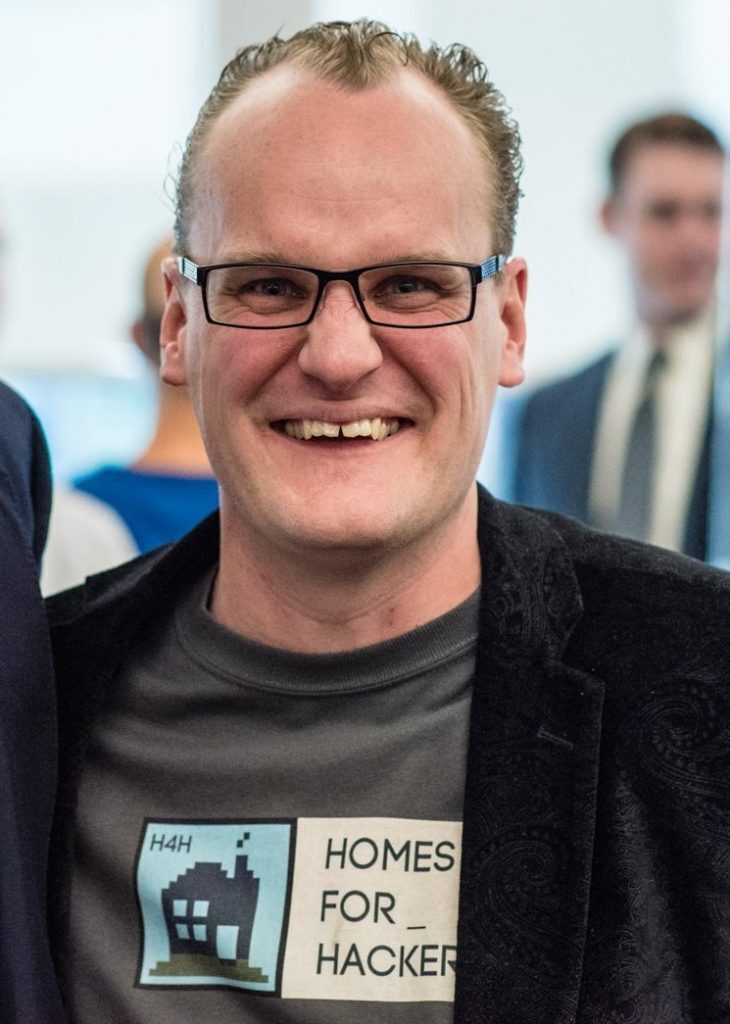
Many people in the Midwest seem to misunderstand what a startup even looks like. The startup village is critical to the entire region because nowhere else are startups so concentrated and distilled into their purest form. … It’s always fun watching the faces of new visitors light up when they ‘get it’ for the first time.
– Ben Barreth, 37, Founder of Homes for Hackers
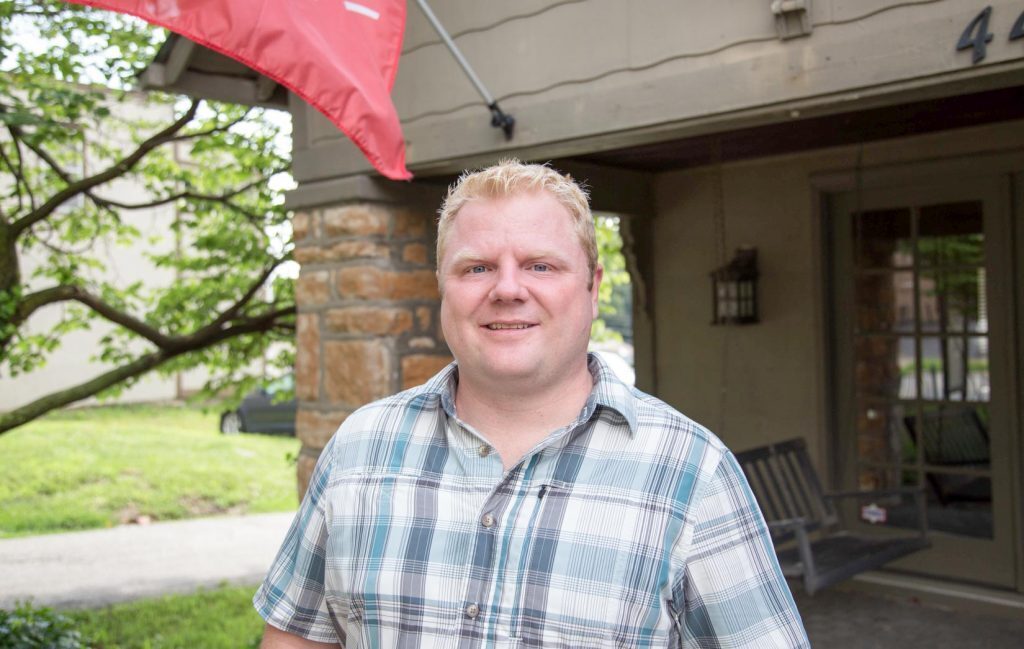
The village is a shared vision of building this community of entrepreneurs that spurs investment of time and money to build out the neighborhood. It’s been a gateway for residents to meet other like minded people and easily get connected with the rest of the startup community.
– Brandon Schatz, 34, Founder of the Kansas City Startup House

There is so much love and support for neighboring startups it’s unreal — and it’s not just those startups in the village, but all startups throughout Kansas City. The village is not about we, but about us. If one company succeeds, the village and Kansas City as a whole succeeds.
– Brittain Kovac, 31, Co-leader of the Kansas City Startup Village

The village is so important to Kansas City because it gives something for people to get behind, that they can believe in, that was built by entrepreneurs, for entrepreneurs.
– Cameron Cushman, 36, Former co-leader of the Kansas City Startup Village
Featured Business

2016 Startups to Watch
stats here
Related Posts on Startland News
LISTEN: Ground Truth Ag puts real-time objectivity into grain grading; here’s how it makes your food safer
On this episode of our 12-part Plug and Play Topeka podcast series, we speak with Kyle Folk, CEO and founder of Ground Truth Ag — a next-gen ag-tech company using AI, machine vision and near-infrared spectroscopy to deliver real-time grain-quality data across the farm-to-market workflow. Folk shares how his upbringing on a Canadian farm inspired…
Peek inside: Buffalo State Pizza takes another slice of ownership with fresh-baked downtown OP relocation
Three decades of pizza at a popular downtown Overland Park corner might have come to a close this week, as the crew at Buffalo State Pizza Co. picked up the last of what they could carry and walked it a half block down the street to the shop’s new home near another local favorite, The…