
Former Google, Uber exec joins maker of Pokémon Go — and he’s building a team of developers in Lawrence
December 7, 2021 | Blythe Dorrian

Startland News’ Startup Road Trip series explores innovative and uncommon ideas finding success in rural America and Midwestern startup hubs outside the Kansas City metro. This series is possible thanks to the Ewing Marion Kauffman Foundation, which leads a collaborative, nationwide effort to identify and remove large and small barriers to new business creation.
[divide]
Brian McClendon developed his passion for technology playing video games like Pac-Man and Asteroids as a child in Lawrence. Now, years after working to help create Google Maps and Uber in Silicon Valley, he’s joined a leading game developer to activate tech jobs in his home state.
Niantic — a San Francisco-based augmented reality (AR) company known for the popular games Ingress and Pokémon Go — is hiring for McClendon’s new engineering squad with its eyes on talent in the Bay Area, Seattle, London and Lawrence (where he plans to build the team as the company’s senior vice president of engineering for AR, Research and Mapping).
Click here to see openings at Niantic.
“The mission of Niantic is to build games and technology that motivate people to get outdoors, whether that is gameplay, activities, or making the outdoors a better experience,” McClendon said.
“Pokemon Go’s motivation is to go out, get steps, visit places, and find things in the real world,” he added. “GPS puts you on the map, but we want to do more than that. The game and the company have collected a large set of points that are interesting, not just stores and businesses.”

Pokemon Go
Moving back to Kansas
McClendon returned to Lawrence about five years ago with his wife, investor Beth Ellyn McClendon — with whom he leads the seed stage investment firm Free State Forge — because of their appreciation for the city. Another bonus: his mother, brother, and reconnected friends from school live in the area.
“For 30 years, I was in California, but I was always saying how I could move back here,” he said. “At least 25 of those years, I had plans to look for real estate, but I didn’t execute on it until 2017.”
One of McClendon’s goals for his hometown engineering team is to increase the local tech footprint, he said, noting Lawrence doesn’t have many tech employers besides the University of Kansas.
[pullquote]
Now in bloom
Niantic recently released a new game called Pikmin Bloom, a companion app that rewards players for being outside. Users are challenged to grow Pikmin characters and make flowers bloom.
So far, McClendon said, the app has received great feedback.
Click here to explore Pikmin Bloom.
[/pullquote]
“There are 777 tech companies that I know of, and more than 250 startups in the KCMO/ Kansas area,” he said. “Tech employment is critical for long-term growth because it creates jobs by generating high-growth companies.”
The first Lawrence-based position with Niantic was posted online within the past two weeks, McClendon said, with senior positions currently prioritized.
“I am part of the platform team,” he said. “We’re not only building platforms for Niantic, but for all other game and application developers to use. My goal is to make something that is widely used. I would like to do the same for augmented reality.”
One exciting aspect of recruiting is that McClendon can potentially reunite with people he collaborated with in the past, he said.
“I enjoy working with technology teams,” McClendon said. “If I am going to work for a company remotely, I want a team locally because I enjoy day-to-day design and technical conversations. I am hiring this team because I enjoy working on tech problems. That is something I have spent 30 years doing, and I don’t want to stop.”
Developing for years
McClendon studied at KU to become an electrical engineer. His father, a math professor, pushed him to excel at mathematics.
He spent the first 10 years of his career building graphics as a part of Silicon Graphics in Silicon Valley.
“That exposed me to high-end applications but also game development,” McClendon said. “The Nintendo 64 was developed on the desk next to me.”
The experience showed McClendon what he could do with 3D power on PC computers. In 1998, he started Intrinsic Graphics. Its first demo was so compelling the team made it a separate company, Keyhole, in 2001.
In 2004, Keyhole was acquired, and it became Google Earth. From there, McClendon went to work for Uber for two years. He became interested in creating games where exercise is a focus.
“As I got older, physical fitness became a life extension argument,” McClendon said. “These games motivated me to walk more and visit places. I now successfully average around 12,000 steps a day, which I did not do before.”
Part of a new era to come
Along with the new position at Niantic, McClendon teaches at KU. About 150 students completed a course about startups shortly before the COVID-19 pandemic.
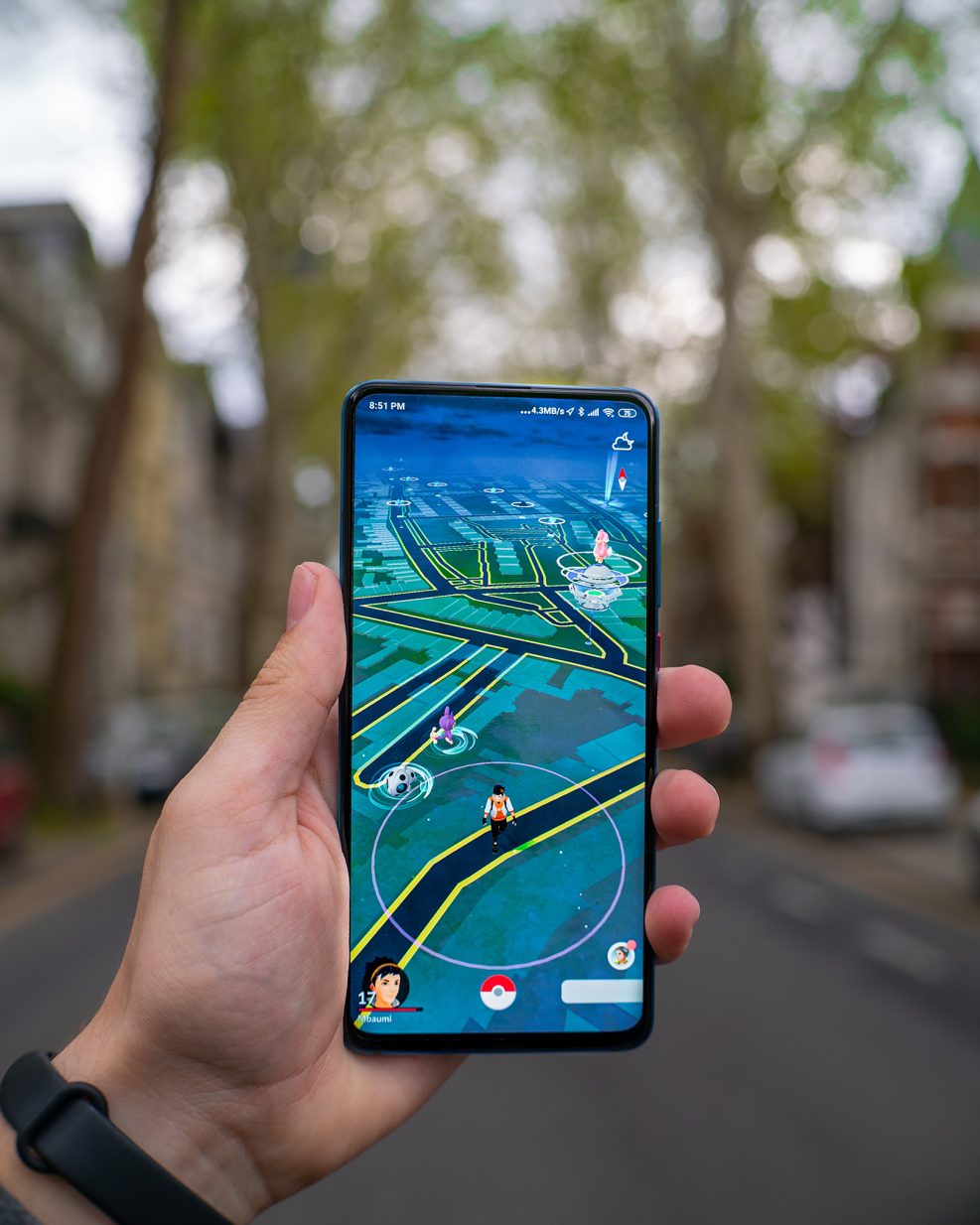
Pokemon Go; photo by Mika Baumeister
“I have helped get several of them jobs in Silicon Valley based on introductions,” he said. “I will continue to help place students both locally and in companies I know around the world.”
Once Niantic begins looking for workers for entry-level positions, local universities in Kansas and Missouri — including his alma mater — could provide some of the best candidates, McClendon said.
When he was graduating from KU decades ago, McClendon never expected the trajectory tech would take him or the world, he said.
“I don’t think any of us in 1986 could have conceived the impact of the internet or the impact of Moore’s Law,” McClendon said. “We are now carrying super computers in our pockets, and we don’t care. We can talk to it, and play games with it. Everybody has it.”
His lingering question: Where will technology take us in the next 10 to 20 years?
“I have theories, but the only way to know is to be part of it,” McClendon said.
[divide]

This story is possible thanks to support from the Ewing Marion Kauffman Foundation, a private, nonpartisan foundation that works together with communities in education and entrepreneurship to create uncommon solutions and empower people to shape their futures and be successful.
For more information, visit www.kauffman.org and connect at www.twitter.com/kauffmanfdn and www.facebook.com/kauffmanfdn
Featured Business

2021 Startups to Watch
stats here
Related Posts on Startland News
In time for Mother’s Day: Ovatemp wants to boost women’s fertility
The arrival of Ana Mayer’s baby girl isn’t the only thing she’ll be thinking about this Mother’s Day. Mayer — who’s among the newest founders in the Techstars-led Sprint Mobile Health Accelerator in Kansas City — will also be mulling how to further develop Ovatemp, the Boston-based ovulation tech company she leads. Ovatemp offers women…
Founder of defunct Symptomly shares lessons from failure
Failure is a touchy subject. But for Derek Bereit — the former CEO and co-founder of mobile asthma tracking company Symptomly — his company’s failure was an opportunity shrouded in a difficult situation. Rather than sulking, Bereit sat down with Startland News to discuss Symptomly’s demise, the lessons it provided him and the possibilities that…