
Black leaders need to earn a ‘thriving wage’ before they can help others; an Evergy-backed cohort could help them ascend
February 15, 2024 | Taylor Wilmore

A new program backed by entrepreneur support groups and Evergy aims to raise household income by at least 30 percent for participating Black professionals, nonprofit founders, and entrepreneurs, said Craig Moore II.
“The ultimate goal is making sure you’re a leader who can do more than show up and talk about community — you have the financial backing to support the community yourself and by raising additional money,” said Moore, founding executive director of Black Excellence KC.
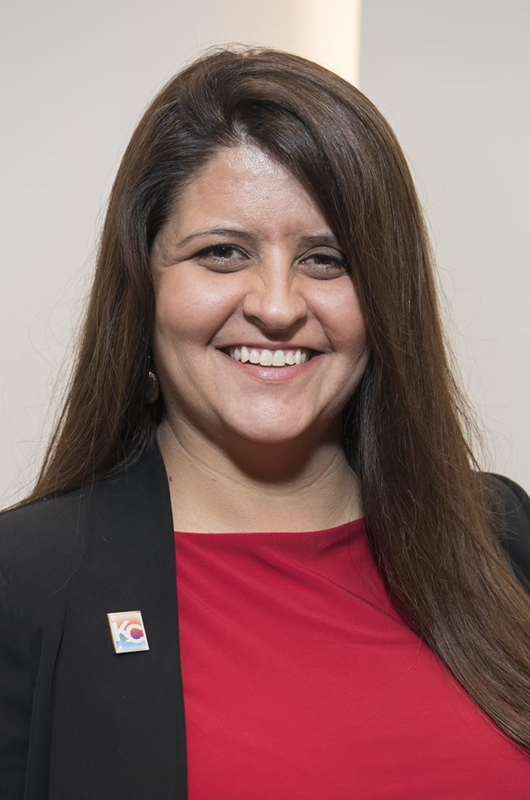
Sheri Gonzales, Evergy
The ASCEND Cohort program — developed by Black Excellence and the Heartland Black Chamber — is supported by scholarships funded by Evergy. The application deadline is Feb. 16, with the program running March 2 to Aug. 8.
Click here to apply for ASCEND.
“We’re partnering with ASCEND on this project, because we think it’s important for our own employees to be able to experience a leadership development program like this,” said Sheri Gonzales, senior director of diversity, equity and inclusion + workforce and development at Evergy.
After surveying its members, Black Excellence determined that a cohort model best suited the organization’s strategic support approach for better preparing future leaders. The program’s focuses include generational wealth, strategy for growth, Black leadership development, and culture impact.
“A lot of what our membership wanted from us is: ‘How can I understand wealth better?’; ‘How can I create career security for myself?’; ‘How can I navigate the resources that are coming in for entrepreneurship and small businesses?’” said Moore.

Growing professionals
The ASCEND Cohort program offers two pathways: the Founder Growth Track and the Professional Growth Track, providing essential leadership skills through a comprehensive framework.
The Professional Growth Track is for Black professionals with at least two years in their careers who are seeking career growth and expertise in their specific industries. These professionals will receive performance strategies, team and department acumen, development of key performance indicators/objectives and key results, and more.
“Our hope is that they will step into leadership positions that they’re passionate about, and that they have everything that they need as an individual to be able to show up in these spaces and represent the community,” said Moore.
Growing founders and owners
Within the Founder Growth Track, founders and owners with a developed business idea looking are given help navigating their ecosystem and figuring out what scaling their business looks like for them.
“Oftentimes, particularly for Black business owners and founders, we don’t have the space and time to truly plan,” said Moore.
Both tracks provide coaching and strategic guidance from the program’s strategists, along with financial support and planning from Cornerstone Financial, ensuring participants know how to develop their careers while aligning their finances with their long term plan.
“That will take them from a living wage to a thriving wage,” said Moore. “This way, I’m able to do more with my money, I’m able to save with my money, I’m able to invest back into my community, and I’m able to donate to the nonprofits around me.”
Therapy for racial healing
One of the highlights of the program: racial healing therapy sessions, creating a supportive environment for participants to address racial traumas and embrace their cultural identities.
“Statistics show that the average Black professional comes in contact with racism at a minimum of five times a day,” said Moore. “We don’t deal with the impact of us being Black in a system that wasn’t really built for us, and so how do we heal from those impacts?”
Through therapy sessions, participants will learn to recognize and address both explicit and implicit biases. They will have the tools to navigate these interactions, advocate for oneself, and transform those experiences into opportunities for education and growth.
“It’s about creating an opportunity for you to feel secure in your own skin and who you are, know the injustice that you’re going through, and making sure that as you’re navigating these spaces, you’re being that leader that will help pave the way for people not to go through that again,” said Moore.
Featured Business

2024 Startups to Watch
stats here
Related Posts on Startland News
ECJC relocates office, updates brand
The Enterprise Center in Johnson County is shaking things up. The non-profit organization that connects entrepreneurs to the resources they need to grow revealed Thursday an updated website, brand identity, and new office location. “This move is the culmination of a long, strategic transition to ensure that as Kansas City’s entrepreneurial community changes, we change…
Former Sprint COO LeMay dishes on KC capital, failure
There are few people in Kansas City more connected into the area’s investor, corporate and startup community than FarmLink CEO Ron LeMay. Also now managing director of Kansas City-based OpenAir Equity Partners, LeMay frequently sees the successes and failures of the metro area’s capital landscape. The former Sprint COO recently spoke with dozens of Kansas…
RFP365 partners with Kansas City, raises $950K
On the heels of a six-figure raise, area tech firm RFP365 recently landed the City of Kansas City as a client for its software that eases the request for proposal process. The company’s deal with Kansas City was born from the city’s “Innovation Partnership” program, which affords entrepreneurs the opportunity to “test drive” their technologies…
Study: Gov should take long-term approach to grow new businesses
A recent study by the Ewing Marion Kauffman Foundation reports that while governments have long supported entrepreneurship, new business creation is waning. The study — Guidelines for Local and State Governments to Promote Entrepreneurship — found that new businesses comprised about 8 percent of all U.S. businesses in 2011, down from roughly 15 percent in the…