
AudreySpirit fashions clothing to help chronically ill child patients feel like themselves again
May 28, 2019 | Elyssa Bezner

AudreySpirit is designed to bring dignity to chronically sick children, said Donna Yadrich, detailing a specially created clothing line that doesn’t sacrifice practicality.

“When my daughter Audrey was in the [Intensive Care Unit] the last time, I was looking at her arms and she just had so many wires and everything coming out of her — it was so hard [to keep her covered],” said Yadrich, founder of the therapeutic garment apparel startup that bears her daughter’s name. “The nurses had to disconnect stuff and reconnect it to move her around… I thought that there had to be a better way.”
Yadrich modified Audrey’s clothing to better fit her needs and abilities up until the 15-year-old’s death in 2011, she said.
Click here to read more about Audrey’s story.
The startup launched in 2015 to champion the importance of maintaining dignity and comfort throughout the health struggles of children everywhere — all fueled by Audrey’s legacy, said Yadrich.
“After she died, I started working with other children and had them tell me exactly what they needed,” Yadrich said. “I took their specifications and worked with it. They said, ‘It had to look to my own clothes.’”
Click here to learn more about Audrey Spirit.
Currently sold through a direct-to-consumer online store, the garments are manufactured to reduce pressure points on clasps and provide accessibility to potential port areas or injection sites, she added.
Despite the focus on pediatric patients, the startup is currently in talks with the U.S. Department of Defense and the veterans associations to adopt use of the garments for those suffering from post-traumatic stress disorder, she added.
“When you’re thinking about veterans and PTSD and depression that comes with the loss of functionality — the importance of independence to your overall sense of wellbeing and state of mind. It really is a no-brainer,” Yadrich said. “We’ve got to start looking at the whole person if we’re going to really make a difference.”
“So here’s a kid who’s at Cincinnati Children’s Hospital,” she continued, showing Startland an album with photos of children across the U.S. modeling their individual designs. “She looks completely dressed and completely normal. The doctors and nurses can get to any part of her without having to show all of her. [All the kids] told me, ‘We don’t want anybody to look at us and see anything different.’”
Similar products exist for cancer patients undergoing chemotherapy, Yadrich added, noting the focus of AudreySpirit stays on children with rare diseases that don’t always get the same attention.
“These kids are maybe sick from the age of 2, born with something like cystic fibrosis where they’re very malnourished — finding something that can comfortably sit on their skin is huge,” Yadrich said.
The alternative styles take the burden off of caregivers as well, she said.
“Those families want that person to feel normal and they want them to feel whole,” she added. “The indignity of not feeling dressed is a horrible feeling.”
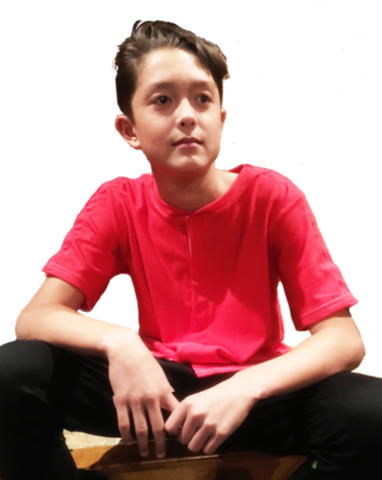
The “Adrianne Style” from AudreySpirit
The garments come in two shirt styles: the “Rylie Style” specifically made for port areas on the chest at a price point of $95 and the “Adrianne Style” applicable to all standard needs for $189, Yadrich said.
The high price point is reflective of the quality of fabrics made through sustainable practices, she said, noting families typically buy two to four pairs — not a full wardrobe.
“I have a manufacturer here in the U.S. that makes them and that stuff is important to me,” Yadrich said. “I went to several different manufacturing sites and you would be surprised what they look like. Those are not environments I want to make this clothing in. The facility I chose has benefits for their employees and all of that’s important to me [as well].”
Transitioning to startup life from work as a former clinical research professional definitely prompted a period of culture shock, she said.
“When you’re in the medical field, everything’s laid out all the time and even when you’re making a clinical judgement, it’s within parameters. In business, it seems much more ‘loosey goosey,’” she said, laughing.
“People can walk around saying, ‘I’m an expert,’ and that’s not always the case,” Yadrich continued. “[In contrast], I’ve learned to appreciate my expertise — I am an expert in this world.”
With current health care practices beginning to feel less equipped for the changing needs of patients, comfort must remain a priority, she said, with passion.
“My hope is that for your complex medical condition you get ‘X’ number of these because they recognize you’re a person. You’re just a person,” Yadrich said.

2019 Startups to Watch
stats here
Related Posts on Startland News
André’s planted its flag in KC 70 years ago; chocolatier says that’s just a taste of what’s to come
Nearly 5,000 miles from Switzerland, a small group toured the inner sanctum of an iconic 70-year-old Kansas City company — a family-run brand that helped redefine accessible luxury in the Midwest, one Swiss chocolate-covered almond at a time. “What people get excited about André’s is the legacy, that we take a lot of pride in…
Here’s how ULAH’s new boutique model aims to rack success for local brands, not inventory debt
The new KC Collective consignment-based program for local brands at ULAH is a win for both the Westwood boutique and Kansas City creatives, said Joey Mendez and Buck Wimberly, announcing a fresh model to help the struggling store stay open and financially stable. “We’ve always had local brands,” said Mendez, co-founder of ULAH, explaining the…
Tiki Taco ticks up giving alongside expansion; CEO owns up to taco shop’s neighborhood impact model
A month-long campaign in the popular Kansas City-based chain offers easy add-on: joining KC GIFT’s network of donors Restaurant executive Eric Knott wants Tiki Taco’s operators to own the neighborhoods into which the popular taco shop expands, he said, but that doesn’t just mean dominating the fast-casual market in each pocket of Kansas City. “Our…