
Herd that beef was grass-fed? KC inventor’s cattle facial ID could drive steak through origin uncertainty
February 16, 2021 | Austin Barnes

One of Kansas City’s most active serial inventors recently harvested his 88th patent, but it’s the revolutionary new way he’s using blockchain technology and augmented reality that’s turning heads (of cattle) down on the farm.
Shekhar Gupta’s latest reveal: a facial recognition platform specifically designed to identify and track bovine for the bottom line — reducing costs and upping accountability for ranchers.
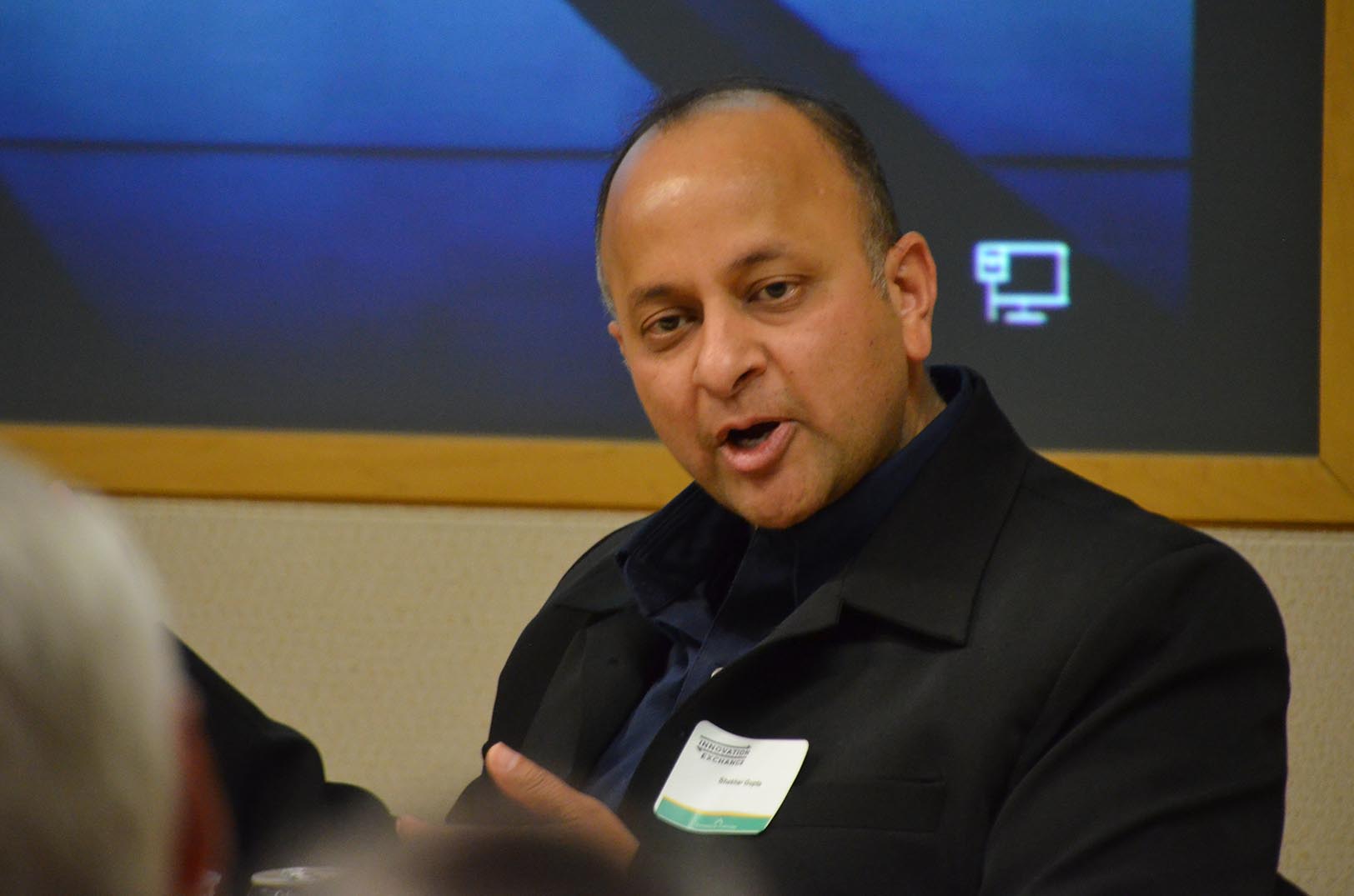
Shekhar Gupta, Blockchain Initiatives, The Solutions Group; Startland’s Innovation Exchange, November 2019
“It’s a beef capital from Columbia, Missouri, to Manhattan, Kansas. The feedlot owners have millions of cows,” said Gupta, chief technology officer at Asuun — a division of The Solutions Group, explaining a problem unique to animal health corridor ranchers who’ve long made use of RFID tracking systems.
“They put RFID tags on their ears — and it works great because an RFID tag costs about $3 to $5. It works great for those ranchers who’ve got 200 and 300 cows … but here in this part of the world — think about it — that’s [something like] 5 million cows,” he continued, noting the near-constant buying and selling of cattle in the region means RFID tags regularly go missing, a problem that milks money from the collective pockets of ranchers.
“That’s $15 million in expenses every year. If they’re selling say one, two hundred or a thousand cows — and about a hundred of them lose the RFID tags in transport, how do you know which tag belongs to which cow? That creates a big, big issue for the supply chain.”
In response, Gupta developed the new cattle-prodded product for Asuun. He announced the facial ID platform’s launch Feb. 1.
“It’s a machine learning and augmented reality powered app. Machine learning determines a cow between a bull, a horse, or a dog — because a cow has an elongated face and so do horses and many breeds of dogs,” he explained, noting the state of Missouri has thrown its support behind Asuun in the form of grant dollars.
“Augmented reality determines the best angle to take pictures of the cow and gathers all the things that you want to capture about the cow — the age, the pasture, any medical issues, any vaccinations.”
The information is then stored on a distributed ledger technology (DLT) network using blockchain, Gupta said, adding he hopes the technology can eventually work its way into processing plants to solve an even bigger problem: trust.
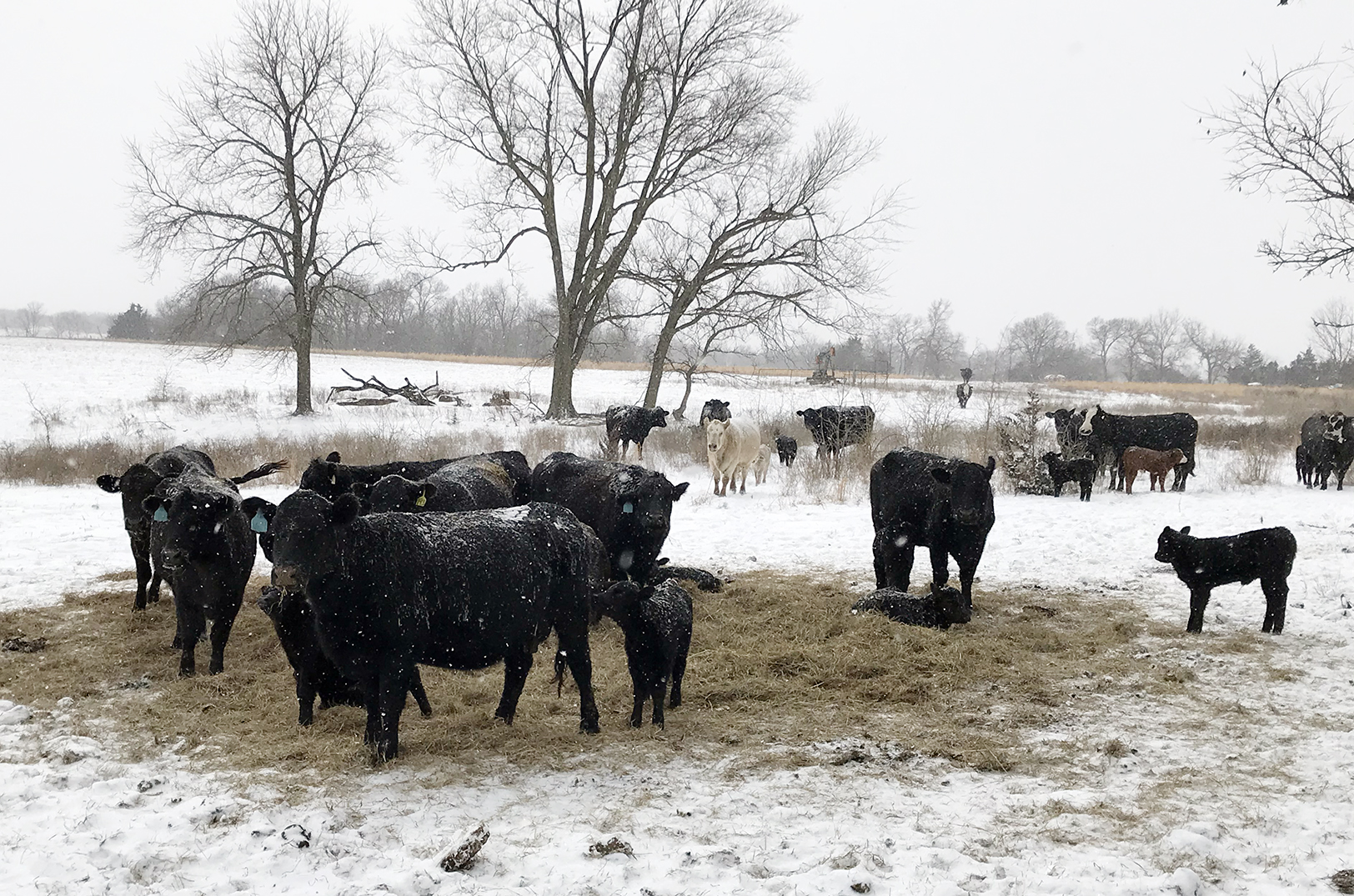
Kansas cattle this week in Montgomery County
“People pay a premium for a grass-fed cow versus a corn-fed cow. Nobody seems to be doing anything [to verify authenticity of a cow’s raising] before the processing plant. That’s where we’re going to have a market,” he said.
“We’re going to have a network in those feedlots that eventually supplies [data] to the processing plants. You hear of all these recalls coming in every so often. Those recalls are not only a health hazard for a consumer. They also cost the company tons of many as well.”
The platform could also aid in disease prediction, Gupta added, noting it could help cure sick cows suffering from such illnesses as mastitis.
“The milk production of the cow goes down and eventually, if it’s not treated, the dairy farmer ends up losing the cow — and dairy cows are very expensive,” he said.
“We have the technology to predict if mastitis is going to happen to a particular cow. We can provide that technology to a dairy farmer and then they can take preventative measures and save revenue and potentially save their cows as well.”
To better understand the needs of farmers and ranchers, Gupta hit the road, traveling along I-70 and stopping at the gates of as many open-range cattle yards as he could find.
“I basically drove from Columbia to Manhattan and spoke with these ranchers and talked with them about what their challenges were and managing the RFID tags was at the top of their list. So here we are.”
Click here to read about one of Gupta’s other recent inventions: a COVID-19-battling smart disinfection doorway.
Such proactive problem solving has driven much of Gupta’s path since he arrived in the United States from India in the early 1990s, he recalled, adding his purpose in the country quickly became clear.
“When I came to this country, everybody was like, ‘Oh, you’re going to the United States of America, that’s the richest country in the world,’” Gupta said.
“I came here and the poverty and homelessness was here just as much as it is in any other part of the world. Many times people just simply don’t get a job. And I’m thinking, if these companies and agencies start to save more money, then maybe they can increase the pay rates of their existing employees, begin to hire more employees. The job rate goes up, people’s median salary goes up, and the country continues to become better.”
Using innovation to provide a better life for all Americans fuels Gupta — no matter the industry he’s problem solving in at any given time.
“We all deserve a better quality of life. So if I can do my part in it, I’d love to,” he said.
[divide]

This story is possible thanks to support from the Ewing Marion Kauffman Foundation, a private, nonpartisan foundation that works together with communities in education and entrepreneurship to create uncommon solutions and empower people to shape their futures and be successful.
For more information, visit www.kauffman.org and connect at www.twitter.com/kauffmanfdn and www.facebook.com/kauffmanfdn
Featured Business

2021 Startups to Watch
stats here
Related Posts on Startland News
SNAP cuts are ‘worse than they look on paper’: Food access advocates warn shelves could go bare overnight
Chef Shanita McAfee-Bryant doesn’t mince words about perceptions of the hungry Kansas Citians she serves daily through her award-winning culinary social venture. “These are the people who — if you listen to the rhetoric — are deemed ‘lazy,’” the founder of The Prospect KC’s NourishKC Community Kitchen told Startland News. “We know the narratives being…
LISTEN: Fermenting a clean future through products from meat alternatives to skin creams and baby formula
On this episode of Startland News’ Plug and Play Topeka founder podcast series, we chat with Francesca Gallucci of Natáur, a Baltimore-based biotech company that’s reimagining how essential nutrients are made. Combining synthetic biology, metabolic engineering, and eco-friendly fermentation, they’re producing bio-based taurine (and other naturally occurring sulfur compounds) without relying on petroleum. Gallucci takes…
KCMO slashes fees for outdoor dining permits, launches dining trail for grant winning projects
Kansas City has officially eliminated outdoor dining permit fees, reducing the cost from $850 to zero, thanks to the momentum created by a city-led initiative to encourage investment in outdoor dining experiences, city leaders announced this week, unveiling new plans to promote funded businesses and their projects. Launched in 2024, the Outdoor Dining Enhancement Program…
World Cup will produce KC small biz millionaires in just weeks, leaders say, but it’s only the start
Kansas City can’t look at the World Cup in 2026 as one big event where businesses are going to make good money for a while, and then everything goes back to normal, said Wes Rogers. “This has to be the beginning of the next chapter of our city,” the 2nd District Councilman for Kansas City,…