
Angel investment trends with the Angel Capital Association’s Marianne Hudson
September 29, 2016 | Elizabeth Usovicz

Editor’s note: The opinions expressed in the commentary are the author’s alone.
Kansas City is known for the Royals, great barbecue and recently-acquired tech firm EyeVerify.
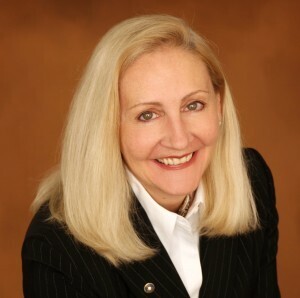
Elizabeth Usovicz
But it is also home to the headquarters of the Angel Capital Association .
From its inception, the Overland Park-based Angel Capital Association has been led by executive director Marianne Hudson. She was instrumental in the Ewing Marion Kauffman Foundation’s formation of the Angel Capital Alliance in 2003, and oversaw the alliance’s transformation into the Angel Capital Association in 2007.
“The association was initially formed to enable angel groups to connect and share best practices,” Hudson explains. “Today, the association’s members include 13,000 accredited investors in 50 states and 5 Canadian provinces, who may or may not have an affiliation with an angel group, online investor platform or family office.”
Members still share best practices and exchange information and policy on angel investing, says Hudson. They also network, access deal flow and syndicate investment deals.
Hudson recently shared her perspectives on current and future trends on angel investing.
Why does accreditation matter?
Angel investments are the powerhouse of the seed and startup capital ecosystem. In 2015, accredited angels invested an estimated $25.6 billion in more than 71,000 startups, and created over 270,000 jobs nationally. (Source: The University of New Hampshire, Center for Venture Research).
By SEC definition, an accredited investor in the United States must have a minimum net worth of $1 million, excluding primary residence, a consistent individual annual income of $200,000, or a consistent joint annual income of $300,000. Angel Capital Association and its member groups require that investors meet the SEC’s accreditation requirements to ensure that members understand the potential upsides and losses to his or her investment portfolio.
“Angels are a distinct class of investors,” Hudson said. “Angel investment is right for certain types of companies — startup and early-stage companies with high-growth potential that fully understand the impact of an equity investment.”
Who are angel investors?
“We know more about angels’ investments than we do about angels’ demographics,” Hudson observes.
Hudson estimates that in 2006, 6 percent of angel investors were women. Today, Hudson calculates, that percentage is in the low twenties. While that represents solid progress, “we have a long way to go in angel diversity across demographics such as age, gender and ethnicity,” admits Hudson.
A joint research initiative of Angel Capital Association and Wharton Entrepreneurship, The American Angel, is currently underway to identify and explore the demographics of angel investors.
What’s next for angel investing?
The use of online accredited investor platforms such as AngelList to source and syndicate geographically dispersed deals will continue to grow. Hudson also projects that more angel groups and online platforms will proactively reach out to attract a broad demographic range of investors.
“The more diverse the angel group, the more insights it has, and the better investment decisions a group can make,” she said.
Elizabeth Usovicz is topline revenue strategist and principal of WhiteSpace Consulting, specializing in top-line revenue strategies and market insights for high-growth companies, new ventures and business units within established companies; keynote speaking and strategy session facilitation. Connect with Elizabeth at elizabeth@whitespacerevenue.com or @eusovicz on Twitter.
In July of 2015, Startland News collaborated with WhiteSpace Consulting to conduct a whiteboard conversation with women entrepreneurs in the Kansas City region. Women entrepreneurs shared their perceptions about launching and leading companies, and identified topics for ongoing discussion. As a result of this conversation, Startland News and WhiteSpace Consulting have developed (S)heStarts, a blog series that explores the entrepreneurial experience that women and men share, as well as perspectives on how their experiences are unique.
Featured Business

2016 Startups to Watch
stats here
Related Posts on Startland News
Founder of defunct Symptomly shares lessons from failure
Failure is a touchy subject. But for Derek Bereit — the former CEO and co-founder of mobile asthma tracking company Symptomly — his company’s failure was an opportunity shrouded in a difficult situation. Rather than sulking, Bereit sat down with Startland News to discuss Symptomly’s demise, the lessons it provided him and the possibilities that…
Founders discuss tough decisions entrepreneurs face
Two founders took the stage at Kansas City’s chapter of 1 Million Cups to discuss the vast variety of tough decisions entrepreneurs face when starting and running a business. Stuart Ludlow, co-founder of RFP 365 and Sarah Shipley, co-founder of BikeWalkKC, offered insights and advice for those launching a business. Read about RFP365’s recent funding…
KC’s first innovation officer reflects on work, city’s tech future
After more than two years of service, Ashley Hand is leaving the driver’s seat of Kansas City’s innovation efforts. Hand, who soon will be departing as Kansas City’s chief innovation officer, was tasked with implementing innovative strategies to improve how city government can better serve Kansas Citians. The city will be accepting applications for the…
Former Sprint COO LeMay dishes on KC capital, failure
There are few people in Kansas City more connected into the area’s investor, corporate and startup community than FarmLink CEO Ron LeMay. Also now managing director of Kansas City-based OpenAir Equity Partners, LeMay frequently sees the successes and failures of the metro area’s capital landscape. The former Sprint COO recently spoke with dozens of Kansas…
- « Previous
- 1
- …
- 86
- 87
- 88