

Tim Tebow to entrepreneurs: Embrace the heavy lift if you want to reap life’s real profits
November 7, 2025 | Nikki Overfelt Chifalu

COLUMBIA, Mo. — Business should be about driving impact, not just scoring another win, said former NFL quarterback Tim Tebow — challenging Midwest entrepreneurs, community builders, and investors to consider outcomes that boost others, not just one’s personal pocketbook.
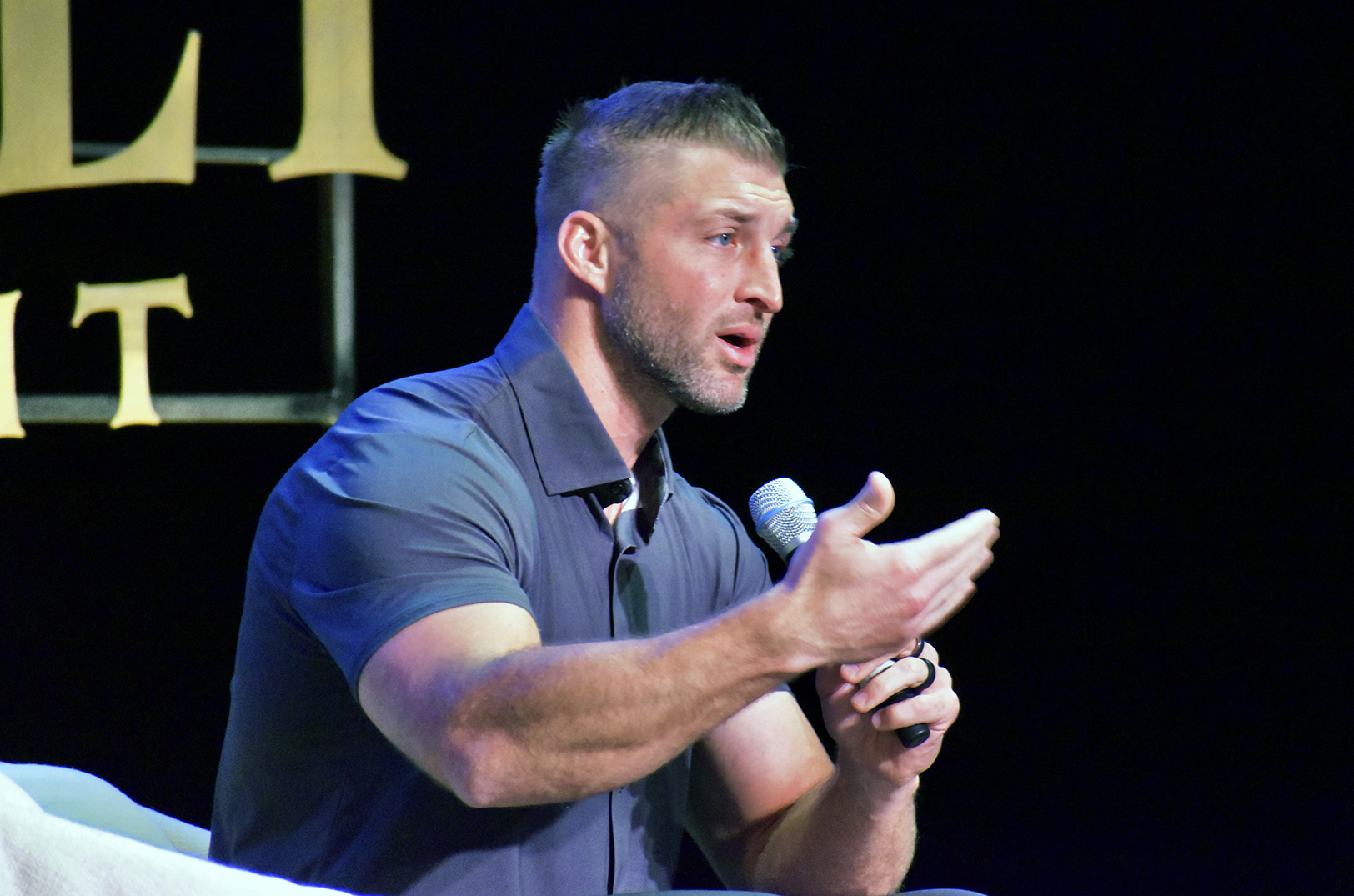
Former NFL quarterback Tim Tebow, founder and chairman of the Tim Tebow Foundation, speaks about scoring significance over success during a keynote speech at Main Street Summit in Columbia, Missouri; photo by Nikki Overfelt Chifalu, Startland News
“Probably everybody in this room has been super blessed with skill sets, resources, relationships, opportunities, companies, all of it,” Tebow told a crowd gathered Wednesday night for Main Street Summit’s keynote at the Missouri Theater in downtown Columbia. “How can you take what you have been gifted with, which you have, what you’re a steward of, and take it from success to significance? I think all of you could do that in different ways. I don’t think there’s a one size fits all.”
“But it’s like, ‘OK, how can I use my company?” he added. “‘How can I use the relationships? How can I use our business? How can I use the resources? How can I take this and impact the world, especially those that are suffering?’”
Tebow — founder and chairman of the Tim Tebow Foundation, an organization responsible for guiding its mission to bring faith, hope, and love to children and vulnerable populations — was one of more than 120 speakers spread across three days and 15 downtown Columbia venues. They included experts within seven programming tracks: venture and startup, manufacturing, construction, franchise, health, nonprofit, and faith and work.
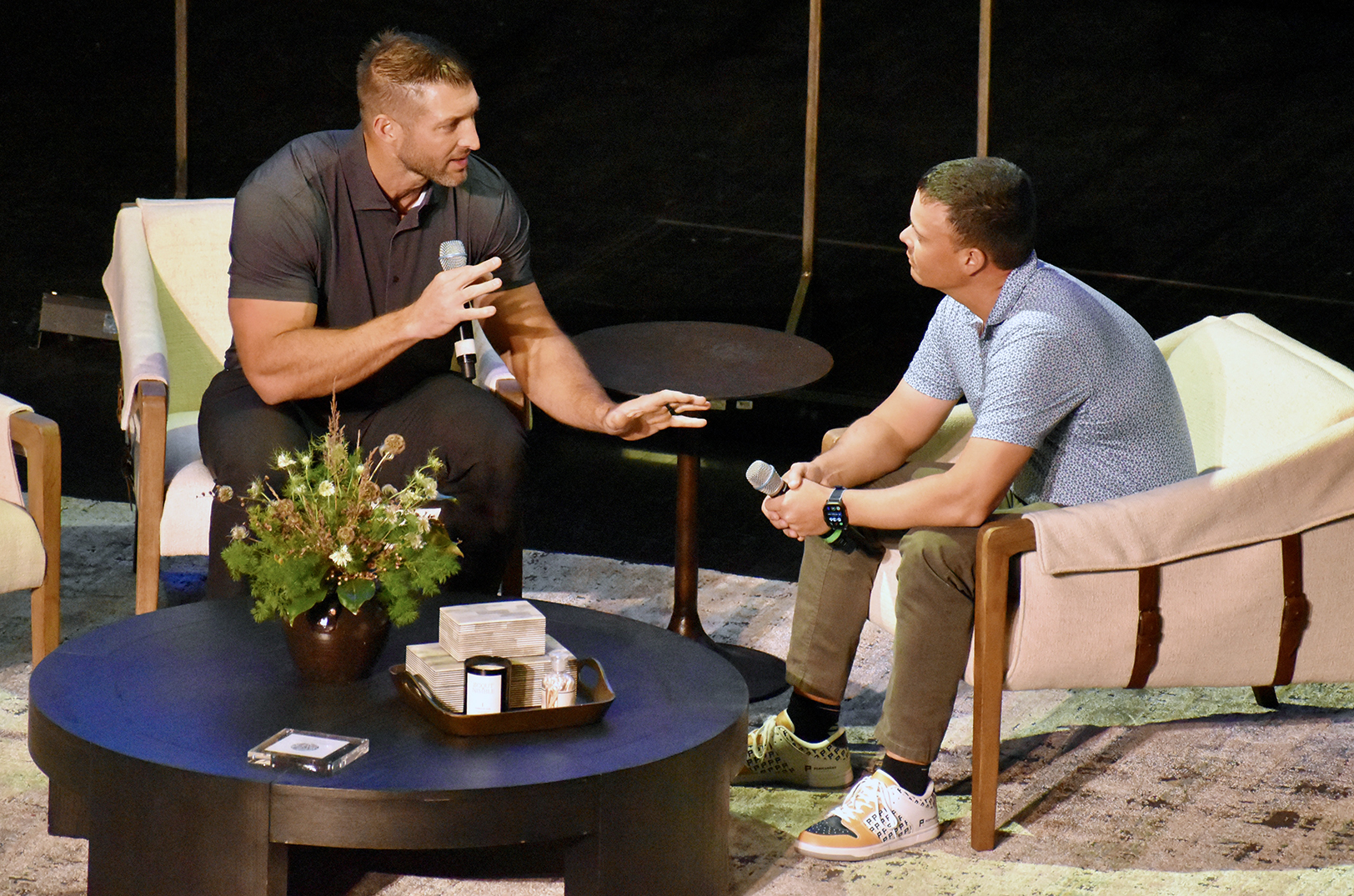
Tim Tebow, former quarterback for the Denver Broncos and four other NFL teams, shares the stage with Brent Beshore, CEO of Columbia-based private equity firm Permanent Equity and founder of Main Street Summit; photo by Nikki Overfelt Chifalu, Startland News
This was the third year for the summit, which was launched by Columbia-based private equity firm Permanent Equity and its CEO Brent Beshore.
“When we first started, there were a couple 100 people,” noted Patrick O’Shaughnessy, founder and CEO of Positive Sum and host of the Invest Like the Best podcast, who also took the main stage on Wednesday night. “Now it’s 1,500 or something — from so many countries — and that is totally a testament to Brent’s hospitality, to his love of his hometown. It’s amazing.”
ICYMI: How Main Street Summit is putting homegrown small business on stage with Tim Tebow
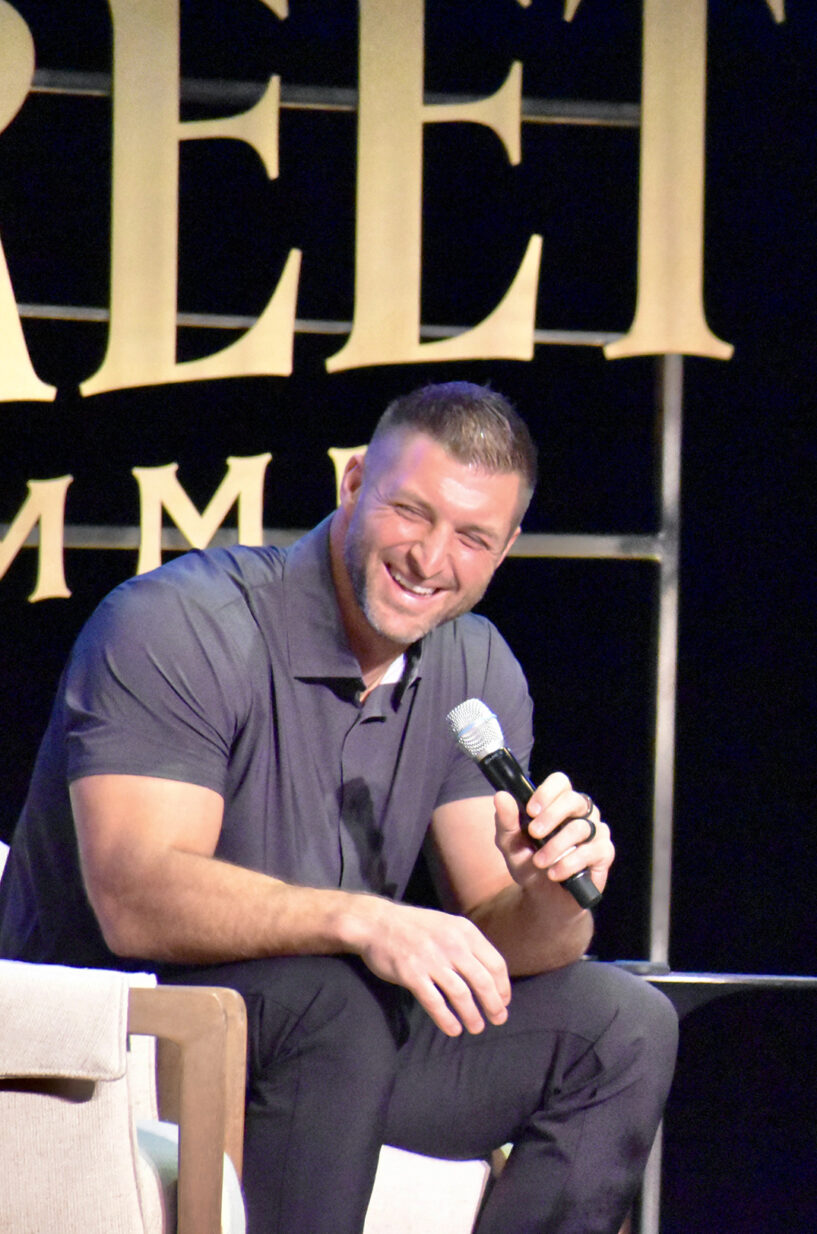
Former NFL quarterback Tim Tebow, founder and chairman of the Tim Tebow Foundation, shares a laugh with event founder Brent Beshore during a keynote fireside chat at Main Street Summit in Columbia, Missouri; photo by Nikki Overfelt Chifalu, Startland News
Tebow — who was vocal and transparent about his Christian faith during his college and professional football careers — encouraged the crowd to strive to live a compassionate life, not a comfortable one during his conversation with Beshore.
“In our society, we’ve become so at ease with seeing people suffering and thinking it’s somebody else’s job,” Tebow explained. “And I do believe that comfort’s a big part of it. How many times have I not done something because I’ve been more concerned with comfort than I have with compassion?”
Comfort and compassion cannot coexist, he continued.
“If we want to live a comfortable life, it might be easier,” he added. “If we live a compassionate life, it will be heavy; it will be hard. But it will also be so much more fulfilling than a comfortable life would ever be. There’s just no comparison. If we want to make a bigger impact, it’s going to be a compassionate life, not a comfortable life.”
Tebow also shared how his foundation is working with engineers and companies to use technology like AI to combat the evils of sex trafficking. For example, DejaVuAI is using its pattern recognition technology to identify victims, so that they could be located and rescued.
“This one company has been able to do that now 700 times in partnership with law enforcement,” he noted.
Another example is HarmBlock, he said, which uses AI technology to protect children from online sextortion.
“Technology is not inherently bad,” he continued. “It’s just being used by a lot of people in a bad way. Why can’t we also use that in a good way?”
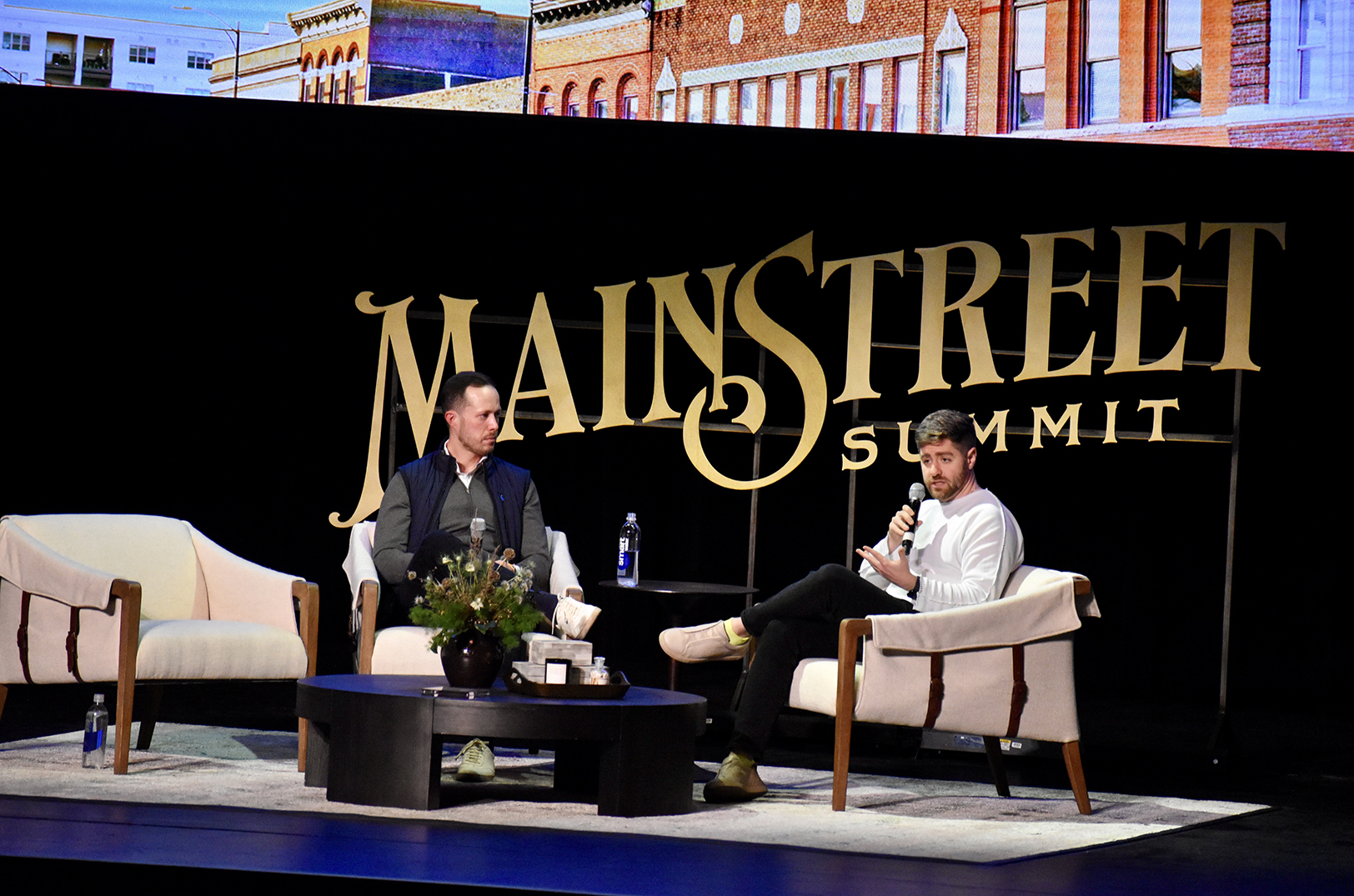
Eric Glyman, CEO of Ramp, right, chats about scaling his fintech company to $20 billion and beyond during a fireside chat with Patrick O’Shaughnessy, founder and CEO of Positive Sum and host of the Invest Like the Best podcast, during Main Street Summit in Columbia, Missouri; photo by Nikki Overfelt Chifalu, Startland News
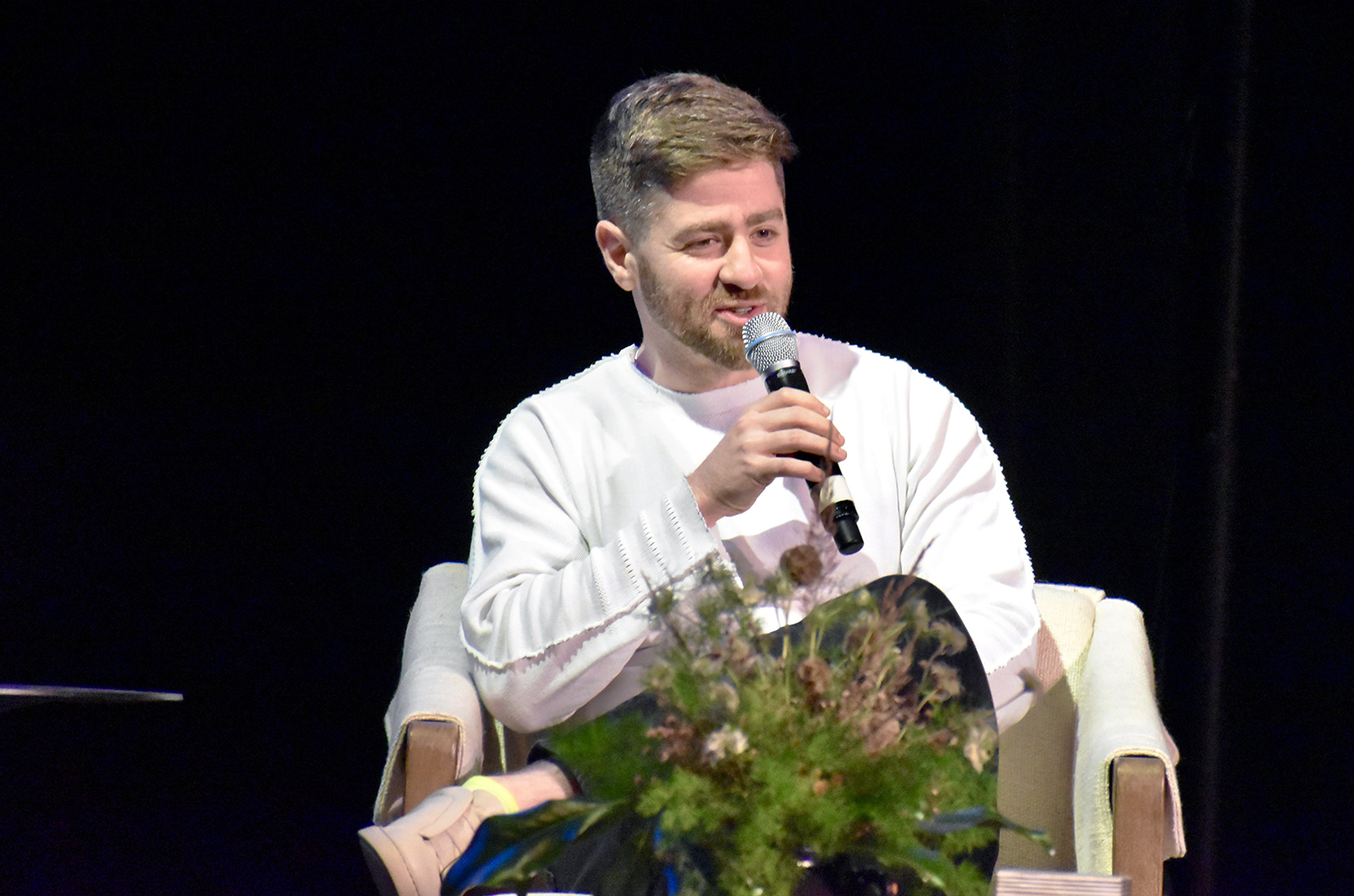
Eric Glyman, CEO of Ramp, speaks during one of 120 Main Street Summit sessions organized across three days in Columbia, Missouri; photo by Nikki Overfelt Chifalu, Startland News
Before Tebow took the stage, the crowd heard from Ramp CEO Eric Glyman about scaling to $20 billion and beyond; from Romeen Sheth, co-founder and CEO of Workstreet and board director for Metasys Technologies, and Jamie Shah, president of Chem-Impex, about the joys and complications of a family business; and Shegun Otulana, founder and CEO of Harmony Venture Labs, about building outside tech hubs with limited capital.
Despite Ramp creating about $5 billion of enterprise value in each of its first five to six years of existence as a company, Glyman told O’Shaughnessy that he adheres to the concept of divine dissatisfaction when it comes to success.
“People who — as good as they are, as good as the work is — they know they can make things just a little bit better to keep improving in the craft,” he explained. “You don’t need to be better than other people. What you can do is simply do the best that you’re capable of and check yourself and try to do each and every day.”
“I think just taking that spirit to building a company or doing what you do,” he added, “I think, actually, just takes the noise out of it all. It makes it easier to improve.”


2025 Startups to Watch
stats here
Related Posts on Startland News
Closing KCK’s Black-owned coffee shop opens opportunity for Kinship to brew bigger, owner says
When TJ Roberts posted on social media about closing Kinship Cafe, a Black-owned coffee shop in Kansas City’s Strawberry Hill neighborhood, he was surprised by the outpouring of support — a morale boost that not only gives him the spirit to keep fighting for the business, but expand it, he said. “When we posted about…
Kansas brothers launch speedy trial for app that eases reentry for the wrongfully incarcerated
Podcast host-turned-innovator Dylan Carnahan is a man built for talking, he said, but there’s a time when words aren’t enough — when action is needed in the face of injustice. For Carnahan and his brother, that moment is now. “While media spreads awareness, software facilitates action,” said Carnahan, teasing the tech he’s developing alongside Alex…

Restaurant’s nostalgia is only part of it’s recipe: How Paul’s Drive In sizzled a community staple by ‘doing good first’
Editor’s note: The following story was written and first published by the Economic Development Corporation of Kansas City, Missouri (EDCKC). Click here to read the original story. In the heart of South Kansas City, Paul’s Drive In on Blue Ridge Blvd has been a cherished staple since the 1960s. Through ups and downs — including…
Meet six coalitions earning grants through Kauffman Foundation’s new ‘Collective Impact’ funding pathway
Systemic change happens when communities come together to drive transformation through collaboration, said Dr. DeAngela Burns-Wallace, announcing a half-dozen grants to high-capacity organizations with strategies to close economic mobility gaps in the Kansas City region. The “Collective Impact” planning grants of up to $500,000 are awarded to the winning coalitions are the first piece of…