

Their brands survived legal bruises; here’s what still keeps these founders up at night
November 24, 2025 | Nikki Overfelt Chifalu
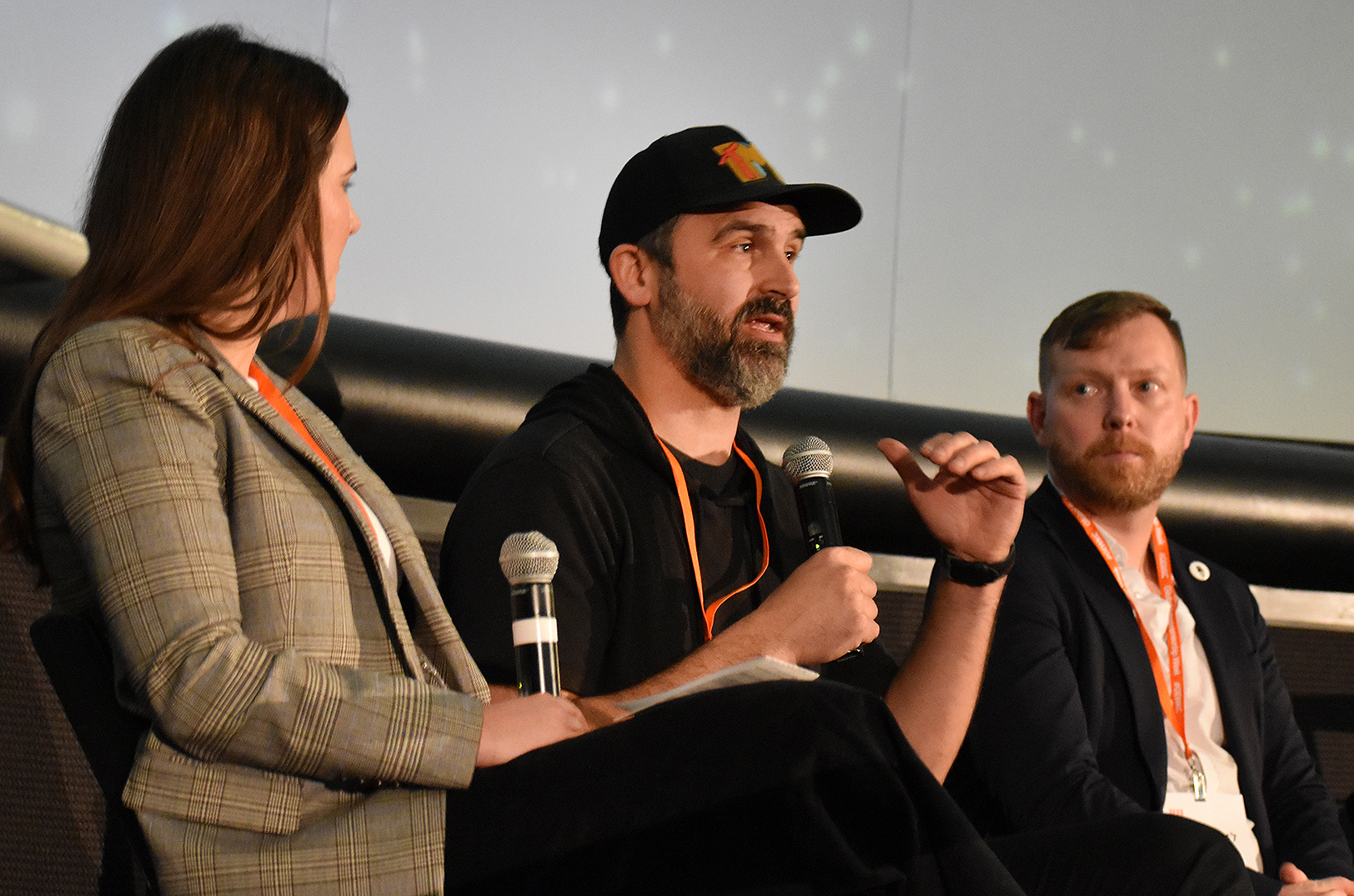
A brand worth building is worth safeguarding, said Bo Nelson, joining a chorus of battle-tested entrepreneurs at GEWKC who encouraged emerging business owners to trademark their own peace of mind early by locking down intellectual property — like designs, names and unique processes — from the start.
“If you do have something that you genuinely, deeply believe in — which I hope you would if you’re founding it — make sure that it’s protected,” Nelson, owner of Thou Mayest Coffee Roasters, told a Global Entrepreneurship Week-Kansas City audience Wednesday inside the Planetarium at Union Station. “I’ve been cease and desisted twice. I’ve been threatened with lawsuits two to three times. So I’ve got some battle wounds. I’ve got some scars.”
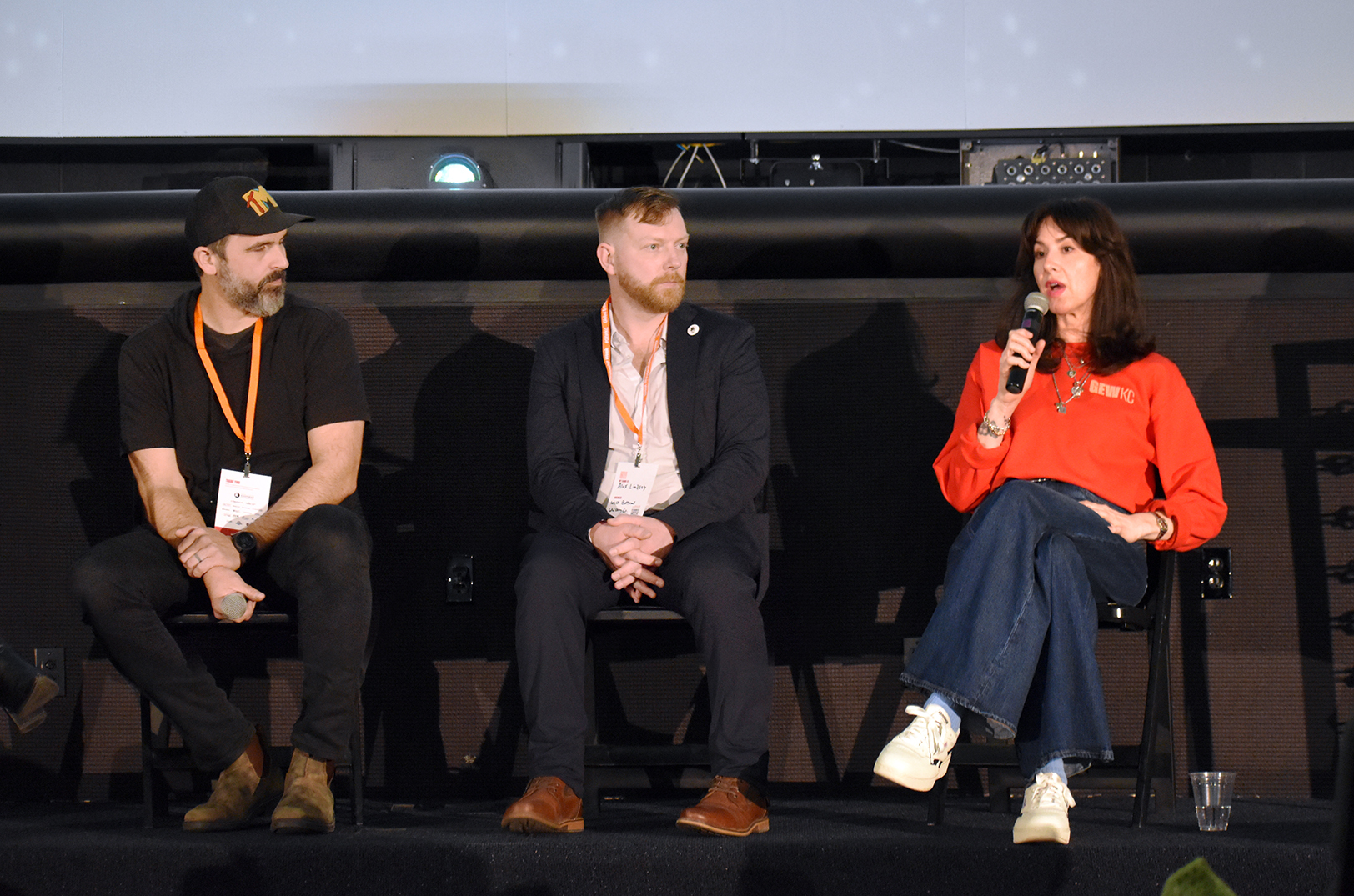
Callie England, former CEO of WallyGrow, founder of Rawxies, and now marketing director for UMKC Innovation Center, right, shares stories of branding battles during a GEWKC panel conversation in the Planetarium at Union Station; photo by Tommy Felts, Startland News
The veteran roaster was joined on a branding panel by Alex Lindsey, founder of West Bottoms Whiskey Co., and Callie England, former CEO of WallyGrow, founder of Rawxies, and now marketing director for UMKC Innovation Center, as they discussed lessons from navigating trademarks, cease and desist letters, and legal landmines — as well as how they protected their consumer packaged goods brands along the way.
“If you do the groundwork at the beginning, it makes that growth so much easier,” noted Maggie Mannebach, an intellectual property attorney from Husch Blackwell who moderated the conversation. “It’s so much easier to protect that brand when you put all that work on the front end early on.”
England detailed pricey naming fights over one of her Rawxies products, along with a feud with Miracle-Gro over whether WallyGrow could use its first-choice name: WallyGro. (Spoiler: it couldn’t.)
She then endured the expense of shutting down operations and pulling products from shelves with Rawxies, plus redoing all of the plastic molds for the WallyGro planters when her attorney helped her realize she did not have the money to fight a giant like Miracle-Gro.
“I think the worst thing you can do is say, I’ll worry about it later,” England said. “Because when [a dispute] comes, you’re going to be tired, exhausted. You’re going to want to quit your business every day. And all of a sudden, you get slapped with a cease and desist or lawsuit, and it can just put you over the edge.”
“We don’t really talk enough about mental health,” she added. “Move slower, really be thinking about all of these things and how they play together.”
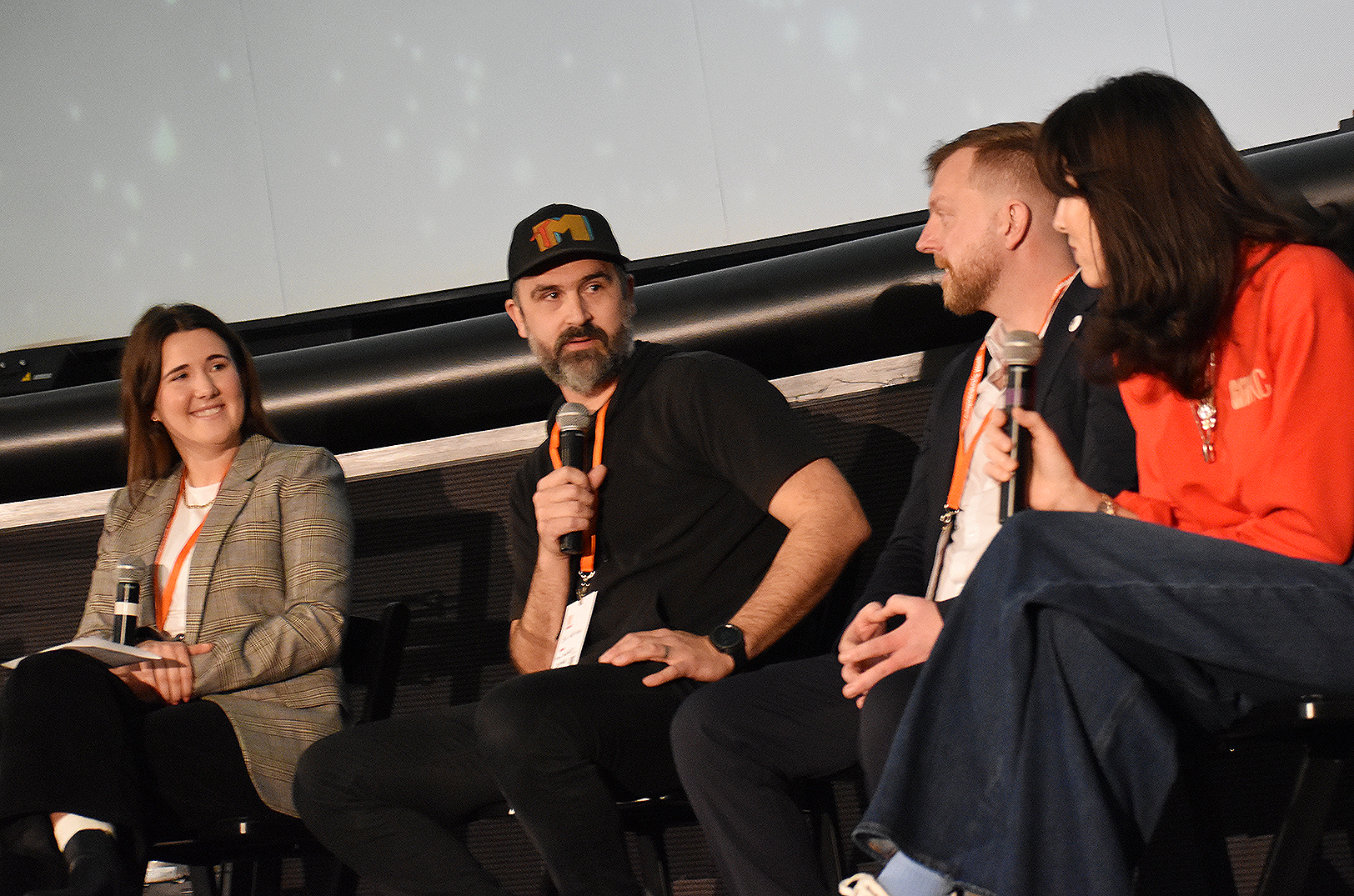
Bo Nelson, Thou Mayest, and Callie England, now lead organizer for GEWKC, swap branding war stories during a panel conversation at Union Station; photo by Tommy Felts, Startland News
Dealing with legal issues — like getting a cease and desist order over selling cold brew in brown, stubby bottles — starts to take a toll on the physical body, Nelson noted, but it’s also part of the entrepreneurial journey for many.
“This gray hair came really quick,” he explained. “But also, I have panic attacks that I can’t control anymore. I have crushing anxiety. When that happens, you’re going on breathing walks.”
“Nobody wants to go through that stuff,” Nelson added. “But when you do go through it, you’re in good company, Everybody who’s out here on the trail, you’re gonna have some bruises, you’re gonna have some scars. I’ve heard of very few who have had smooth sailing all the way through.”
To protect your brand against legal landmines, the trio of entrepreneurs and Manneback encouraged founders to consider a handful of early actions and tips:
- Work with an attorney to perform a thorough trademark search;
- Start using the TM trademark designation on branding early to establish proof of its use in commerce, even if you aren’t ready to file for a registered trademark;
- Find an attorney that gets your vision and shares your same values;
- Connect with other entrepreneurs to learn from their mistakes; and
- Don’t let lack of money stop you from seeking legal advice.
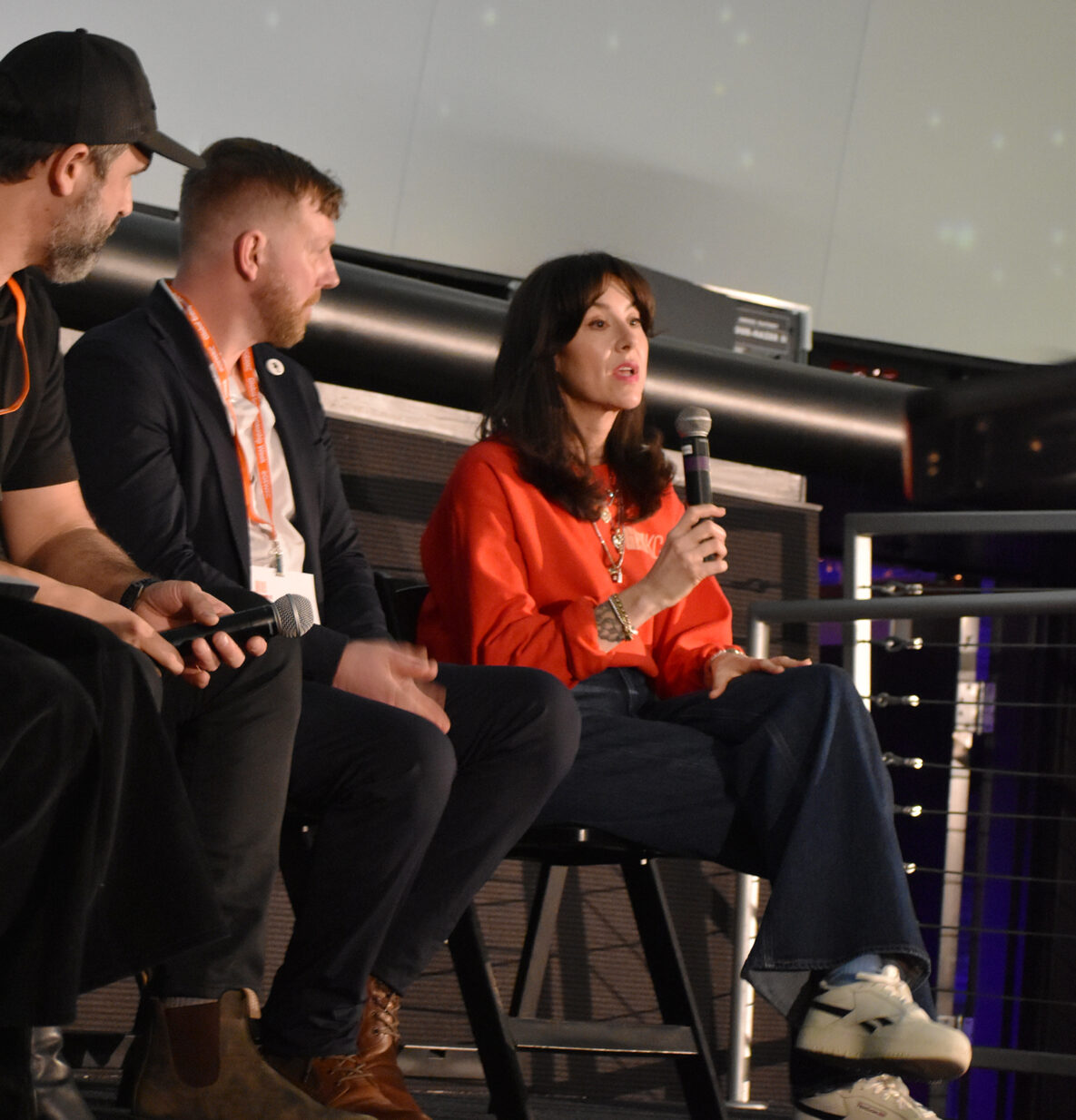
Veteran entrepreneur Callie England speaks during a GEWKC panel conversation on the legal pitfalls that can befall founders building attention-grabbing companies; photo by Tommy Felts, Startland News
“If you can’t launch a product because you can’t afford to go talk to someone about a trademark, then maybe don’t launch it,” England said. “Maybe wait, maybe build the revenue. I’m all about sustainability and businesses. I mean, I brought an entire freaking business to the ground by missing a few things in an operating agreement with investors. So I’m really scarred with legal.”
“So move slow,” she added. “Read everything, get opinions. And if you are like, ‘I can’t afford it,’ find lower cost, free services. It’s better than just saying I can’t do that.”
At West Bottoms Whiskey, Lindsey spent thousands of dollars within the business’ first year to federally register the trademark for its Distinguished Gentleman logo, he said, describing a process that took three to four months.
“Really it was more just that reassurance we knew we had that paper,” he explained. “It was filed away. I don’t have to think about it unless something comes up.”
Looking back, Lindsey said, he at times wishes he would have waited a little longer before registering because it locked the business into branding before the concept was fully realized.
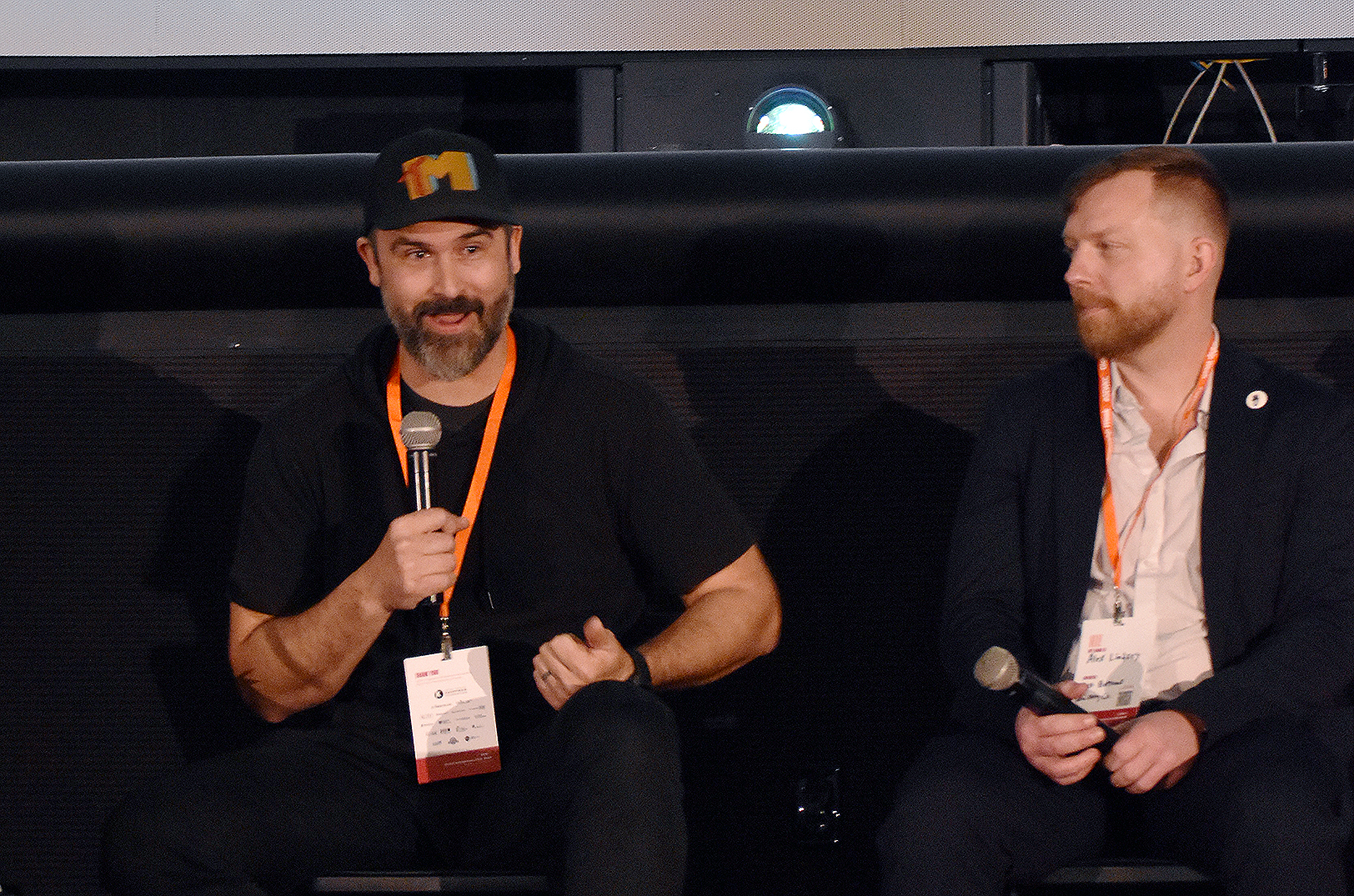
Bo Nelson, Thou Mayest Coffee Roasters, speaks alongside Alex Lindsey, West Bottoms Whiskey Co., during a GEWKC panel conversation on legal protections for emerging businesses; photo by Tommy Felts, Startland News
“Know your business really well,” he continued. “Understand your brand really well, and what your messaging is. Then at that point, do the protection.”
At the end of the day, Nelson added, such safeguards should be about balancing reassurance with reality.
“I want to make sure that people stay protected, for sure, while you go on that journey,” he explained. “But at the same time, don’t be afraid because you’re gonna be met with all new sorts of unknowns and uncertainties. On a Tuesday afternoon, somebody slapping papers for lawsuits and depositions in your hand, that’s terrifying and you don’t know how you’re going to get past it, but you do.”
“So my encouragement to the entrepreneur is always, ‘Just take a breath,’” Nelson added. “‘Let’s slow down and let’s figure out what the next step is so that you can get through this.’”

Featured Business

2025 Startups to Watch
stats here
Related Posts on Startland News

Report: KC is a tech hub but labor shortage is hampering growth
Each day, Kansas City is better positioning itself to be the Midwest’s tech hub. But for Kansas City to realize its full potential, tech leaders, policymakers and the community need to do more to cultivate homegrown talent, KC Tech Council president Ryan Weber said. “Attracting talent from another city is a very small game — and…

KC tech startup partners with Children’s Mercy to help diagnose, manage care
Kansas City-based Engage Mobile Solutions developed a mobile app assisting pediatricians at Children’s Mercy Hospital, treating children facing acute illnesses and injuries. The tech firm created “CMPeDS: Pediatric Decision Support” to provide healthcare professionals with evidence-based guidelines to manage patients who are facing acute illnesses such as infections, or children who are experiencing acute injuries,…

UMKC eyes ‘final four’ of Enactus contest attracting thousands of student entrepreneurs to KC
Kansas City will soon become the entrepreneurial epicenter for a national, collegiate competition and conference challenging young innovators to do good in their communities. From May 21 to 23, Kansas City will host more than 2,000 entrepreneurial college students for the Enactus United States National Exposition. Founded in 1975, Enactus challenges students from more than…

Kauffman VP hops on national TV to discuss gaps in entrepreneurship
The Ewing Marion Kauffman Foundation’s vice president of entrepreneurship recently took to national television to examine declining startup rates. CNBC recently featured Victor Hwang to discuss the trend in declining startup rates, including generational gaps, cultural shifts, limited access to capital and the impact of regulations. “It’s hard to pin it down exactly,” Hwang told…