

Missouri’s weapon in the AI race with China: KC tech companies, says GOP lawmaker
October 16, 2025 | Taylor Wilmore
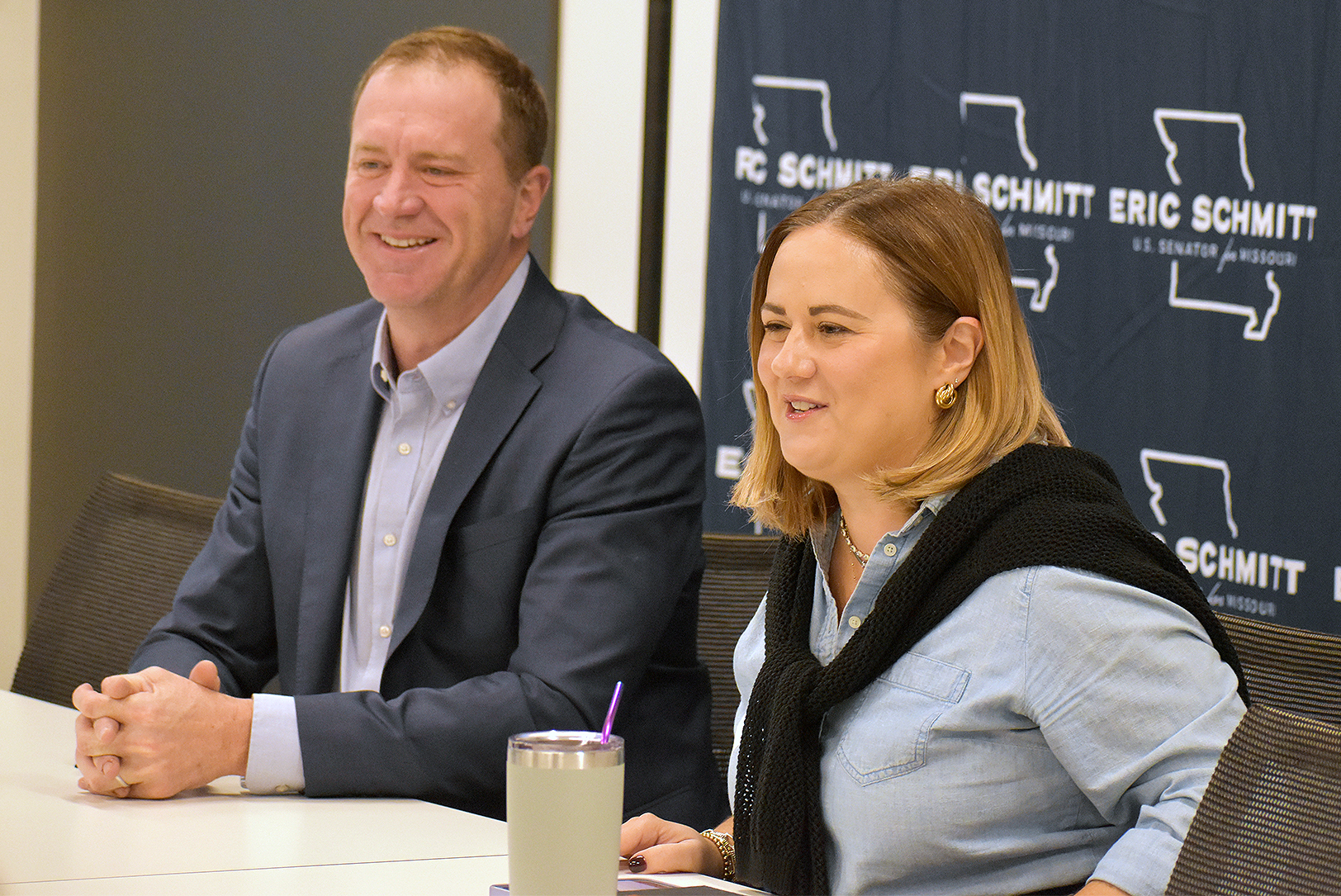
As artificial intelligence reshapes the way Kansas City works, civic and elected leaders want to ensure small businesses and the region’s tech community have seats at the table. Federal regulation could help, said Eric Schmitt.
“For me, [it’s about] making sure that the big tech companies don’t block out a lot of the innovators, say smaller tech or little tech, so they have a place,” U.S. Sen. Schmitt, R-Missouri, told a group of local tech stakeholders Tuesday during a Tech and AI Roundtable event at H&R Block headquarters. “That’s the kind of innovation and competition that’s going to make us win this really important AI race with China.”
The discussion, hosted by the KC Tech Council, centered on how artificial intelligence is already impacting industries of all sizes — from small businesses to global companies — while also raising new challenges in workforce readiness, energy demands, and data security.
“There’s a lot of innovation happening in Kansas City, which is great, and that bodes well for the workforce of the future,” Schmitt said. “This is making sure that Kansas City, Missouri, can benefit from this AI boom that we’re seeing that’s going to make people more productive.”
Balancing limits with opportunity
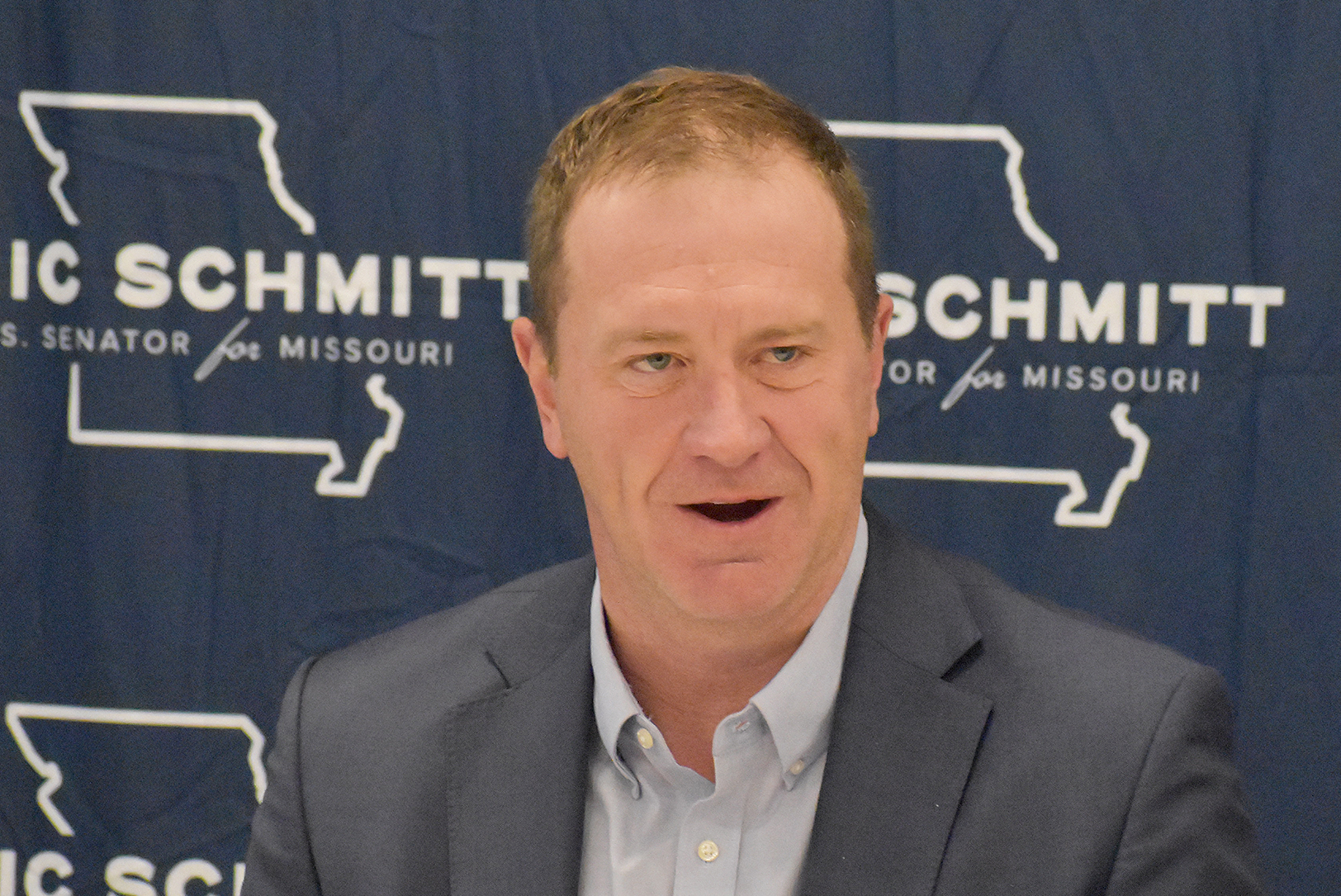
U.S. Eric Schmitt, R-Missouri; photo by Taylor Wilmore, Startland News
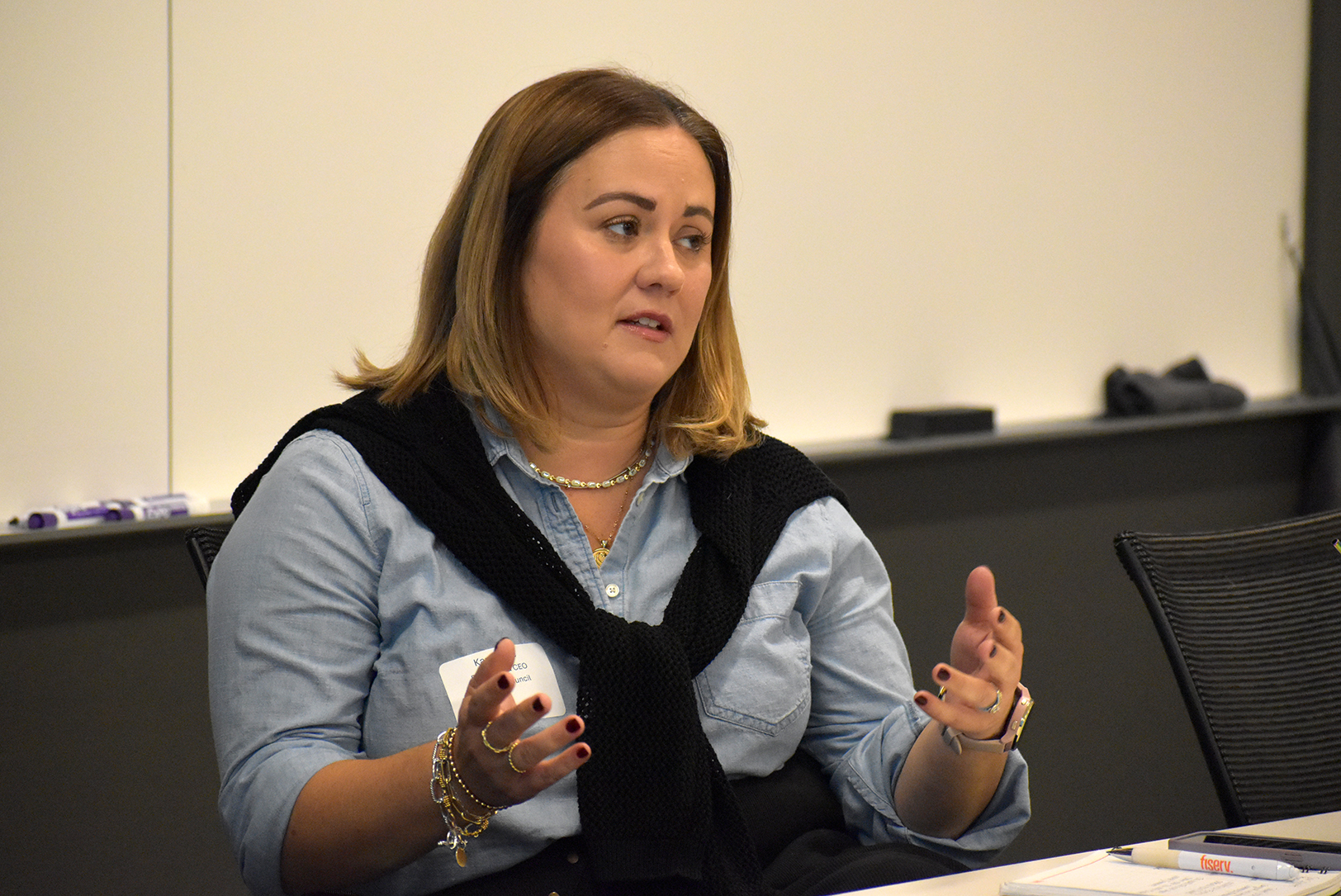
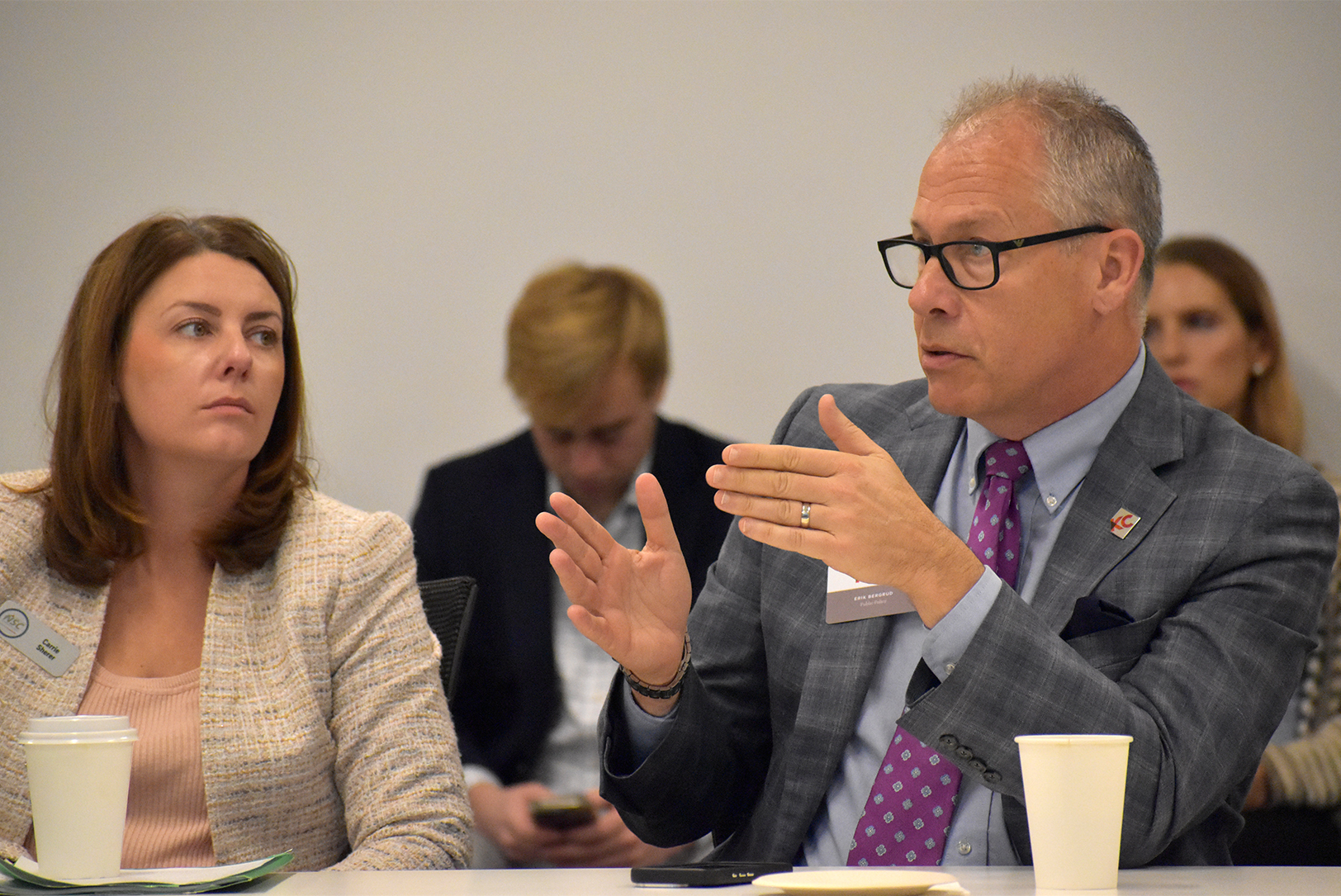
As the group explored potential AI-related policies at the federal and state levels, both Schmitt and Kara Lowe, CEO of KC Tech Council, voiced concern over fragmented regulation. Lowe highlighted how state-by-state policies could disproportionately burden smaller companies.
“The encumbrance on small and mid-sized companies is greater than in some cases those that are large companies that have large compliance teams,” she said. “It continues to be an ever-complex patchwork.”
Schmitt agreed that consistent federal oversight is key.
“It’s probably important for the federal government to come in and preempt this,” he said. “Can you imagine Kansas has one set of rules for AI and Missouri has another? That’s not going to work.”
Workforce and the future of learning
Education and workforce development were also key topics, with Schmitt calling for a shift toward lifelong learning to meet the demands of a rapidly changing economy.
“This idea that you’re going to learn everything you need to know for the rest of your life in four years before your degree is kind of an outdated model,” he said. “Making sure we have lifetime learners, AI can play a role in that.”
Lowe echoed the importance of aligning education with business needs, pointing to the KC TechBridge, an initiative that is building a stronger, employer-led tech talent pipeline in Kansas City, as a step forward.
“We’re embarking on a project to bring together the needs of the business community and put a lens on our education and training space when it comes to tech jobs,” she said.
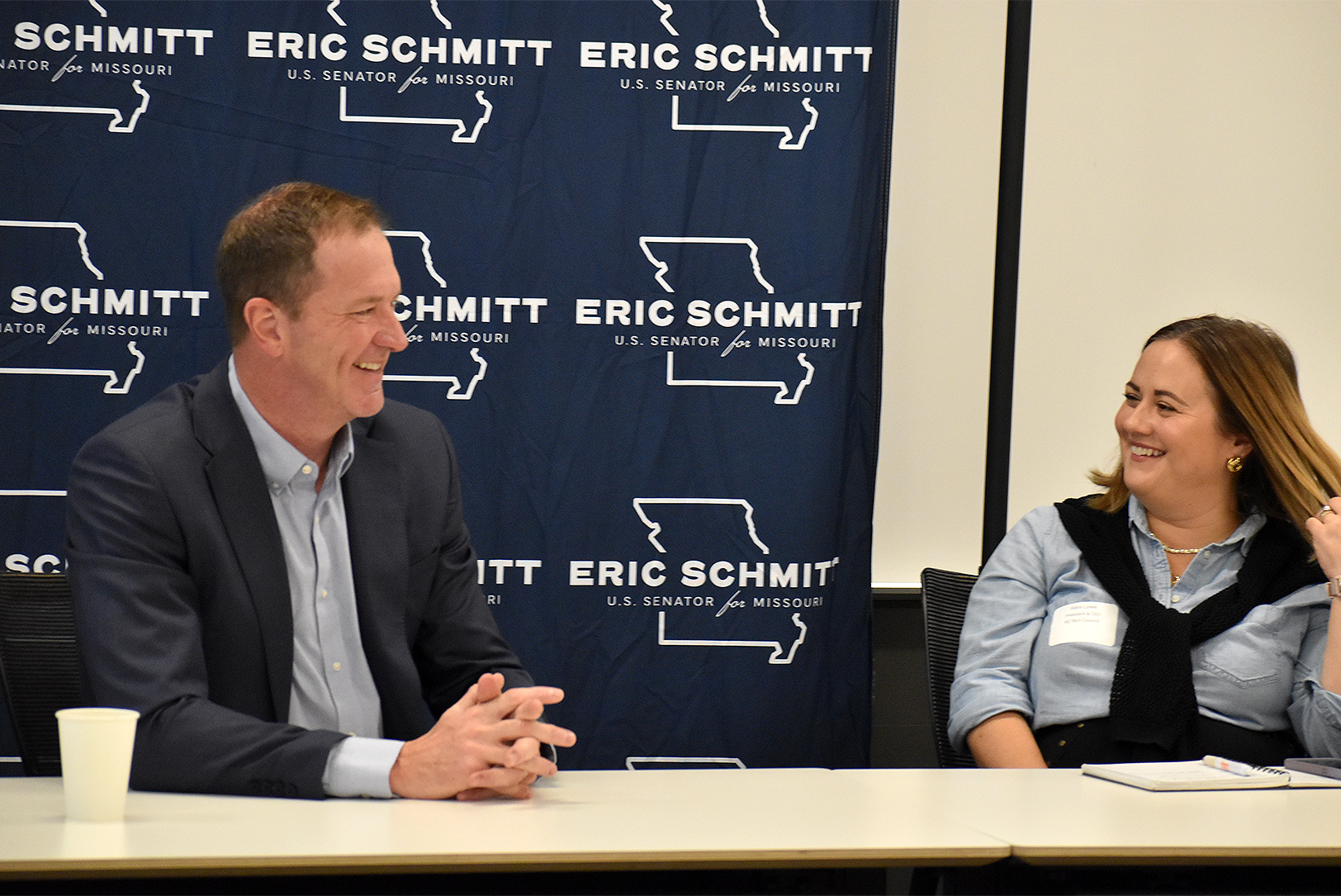
U.S. Eric Schmitt, R-Missouri, and Kara Lowe, CEO of KC Tech Council, chat during a roundtable conversation AI and tech in Kansas City; photo by Taylor Wilmore, Startland News
Energy, infrastructure, and national security
AI’s impact reaches beyond the workforce and into national priorities like energy and defense, Schmitt stressed, noting the importance of domestic computing infrastructure and future energy solutions.
“We have to have the processing ability here in this country,” he said. “Our energy needs over the next five to 10 years are going to be astronomically higher than they are right now. So what are those energy sources that are cheap that we could do? It’s small, modular, nuclear reactors.”
Lowe noted that Kansas City’s legacy in engineering and construction could help position the region for continued leadership in these areas.
“We kind of have this almost central nervous system here in this region,” she said. “And I think it is a competitive advantage.”
Both Schmitt and Lowe agreed that Kansas City’s combination of innovation, technical talent, and cross-industry collaboration makes it well-positioned to lead in the nation’s AI-driven future.
“It’s an exciting time,” Schmitt said. “There’s immense opportunity, and Kansas City is well-situated to be a leader.”


Taylor Wilmore
Taylor Wilmore, hailing from Lee’s Summit, is a dedicated reporter and a recent graduate of the University of Missouri, where she earned her Bachelor’s degree in Journalism. Taylor channels her deep-seated passion for writing and storytelling to create compelling narratives that shed light on the diverse residents of Kansas City.
Prior to her role at Startland News, Taylor made valuable contributions as a reporter for the Columbia Missourian newspaper, where she covered a wide range of community news and higher education stories.
2025 Startups to Watch
stats here
Related Posts on Startland News

Couple with tech, startup background embraces risk-taking as new Pitch owners
Local ownership of The Pitch will preserve the Kansas City alternative news publication’s voice, as well as expanding digital content for readers, and promotions and services for advertisers, Stephanie Carey said. “I love the independent voice. I love the fact that we can push those boundaries, push the envelope on stories, dig a little deeper,”…
Cultural differences contribute to entrepreneur access gap, Porter House founder says
Early education about entrepreneurism and the resources available aren’t typically priorities in low- to moderate-income communities, said Daniel Smith. “A lack of access results because we don’t really have a lot of programs in our communities that focus on small business and entrepreneurism,” said Smith, founder of The Porter House KC. “It’s more focused on…

Missouri, Airbnb announce revenue-sharing state sales tax deal
As Kansas City wrangles with its own short-term rental rules, Airbnb and the Show Me State announced an agreement Wednesday that will allow the home-sharing giant to collect and remit taxes on behalf of 6,300 Missouri hosts. Effective Feb. 1, the tax agreement with the Missouri Department of Revenue adds a state sales tax — now…

FEWDM drops high-tech fitness devices, pivots to workout apparel
Not every promising startup venture can keep the ball moving toward the end zone. It’s a lesson FEWDM founder Tommy Saunders says he’s blessed to have learned — despite the bittersweet turn for the former Detroit Lions receiver’s company. “We have a strong brand that our customers connect with and have grown to love,” Saunders…