

Power through purpose: How a winding journey led this eco devo steward to deep-rooted impact
October 17, 2025 | Brian Escobar
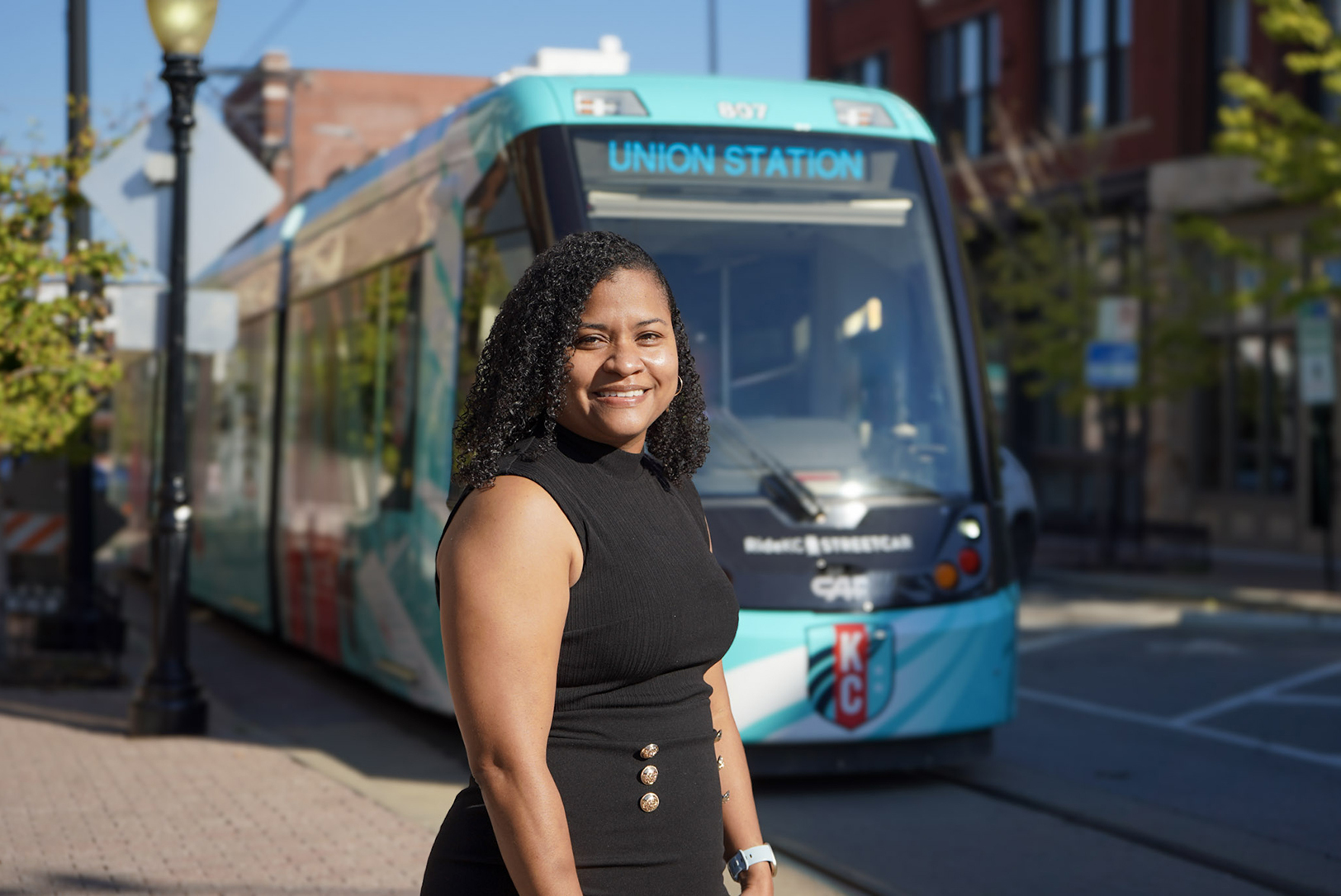
Editor’s note: The following story was written and first published by the Economic Development Corporation of Kansas City, Missouri (EDCKC). Click here to read the original story.
Going behind the scenes of CCED with the people who make it happen
Some people are drawn to city-building because of the bricks and steel, the architecture, the skyline, the grandeur of transformation. For Sherise Kirkwood, the draw has always been people.

CCED invests voter approved funds in Kansas City’s Central City Area on the east side, between 9th and Gregory, from Indiana to Paseo.
Raised in the Virgin Islands and shaped by a culture where community is a way of life, her journey to Kansas City was not exactly linear. After graduating from Columbia College, Kirkwood accepted a position far removed from planning or development.
Life, in its winding way, brought her to Kansas City, a place that immediately felt familiar, she said. It was not the palm trees or ocean air that reminded her of home, but the feeling, the closeness, the culture of care, the rhythm of a city where people still look out for one another.
Kansas City became a place to grow roots.
Since arriving in 2010, Kirkwood — now program administrator for the Central City Economic Development (CCED) program at Economic Development Corporation of Kansas City, Missouri (EDCKC) — has witnessed the city’s evolution, neighborhoods shifting, momentum building, and the sense that something meaningful was taking shape. She chose to stay not just because of what the city was like, but because of what it could become.
Her path into public service led her to Kansas City’s Housing and Community Development Department, where she became deeply involved in CCED. That experience carried her to EDCKC, where she now helps lead the program into its next chapter.
What hasn’t changed through those years: her mission, to ensure that economic development stays grounded in the community.
A steward for the people
Kirkwood describes her role simply, but powerfully: a steward for the community.
That title captures the heart of her work. She manages contracts, supports developers, coordinates with departments, and ensures public dollars are used responsibly. But more than that, Kirkwood builds bridges between process and purpose, making sure that development isn’t just efficient, but meaningful.
Her daily work includes checking in with developers, reviewing financials, resolving logistical hurdles, and pushing projects forward. It’s detailed and demanding, but Kirkwood’s perspective never drifts from the bigger picture.
“Economic development should be about more than buildings,” she said. “It should be about people, neighborhoods, and the future we’re creating together.”
Growth that honors community
CCED reflects that philosophy.
Funded through a voter approved sales tax, the initiative invests in historically under-resourced neighborhoods within Kansas City’s Central City Area. The projects vary, from affordable and market rate housing to youth centers, art museums, hotels, childcare, and small businesses. Each one speaks to a real need, and together they form something larger, an ecosystem for equitable growth.
“Some communities expand without intention,” Kirkwood noted. “But CCED is growth with a purpose.”
It is a program rooted in accountability, inclusion, and legacy. When ribbon cuttings take place and doors open, she sees the culmination of countless conversations, contracts, and commitments.
For her, those moments are more than milestones. They keep promises.
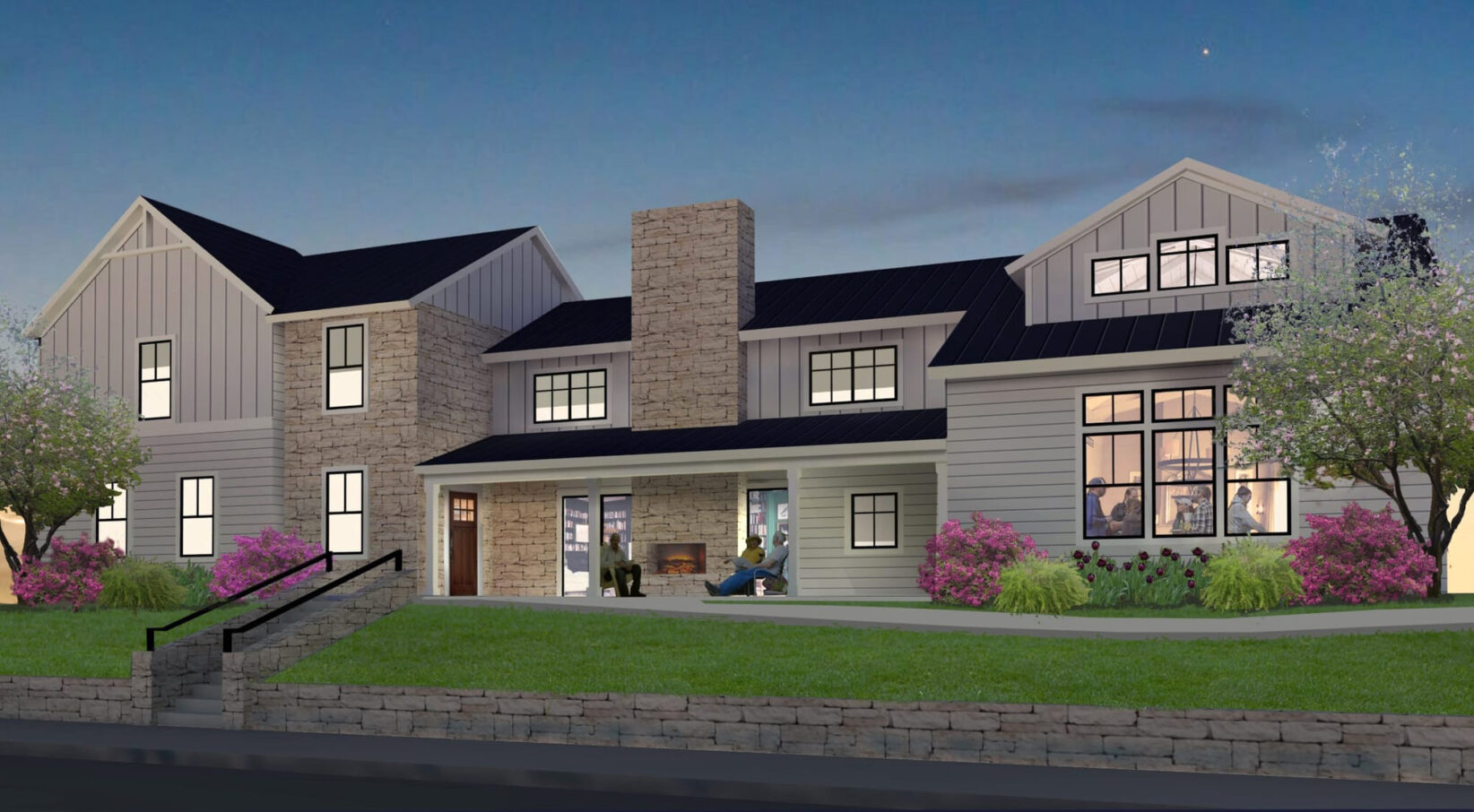
Rendering of Heroes Home Gate
A favorite project: Heroes Home Gate
One project specifically captures what purpose driven development looks like in practice, Kirkwood said. Heroes Home Gate creates 24 units of transitional housing for veterans in the Ivanhoe neighborhood.
She describes it as “a project that meets a real human need while strengthening a historic community.”
Her role touched the day-to-day details that make impact possible, from coordinating with the developer and city departments to tracking budgets and timelines so public dollars were used responsibly.
The result is more than a building. It is stability for veterans and momentum for a neighborhood that continues to invest in itself.
A place to belong
Kansas City is more than a workplace, Kirkwood said. It’is home.
“Home means peace,” she said. “It’s where I raise my family, where I find pride in the place we live, and where I see a future worth building.”
Her values were shaped by her upbringing in the Virgin Islands, where neighbors are treated like family. That outlook defines how Kirkwood approaches her work.
Whether supporting a developer or connecting with a colleague, she brings the same principle: treat people the way you would want your own family to be treated.
Looking ahead
As Kirkwood continues her journey at EDCKC, she’s excited to learn more about other programs, expand her understanding of incentives, and collaborate beyond the CCED scope.
Land development has sparked her interest. For Kirkwood, it’s about continuing to build the physical and social fabric of Kansas City in ways that leave a lasting impact.
Her “why” is clear: to help create a city where everyone has a place to thrive.
That vision lives in every project Kirkwood touches, in every relationship she nurtures, and in every neighborhood that begins to see itself not as forgotten, but as foundational to the future.
Her story — with its vision, humility, and purpose behind her work — is one of persistence, heart, and a belief that progress only matters when everyone has the chance to be part of it.
Inspired by Kirkwood’s work? EDCKC is hiring a director for the Central City Economic Development Sales Tax District. Click here to learn more about opportunities to help shape equitable growth in Kansas City.

Featured Business

2025 Startups to Watch
stats here
Related Posts on Startland News

Dreamgirl hits the start button at SXSW; why the KC band tells its peers to break out of the Midwest
Editor’s note: The following story is part of Startland News’ coverage of the SXSW conference in Austin. Click here to read more stories from the 2022 trip. AUSTIN — Dreamgirl describes itself as a family — a bit dysfunctional at times, but nonetheless family, members of the Kansas City-based band shared, laughing the morning before their…
Climate change innovation, leadership must be built at the local level, Buttigieg tells SXSW
Editor’s note: The following story is part of Startland News’ coverage of the SXSW conference in Austin. Click here to read more stories from the 2022 trip. AUSTIN — The keys to solving climate change could already be in the ignition, Pete Buttigieg said, empowering a crowd of innovation leaders to sit in the passenger…

Sit Foundry takes a stand for ‘lost art’ of upholstery amid fast furniture’s climate threat
Alex Krause Matlack is bringing what she teaches in the classroom to Kansas City’s entrepreneurial ecosystem as she pursues Sit Foundry — an all-inclusive reupholstery design studio. “In the first week of my Intro to Entrepreneurship class, I tell my students to go out into the world and take notice of the problems they face.…
De-risking a dangerous job: How a window washing startup is raising the bar (and hose) with drones
It’s a nightmare to clean the windows of multi-story buildings, said Andrew Brain. “It’s incredibly unsafe for folks to be hanging on the side of buildings — and it’s incredibly expensive for them to be there. Insurance liability has gone up 300 to 400 percent. … I was thinking that there’s got to be a…