

This Dirt Beast works the soil for $2 an hour; why harvesting joy from his urban farm fills the bag
October 3, 2025 | Taylor Wilmore
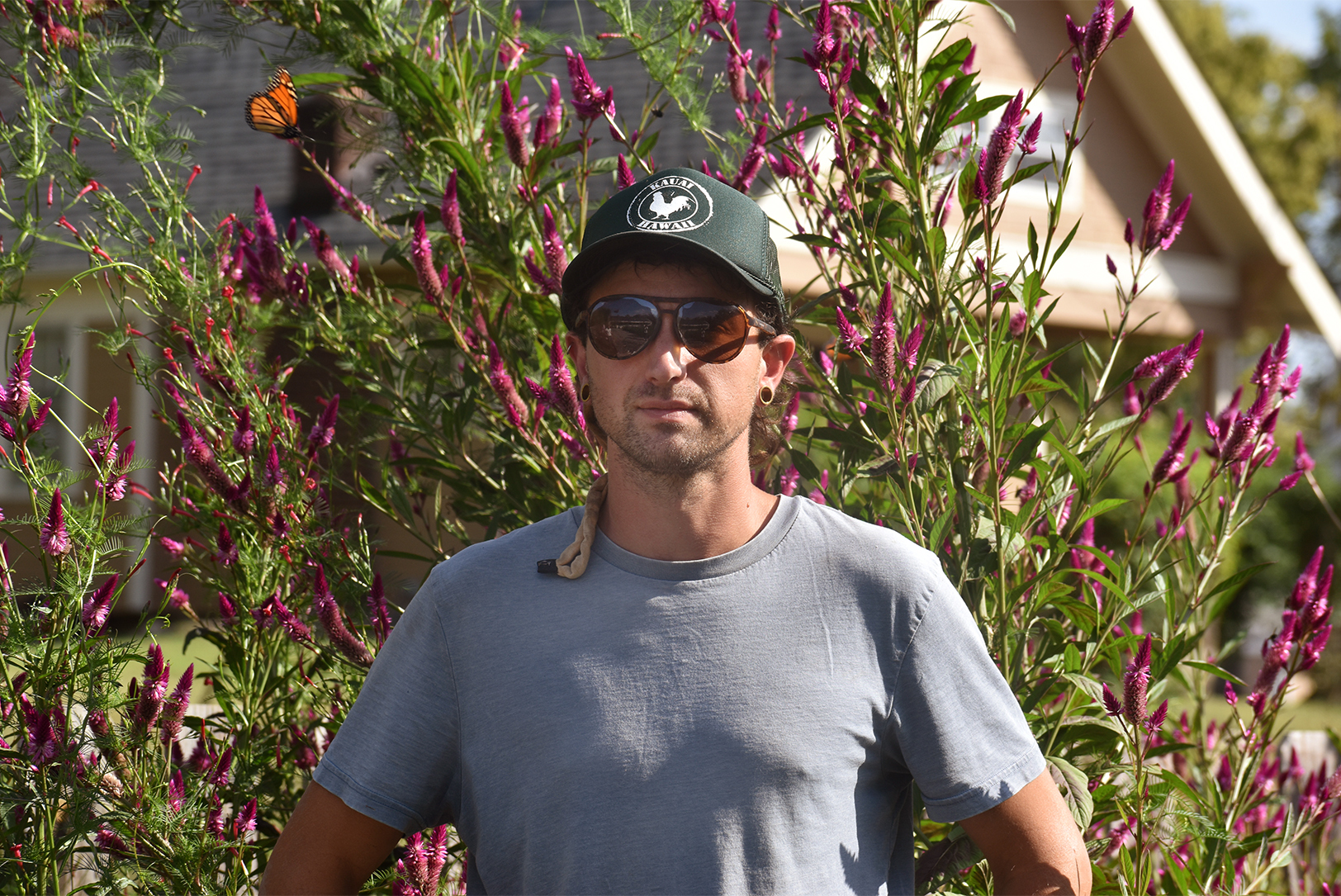
Rows of peppers, tomatoes, eggplant, and other vegetables now grow where more than a dozen Kansas City lots once sat vacant. The essence of Dirt Beast Farm is seeded in this soil, creating the ecosystem through which Jameson Hubbard has spent nearly a decade turning open land into food, flowers, and a space for neighbors to gather.
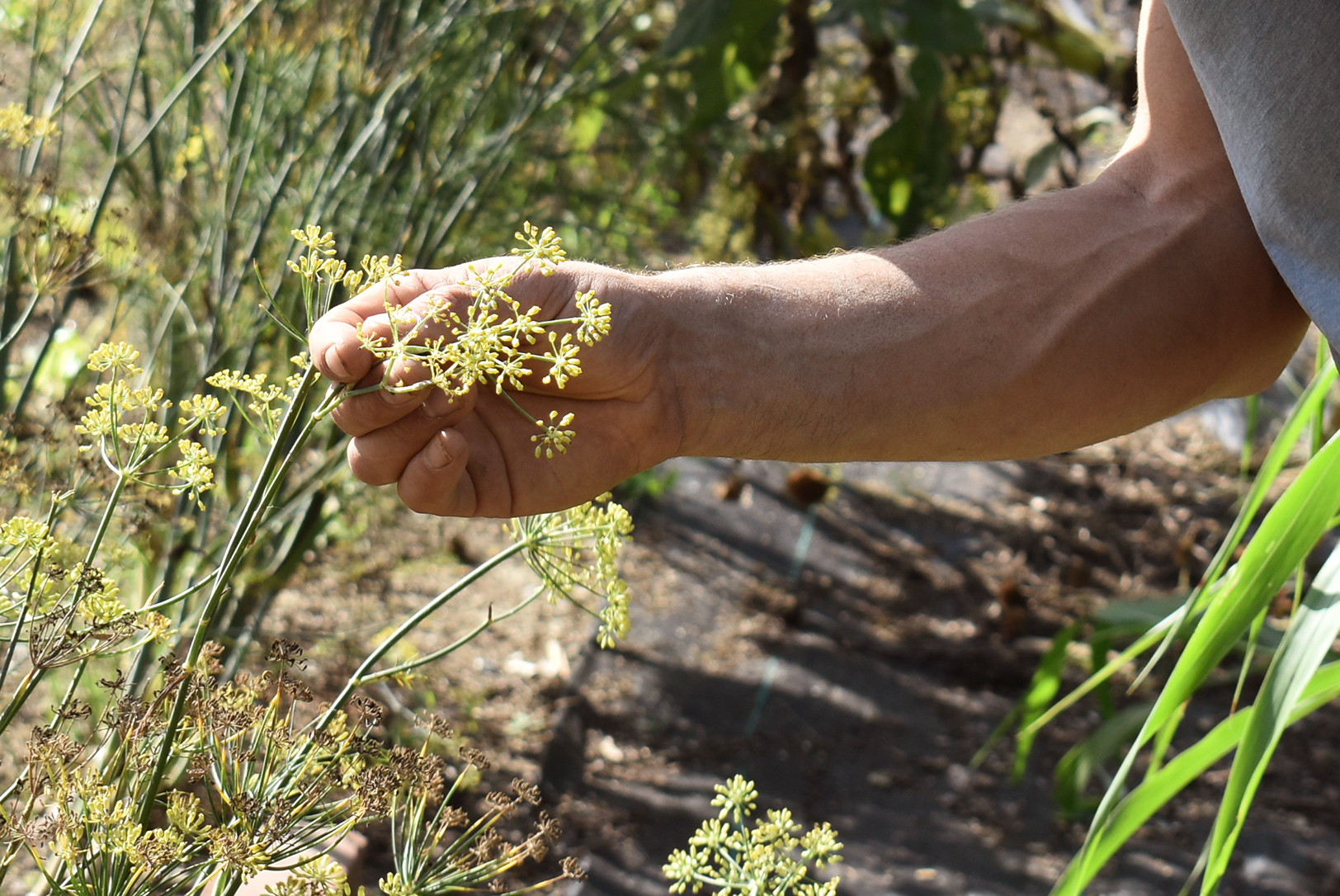
Jameson Hubbard inspects fall growth at Dirt Beast Farm; photo by Taylor Wilmore, Startland News
“I’ve always wanted to have my own farm,” said Hubbard, whose produce operation is now a local farmers market staple. “I wasn’t really into the whole renting scenario. So the land bank really helped out big time.”
Through Kansas City’s land bank program, Hubbard bought 16 small lots along Highland Avenue and turned them into farmland. He lives nearby and walks between plots each day. The farm’s role in the neighborhood goes well beyond vegetables; Hubbard hires locals to help with the work.
Many of them share his dream of one day starting a plot of their own, he said.
“This farm really can contribute to their understanding of what it takes,” Hubbard said of maintaining the Highland Avenue grounds, which sit between The Paseo and U.S. 71 on Kansas City’s east side.
Along with growing food, Hubbard plants native trees and flowers, along with removing invasive plants. Children visit to hunt for bugs in the wildflowers, and families stroll through rows of sunflowers.
“It cheers everyone up,” he said.
A steep learning curve
Before launching Dirt Beast, Hubbard worked on farms in Washington, Kentucky, and Tennessee. Those operations already ran on firmly-set systems. Starting from scratch in Kansas City meant clearing lots, rebuilding soil, and designing tunnels and beds himself.
“It was a slog,” Hubbard admitted. “It’s a lot to learn. I’ve never started a farm. The farms I’ve worked on have been established, and I’ve started little gardens and stuff. But this, yeah, this was a steep learning curve, for sure.”
Despite the challenges, he saw an opportunity to turn unused land into a neighborhood resource. Instead of letting developers sit on empty lots, he chose to grow food and preserve green space.
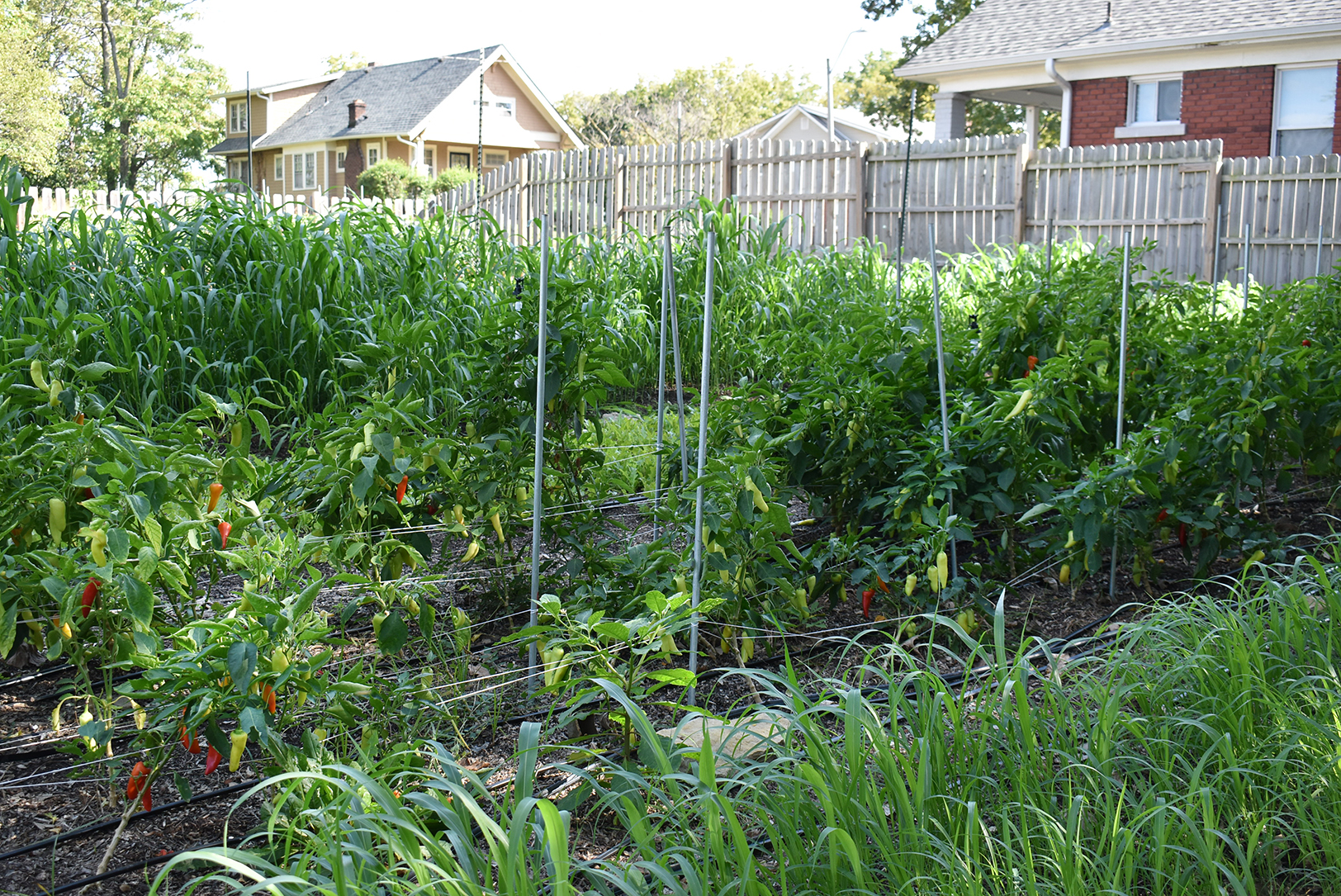
Plots of vegetables at Dirt Beast Farm along Highland Avenue in Kansas City; photo by Taylor Wilmore, Startland News
Harvest and habits
The farm’s crops change with the seasons. Spring brings kale and lettuce, summer yields peppers and tomatoes, and fall focuses on carrots and other root vegetables. Hubbard sells produce at the Overland Park Farmers’ Market and through his CSA program.
The CSA, or Community Supported Agriculture program, allows customers to invest in the farm ahead of time. Members sign up for a 14-week share and receive a weekly bag of produce, filled with whatever is in season.
The program gives Hubbard steady income and helps him plan his planting schedule, knowing how much food he needs to grow.
“It’s kind of like people investing in the farm season,” he explained. “They usually buy 14 weeks, and that’s the two main ways we sell, the CSA and the market.”
Weekly boxes might include peppers, tomatoes, garlic, lettuce, or other seasonal produce. Customers get variety and a connection to the farm, while Hubbard gains a more stable foundation for his business.
CSA members have added their own touches, too. Some return jars of salsa, sauces, or pickles made from the farm’s produce, reminders of how his vegetables are used in kitchens across the city.
View this post on Instagram
Costs and challenges
Farming in Kansas City comes with high costs. Water bills, labor, and property taxes are more expensive than in rural areas, and selling produce at competitive prices is tough, Hubbard said.
“It’s probably the same thing every farmer faces, just money,” he noted. “Especially if you’re doing diversified vegetable production where you’re trying to grow a little bit of everything.”
CSA boxes require a wide variety of crops, each with its own needs.
“Every year, it’s something new, and it’s kind of challenging. I call it productive anxiety,” Hubbard continued.
To reduce stress, he’s considering focusing on fewer crops and working with other small farmers to share the responsibility of providing variety for CSA customers.
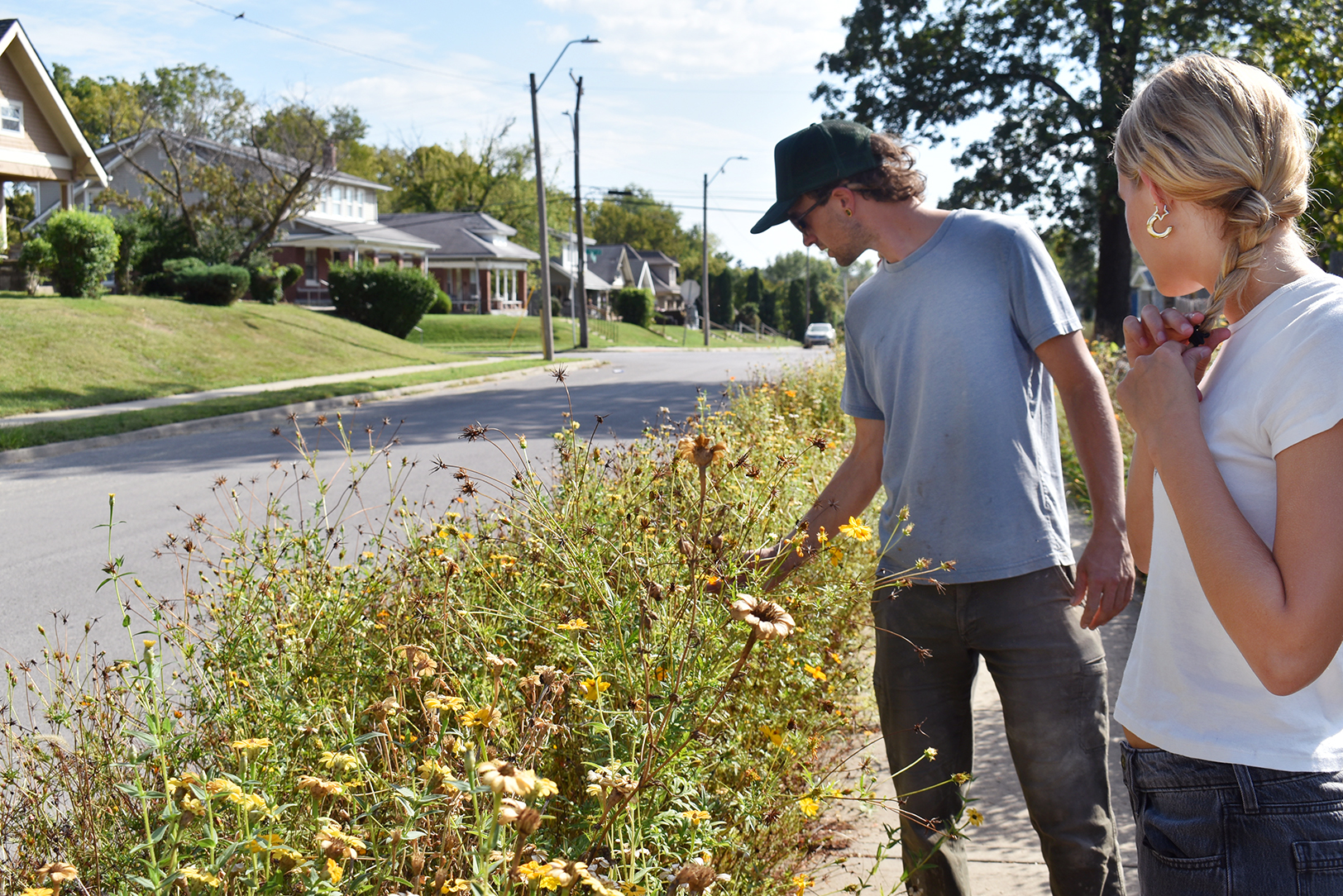
Jameson Hubbard showcases streetside growth alongside Highland Avenue at Dirt Beast Farm; photo by Taylor Wilmore, Startland News
A season that never truly ends
Even when harvests slow, farming doesn’t stop. Hubbard typically takes January and February off to rest, but planning for the next season begins quickly.
“We usually have things overwintering,” he explained. “Some crops are pretty low maintenance, a lot of root crops that can harness the soil temperature if they’re covered with something. But I like to take January and February off, just to regroup because there’s a lot of planning involved.”
By spring, the long weeks begin again.
“It’s 60-hour weeks. So that’s a lot for $2 an hour,” he said with a laugh.
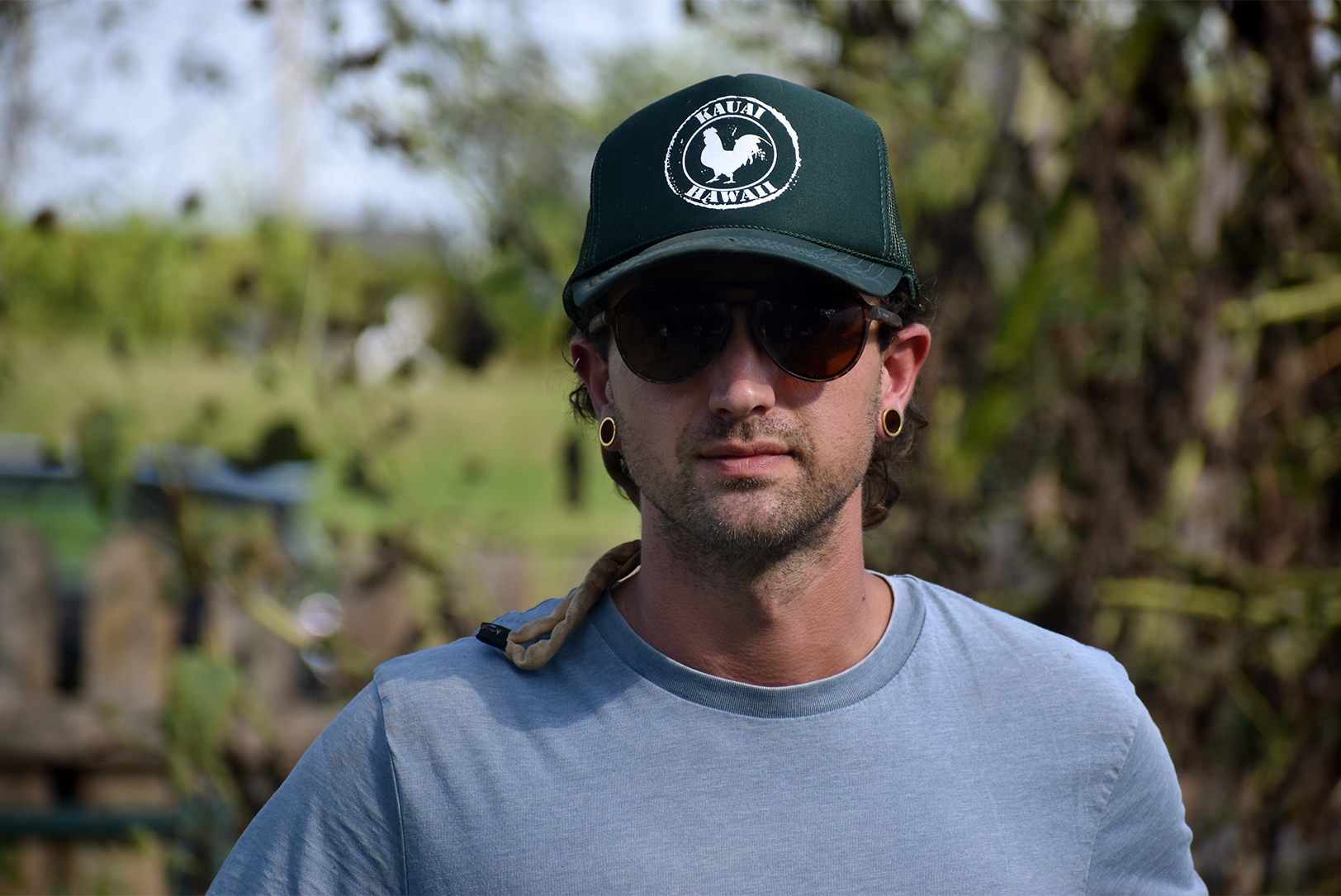
Jameson Hubbard, Dirt Beast Farm; photo by Taylor Wilmore, Startland News
Planting for tomorrow
Hubbard worries about out-of-state developers buying vacant lots and driving up prices, putting land out of reach for urban farmers. He’s also concerned about changes to food assistance programs and limited funding for small farms.
Still, he stays focused on what Dirt Beast Farm brings to the community: food, green space, and a chance for people to learn.
“I’ve been trying to focus mostly on creating more green jobs and training for folks who want to get into farming,” he said.
For Hubbard, the effort is worth it. The farm has become both a business and a way to protect land for people and plants in Kansas City’s core.
“It’s stressful, but at a certain point you just sort of ignore the stress and you start just playing around in the dirt again,” he said. “Everything about it brings me joy.”


Taylor Wilmore
Taylor Wilmore, hailing from Lee’s Summit, is a dedicated reporter and a recent graduate of the University of Missouri, where she earned her Bachelor’s degree in Journalism. Taylor channels her deep-seated passion for writing and storytelling to create compelling narratives that shed light on the diverse residents of Kansas City.
Prior to her role at Startland News, Taylor made valuable contributions as a reporter for the Columbia Missourian newspaper, where she covered a wide range of community news and higher education stories.
2025 Startups to Watch
stats here
Related Posts on Startland News

This duo plans to takedown one of female wrestlers’ most ‘mortifying’ foes: the wrong kind of exposure
Two women-owned Kansas businesses are teaming up to ensure that female wrestlers don’t get pinned by a wardrobe malfunction mid-match, shared Deb North and Frankie Elder-Reedy. It’s a pairing that shows for these sole sisters, entrepreneurship is more than an individual sport. Topeka-based Yes! Athletics is going to the mat with the Apex high-impact sports…

Entrepreneur featured on Hallmark show finds identity beyond motherhood (with help from Connie Britton and her own KC Team Mom)
When Kansas City’s Rochelle Owens answered a message from Hallmark, she had no idea it would launch her into the national spotlight — or transform her life as a single mother and aspiring entrepreneur. Owens is the featured mom in Monday’s episode of The Motherhood, Hallmark’s new reality series created and hosted by actress Connie…

Four role models selected for Hall of Fame as Junior Achievement celebrates 25 years of business honors
A fresh round of Hall of Fame laureates celebrates Kansas City’s living legacy of visionary leaders who drive business excellence, innovation and community impact, said Megan Sturges, announcing a range of honorees from tech to tender chicken. “The JA Business Hall of Fame celebrates more than business success — it honors the spirit of leadership…

First domino falls as University of Kentucky athletic department launches its own LLC
Editor’s note: The perspectives expressed in this commentary are the author’s alone. Parker Graham is co-founder of Vestible, an Overland Park-based investment platform that gives fans ownership in the career trajectories of their favorite players. The University of Kentucky’s athletic department is officially becoming its own LLC. Anyone in athletics needs to understand the implications…