

Kansas company beefs up natural qualities of meat, tallow with tech, not enhancements
August 5, 2025 | Nikki Overfelt Chifalu
Startland News’ Startup Road Trip series explores innovative and uncommon ideas finding success in rural America and Midwestern startup hubs outside the Kansas City metro.
WAKEENEY, Kan. — Plainview Beef is more than just a name for the western Kansas direct-to-consumer company, CEO Gabe Orr shared. It’s a nod to a mission rooted as much in transparency and wellness as prairie soil.
Gabe Orr, Plainview Beef
“We want people to see what we do in plain view,” the exited entrepreneur-turned-ag innovator explained. “We’re trying to create a movement with food where we don’t have anything to hide and are proud of what we do. And If people buy into that, we obviously would love for them to try out our products.”
Plainview — a family-owned and -operated cattle company headquartered in WaKeeney, Kansas — launched in January 2024, followed by its first funding round in July 2024. The operation uses a mix of traditional farming methods passed down through the generations with the latest innovation in agriculture to produce a higher quality beef, Orr explained.
The family takes a land-to-market approach that’s better for the cattle and the land, he added.
“We did a lot of R and D trying to find how we could do all the components of what we were trying to do and to reinvent and use technology to raise a healthier brand of meat and cattle,” Orr recalled.
The company offers beef products — like ground beef and steaks — direct-to-consumer, as well as to several restaurants, along with tallow skin care products — like skin, lip, and sun care balms. Plainview also plans to roll out naturally fermented beef sticks and organ supplements (with an FDA-approved partner) in the near future, Orr said.
“We’re really trying to use the whole animal,” he explained. “We’ve learned a lot from the health community about how healthy different segments of the animal are, so we want to avoid wasting that.”
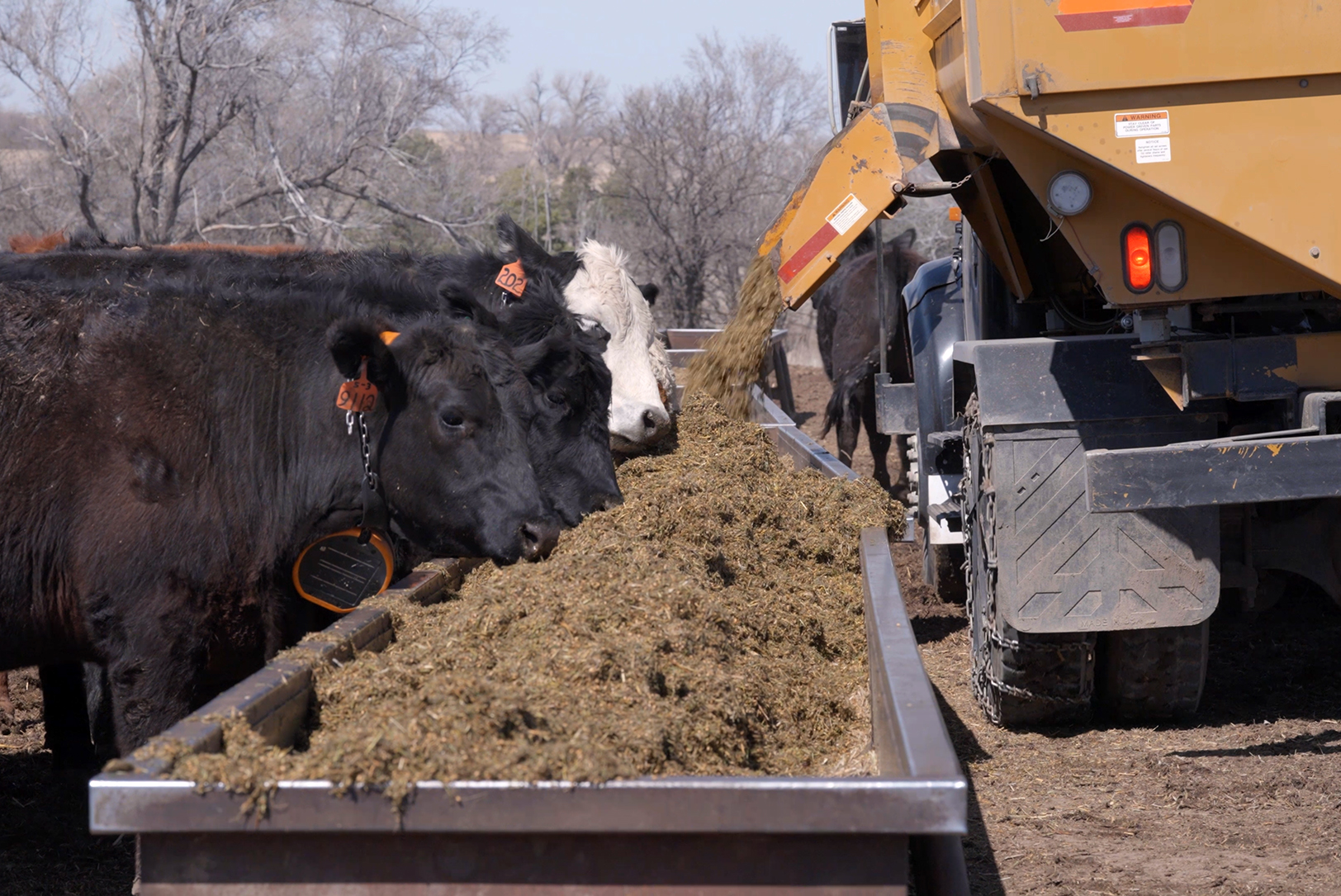
Cattle at Plainview Beef eat sprouts produced on site for better nutrition; photo courtesy of Plainview Beef
Orr’s family has been raising cattle in Fowler, Kansas, since the early 1900s, he noted. But when it came time to launch Plainview, Orr wanted to challenge the status quo, asking questions about why hormones and steroids are used, and if the downstream effects on the consumer have been considered.
“My family knows a lot about cattle and they’ve done it for a long time,” he continued. “So I have a really good knowledge base and a lot of expertise around me, but I think from my angle, I was pushing on the health and wellness side of beef.”
“With that in mind, we sat down and went through all the aspects of raising cattle,” Orr added, “and we said, ‘What could we do to achieve a similar result and without all these artificial enhancements that we so often rely on?’”
He understands the rationale behind relying on hormones and steroids: to keep costs low and get the meat yields that are needed, he said, but Orr also saw an opportunity for Planview to operate differently — without losing those benefits.
“So we brought in technology to be able to raise the amount of fresh grass needed to really bring the animals to a weight that still achieves the same yield and tenderness of the meat,” he noted.
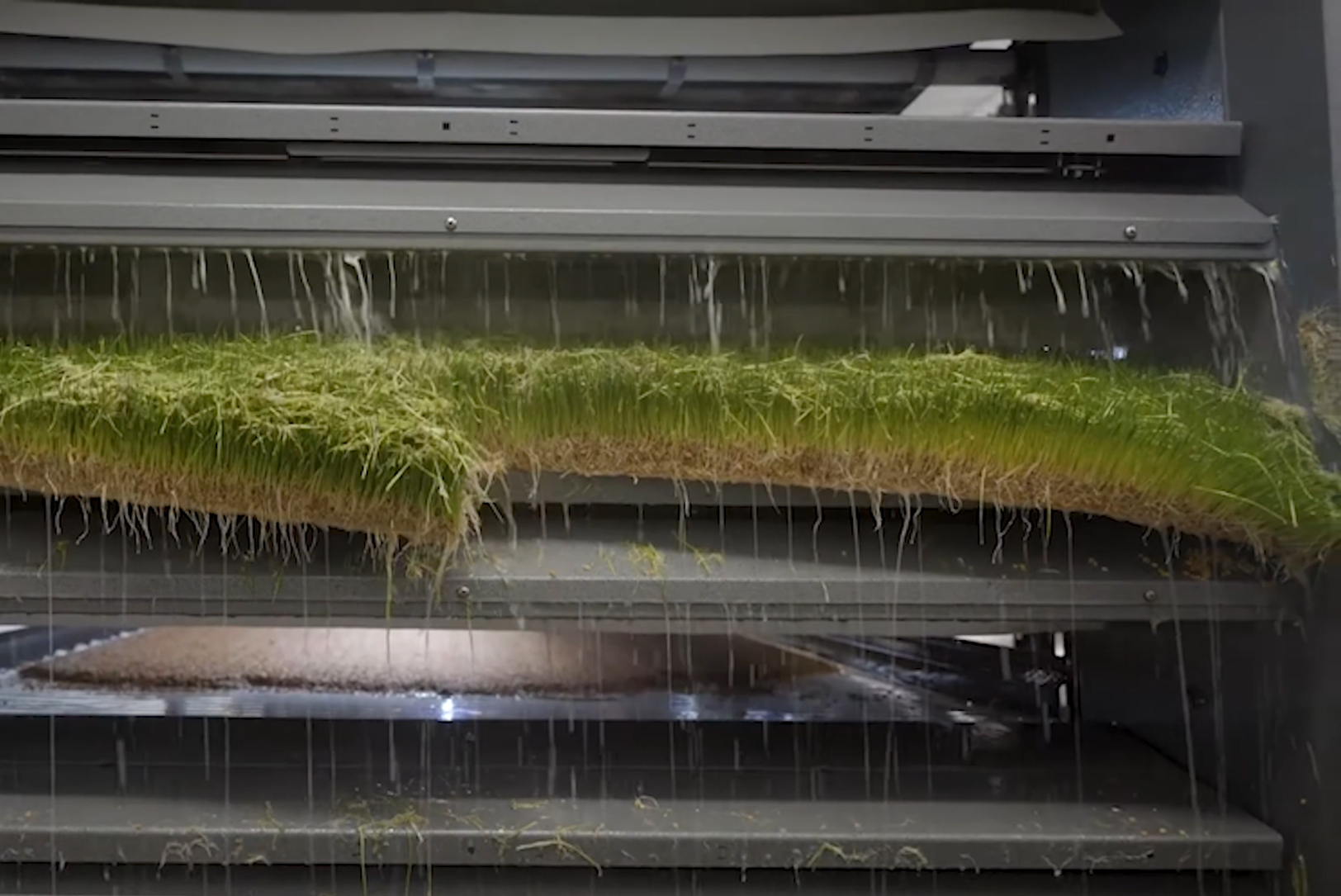
Grass grown in house (and indoors) for the Plainview Beef operation; photo courtesy of Plainview Beef
Cutting waste instead of corners
Plainview cattle are grass-fed and sprout-finished, according to the company, which is better for the cattle and the environment, Orr said.
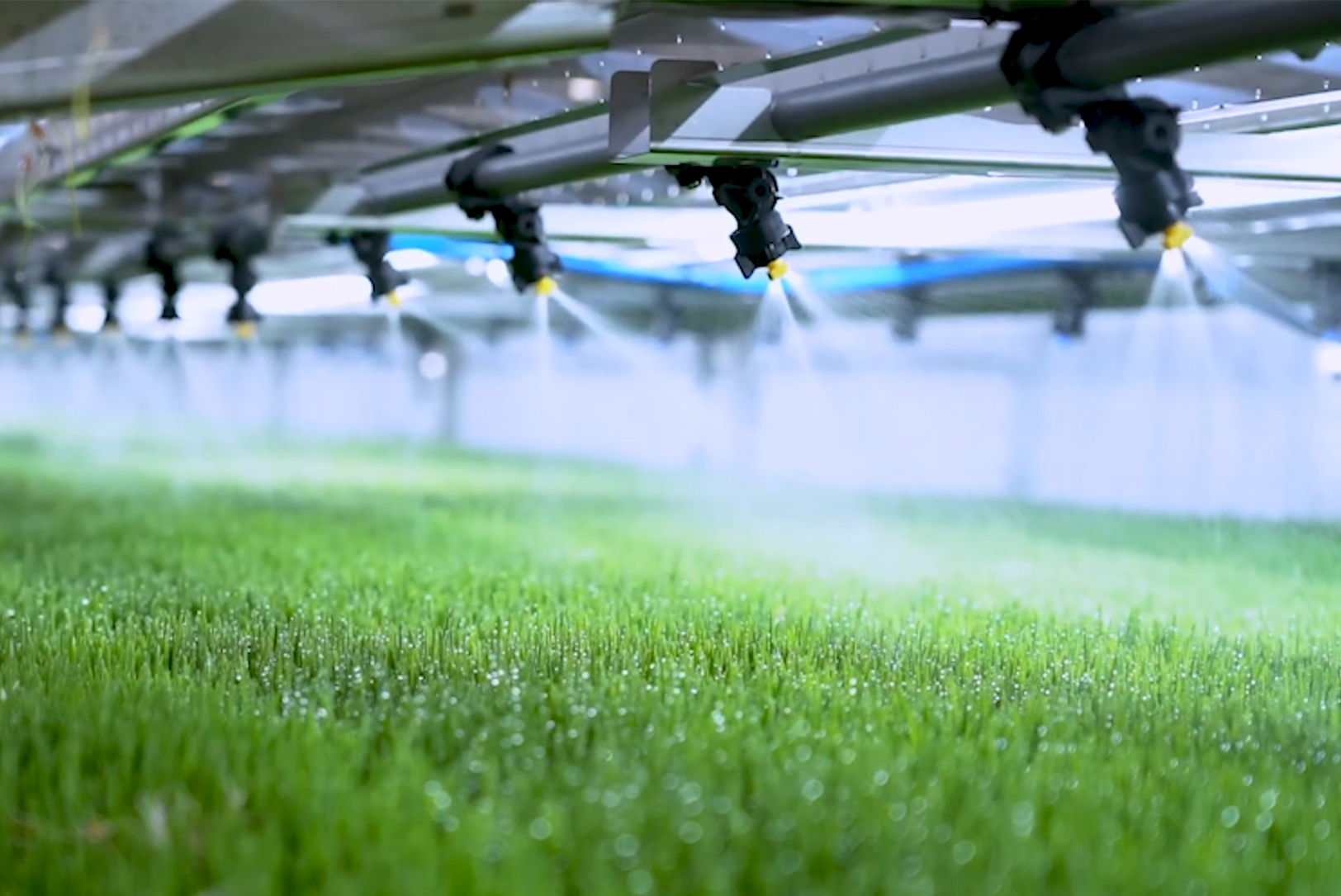
Sprayers water grass indoors at Plainview Beef; photo courtesy of Plainview Beef
But feeding cattle on just grass is tough, he explained, noting challenges posed by the amount of land and resources that are needed, plus Midwest weather conditions like drought. But by using an indoor growing system — one that’s automated, computerized, and monitored around the clock — Plainview’s operation can spit out about 5,000 pounds of fresh grass every day for the cattle to eat.
“The scalability of that solution really allows us to not cut corners; we can avoid using things that would normally be deployed because of the harsh environment in Kansas that we raise our cattle in,” he continued. “Farmers do the best they can. We’re just trying to find solutions and I think technology has been a big part of that.”
Just as people often consume wheat grass shakes for the nutrients, Orr said, the wheat sprout enzymes are healthy for the cattle and they love them.
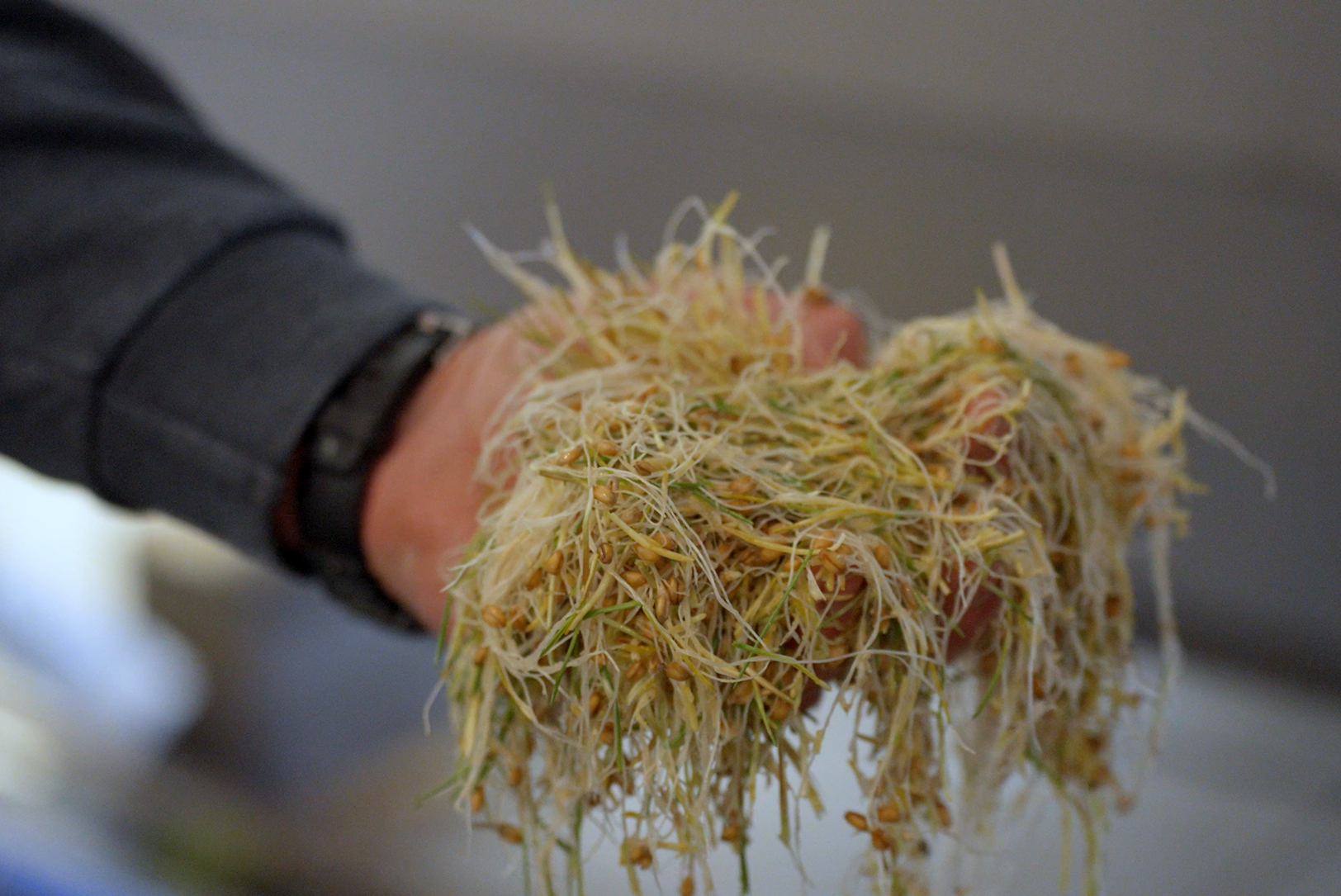
Sprouts used to feed cattle at Plainview Beef; photo courtesy of Plainview Beef
“The cattle do really well on these enzymes,” he added, “and it creates a real energy and high-protein feed for them, with a lot of other components that are really healthy for their rumen and all these different aspects of grazing cattle. So we see a huge drop in methane and we see a really good rate of gain from the cattle eating these sprouts every day.”
Using the indoor growing technology, Orr noted, also allows for the filtration and reuse of water. (The water used to grow crops is then used to water the cattle.)
“Between recirculation and repurpose of the water, we’re using roughly 85-90 percent of the water, so we don’t have water that’s getting wasted,” he said. “We’re just using absolutely everything we can.”
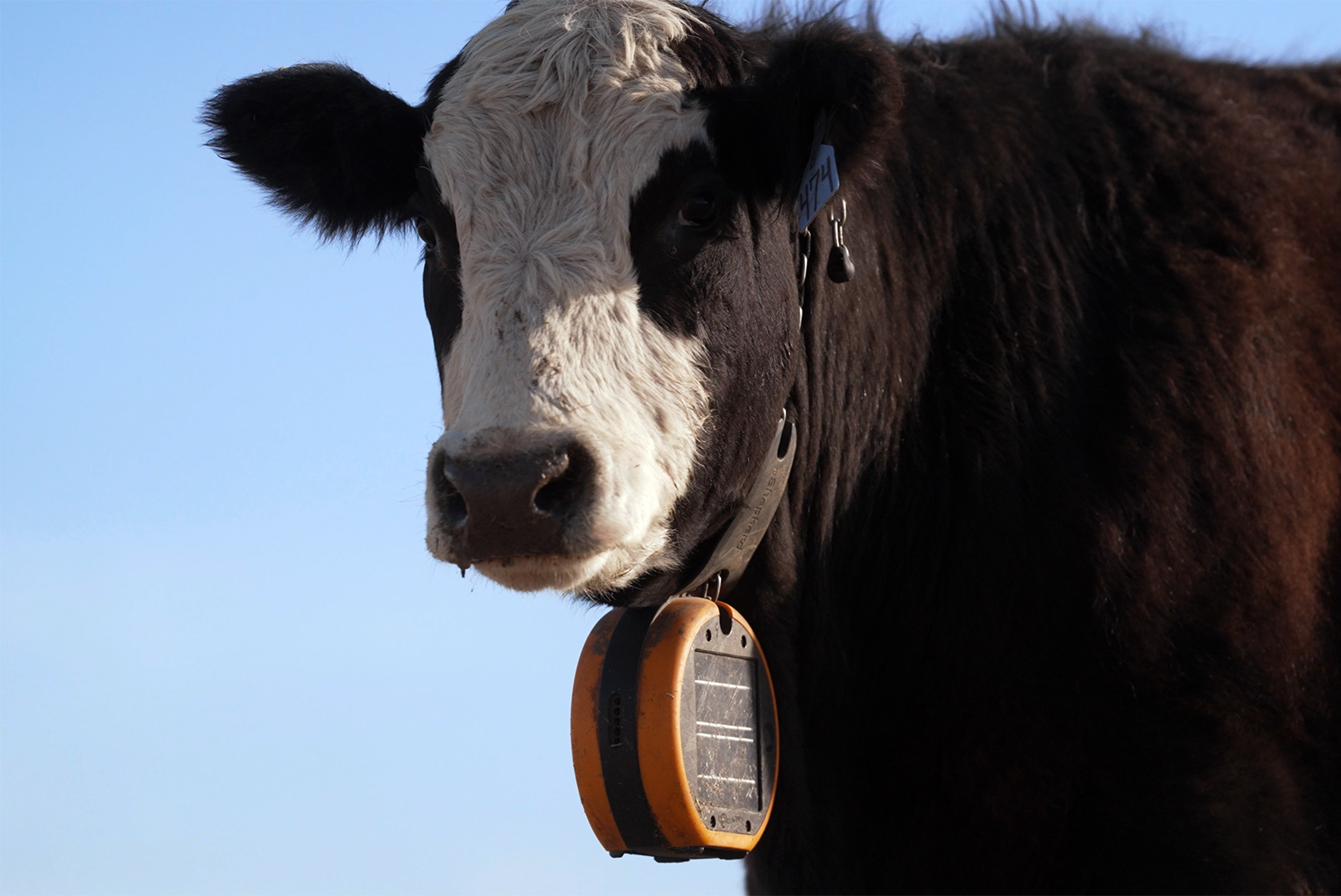
An e-collar worn by cattle at Plainview Beef; photo courtesy of Plainview Beef
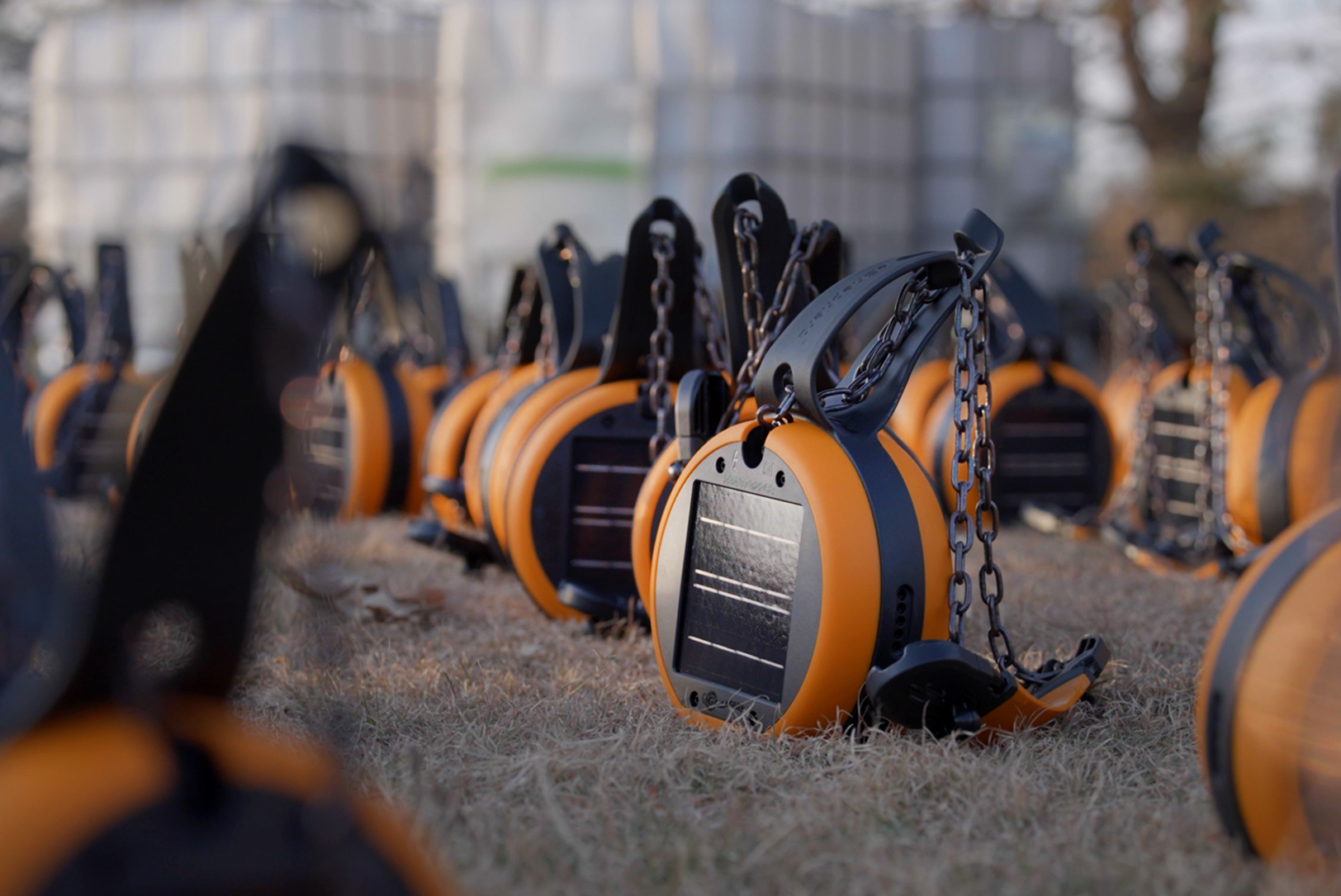
Plainview cattle also aren’t restricted to traditional feedlots, thanks to geo-fencing technology the company deploys, Orr shared. The cattle wear e-collars that allow the team to guide them to the best part of the pasture to graze each day, which prevents overgrazing and ensures the cattle have the grass they need.
“You have all kinds of waste and disease issues that come with confining cattle,” he explained. “So we felt like the way around that is to be able to use every square inch of our property. We can still confine them into a desirable area, and that allows us to really help the meat quality and also the feed quality for them. So we’re making sure they get on fresh grass and then that they also don’t roam forever to find it because there’s also disadvantages to that.”
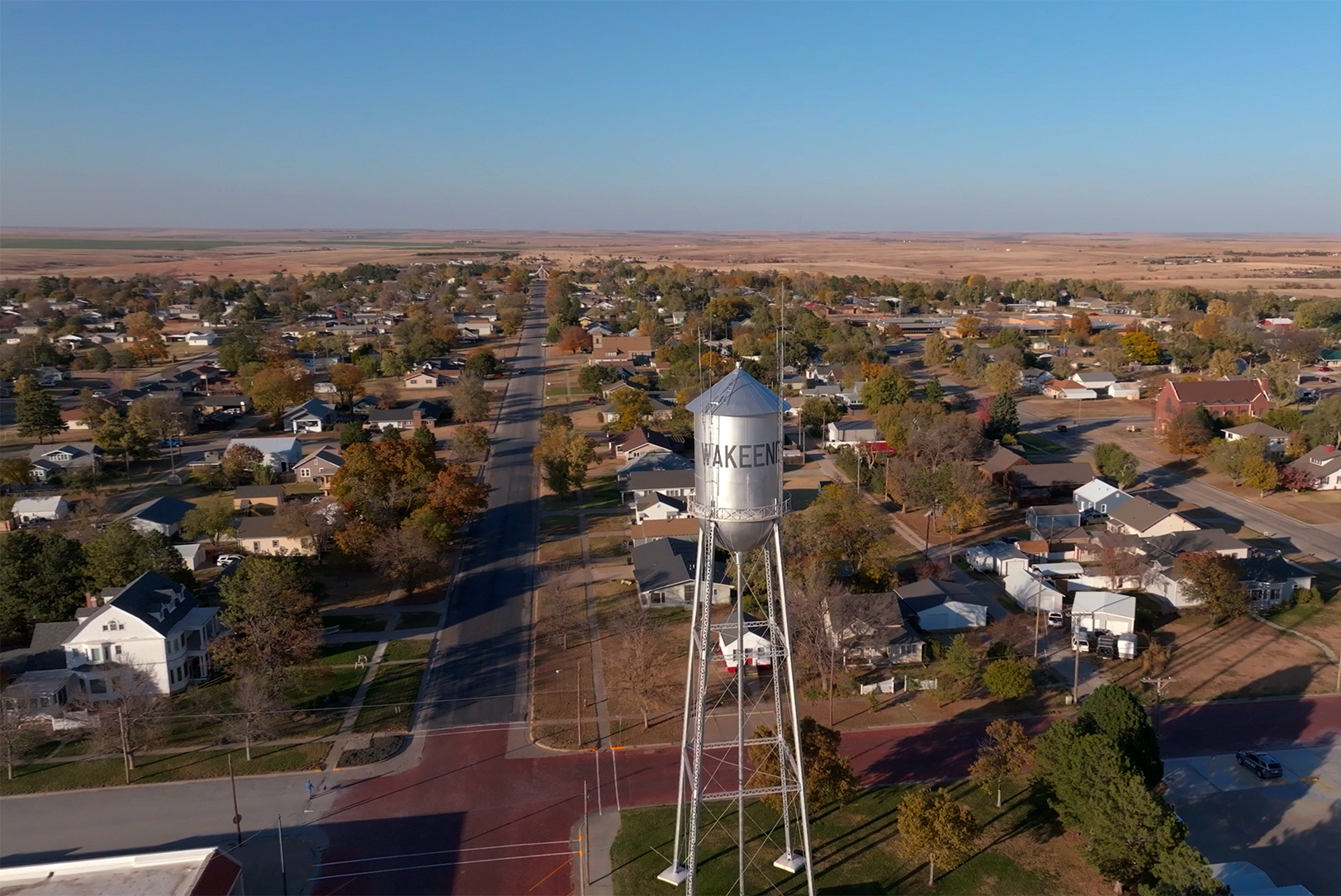
Aerial view of WaKeeney, Kansas, in Trego County; photo courtesy of Plainview Beef
Lifted by angels
While raising capital last year, Plainview took advantage of the Kansas Angel Investor Tax Credit Program through the Kansas Department of Commerce, Orr shared. The program allows angel investors the opportunity to earn up to a 50 percent tax credit while investing in Kansas startups.
“Our investors, obviously, really benefit from that, and then we benefit from the ability to raise additional capital,” he said. “This program has been absolutely transformative to us in the sense that it took us three or four weeks to compile all the requirements, but it also just took them three or four weeks to approve us, which, I think, is amazing. And they’ve been really supportive with our investors.”
The program is helping them innovate in the cattle industry right here in Kansas, he continued.
“Obviously, as a startup, it’s always challenging,” he added, “because there’s many risks involved with our business and things that we haven’t proven out yet.”
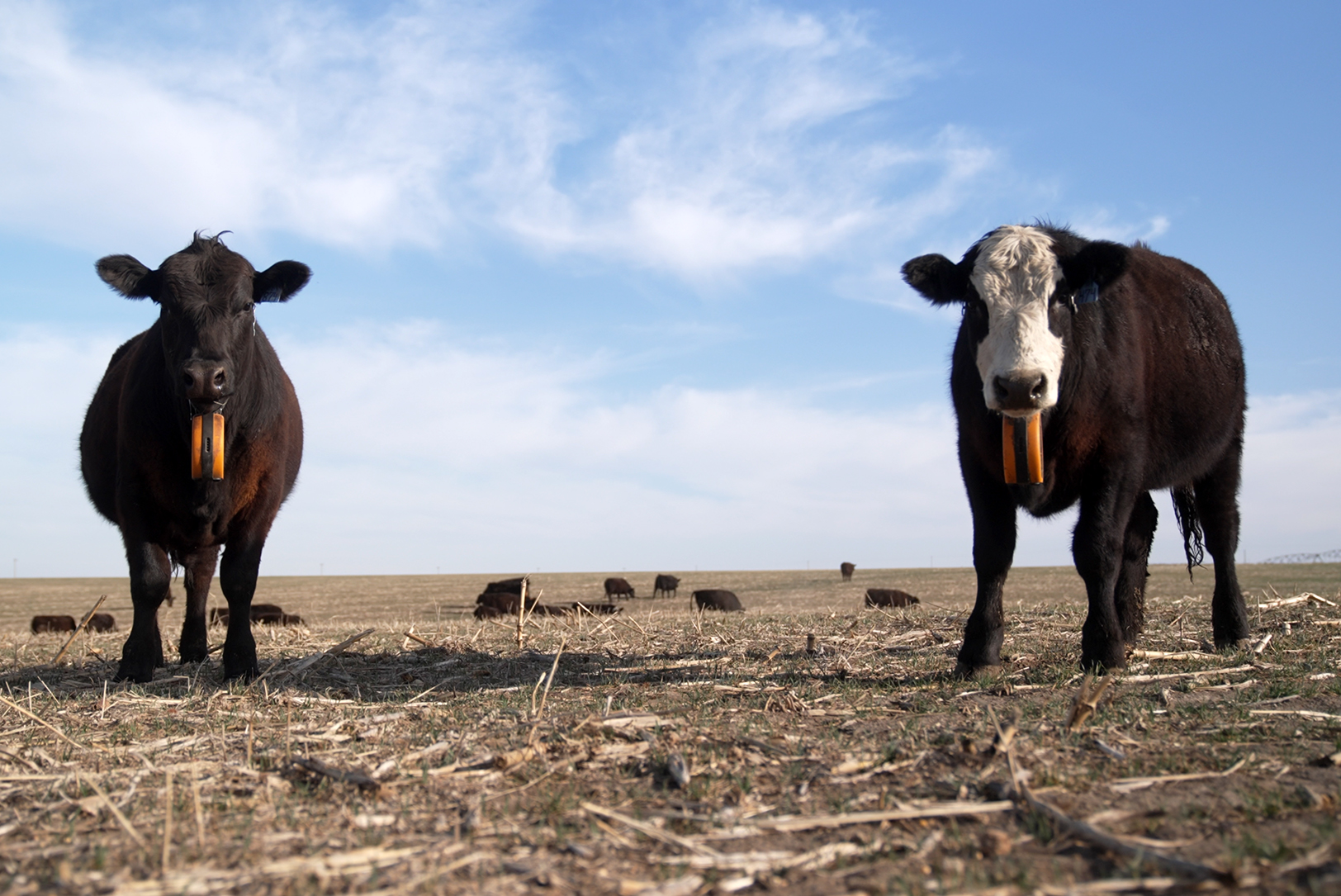
Cattle at Plainview Beef in western Kansas; photo courtesy of Plainview Beef
Farm, tech paths cross
Orr comes by entrepreneurship and innovation naturally, he noted. While his dad was raised on the family farm in Fowler, Orr grew up on a potato farm in Colorado, where they also had cattle.
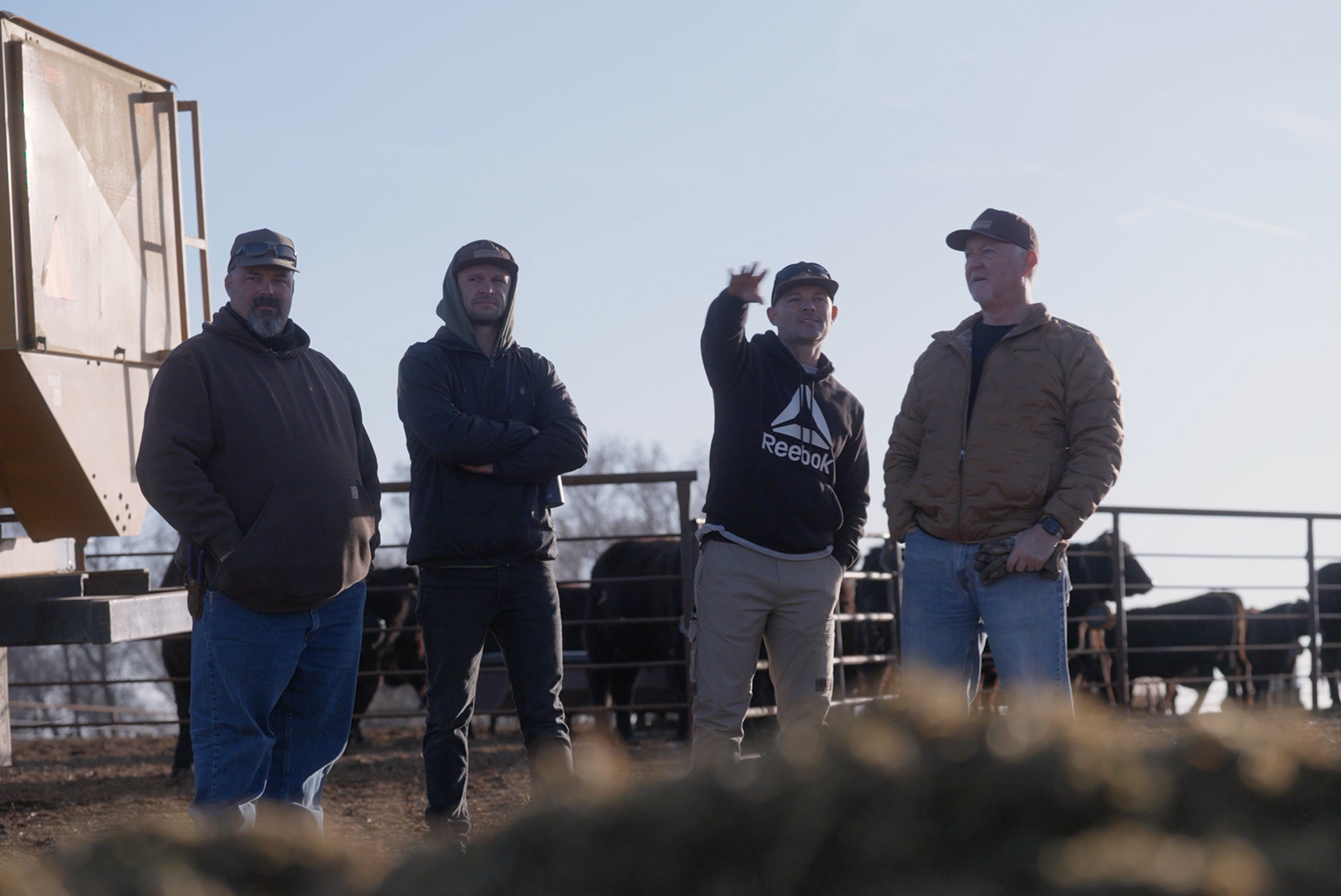
Gabe Orr, second from right, chats with team members at Plainview Beef; photo courtesy of Plainview Beef
“The life of an entrepreneur is definitely up and down and all around,” he said. “I was raised watching my dad start many businesses, some of which didn’t go so well and some that did go well.”
“I think farmers and ranchers are the heroes of our country,” he added. “They just do a lot of hard work, and they are pretty smart people and really have to innovate in order to stay afloat.”
After his early farm days, Orr spent 17 years overseas working on a wind farm project that he piloted to a multi-million dollar exit, he shared. Then about three and a half years ago, he decided to return to Kansas and reconnect to his cattle farm roots. Now he’s combining his startup experience with the lessons of innovation that he learned on the farm to pilot Plainview.
“It comes down to our ability to really put a plan in place and then have the ability to adapt within that plan and execute as things change,” Orr explained. “Because in the farming and ranching world, there’s obviously challenges that come up that you don’t foresee. It takes tenacity and commitment.”
“I’m blessed with a family that really has taught us that,” he added, “and we just try to pull together and find a way.”

This story is made possible by Entrepreneurial Growth Ventures.
Entrepreneurial Growth Ventures (EGV) is a business unit of NetWork Kansas supporting innovative, high-growth entrepreneurs in the State of Kansas. NetWork Kansas promotes an entrepreneurial environment by connecting entrepreneurs and small business owners with the expertise, education and economic resources they need to succeed.


2025 Startups to Watch
stats here
Related Posts on Startland News

Are You Ready For It? J. Rieger partners with KC TikToker for Eras Tour pop-up ahead of Taylor Swift concert weekend
Calling all the argumentative, antithetical dream Swifties — J. Rieger & Co. is welcoming Taylor Swift fans to its Electric Park Garden Bar for a pre-concert weekend celebration. “The dedication that people have for Taylor Swift’s concert has been incredible to see,” said Sarah James, director of hospitality at J. Rieger & Co. “We love…
This Kansas gardener is suing for the right to sell honey and fruit from her Ottawa yard
Editor’s note: The following story was published by KCUR, Kansas City’s NPR member station, and a fellow member of the KC Media Collective. Click here to read the original story or here to sign up for KCUR’s email newsletter. Ellen Finnerty dreams of beekeeping and of supplementing the income from her warehouse job by selling products from her garden. OTTAWA,…
They called her ‘Buckwheat’ as a child; Her genre-blending new film flips the script on preconceived narratives
Jamie Addison’s production company aims to expose realities not often explored in mainstream media or society, the Kansas City filmmaker said, particularly as they reveal truths that have been hidden to create misleading or outright false narratives around gender, race and social norms. “Let’s take back the power and identity and love ourselves; truly feel…

Married puppeteers had a hand in reviving iconic Mr. Rogers characters for film; now they’ve returned to KC (with their studio)
Puppeteers are often anonymous, but Spencer Lott — and his wife and business partner, Grace Townley — are stepping into the spotlight to start their own creative studio, they shared. The Lawrence-based couple — who built the puppets used in the Tom Hanks film “A Beautiful Day in the Neighborhood” about the life of TV’s…