

Bean around the block: How this Westport coffee shop is cherry picking roasts from its own farm in the Andes
August 21, 2025 | Joyce Smith
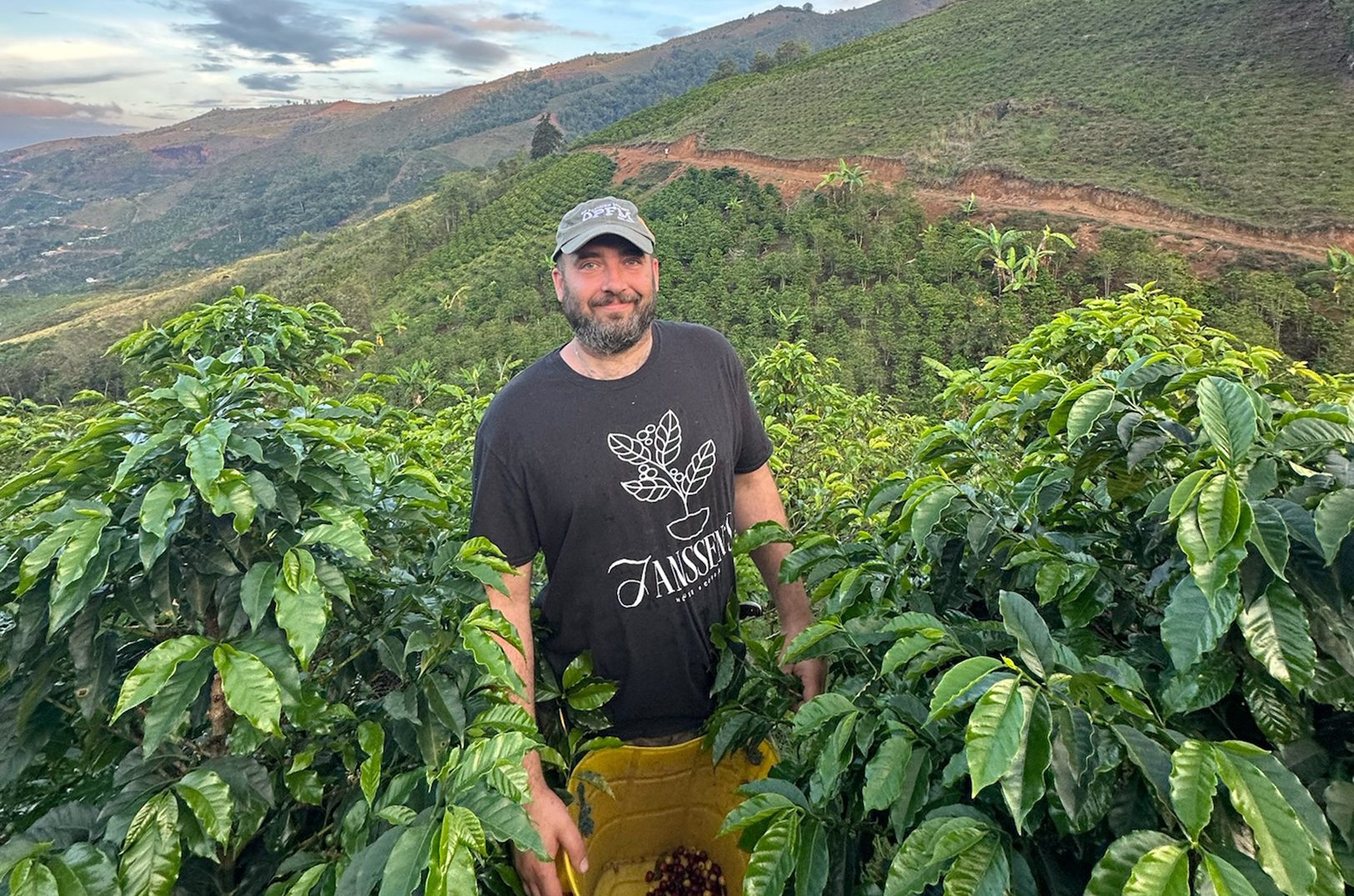
A hemisphere away from Brett Janssen’s former job at General Motors in Kansas City’s Northland, the now-budding Westport coffee shop owner found a fresh batch of opportunities: his wife, business partner and a transcontinental farm-to-cup Columbian coffee operation.
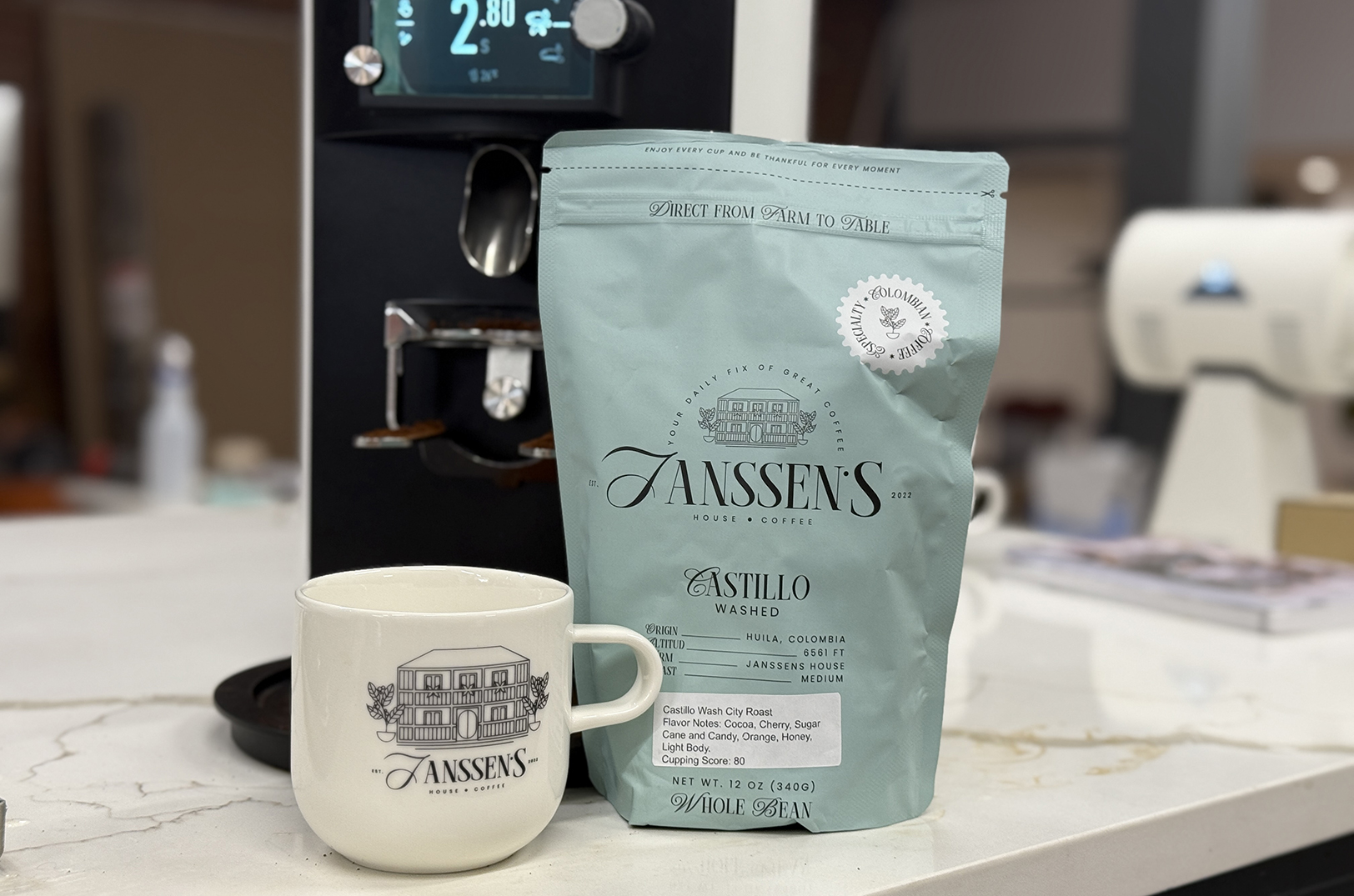
Janssen’s House Coffee; photo by Joyce Smith
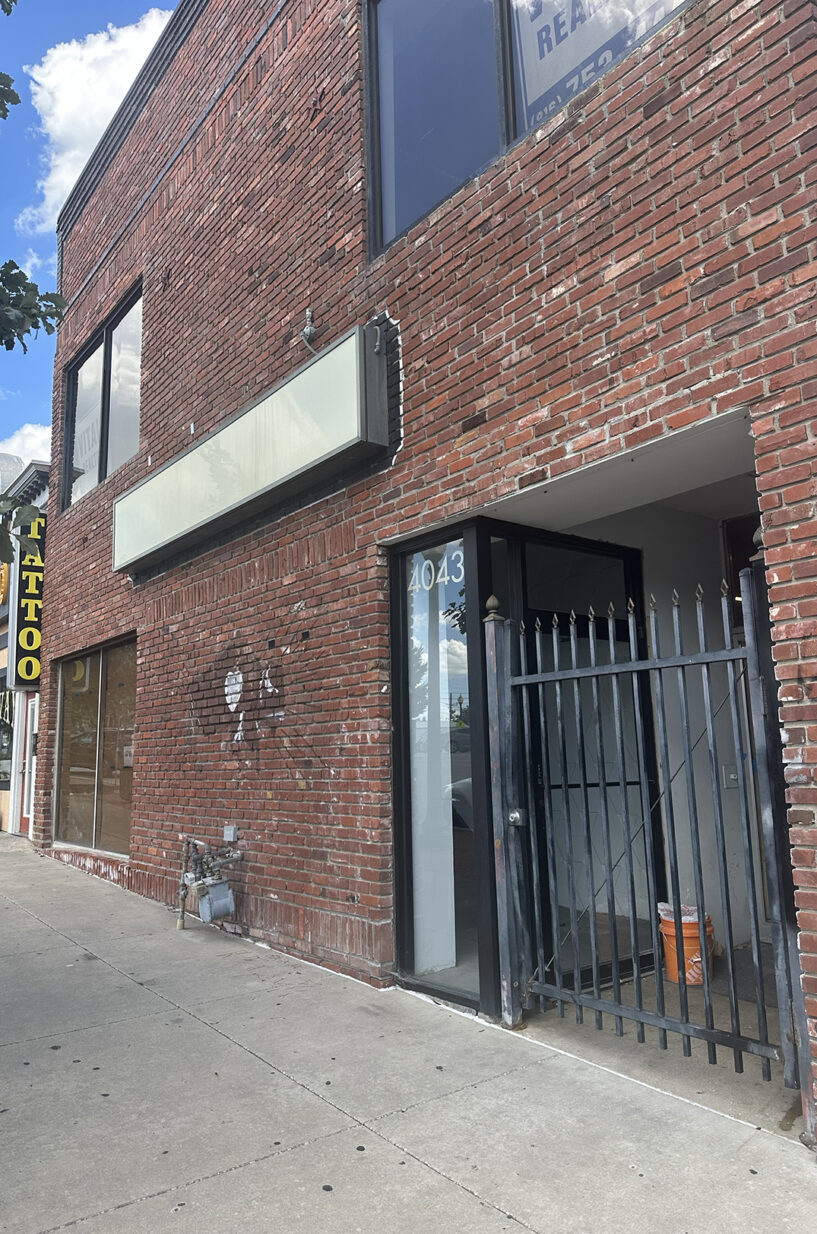
Janssen’s House Coffee — the fruit of Janssen and his fiancée Genisis Mejia’s passion for coffee — is set to open in October at 4041 Broadway Blvd. The shop notably sources its beans directly from the couple’s own coffee farm in Mejia’s native Colombia.
“We try to keep as short of a chain supply as possible, mostly a three month supply sent out,” he Janssen, noting the coffee is currently available online and at the Overland Park Farmers’ Market. “Most of the time we are already sold out.”
His 2,000-square-foot Westport space has 16-foot ceilings, and exposed brick walls. It’s set to feature lounge seating in the back, and the couple hopes to eventually replace a large front window with a garage door to open in nicer weather.
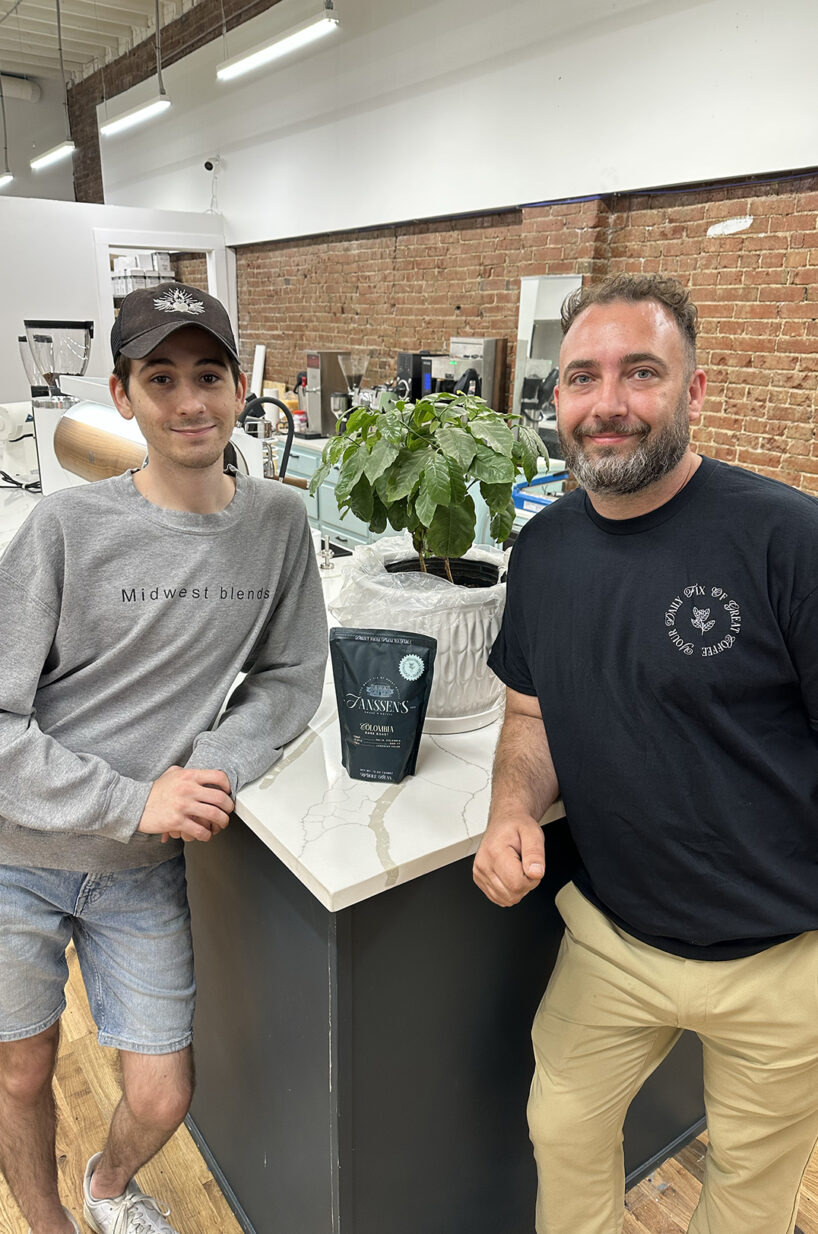
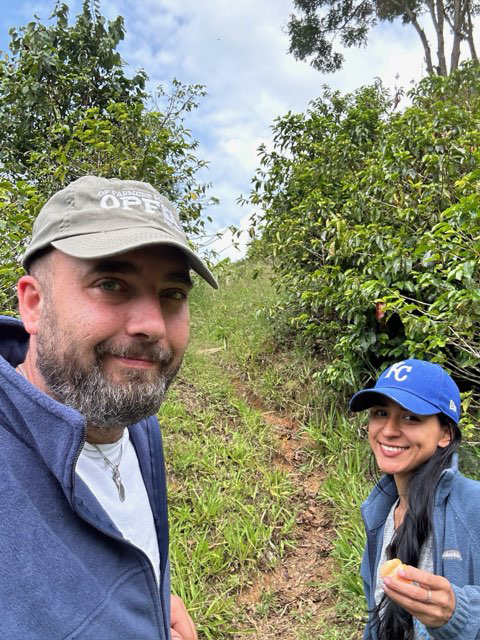
Brett Janssen and Genisis Mejia in Colombia; courtesy photo
Mejia is a lawyer and still lives in Colombia, with Janssen living in the U.S. part time, making the roughly 2,700-mile trek back to Kansas City to run the brick-and-mortar operation. He emphasized the coffee shop is an accessory to the farm.
“We’re farmers. It’s our first priority because that’s where the quality starts,” he said. “It costs a fortune trying to open a store these days and I’m stuck up here trying to build a brand while she is stuck down there with the farm.
“But I feel like people who come here are going to be tasting real coffee for the first time — farm-fresh quality coffee.”
In keeping with that focus on quality, the couple purchased a Dalla Corte espresso machine, retailing in the five figures. They plan to offer tastings, as well as cupping classes.
Janssen’s House Coffee will be competing with several coffee shops just in the Westport area, such as mainstay Broadway Cafe, as well as newcomers such as Chambre Coffee and Le Champion. Triple Crown Coffee closed in March after a short stint in a building just north of Janssen’s.
View this post on Instagram
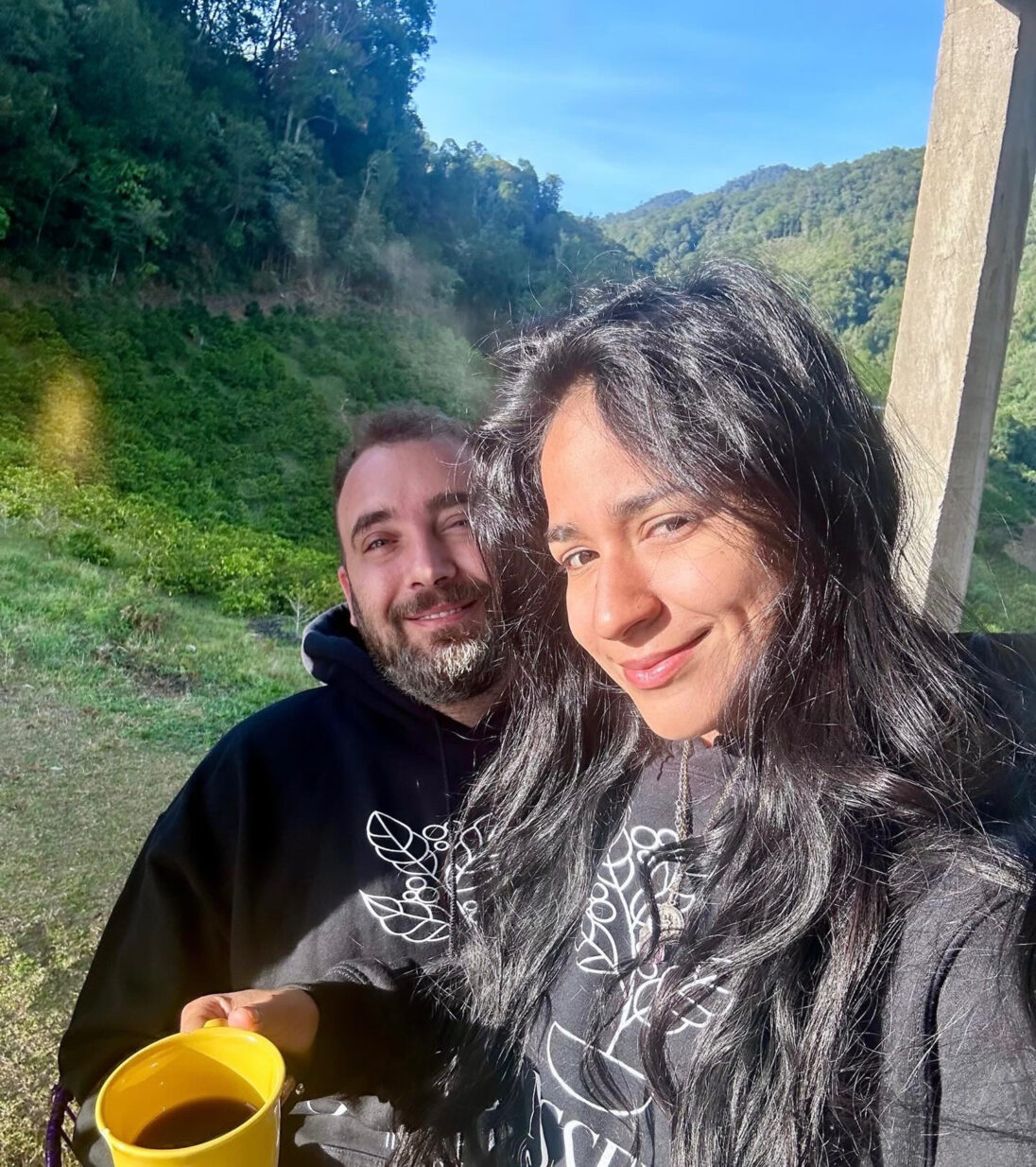
Brett Janssen and Genisis Mejia in Colombia; courtesy photo
Rerouting from wholesale
Janssen has visited Colombia for 15 years, and met Mejia, who he calls his wife, in 2018. Three years later they bought a 50-acre farm — in the Andes Mountains of Huila, in southwestern Colombia, a vibrant spot for high-quality coffee and cotton production. They later expanded to 60 acres.
Because Janssen grew up in Kansas City and maintains a home locally, the farm expansion seemed like a good opportunity to wholesale beans back to coffee shops in the City of Fountains. So after the couple perfected its processes, he took packages of beans around to Kansas City shops looking for partnership opportunities among businesses eager for a direct farm-to-shop bean.
“They weren’t interested at all,” Janssen said. “It was shocking to us. A lot of places try to spell out that they are as close to the farm as possible, but at the end of the day that doesn’t seem to be the case.”
Janssen and Mejia are no longer interested in wholesaling. At least for now. Instead, they’re putting the product to work for their own consumer-facing venture.
Click here to follow Janssen’s House Coffee on Instagram.
View this post on Instagram
Mapping ever-changing tones
The farm-to-shop method is labor-intensive, Janssen acknowledges, but notes the process contributes to the unique appeal and quality of Janssen’s House Coffee.
After harvesting, the cherries (the fruit of the coffee plant) are dumped into a vat of natural spring water from the farm. In a process called “floating” the bad cherries float to the top, are skimmed off and sold to a less discriminating buyer, Janssen said.
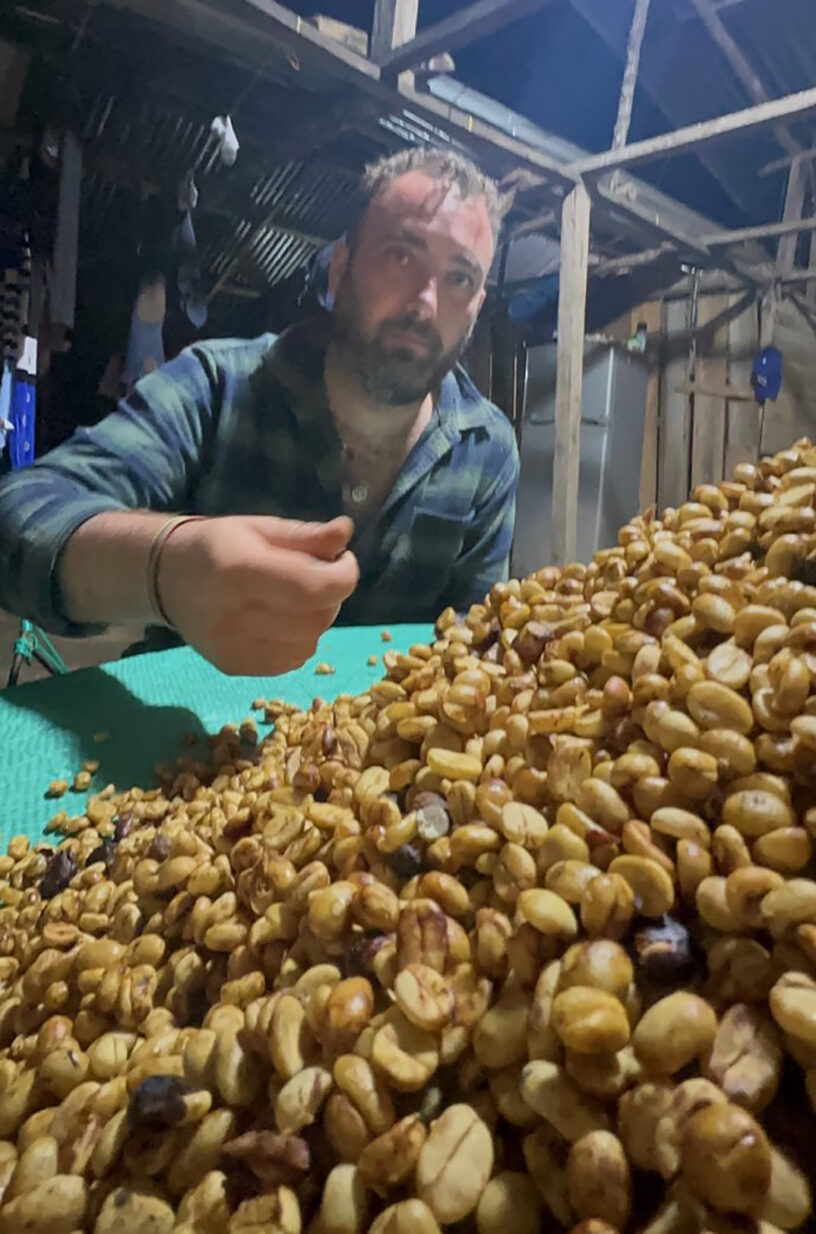
Brett Janssen with beans from his coffee farm in the Andes Mountains of Huila, in southwestern Colombia; courtesy photo
The good cherries are then processed three ways:
- Washed coffee: The mucus-like substance surrounding the bean is washed off with more spring water. The beans are then solar-dried before selection.
- Honey coffee: Yellow, red or black. The mucus-like substance is left on the bean, giving it a different flavor profile. Black honey has the most.
- Natural coffee: The cherry is left on the coffee bean during the drying process, providing a fermented, fruitier bean.
Then the green coffee beans are dried and stored in fika bags to rest. About two weeks later, the couple — and any seasonal help — sift through the beans, searching for defects. The beans are then shipped to a facility in Bogotá, Colombia, to thresh the “parchment” off the bean. They are screened again, this time according to size.
“It’s not to say one is better than the other. It is more for uniformity in the roasting process,” Janssen said. “A bigger bean might take longer to roast. We can’t afford to have a bad batch.”
The beans are roasted at another facility, packed in 5-pound bags, and shipped to Kansas City.
Flavor profiles are determined by professional Q Graders in Colombia, who also evaluate the beans for any defects, acidity, body and overall quality.
Once a batch sells out, a customer probably won’t be able to get that particular flavor again.
A recent Colombia dark roast was described as having flavor notes of toasted almonds, dark chocolate, cocoa and caramel with a cupping score of 84.25. Scores of 80 points or higher indicate a specialty coffee of high quality.
A castillo washed had flavor notes of cocoa, cherry, sugar cane, candy, orange and honey with a light body and a cupping score of 80.
“With every batch it’s different,” Janssen said. “We roast just 20 kilos at a time, and the tones are forever changing.”
Startland News contributor Joyce Smith covered local restaurants and retail for nearly 40 years with The Kansas City Star. Click here to follow her on Bluesky, here for X (formerly Twitter), here for Facebook, here for Instagram, and by following #joyceinkc on Threads.


2025 Startups to Watch
stats here
Related Posts on Startland News
Bus tech startup Transportant announces $11M in pre-sales at Lean Lab pitch night
School districts across North America are on board with Transportant — to the tune of $11 million in pre-sale agreements, co-founder John Styers said. The startup, which uses video-based technology to allow students, parents and school administrators to better monitor school buses, announced the milestone — $10 million over its goal of $1 million in…
Councilman introduces east side investment proposal with $15/hour wage provision
As economic development surges in pockets across Kansas City, residents and businesses on the east side shouldn’t be left behind, Scott Taylor said. “Our clock is ticking as a city on this, and we need to do more,” said Taylor, councilman for the sixth district, at-large. At a press conference Thursday, Taylor introduced a draft…

KCPS superintendent to city struggling with violence: When do we all come together?
It’s inexcusable for Kansas City to simply accept 130 murders before it’s even December, Mark Bedell said. “Who do you think are committing these crimes?” Bedell, superintendent of Kansas City Public Schools, asked a crowd gathered Thursday for the Lean Lab’s Launch[ED) Day. “Probably people who have been victims of schools that have failed them…
Kauffman Foundation rolls out $1.2M microlending program to help underserved entrepreneurs
Amid a swarm of 160 events as part of Global Entrepreneurship Week, the Ewing Marion Kauffman Foundation announced a new microlending program to spur investment in underserved entrepreneurs. In partnership with four microfinance lenders, the foundation issued a series of grants totaling $1.2 million that a will change the way the nonprofit microlenders capitalize their…