

Garmin survived the smartphone revolution; now it wears digital health innovation on its wrist
August 23, 2025 | Nikki Overfelt Chifalu
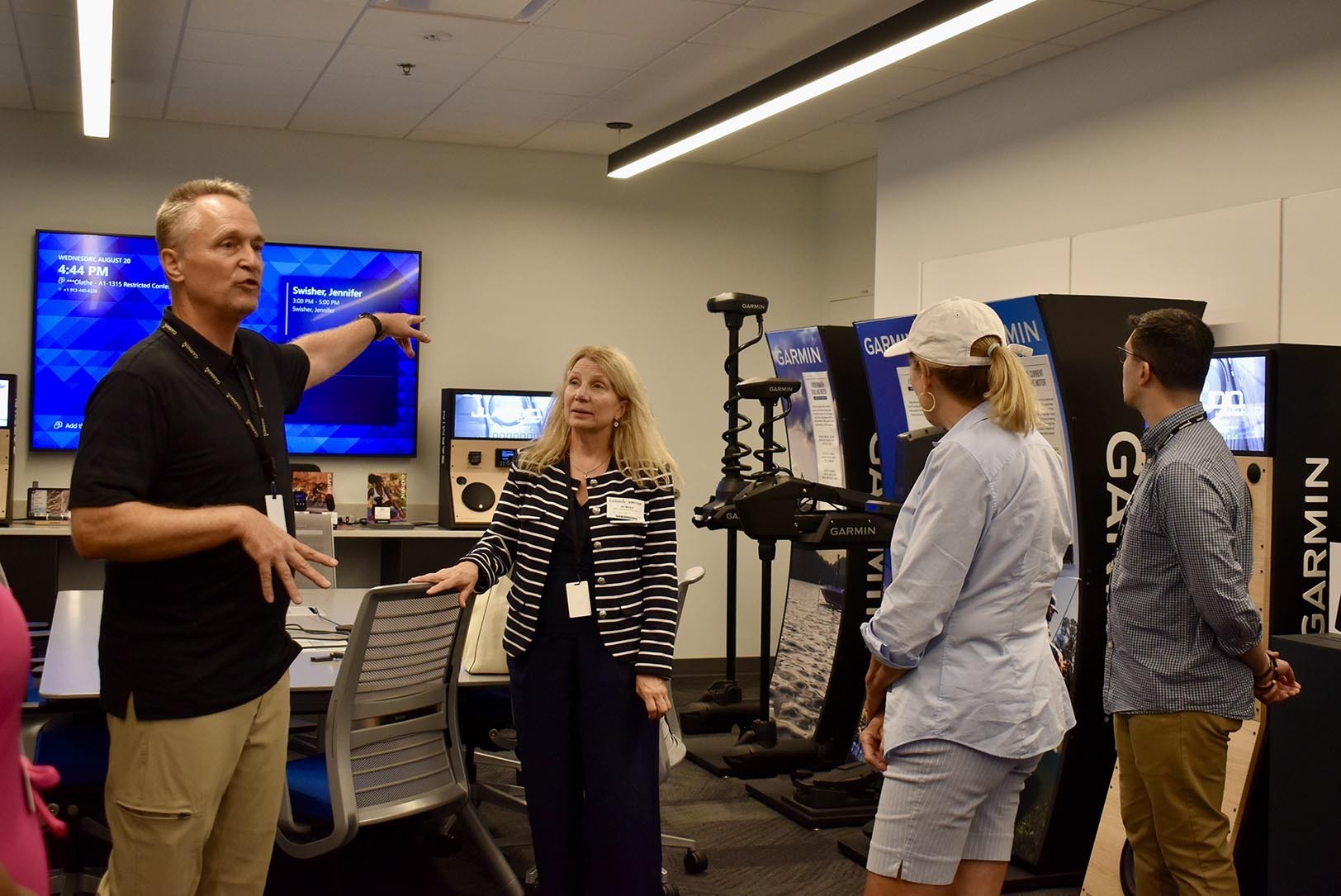
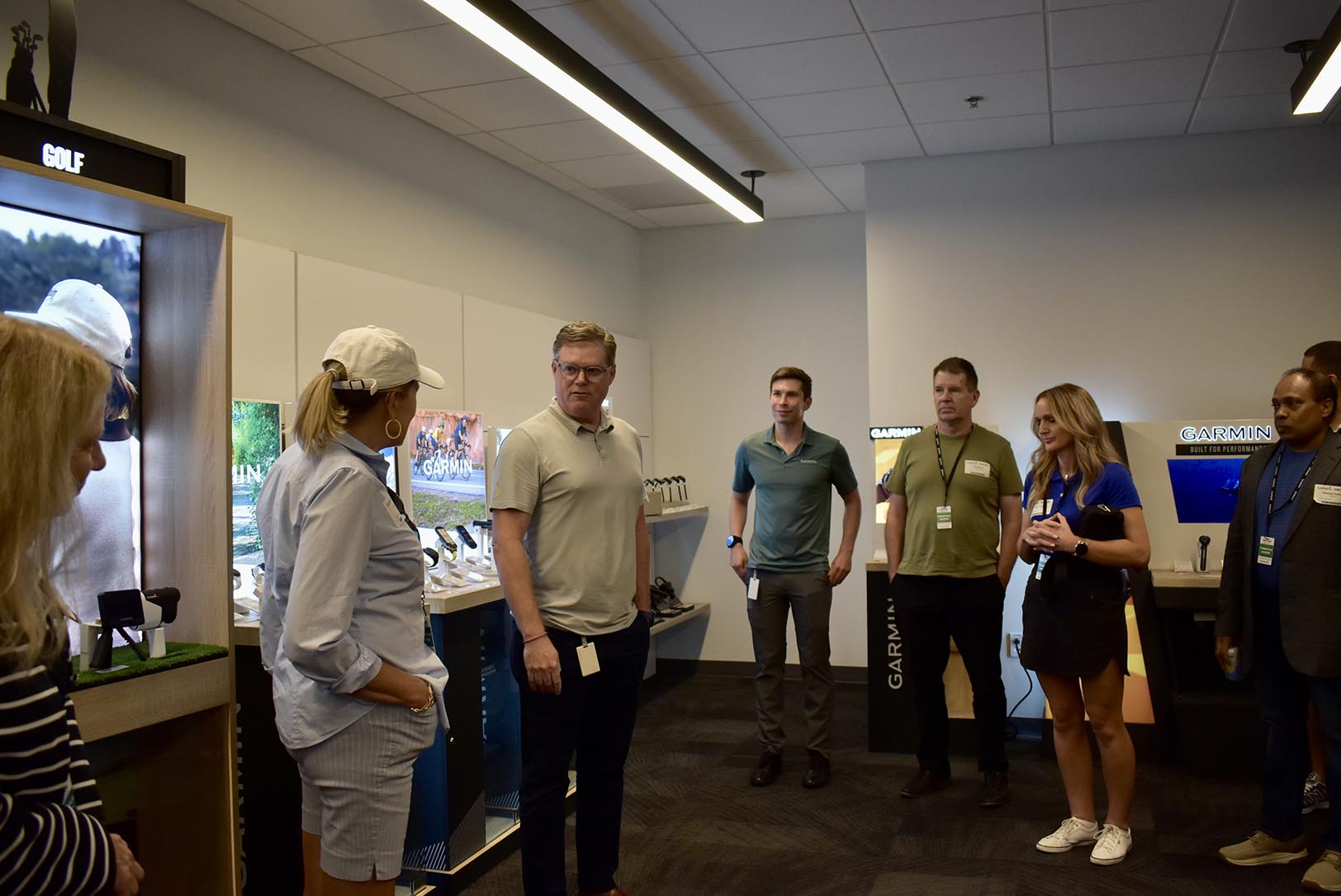
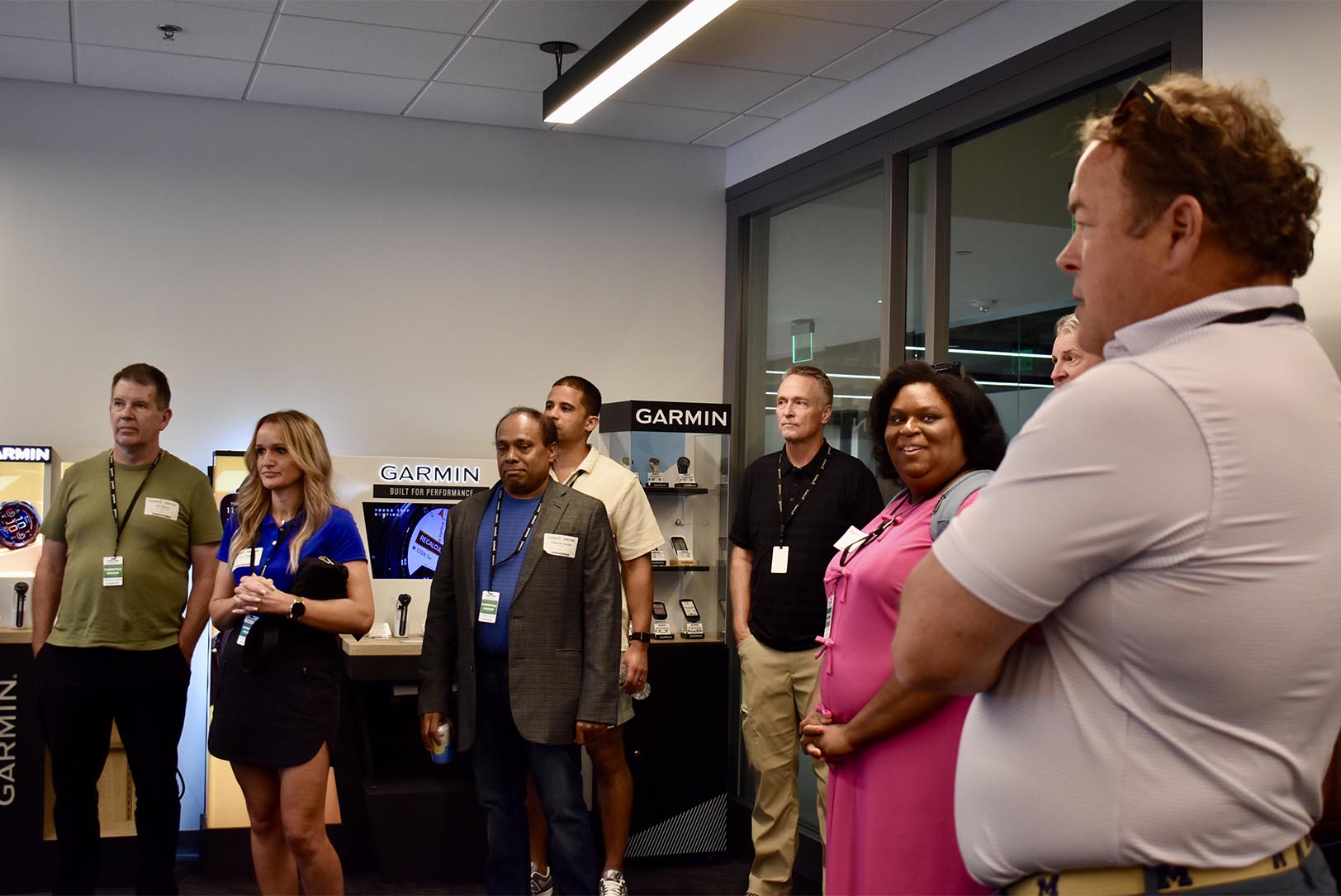
Garmin might not have survived cellular carriers putting free navigation and mapping apps on every smartphone if the Olathe-based GPS tech leader wasn’t constantly innovating, said Scott Burgett, touring a group of digital health entrepreneurs and investors through the Johnson County headquarters.
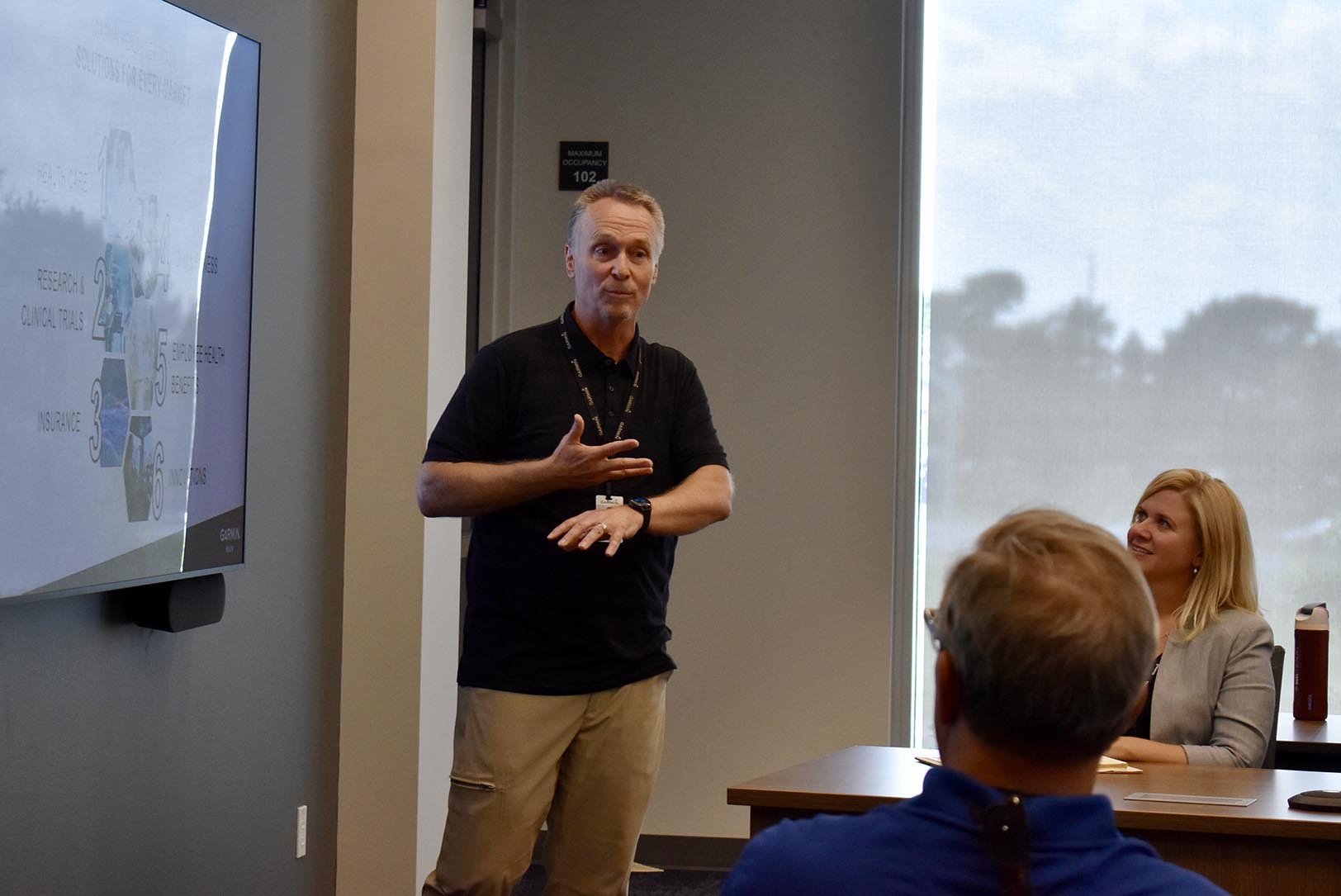
Scott Burgett, senior director of Garmin Health Engineering, speaks to founders, investors and other visitors to Garmin during a Digital Health Day event; photo by Nikki Overfelt Chifalu, Startland News
“It’s what keeps a company vibrant,” said Burgett, senior director of Garmin Health Engineering, offering behind-the-scenes insights to visitors Wednesday during a special Digital Health Day event organized by Digital Health KC. “Our new products typically account for 30 to 40 percent of our revenue.”
RELATED: Meet the Lumi Award winners: Digital Health KC salutes pioneers leading innovation trends
The tour included two of the reliability and testing labs at the Olathe innovation site, from which Garmin — a Kansas-built company that brings GPS navigation and wearable technology to the automotive, aviation, marine, outdoor, and fitness markets — has exceeded $6 billion in revenue. (Garmin now has 22,000 associates in 35 countries worldwide, including more than 5,000 at the Olathe campus.)
Such success in the age of smartphones required the company to innovate around technologies and uses that were adjacent to Garmin’s established GPS expertise, Burgett explained.
“We’re not going to suddenly create some brand new business,” he said, noting that developing wearable devices was a core example of Garmin turning an obstacle into opportunity.
From the archives: Garmin CEO reveals startup origins, tech hiring challenges, culture of innovation
The engineering team was initially working on a small handheld device, Burgett said, but they decided one day to see if the tech still functioned correctly if they strapped it to a person’s wrist and sent them on a run.
“It actually worked,” he recalled. “And that became our first GPS wearable. It’s now our biggest business. So we’re constantly looking for things that are adjacent.”
Those same wearable devices — which gain access to a wide array of health metrics and real-time sensor streams — also prove ideally suited for digital health applications, Burgett continued.
“Wearables are our focus, but we realize that they can’t be utilized unless they have the right connectivity solutions, getting data off the device into someone’s app, someone’s ecosystem,” he explained.
That’s where Garmin Health comes in, he noted, calling the brand a startup within Garmin.
“We are an ecosystem player,” he told the group of Digital Health Day visitors. “So we don’t want to go out and create prescriptive solutions for some problem like chronic condition management. We want to sell you a watch, give you a connectivity solution, so you can go create your solution because you’re better at it than we are.”
“We’re engineers,” he added. “We’re more worried about ‘What’s the current draw of this sensor?’ You can worry about things at the higher level like, ‘How do I address COPD or care outside the home?’”
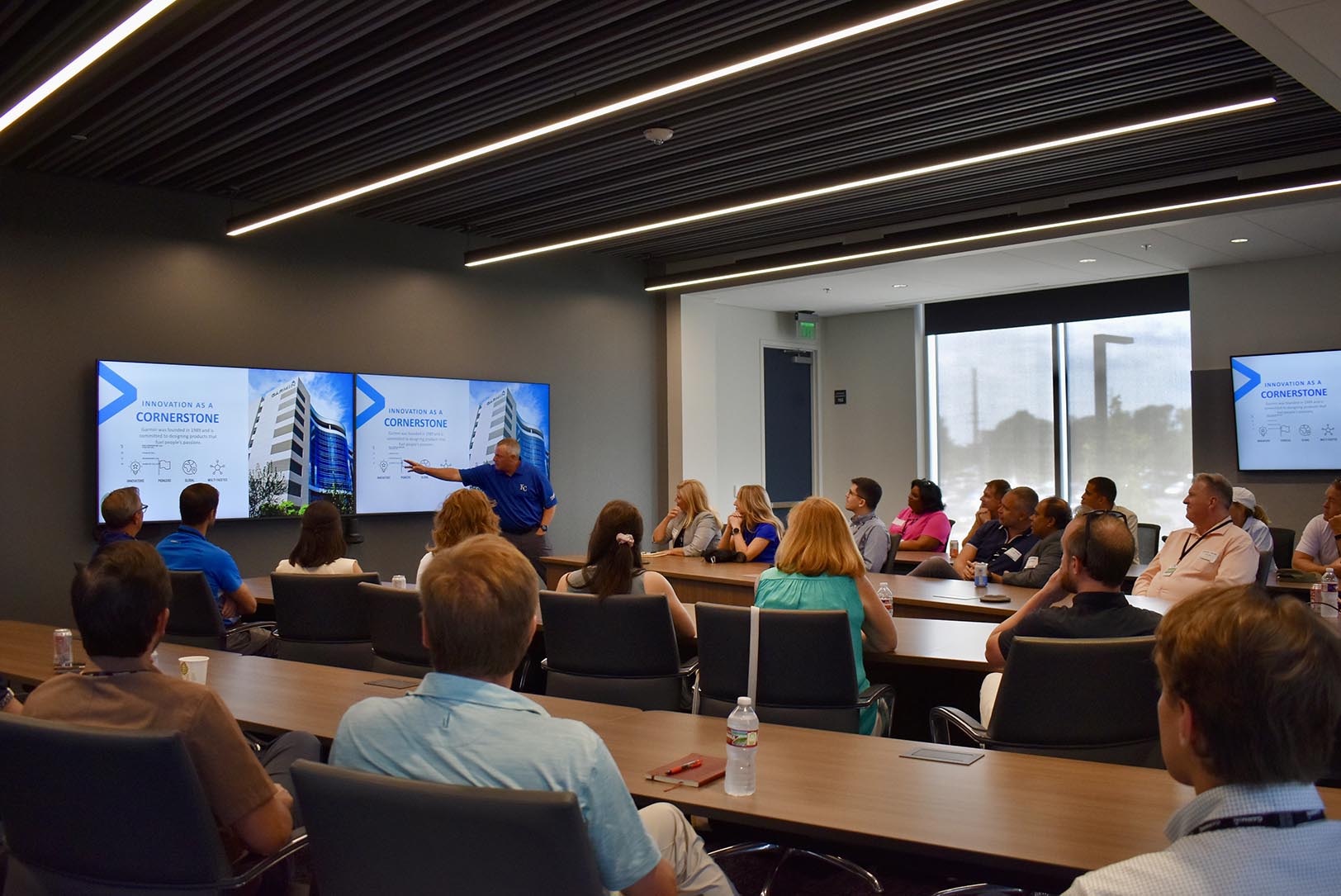
Andy Beckman, director of sales for Garmin Health, gives visitors and innovation overview during a Digital Health Day event; photo by Nikki Overfelt Chifalu, Startland News
Orbit Health serves as an example of a digital health startup using Garmin wearable technology for Parkinson’s Disease management, Burgett noted. The company translates the acceleration and gyro data from the wearable to detect when a patient’s tremors start again, even before the user might realize it, so that their medication can be adjusted if needed.
“It’s very cool,” he added.
Although Garmin Health is competing with the likes of Apple, Samsung, Whoop, and Oura, Andy Beckman, director of sales for Garmin Health, said he feels like the company is more open to partnerships and working with startups.
“We welcome the opportunity to have a conversation and see if we can make some magic together,” he told the tour group.


2025 Startups to Watch
stats here
Related Posts on Startland News

Science City merger to bolster local STEM education
Officials leading the merger of two non-profit science organizations hope their combined efforts will translate to more STEM professionals in Kansas City. A science museum, Union Station’s Science City is merging with Kansas City-based Science Pioneers to offer complementary science events, activities and programs. The merger — which will be complete July 1 — aims…

$10M earmarked for Kansas City tech talent development
Kansas City’s Full Employment Council is doubling down on its efforts to train techies. U.S. Deputy Secretary of Labor Chris Lu is visiting Kansas City Wednesday as part of the FEC’s announcement that it earned a $5 million grant to train young adults in IT, healthcare, financial services and advanced manufacturing. And thanks to matching…

North Kansas City to receive area’s largest coworking studio
North Kansas City will soon boast the metro’s largest coworking facility. The first shared workspace in North Kansas City, iWerx’s massive 33,000-square-feet facility is scheduled to open in July for entrepreneurs hoping to work in a community of innovators. iWerx also will house a business incubator that hopes foster entrepreneurial vibrancy in North Kansas City.…

Gallery: The 2016 Kansas City Maker Faire
Kansas City creativity was on full display at the 2016 Maker Faire. To learn more about the event, check out this video from Startland News.